REVIEW · BALLESTAS ISLANDS
From Paracas: Ballestas Islands & Paracas National Reserve
Book on GetYourGuide →Operated by JD ADVENTURE TRAVEL · Bookable on GetYourGuide
Paracas feels like science fiction on the water. This trip strings together two big draws: sea lions and penguins on Ballestas Islands, then the maroon-sand beaches and stark desert cliffs of Paracas National Reserve. One thing to plan for is the boat ride: you can get splashed, and it may feel cold even when the sun is out.
I like how this day moves fast but stays structured. You’ll get hotel pickup in the Paracas area, a speedboat out to the islands with a bilingual guide, then a drive through the reserve with stops that make the scenery feel genuinely otherworldly. If you’re lucky, you’ll be guided by standouts like Olenka or Eduardo—names that show up again and again in the guide feedback.
In This Review
- Key Highlights at a Glance
- Speedboat Morning From Paracas: Pickup and First Big Sights
- Islas Ballestas: Sea Lions, Penguins, and the Wildlife-Watching Sweet Spot
- The Candelabro Stop on the Paracas Peninsula
- Paracas National Reserve by Van: Desert Cliffs, Cathedral Rocks, and Ocean Air
- Playa Roja and Lagunillas: Why Maroon Sand Feels Like a Planet Swap
- The Guide Makes the Day: How Bilingual Storytelling Changes the Experience
- Price and Value: Is $60 Worth It Here?
- What to Pack (and What to Skip) for a Smoother Day
- Who This Tour Fits Best (and Who Should Rethink It)
- Should You Book This Paracas & Ballestas Tour?
- FAQ
- FAQ
- How long is the Paracas and Ballestas tour?
- What is included in the price, and what costs extra?
- What language is the guide?
- Do I need cash for the entrance fees?
- Is pickup included from Paracas?
- What should I bring for the tour?
- Is this tour suitable for young children, pregnancy, or wheelchair users?
Key Highlights at a Glance
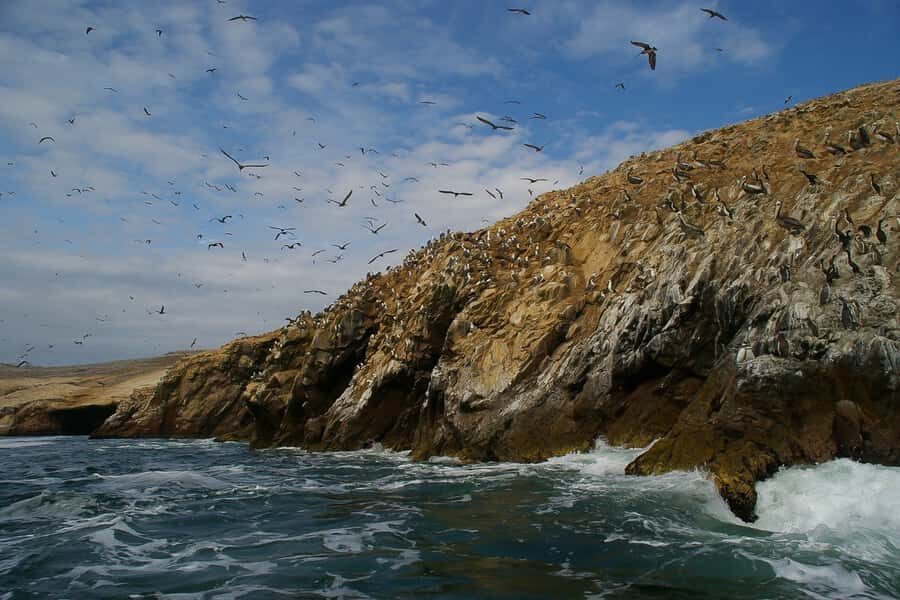
- Sea lions and penguins along rocky shores, with birds like pelicans and blue-footed boobies possible
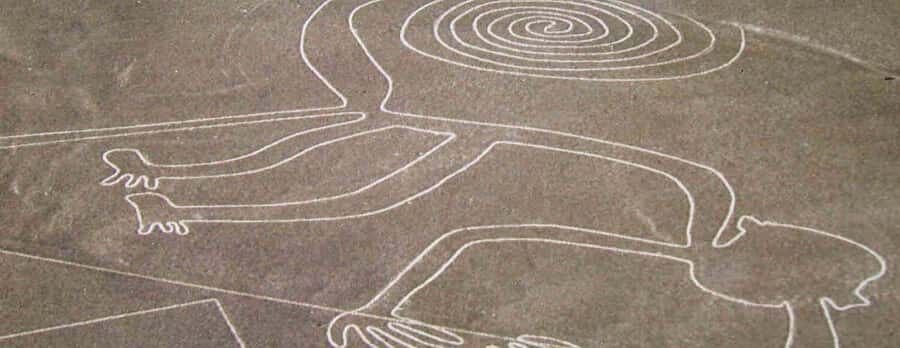
- Paracas Peninsula Candelabro: a mysterious hillside glyph you can’t fully explain
- Desert cliffs next to the ocean in Paracas National Reserve
- Cathedral viewpoints tied to a rock formation destroyed by a cataclysmic earthquake
- Playa Roja and Lagunillas: maroon-sand beaches that look like they belong on another planet
- Bilingual guidance (English/Spanish) that helps you connect the wildlife and geology
Speedboat Morning From Paracas: Pickup and First Big Sights
Your day starts with convenient hotel pickup in Paracas (and transfers are also offered for Pisco, but pickup rules can vary depending on where you’re staying). From there, you head to the pier and get on a speedboat for the Ballestas portion.
This part matters because Ballestas is best seen from the water, not from a viewpoint. The speedboat gets you onto the right stretch quickly, and you’ll have the chance to scan rocky outcrops for wildlife as you go. Expect a set rhythm: ride out, guided stops, then the return to the harbor.
Also plan for the “Peru on the coast” weather reality. Even when the air is comfortable, the ocean wind can turn the boat portion chilly. Bring the same common sense you’d use on a cold ferry ride: layers, sunglasses, and something that you don’t mind getting wet.
Islas Ballestas: Sea Lions, Penguins, and the Wildlife-Watching Sweet Spot
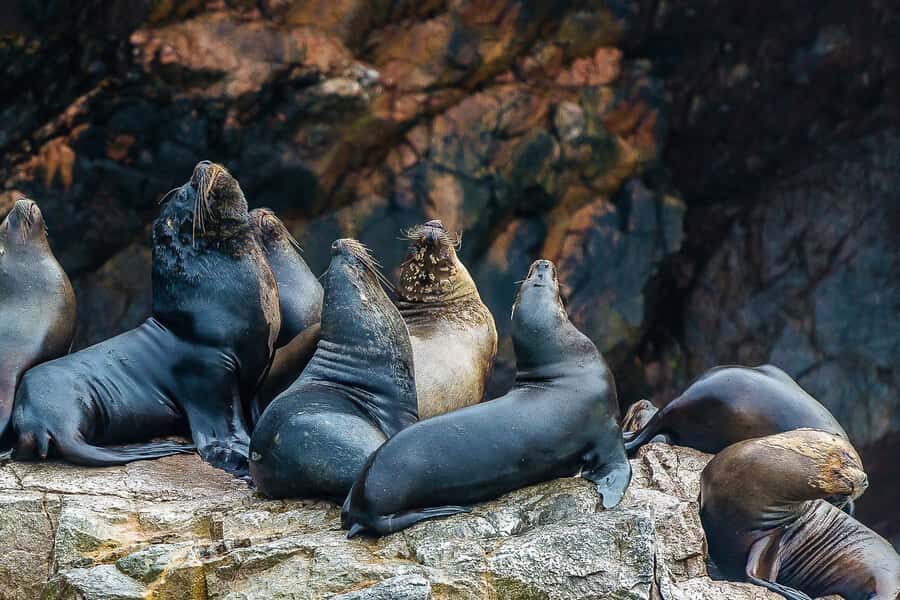
Ballestas Islands are famous for a reason: this is where the wildlife density feels almost unreal. From the boat, you’re looking at rocky shorelines packed with sea lions hauled out in huge groups. The guide will point out what you’re seeing and how the habitat supports so many animals in such a small area.
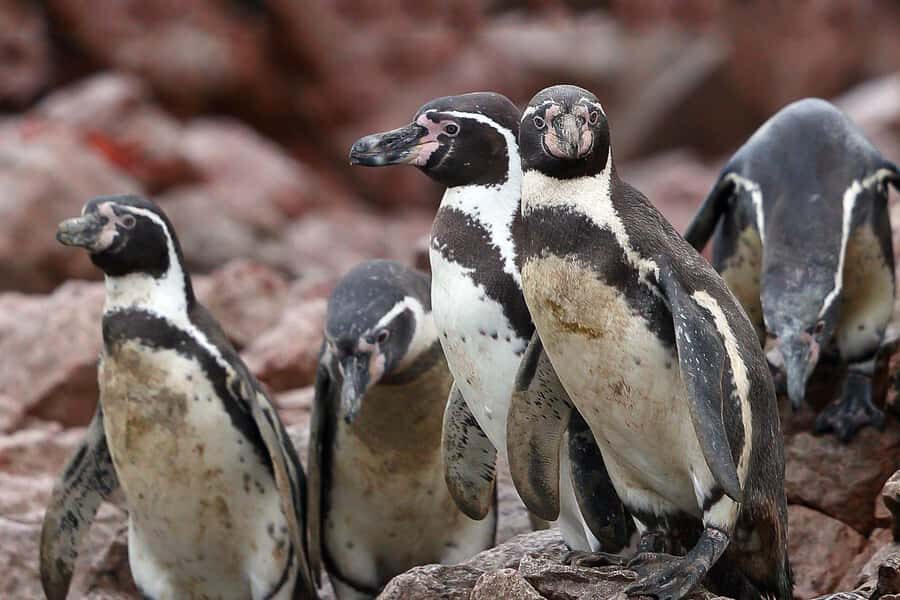
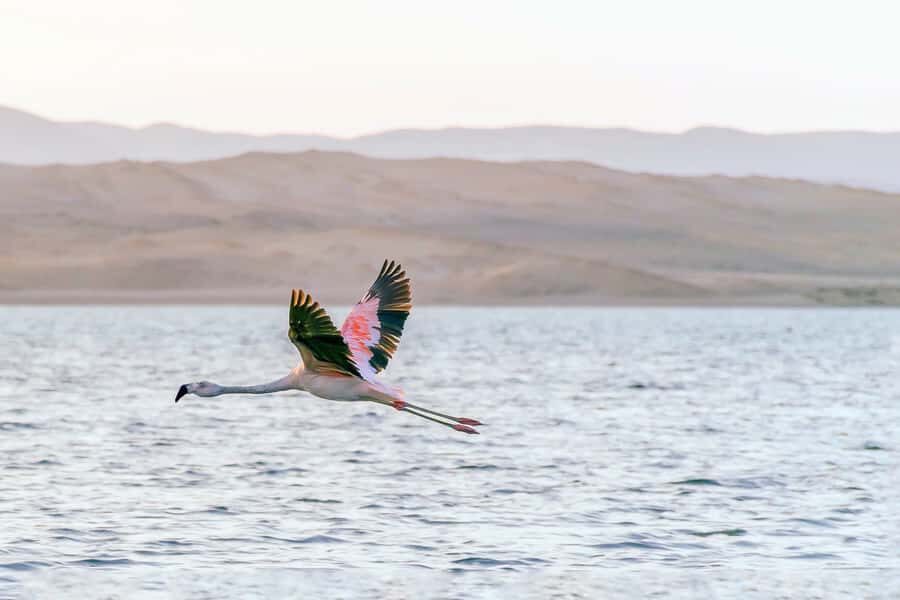
Penguins are a headline here too. You might spot them basking near the coast, and you may also see them shoot back into the water to feed in the turbid sea. Bird lovers often get extra rewards—some tours note pelicans and blue-footed boobies, and a few people even mention dolphins and whales when conditions line up.
One practical note: penguin sightings can vary by season and local conditions. If you’re visiting at a time when penguins are less visible offshore, your experience can still be excellent because the sea lion crowds and bird activity usually remain the anchor.
If you have motion sickness, take it seriously. A few guide-freezing comments in the feedback point to the idea that a bit of preparation can make the boat ride more pleasant. I’d treat this as a “dress for wind, expect spray” kind of outing, not a calm sightseeing cruise.
The Candelabro Stop on the Paracas Peninsula
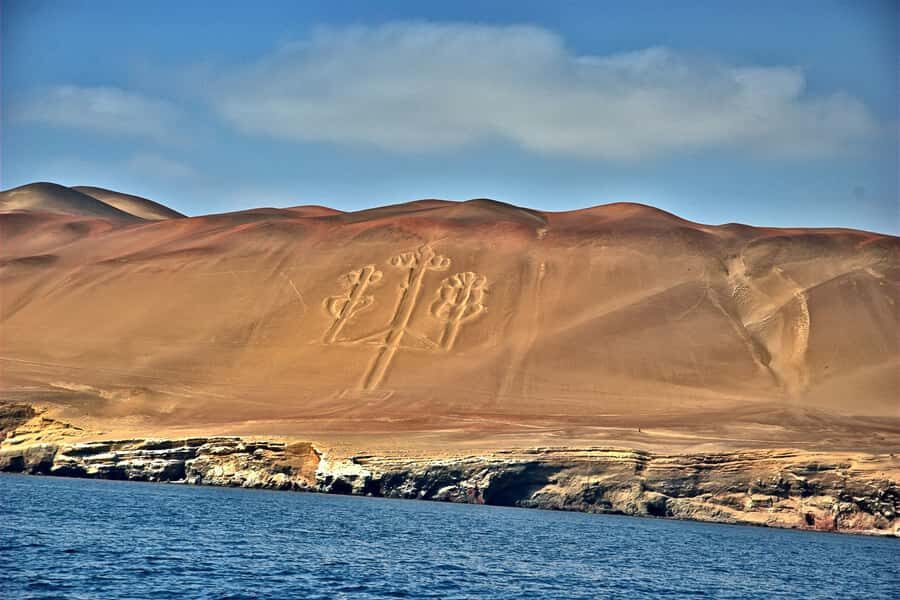
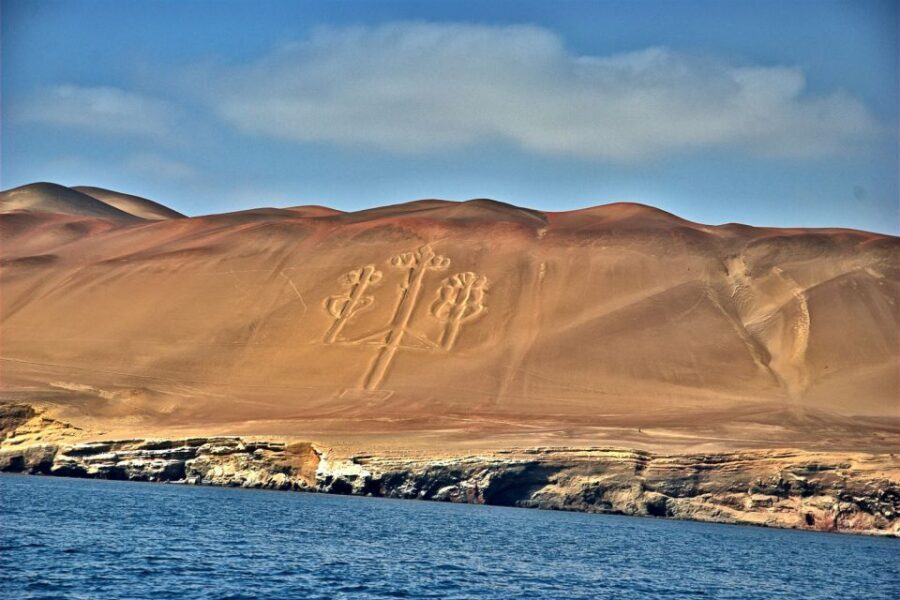
On the way to Ballestas, the boat makes time for a stop at the Paracas Peninsula to view the Candelabro. This is an enormous carved glyph on the hillside, and it’s one of those sights that stops people mid-sentence because it feels too big to be a simple art project—and yet no one can confidently say who made it or what it was meant for.
Why this stop is worth it: it adds human history to a day that could otherwise be purely wildlife-focused. You’re not just looking at animals and beaches. You’re seeing a coastal desert shaped by long periods of mystery, settlement, and culture—right alongside modern marine life.
Also, the viewing is from the water, so your best chance to see it clearly comes from staying alert when the captain and guide call out the location. Bring your eyes and your patience. This is a “glance, then refocus” kind of moment.
Paracas National Reserve by Van: Desert Cliffs, Cathedral Rocks, and Ocean Air
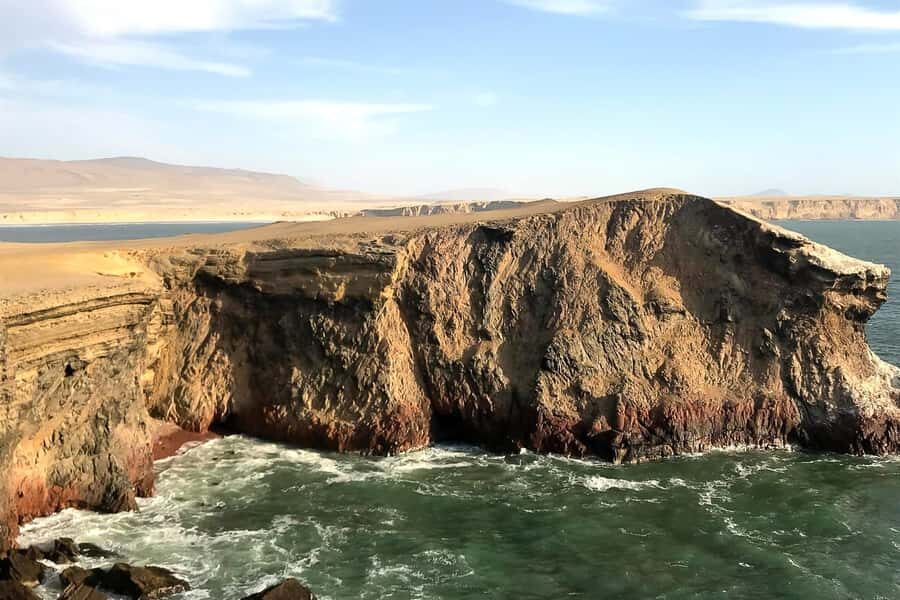
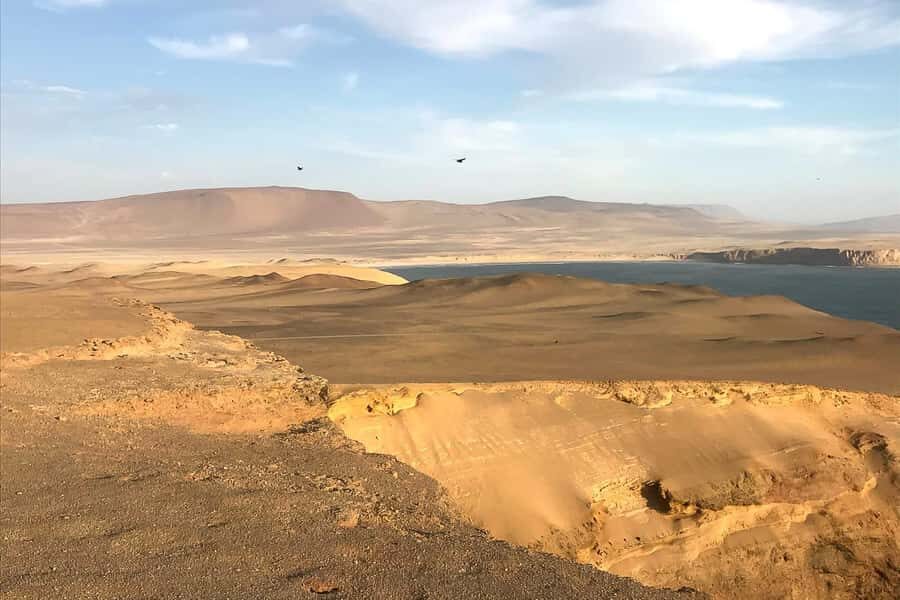
After the boat returns, you’ll shift gears from open water to an inland drive through Paracas National Reserve. The reserve is the second half of what makes this tour special: vast desert stretches sit next to the bright blue ocean, creating that stark, dramatic coastline look.
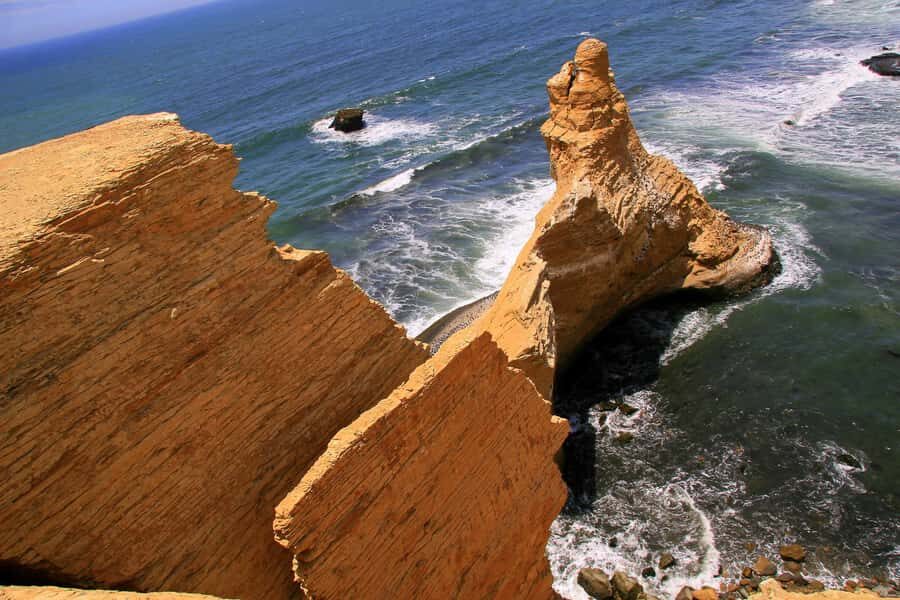
Driving through the reserve, you’ll reach several key viewpoints. One of the most talked-about is the Cathedral area. The name comes from a tall rock formation that once stood here; it was destroyed by a cataclysmic earthquake. Even if you’ve never studied geology, the stop helps you “read” the coastline: rocks here aren’t just scenery, they’re records of violent change.
You’ll also have a break point in the middle of the schedule with free time at a local café. That matters more than it sounds. The reserve drives can mean long stretches of sun, wind, and stopping for photos. A quick reset keeps the day comfortable and makes the later beach time feel unhurried.
Playa Roja and Lagunillas: Why Maroon Sand Feels Like a Planet Swap
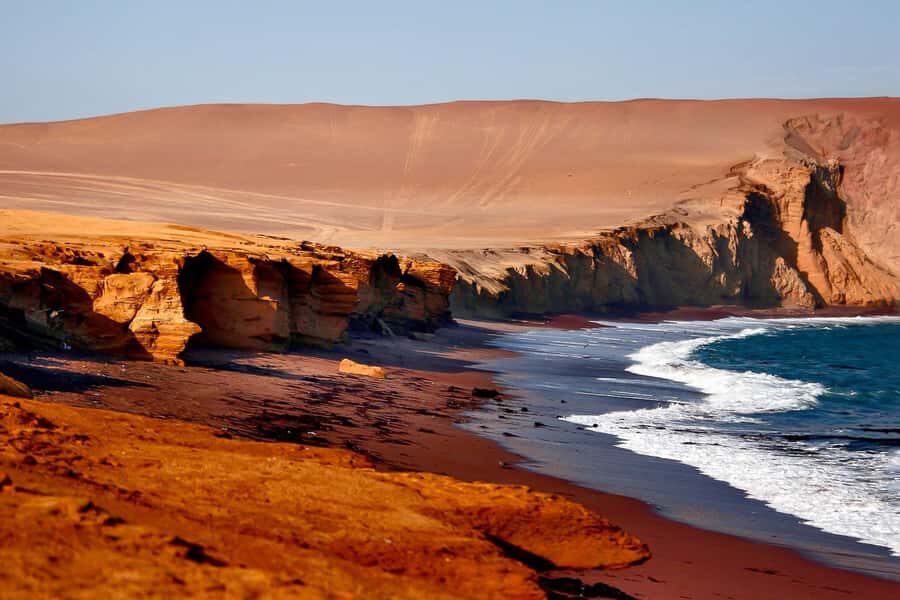
This is where the reserve earns its otherworldly reputation. The tour finishes with visits to Playa Roja and Lagunillas Beach—both known for their maroon-colored sand. The color isn’t just a visual trick; it gives the beaches a totally different tone than the pale sand you might expect on Peru’s coast.
Walking to the viewpoints (and taking photos) feels surreal because the contrast is so strong: red-brown sand, stark cliffs, and the blue ocean behind it. Even if you’re not a beach person, these two stops are a strong reason to choose this specific combined tour rather than doing islands only.
A practical tip: bring sunscreen seriously here. Desert + coastline sun can be intense, and while the ocean breeze helps, it doesn’t replace protection. Sunglasses and a hat also work overtime at these stops.
The Guide Makes the Day: How Bilingual Storytelling Changes the Experience
A big reason this experience stays popular is the guide quality. Many of the strongest comments mention guides like Olenka, Eduardo, Pablo He, and others (including specific drivers such as Jorge in some cases). What you’re looking for isn’t just facts. It’s the ability to connect birds, geology, and coastal desert conditions into a story that makes you look longer.
In the second half, the reserve guide tends to slow things down at the allowed viewpoints. People repeatedly liked getting enough time to take photos and actually look, not just stand in a line and move on. That makes a difference in a place like Paracas, where details—rock forms, shoreline patterns, and how the coastline works—are part of the payoff.
If you care about birding, you’ll also appreciate when the guide calls out what to look for. Even when wildlife numbers change, a good guide helps you shift from chasing a single species to noticing the whole system: sea lions, seabirds, and the way the coast feeds them.
Price and Value: Is $60 Worth It Here?
The listed price is $60 per person for a 5-hour outing. On paper, that might sound like it’s only “boat plus drive.” In practice, the value is in what’s bundled:
Included:
- Hotel pickup and drop-off in Paracas and Pisco
- Bilingual guide (English/Spanish)
- Boat tour to Ballestas Islands
- Transportation for the reserve portion
- Bottle of water
Not included:
- Adult entrance fees (22 Peruvian Soles per person; cash only)
- Kids entrance fees (16 Peruvian Soles per person; cash only)
- Meals and alcoholic drinks
So what are you really paying for? You’re paying for transport, timing, and expert help at two very different environments—ocean wildlife and desert geology. The entrances add a local cash cost, but the tour still does the hard part for you: getting you from your hotel to the pier, out onto the islands, and then efficiently through the reserve stops.
One more practical detail: the tour notes you can pay the local fee in USD (listed as $7 per person). That’s helpful if you don’t want to carry Peruvian Soles beyond what you need.
What to Pack (and What to Skip) for a Smoother Day
You’ll get the best results if you show up prepared for sun, wind, and ocean spray. Here’s what you’re told to bring:
- Passport or ID card
- Comfortable shoes
- Sunglasses
- Sun hat
- Sunscreen
And what to avoid:
- Pets
- Oversize luggage / large bags
- Smoking
- Alcohol and drugs
A smart packing strategy is to think in layers. Boat spray is real, and desert stops can get bright fast. If you’re bringing a phone, consider an extra protective layer and a way to keep it dry.
Who This Tour Fits Best (and Who Should Rethink It)
This is a great match if you want one efficient outing that covers:
- Coastal wildlife (Ballestas)
- Desert geology and coastal cliffs (Paracas National Reserve)
- Unique beach color (Playa Roja and Lagunillas)
It may not be a great fit if:
- You’re traveling with children under 5 (not suitable)
- You’re pregnant (not suitable)
- You rely on wheelchair use: the activity mentions wheelchair accessibility, but it also says it’s not suitable for wheelchair users. That contradiction is worth resolving before you book.
If you’re short on time in the area—this is one of the better ways to get both the islands and the reserve without trying to stitch together transportation yourself.
Should You Book This Paracas & Ballestas Tour?
I’d book it if you want a single, well-structured day that hits the big Paracas highlights: wildlife on the water, then desert viewpoints and maroon-sand beaches. The best reason is simple: the tour doesn’t just show you scenery. It helps you understand what you’re looking at, especially when the guide brings the desert and coastline to life.
I would pause and plan extra carefully if you’re sensitive to cold or motion sickness on boats. Also budget for the fact that entrance fees are paid locally in cash at the harbor main gate.
If you’re traveling in the Paracas area and want maximum variety in five hours, this is a strong bet—especially if you’re the kind of person who likes animals, geology, and ocean air in the same day.
FAQ
FAQ
How long is the Paracas and Ballestas tour?
The duration is 5 hours.
What is included in the price, and what costs extra?
The tour price includes hotel pickup and drop-off, a bilingual guide (English/Spanish), the boat tour to Ballestas, reserve transportation, and a bottle of water. Entrance fees are paid locally at the harbor main gate: 22 Peruvian Soles per adult (cash only) and 16 Peruvian Soles per child (cash only). You can also pay USD 7 per person for the local fee.
What language is the guide?
The guide provides live interpretation in Spanish and English.
Do I need cash for the entrance fees?
Yes. Entrance fees are paid locally at the harbor main gate and are cash-only. USD payment is also listed as an option (USD 7 per person).
Is pickup included from Paracas?
Pickup is included in Paracas and Pisco, but pickup details note that pickups are within Paracas town centre only. If you stay in other towns such as Pisco, Santa Cruz, or San Andrés, you should contact the operator since pickup may have an additional 30 soles transfer cost.
What should I bring for the tour?
Bring a passport or ID card, comfortable shoes, sunglasses, a sun hat, and sunscreen.
Is this tour suitable for young children, pregnancy, or wheelchair users?
It is not suitable for children under 5 or for pregnant women. For wheelchair use, the information is inconsistent (it says wheelchair accessible but also states it’s not suitable for wheelchair users), so you should confirm before booking.