REVIEW · PARACAS
From San Martin Port: Ballestas Island & Paracas Reserve
Book on GetYourGuide →Operated by Tangol · Bookable on GetYourGuide
Ballestas Islands are nature’s show, with penguins close enough to feel real. I love the wildlife viewing—sea lions, birds, and Humboldt penguins—paired with the guided Paracas Reserve stops, from the interpretation center to Cathedral viewpoints. One thing to watch: language coverage can vary, and the transfer driver is only Spanish, so English details depend on who you get.
This tour is built as an early-morning sprint: bus to the pier, speedboat out to the islands, then inland to Paracas desert highlights before heading back to Puerto San Martín. You’ll pass the famous Candelabro geoglyph on the way out, then later ride through desert scenery for iconic rock and beach stops. It’s about 5 hours total, and it’s a strong value if you plan for the local entrance fee and pack for wind and sun.
In This Review
- Key Points to Know Before You Go
- Ballestas Islands: the Wildlife Ride That’s Worth the Early Start
- From Puerto San Martín to El Chaco: How the Day Flows (and Where Delays Can Happen)
- Passing the Candelabro: a 180-Meter Geoglyph Trip Without the Detour Hassle
- Ballestas Wildlife: Birds and Sea Lions You’ll Want to Watch, Not Just Photograph
- Paracas National Reserve: From Interpretation Center to Desert Viewpoints
- Cathedral Viewpoint and the Earthquake Story You Can Still See
- Red Beach and Lagunillas: Two Shore Stops With Very Different Feel
- Language and Guide Reality: Spanish-First Transfers Can Affect Your Experience
- Price and Value: Why $74 Can Be a Good Deal (If You Budget the Entrance Fee)
- What to Pack for Paracas: Wind, Sun, and Quick Temperature Swings
- Who This Tour Suits Best (and Who Should Skip It)
- Should You Book This Ballestas and Paracas Tour?
- FAQ
- How long is the tour from Puerto San Martín?
- What’s included in the price?
- Are entrance fees included?
- Is food and drinks included?
- What language will I hear during the transfers and tour?
- Is this tour suitable for everyone?
Key Points to Know Before You Go
- Speedboat time is the main event: about 2 hours on the Ballestas Islands wildlife circuit.
- Candelabro is on the route: a 180-meter geoglyph roughly 2,500 years old, with links suggested to the Nazca Lines.
- You’ll scan for guano birds: Peruvian booby, Peruvian diving-petrel, and Guanay cormorant are specifically mentioned.
- Paracas goes beyond views: an interpretation center covers flora, fauna, and marine fossils.
- Cathedral still shows the damage: earthquake damage in 2007, but it remains an impressive World Heritage–listed rock formation.
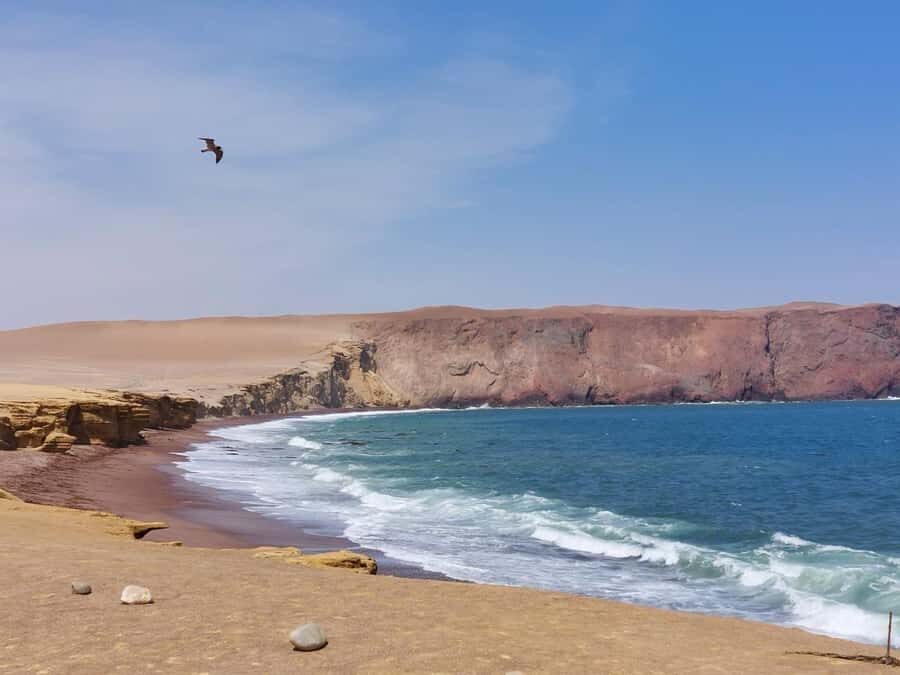
- Red Beach is the signature color stop: reddish sand tied to ancient volcanic eruptions, plus a Lagunillas Beach fishing stop.
Ballestas Islands: the Wildlife Ride That’s Worth the Early Start
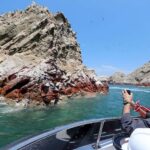
The payoff here is simple: Ballestas Islands are packed with wildlife, and you see it from the water. The tour is designed so you get time out on the sea—about 2 hours—for marine life viewing and wildlife spotting. This matters because birds and sea mammals don’t hang around for a photo session. You need real time on the route to catch good moments.
I also like that the tour doesn’t treat wildlife as background. It’s framed as the living engine of the reserve: guano production, nesting birds, and the food web that keeps it all going. That makes your sightings more than just spotting. You start noticing patterns, like how concentrated bird activity can be around the island areas.
One practical note: expect cool wind and sea spray. Even on a sunny day, the ocean can feel sharp. Bring the windbreaker you plan to use later, not the one you packed for a museum visit.
You can also read our reviews of more tours and experiences in Paracas.

From Puerto San Martín to El Chaco: How the Day Flows (and Where Delays Can Happen)
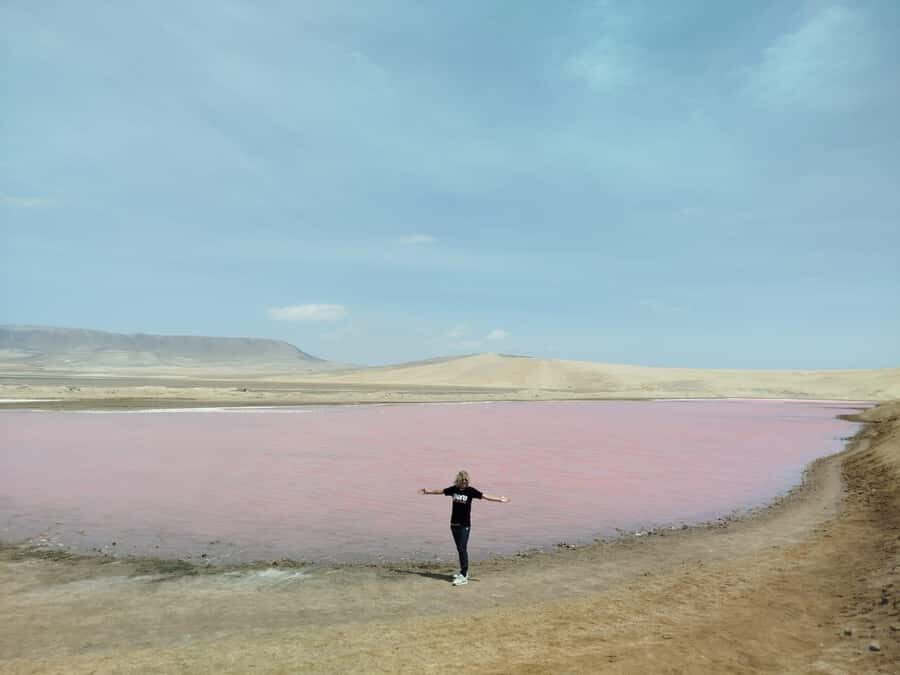
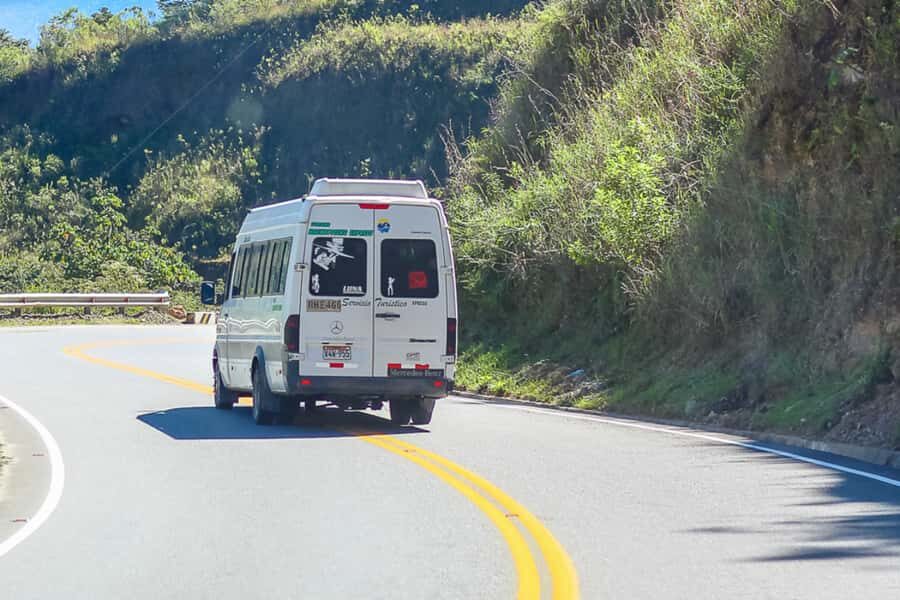
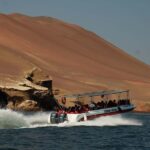
Your tour starts at Terminal Portuario General San Martín in Puerto San Martín. Then you take a bus/coach for about 20 minutes to the traditional pier of El Chaco. From there, you board a speedboat with the rest of the group.
That sequence is smooth when things run on time. But any coastal departure can get chaotic when groups stack up. You may run into crowded queues around boarding, and there can be some waiting while the group is assembled. It’s not the kind of tour where you want to be mentally strict about minutes.
To stay calm: assume you’ll spend a little extra time around check-in and boarding. If you’re the type who hates waiting, bring a snack, water, and something to do while you stand there. Yes, it’s basic advice. Yes, it saves the day.
Passing the Candelabro: a 180-Meter Geoglyph Trip Without the Detour Hassle
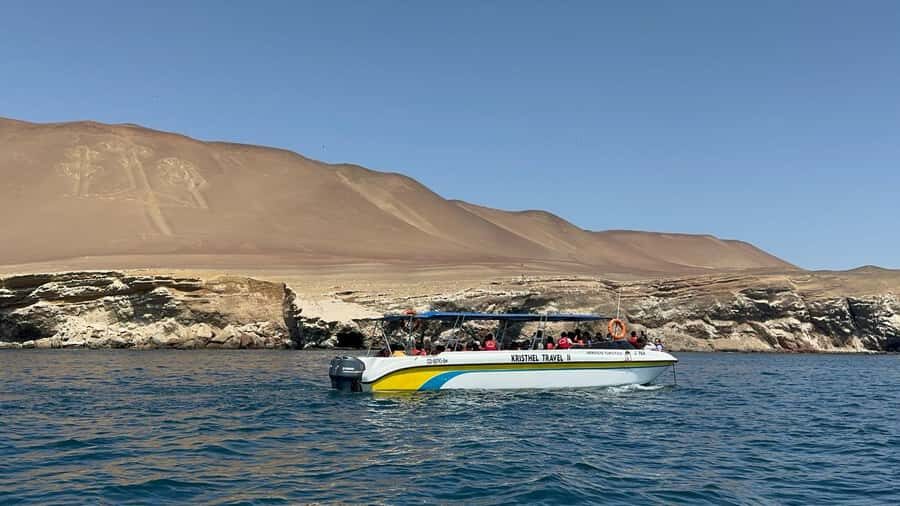
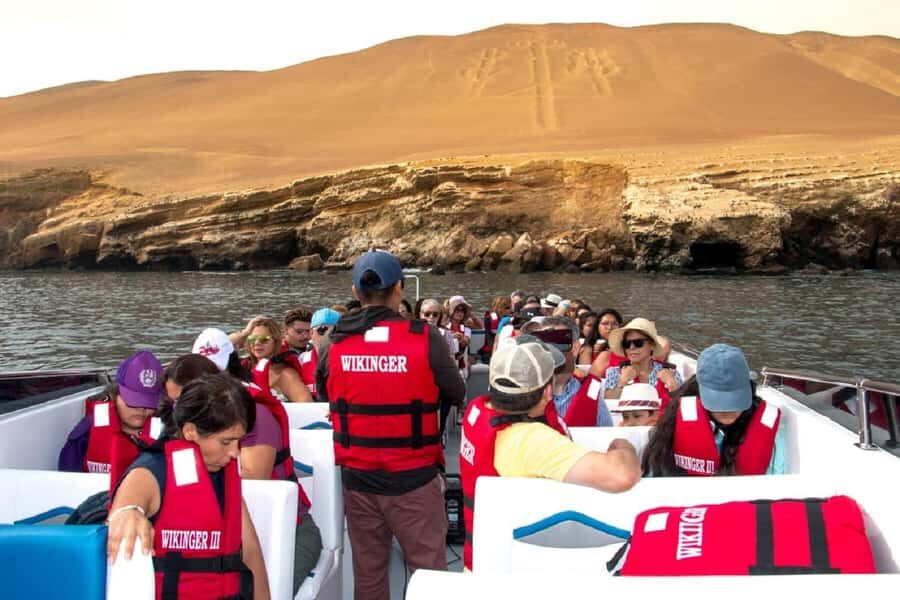
On the speedboat route toward the islands, you’ll first pass Candelabro. This geoglyph is described as about 180 meters long and roughly 2,500 years old, and its exact purpose remains unknown. Some studies suggest a relationship to the famous Nazca Lines.
Even if you’re not a geoglyph scholar, it’s a neat momentum-builder. You’re not just going out to birds—you’re also seeing a clue to the region’s long human presence. And you’re seeing it from the coast as part of the same journey, not as a separate side trip.
Because it’s passed on the way, don’t expect a long stop where you can get out and walk around. Think of it as a moving panorama moment: look, take a quick photo if you get a clear angle, then get ready for the wildlife once the islands come into view.
Ballestas Wildlife: Birds and Sea Lions You’ll Want to Watch, Not Just Photograph
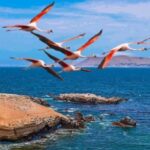
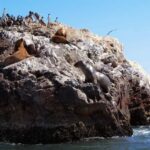
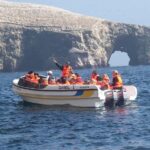
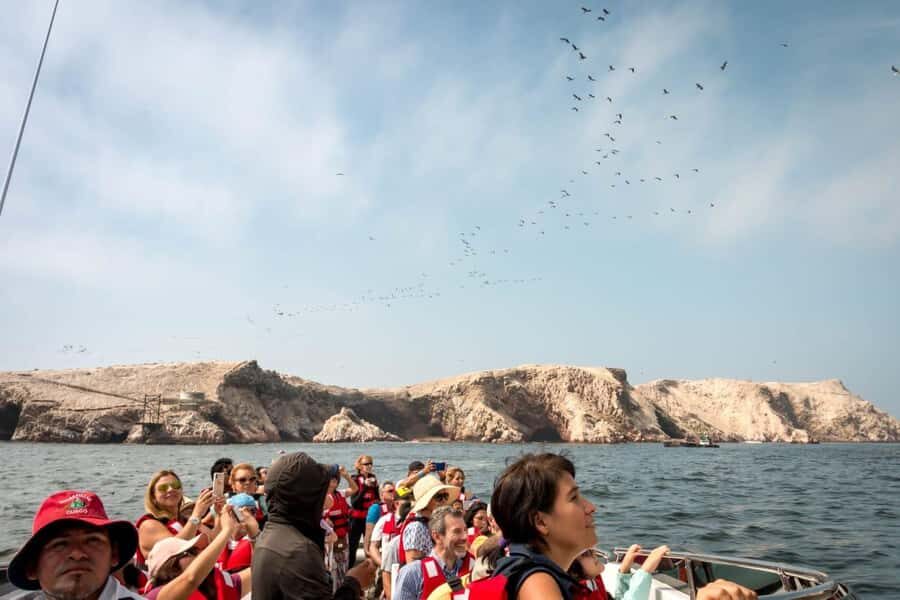
Once you reach the Ballestas Islands, the tour shifts into real-time nature watching. The experience is about marine life viewing and wildlife viewing, with the boat routing you around where animals are likely to appear.
You’ll have a chance to spot:
- Boobies and pelicans
- Sea lions
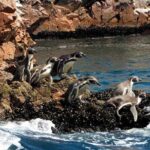
- Humboldt penguins
- Multiple bird species linked to the guano ecosystem
The tour also points you toward guano birds, including the Peruvian booby, Peruvian diving-petrel, and Guanay cormorant. That detail helps your eyes. If you know what you’re scanning for, you spend less time staring blankly at the horizon.
A practical tip: bring binoculars if you can. The tour materials explicitly suggest them, and it makes a difference for spotting birds at distance. On the boat, you can also play a game with yourself: pick one species, track where it flies or perches, then see how quickly others show up nearby.
And if you care about photos: you’ll likely get better angles when the captain keeps both sides of the boat in the game. You can’t control everything, but the good operators watch for sightlines so you’re not stuck staring at the same view for the whole ride.
Paracas National Reserve: From Interpretation Center to Desert Viewpoints
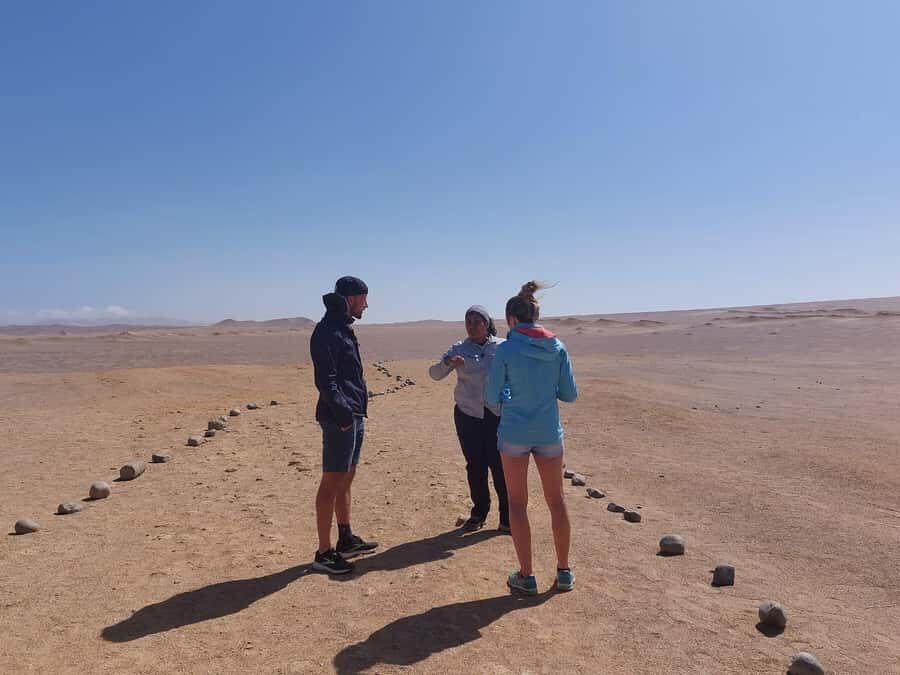
After returning to the pier, the tour continues to Paracas National Reserve. There’s another bus/coach ride of about 25 minutes to get you in place.
Inside the reserve, you get a guided visit at the interpretation center (about 100 minutes total for the reserve portion). The interpretation center is where you learn the structure of the ecosystem: flora and fauna, plus marine fossils that tell ancient stories. That’s valuable because Paracas isn’t only about looks. It’s a place where geology and life are tightly connected, and the fossils help you connect today’s coastline to older worlds.
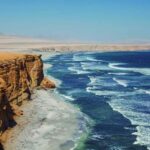
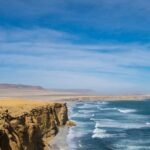
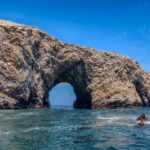
Then you head out through the Paracas desert to a viewpoint for the Cathedral. The tour frames the Cathedral as an iconic rock formation that’s been declared World Heritage, and notes damage from an earthquake in 2007. You still see its scale and drama even with that history.
This part is great if you enjoy seeing how one region can switch moods fast: open water → desert roads → hard rock viewpoints. It’s one day, but it feels like three settings.


Cathedral Viewpoint and the Earthquake Story You Can Still See
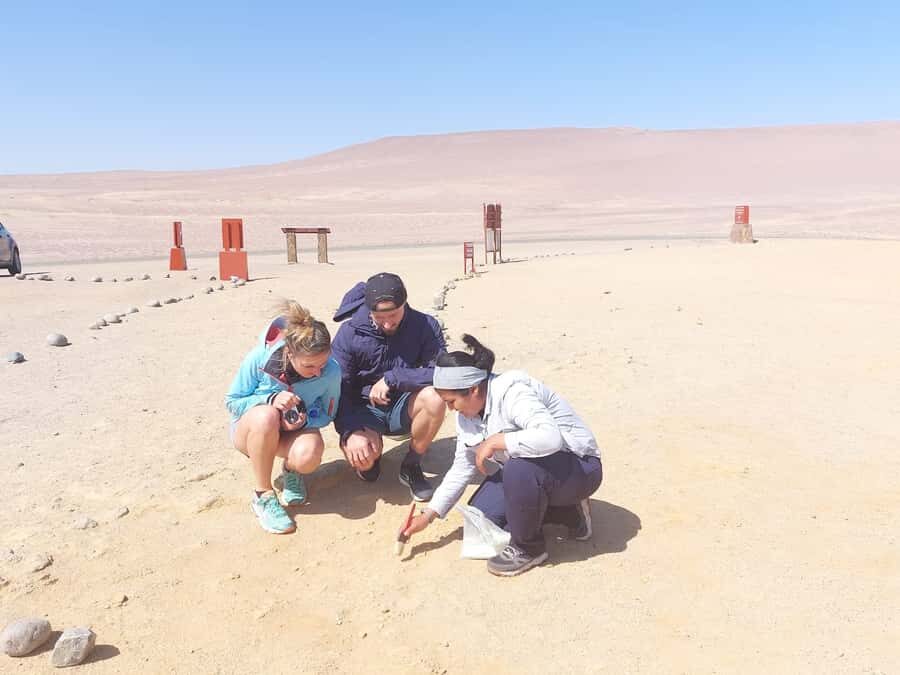
The Cathedral stop is the moment where Paracas looks less like a beach day and more like a geology lesson.
The key detail is that it’s not presented as frozen-in-time. The rock formation suffered damage in the 2007 earthquake, but remains impressive. That gives you permission to look closely. Instead of hunting for a single perfect angle, try to notice changes in shape and the way the formation is layered or fractured.
If you like photos, go for patience. Desert light can shift quickly. If clouds roll in, wait a minute—colors often come back stronger.
And if you’re traveling with anyone who finds nature tours repetitive, this stop usually helps. Cathedral-style rock formations give people a clear “wow” that doesn’t require bird-spotting skills.
Red Beach and Lagunillas: Two Shore Stops With Very Different Feel
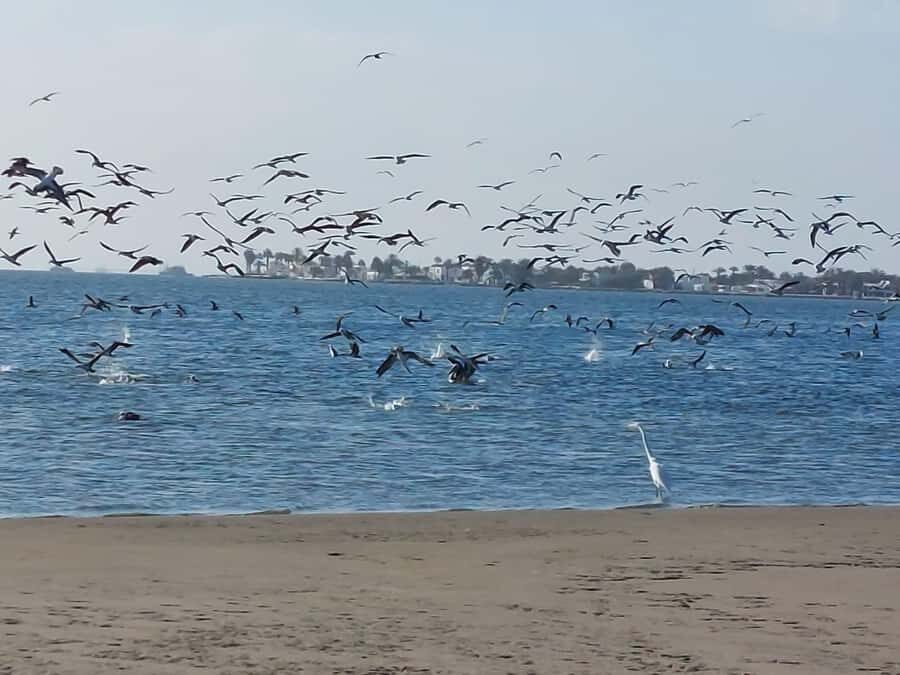
The tour includes Red Beach, highlighted as unique in the world, with reddish sand caused by ancient volcanic eruptions. This is one of those stops where your first thought might be: is this really natural? Then you step closer and the color makes sense. It’s a visual break from the usual postcard sand tones.
After Red Beach, you’ll also stop at Lagunillas Beach, described as a charming fishing resort. The contrast is the point: one beach for color and geology, the other for the everyday feel of coastal life.
Both stops are useful for perspective. Wildlife is the headline on the boat. But Paracas isn’t only wildlife. It’s also a coastline where people fish and live along the rhythm of the sea.
Language and Guide Reality: Spanish-First Transfers Can Affect Your Experience
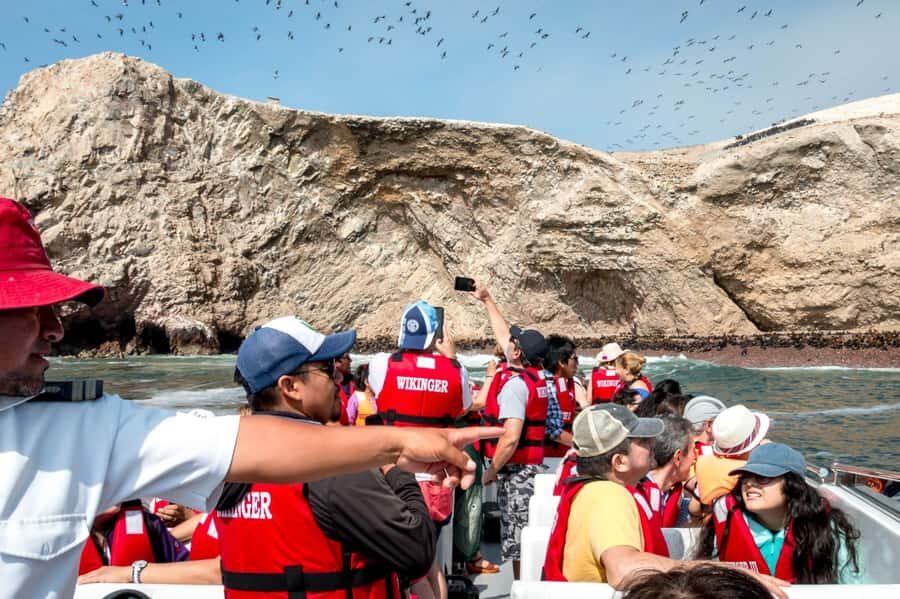
Here’s the honest planning issue: the tour includes a Spanish-speaking driver for transfers, and that can limit detailed information during the bus rides. The guide is listed as available in Spanish and English, but the exact match-up can matter.
If you’re counting on English commentary during the entire day, set expectations accordingly. It’s common for the transfer driver to handle logistics in Spanish, while a guide covers the meaning of stops in both languages.
In practice, this means:
- You may get full English explanations at the reserve and key points.
- You might get more limited English during transportation segments.
- On busy departure days, language support can depend on how groups get organized at the pier.
The good news: when an English-speaking guide is in place, the educational parts land well. Paracas becomes easier to understand, and the bird and geology facts feel tied to what you see.
Price and Value: Why $74 Can Be a Good Deal (If You Budget the Entrance Fee)
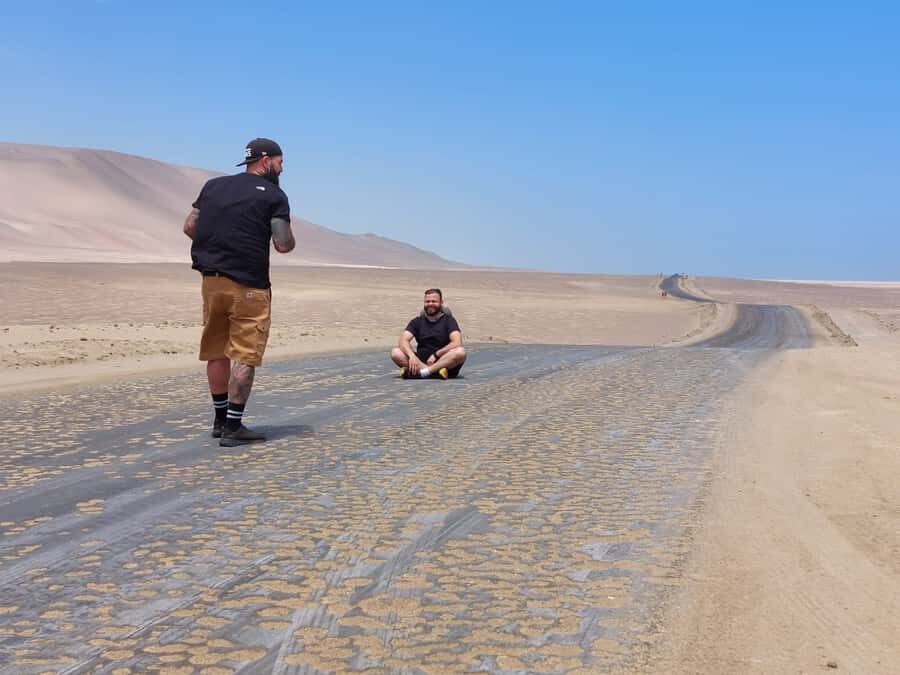
The listed price is $74 per person for about 5 hours. That’s attractive for a combo tour because it bundles:
- Roundtrip transportation to/from San Martín Port
- Speedboat to the Ballestas Islands
- Guided local tour in Spanish and English
- The Paracas National Reserve tour
What’s not included is important: entrance fees of S/ 22.00 (paid locally). If you show up without cash, you’ll feel it. So bring enough cash for the reserve fees and any small extras you decide you need on the day.
Food and drinks aren’t included either. If you’re going early, eat something before you go. Then pack snacks for the boat/bus waiting gaps.
Value isn’t only the ticket cost. It’s whether you get enough time where it matters. Here, you do: 2 hours on the islands, plus a guided reserve visit long enough to cover the center and viewpoints.
What to Pack for Paracas: Wind, Sun, and Quick Temperature Swings
This tour operates on a coast-to-desert rhythm, so you need gear that works across wind and brightness. The tour guidance specifically suggests:
- Passport
- Comfortable shoes
- Windbreaker
- Sunglasses
- Hat
- Sunscreen
- Jacket (worth it in coastal wind)
- Snacks
- Sunscreen
- Cash
- Travel insurance
- Outdoor clothing
- Binoculars (very useful for bird spotting)
If you’ve ever taken a boat ride near cold currents, you know the trick: it can feel colder than you expect when moving. A windbreaker beats “just a hoodie” because it blocks spray and gusts.
Also, skip anything that makes you miserable in a group setting. Bring a small bag you can keep close. You’ll be moving between bus and boat and then walking short distances in the reserve.
Who This Tour Suits Best (and Who Should Skip It)
This experience is best for people who want a structured half-day that hits the region’s big natural highlights without needing to plan transport and timing yourself.
It may be a poor fit if you:
- Are pregnant
- Have back problems
Also, the tour doesn’t allow alcohol and drugs, so it stays focused on sightseeing.
If you love animals, you’ll enjoy it most. If you love geology too, Paracas adds that second layer through the Cathedral viewpoint and Red Beach’s volcanic sand color.
And if you’re traveling with kids, the bird and sea-lion angle is usually a hit—just remember the boat ride can be windy, and you’ll want them dressed for it.
Should You Book This Ballestas and Paracas Tour?
I’d book it if you want one efficient outing that combines:
- a speedboat wildlife circuit
- a pass by Candelabro
- a guided Paracas National Reserve visit with fossils, desert viewpoints, and the famous Cathedral area
- a stop at Red Beach for the color show, plus Lagunillas for a human-scale beach moment
I’d think twice if you need English commentary guaranteed during every single segment. The transfer driver is Spanish-only, and how much English you hear can depend on the guide assignment on the day. If English is your top requirement, plan to focus your English energy on the reserve portion, where the guided tour is central.
If you’re flexible, this tour makes a strong one-day case for Paracas. It’s not about one perfect photo. It’s about seeing how wildlife, geology, and coastal life work together in a compact 5 hours.
FAQ
How long is the tour from Puerto San Martín?
The total duration is about 5 hours, including transportation, the speedboat portion, and the Paracas National Reserve visit.
What’s included in the price?
Roundtrip transportation to/from San Martín Port, a speedboat to the Ballestas Islands, and a guided tour in Spanish and English, plus the Paracas National Reserve tour are included.
Are entrance fees included?
No. Entrance fees are listed as S/ 22.00 Peruvian soles and are payable locally.
Is food and drinks included?
No. Food and drinks are not included, so it’s smart to bring snacks.
What language will I hear during the transfers and tour?
The driver is Spanish-speaking for the transfers. The local guided tour is available in Spanish and English.
Is this tour suitable for everyone?
No. It’s not suitable for pregnant women or people with back problems. Alcohol and drugs are also not allowed.