REVIEW · MARAS
Maras Moray
Book on GetYourGuide →Operated by Libertrek Peru Travel Agency · Bookable on GetYourGuide
Cusco tours can be a lot. This one is a tight route with big scenery and hands-on local crafts. You get Moray’s circular terraces and then the Maras salt mines, both set high in the Andes. I also really like how the pacing leaves enough time at each stop, especially if you want photos. One thing to consider: if it’s your first day in Cusco and the altitude has you a little foggy, the guide may move fairly quickly with explanations.
You’ll start with a morning pickup around 08:30, ride out by tourist transport, and be back in Cusco after about 6 hours. It’s not a hard hike tour, but you are going up and out into high-country weather. Also note it’s not suitable for people with mobility impairments.
In This Review
- Key Reasons You’ll Like Maras Moray
- The Big Picture: What This Half-Day Trip Actually Delivers
- Pickup, Timing, and Getting Comfortable in Cusco Altitude
- Chinchero Textile Stop: Wool, Natural Dyes, and Inca-Style Craft
- Moray: Circular Terraces and the Idea of Testing the Land
- Maras Salt Mines: Thousands of Pans and Water That Creates Salt
- How Long You Really Spend at Each Stop
- Price and Value: What You Pay, What You’ll Still Owe
- What to Bring (So You Enjoy It Instead of Surviving It)
- Who This Tour Is Best For
- Small Details That Can Make or Break the Day
- Should You Book Maras Moray?
- FAQ
- How long is the Maras Moray tour?
- What time does pickup happen?
- Is hotel pickup included?
- What languages are the guides?
- Are entrance fees included in the price?
- Is there food included?
- Do I need to be very physically fit?
- Is the tour offered every day?
- Can I cancel for a refund?
Key Reasons You’ll Like Maras Moray
- Circular Inca terraces at Moray that were used for agricultural experiments, not just viewing.
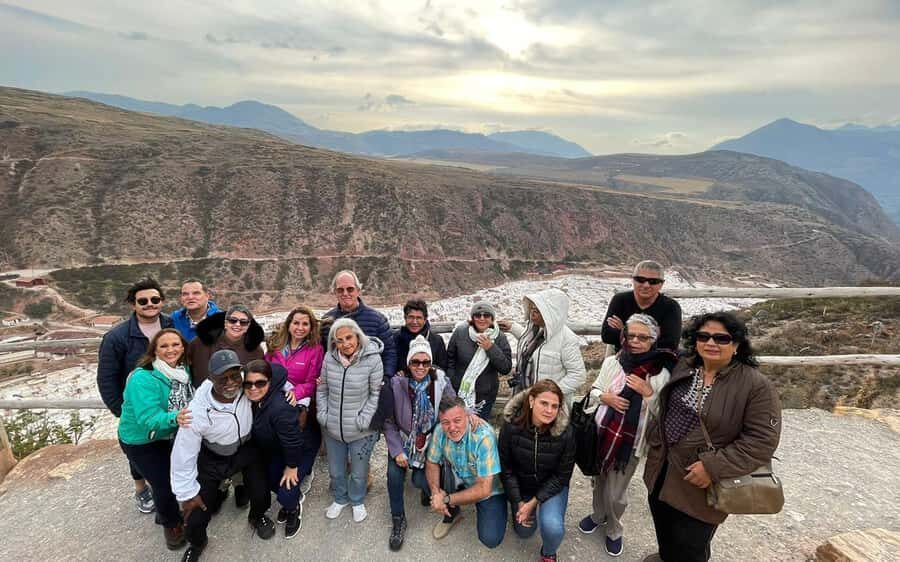
- Maras salt mines with thousands of pans fed by mineral-rich water from the mountains.
- Chinchero textile stop focused on natural dyes made from materials used for generations.
- Bilingual guiding in English and Spanish, with time to pause for photos.
- A half-day format that avoids the full-day grind from Cusco.
The Big Picture: What This Half-Day Trip Actually Delivers
This tour is built around three places, and each one teaches you something different: how the Incas experimented with crops, how locals dyed and processed wool in the Andes, and how salt is made at altitude. If you like travel that helps you read the landscape instead of just staring at it, this hits the mark.
Moray and Maras are both dramatic visually, but the value is in the “why.” At Moray, you’re not just seeing terraces. You’re seeing an experimental setup the Incas used to test growing conditions. At Maras, the salt story is tied to water sources and sodium chloride, and you get to look across a large working saltfield that’s producing at more than 3,000 meters.
The route also matters. Because it’s about 6 hours, you’re not committing your whole day in Cusco. That makes it a smart choice if you only have a day or two, or if you want a second taste of the Sacred Valley without burning out.
You can also read our reviews of more tours and experiences in Maras.
Pickup, Timing, and Getting Comfortable in Cusco Altitude
Pickup is included, and the tour starts around 08:30. The guide will call your name, and you should wait at the reception about 5 minutes before pickup. Then it’s straight into the ride.
You’ll cover a lot of viewpoints and scenery, but the tour does not require high physical effort. That said, you’re still at high altitude. If you’re arriving in Cusco and feel heavy-headed, give yourself a little grace. One helpful tip: plan to move slowly at the first stop, and don’t force fast conversation right away. The guide may speak briskly as they manage explanations for the group, and you’ll absorb more if you take your time.
Bring layers. Even when Cusco mornings look calm, the high places can feel colder, windier, and harsher than the city.
Chinchero Textile Stop: Wool, Natural Dyes, and Inca-Style Craft
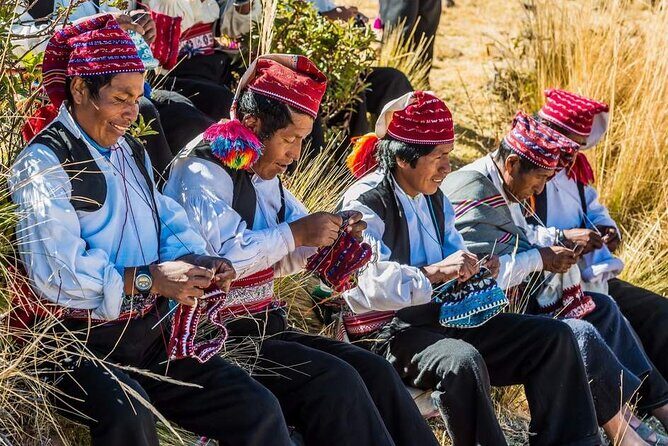
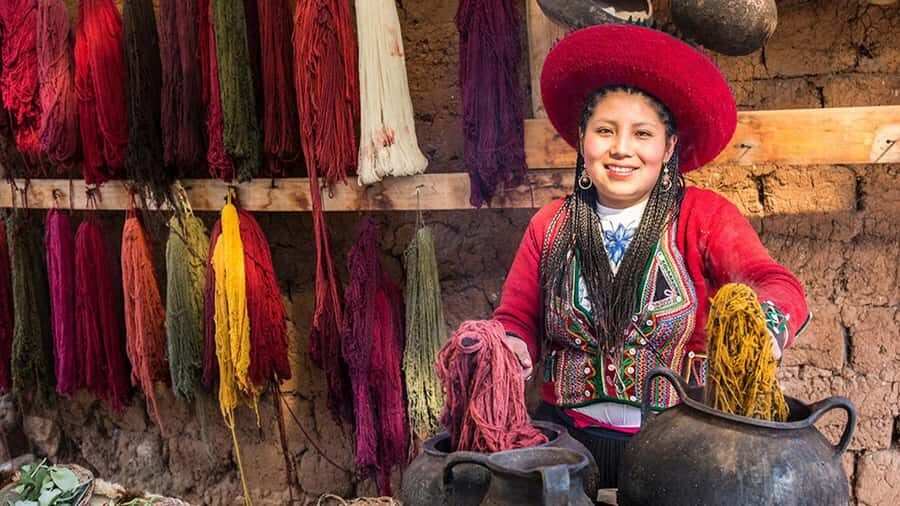
Before reaching Moray, you make a stop in Chinchero, a town known for artisanal textile production with techniques passed down for generations since the Inca era. This stop is especially good if you like seeing skills that are still being used, not just ruins.
At a textile center, you can watch processes connected to coloring llama or alpaca wool. The emphasis here is on dyes based on natural materials, which is part of what makes the crafts feel grounded. You’re not just buying a finished product. You’re learning how colors are made and why certain materials matter for the final result.
A practical note: the stopping format can be brief. So if you’re shopping, don’t wander aimlessly expecting a lot of time at multiple sales counters. Decide what you want to understand—dye colors, wool processing, or just a quick look—then use the time efficiently.
Also, bring your camera, but remember you may need to ask before photographing certain hands-on processes.
Moray: Circular Terraces and the Idea of Testing the Land
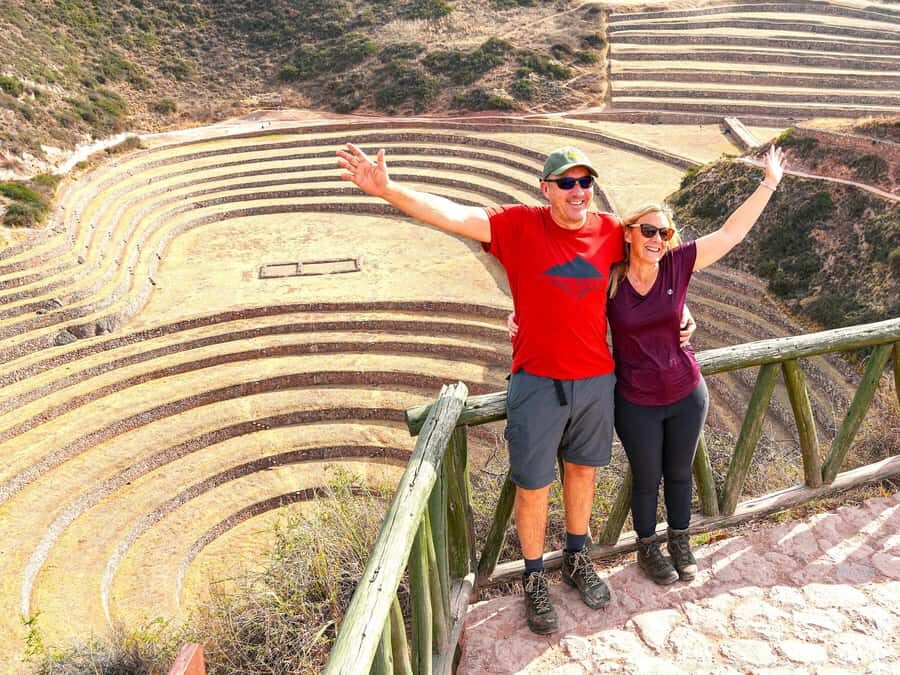
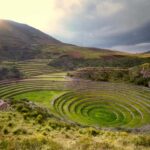
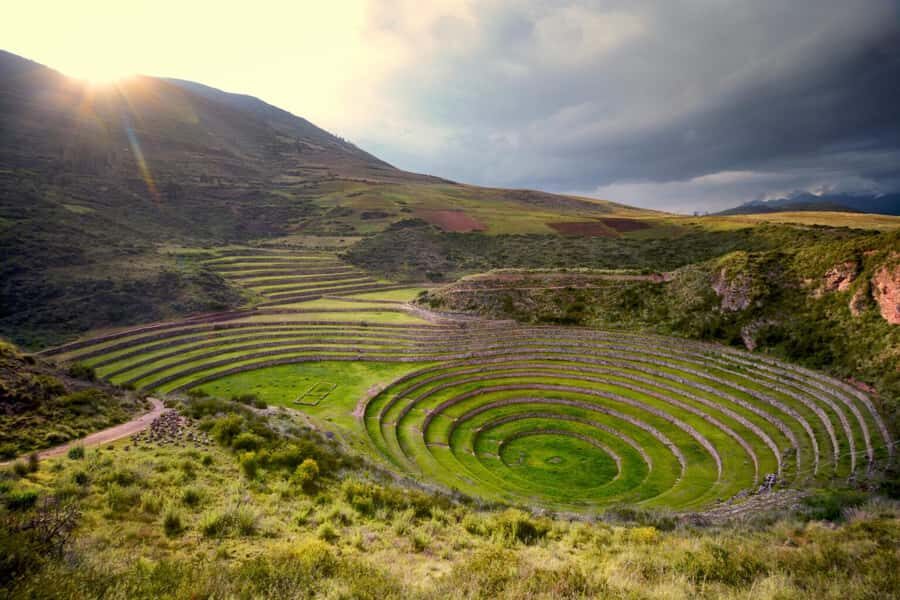
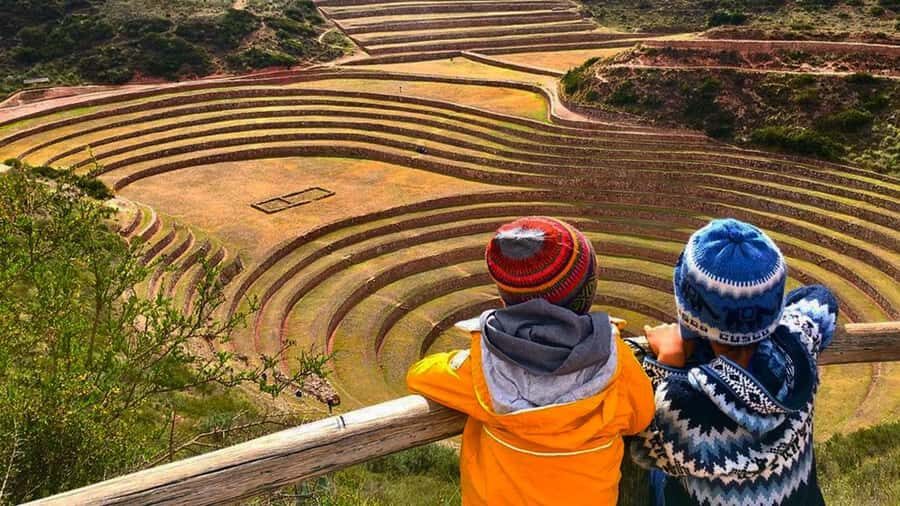
After Chinchero, you head to Moray, the agricultural park famous for its circular terraces. These are unique among Inca terrace constructions because they’re arranged in that circular pattern.
What makes Moray more interesting than a simple viewpoint is the purpose. These terraces functioned as an experimental site—a place to test the obtaining and domestication of crops and varieties. You’ll hear it connected to staples like corn, potatoes, olluco, and others.
Here’s why you’ll enjoy it: standing in front of those rings helps you understand how the Incas read microclimates. The terraces change conditions like exposure and temperature, which allowed them to experiment with what could grow where. It turns the landscape into a lab you can see with your own eyes.
You also get mountain context while you’re there. The region’s high peaks were considered apus, or deities, in Inca times. Even without a dramatic explanation, you’ll feel how spiritual and practical this worldview could be—because the mountains shape everything: weather, farming, and travel.
The only caution: Moray is popular, so expect that the group will move as a unit. If you want a longer personal walk around the terraces, take cues from your guide and find a moment when you’re not blocking others.
Maras Salt Mines: Thousands of Pans and Water That Creates Salt
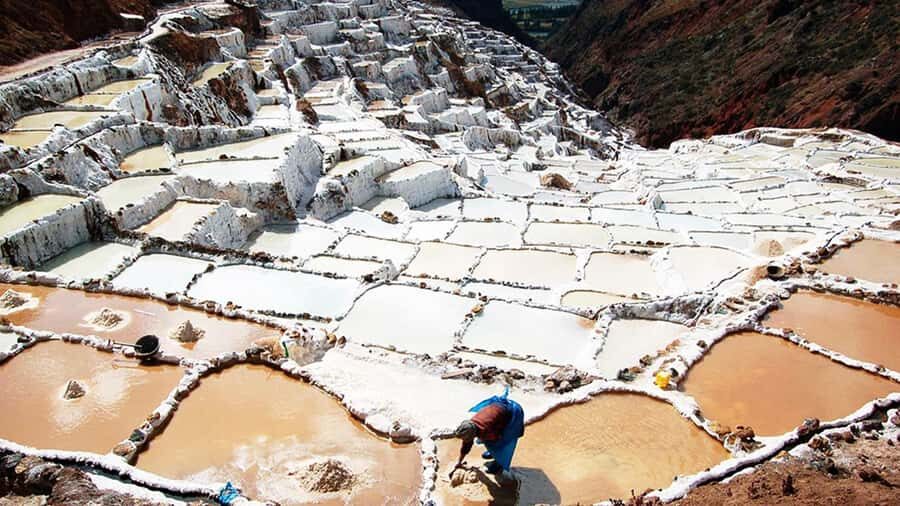
Next comes the highlight for many people: the salt mines of Maras. The defining feature is the presence of water sources with sodium chloride coming from the mountains. This is what lets salt form at over 3,000 meters above sea level—so you’re looking at active salt production in a place where you might not expect it.
The salt production area is made up of roughly 3,800 salt pans. That number matters because it changes your sense of scale. You’re not seeing a small craft operation. You’re looking across a large, working saltfield carved into the terrain, with repetition everywhere you look.
Scenery is a big part of Maras too. The pans create a patterned grid that contrasts with earth tones and mountain shadows. If you like photography, Maras is where your camera will actually work hard for you.
One practical detail: you’ll be outdoors for parts of the visit, so sunscreen is non-negotiable. Also wear good sports shoes. Even when the walking doesn’t feel intense, the surfaces can be uneven.
How Long You Really Spend at Each Stop
The tour runs about half a day (around 6 hours), but the key is how that time gets used. The pace is set so you have time to listen, time to look, and time to breathe between sections.
A great advantage is that guides often adapt to photo time. In one experience with guide Raul, he recognized when people were taking lots of pictures and gave time to walk around freely while he explained things to the group in Spanish before switching to English for your side of the conversation. That’s exactly what you want: explanation without constant rushing.
If you’re the type who always wants one more photo, plan your moments. Start with the “big picture” shots, then do the closer details after you’ve got your main frame. It keeps you from feeling like you’re sprinting and missing the salt-or-terrace story your guide is handing you.
Price and Value: What You Pay, What You’ll Still Owe
The tour price is $18 per person, which is a solid base cost for a bilingual-guided half-day with pickup and tourist transport.
But budget for entrances. Entrance to some attractions is not included, and you should plan on:
- Tourist ticket: USD 20
- Entrance to Maras: USD 7
So your “all-in” number will be higher than $18 once tickets are added. That said, I still think the value can be good, because you’re paying for transport out of Cusco, a guide who can explain in English and Spanish, and stops that each have a clear learning payoff (textiles, terraces, salt production).
If you already have the right entrance coverage from earlier plans, your cost may be lower. If not, price-check before you book so you don’t do the math mid-ride.
What to Bring (So You Enjoy It Instead of Surviving It)
This tour is straightforward, but the Andes can be sneaky. Here’s what matters most, based on the essentials provided:
- Camera
- Sports shoes
- Sunscreen
- Cash
- Passport or ID card
- Personal medication
- A snack and bottle of water are a good idea since there’s no feeding and the tour lasts about half a day
I’d add layers to the top of your mind: light jacket, hat, and anything that helps you handle wind or sun changes.
Also, don’t overpack heavy stuff. You’ll want to move comfortably through crowds and viewpoints.
Who This Tour Is Best For
This works well if you want a guided route that mixes farming history, craft traditions, and active production—all in one day. You’ll also like it if you don’t want a full-day excursion from Cusco.
Best fit:
- First-time visitors who want the Sacred Valley highlights without a long haul
- People who enjoy learning the “how” and “why,” not just looking
- Anyone who wants a schedule that’s doable even if you’re still adjusting to altitude
Not ideal:
- Anyone with mobility impairments, since it’s not listed as suitable
- People who hate group pacing. You’re with a group and you’ll move together between stops.
Small Details That Can Make or Break the Day
A few things that are worth planning around:
- Altitude sensitivity: If it’s your first day in Cusco, give yourself time to warm up. The guide may speak quickly, and you’ll enjoy it more if your brain is fully online.
- Photo timing: If you like photos, tell yourself you’ll get time. In experiences with Raul, the guide adjusted and gave space for people to walk around freely while still explaining in both languages.
- Shopping at Chinchero: Decide what you want. The stop is about appreciating processes, not a long shopping mall.
- Outdoor comfort: Salt mines and viewpoints mean sun and wind. Bring sunscreen and be ready for temperature shifts.
Should You Book Maras Moray?
If you want a compact Cusco-area day with real-world learning—textiles with natural dyes, Inca terrace experimentation, and salt production at altitude—this is an easy yes.
Book it especially if:
- You have limited time and want more than one highlight without a full-day schedule.
- You like guided context that helps you interpret what you’re seeing.
- You’re comfortable outdoors and you’ll bring basic comfort items like water and sunscreen.
Skip it if:
- You need a tour with no group pacing at all, or you have mobility needs that don’t match what’s offered here.
If you go in expecting a half-day rhythm—listen, look, photo, repeat—you’ll leave with three stories you can actually tell, not just three photos.
FAQ
How long is the Maras Moray tour?
The duration is about 6 hours.
What time does pickup happen?
Pickup is around 08:30. The guide calls your name, and you should wait at the reception about 5 minutes before pickup.
Is hotel pickup included?
Yes. Pickup from your hotel or accommodation is included.
What languages are the guides?
The guide provides live commentary in English and Spanish.
Are entrance fees included in the price?
No. Entrance to the tourist points and Maras are not included. The tourist ticket is USD 20, and entrance to Maras is USD 7.
Is there food included?
No feeding is included. You can bring a snack and water since the tour lasts half a day.
Do I need to be very physically fit?
No. The tour does not require high physical effort.
Is the tour offered every day?
Yes. It is enabled every day of the year.
Can I cancel for a refund?
Yes. You can cancel up to 24 hours in advance for a full refund.