REVIEW · LIMA
8-Days Peru, The Rise of the Inca Empire
Book on Viator →Operated by VIPAC Travel · Bookable on Viator
You get two empires in one trip. Lima’s UNESCO colonial core plus Cusco’s Inca skeleton (with gold looted, stones still there) makes this itinerary feel like a living timeline. I like that the plan is built around pre-arranged transport and airport connections, so you spend less energy figuring things out. I also like the pacing of Inca-to-colonial sites every day, topped with Lake Titicaca to close the loop. One thing to weigh: Machu Picchu is strict about entry circuits and your entrance ticket is not refundable, so you’ll want your flight and timing nailed down.
From the Santo Domingo convent under Cusco’s old temple blocks to the salt pans at Maras, you’ll see how geography shaped power. I’m especially glad this tour ends in Puno, because it makes a Bolivia add-on easy instead of forcing you back the same way. The main drawback is not the destinations. It’s that you may have to stay on top of timing details so you’re not stuck in a hotel longer than you want after the Machu Picchu day.
If you want a structured “great hits” Peru run without constant logistics anxiety, this one fits. You’ll just need to travel with a little flexibility and double-check that your key-day schedule is clear before it’s go-time.
In This Review
- Key things to know before you go
- Lima’s UNESCO Old City: a fast start you can feel
- Museo Larco: ancient Peru through gold, textiles, and ceramics
- Fly into Cusco and land on Inca foundations
- Sacsayhuamán and the sacred engineering day
- Sacred Valley day: Pisac ruins plus the market you can shop
- Moray’s microclimates and Maras salt: science and surreal photos
- Machu Picchu day: the logistics are part of the experience
- Cusco to Puno by bus: historic stops across the altiplano edge
- Lake Titicaca: Uros floating islands and Taquile traditions
- Departure from Puno: a clean ending point for your next step
- Value for money: what you pay for and what you avoid
- Who this tour suits best
- Booking checklist I recommend before you commit
- Should you book this 8-Days Peru tour?
- FAQ
- Where does the tour start and end?
- Are flights included?
- Does the tour include airport transfers?
- What’s included for Machu Picchu?
- Are there restrictions for Machu Picchu entry tickets?
- How many people are in the group?
- What meals are included?
Key things to know before you go
- Pre-arranged airport transfers in Lima and Cusco keep day one and day two from turning into a puzzle.
- Small group size (max 15) helps you move efficiently at major sites like Machu Picchu and Cusco.
- Machu Picchu circuit control (route 2 priority) matters because tickets are non-refundable and date changes aren’t accepted.
- Sacred Valley stops mix ruins with hands-on culture at a living textile and tradition center.
- Cusco to Puno overland with planned stops means you’re not wasting the travel day staring out a window.
- End in Puno gives you a clean on-ramp to Bolivia or an extra night to rest.
Lima’s UNESCO Old City: a fast start you can feel
Day 1 begins in the Centro Histórico de Lima, which is the smart way to acclimate your brain to Peru. Even if you’re tired from travel, this opening tour is intensive but manageable, and it sets the tone: Inca-era absence here is the clue that you’re watching the Spanish colonial city build its own story.
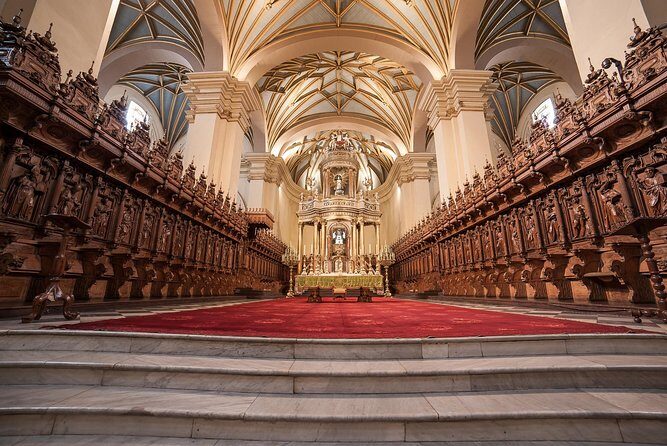
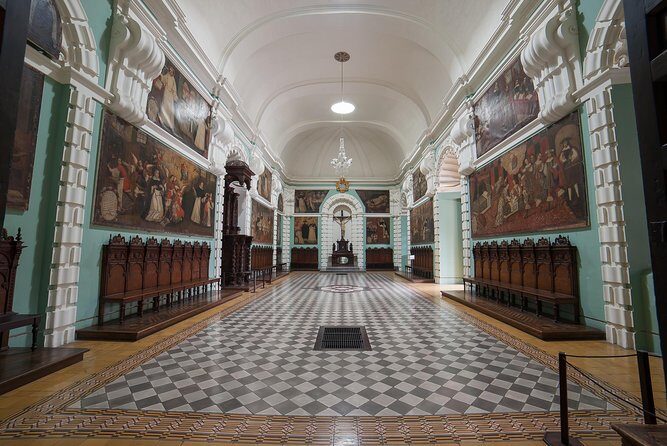
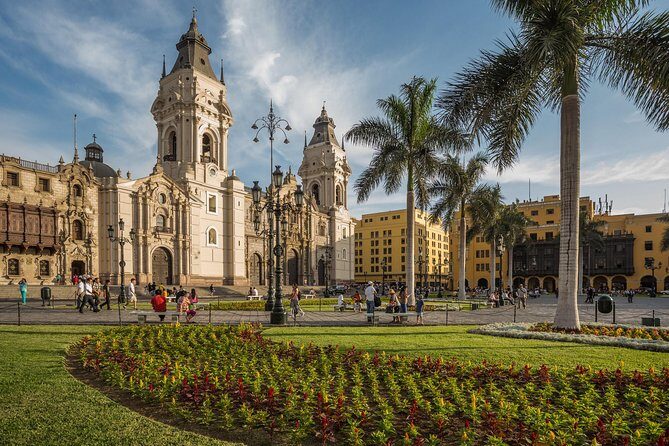
You’ll start at the Convent of Santo Domingo, tied directly to Lima’s founding. The tour also points you to the University of San Marcos site, noted as the oldest in America, plus a choir and library with old holdings, including books printed as early as the 15th century. If you like walking into places where names you’ve heard in history classes still echo in the architecture, this is your kind of stop. The visit continues across the Plaza Mayor, through sights tied to civic power, and ends with a look at the Cathedral of Lima, including colonial art.
Practical note: this is a walking-heavy day. Plan for comfortable shoes and expect the pace to be real, not museum-spa slow.
You can also read our reviews of more tours and experiences in Lima.


Museo Larco: ancient Peru through gold, textiles, and ceramics
After downtown, the tour heads to Museo Larco, and I appreciate how it re-centers the trip. Lima can feel all colonial all the time. Here you get back to ancient Peru and its visual language: gold pieces, textiles, and ceramics.
What makes this museum visit useful is that it’s not just pretty objects. The collection is presented as a window into cosmovision, the way people understood the world. You’ll also see erotic ceramics included in the collection, which is one of those reminders that ancient art wasn’t automatically “tourist-safe.” It was human and sometimes very direct.
Also, the museum’s own handling of their ceramic collections gives you context for how styles connect across time. And if you like detail, the open warehouse area helps you see more of the museum system rather than only the polished exhibits.
Fly into Cusco and land on Inca foundations
Day 2 is built around moving fast. You transfer to the airport, fly to Cusco, then meet and greet and go straight to your hotel. This is exactly why I like structured tours at altitude: you’re not guessing on transport when the air is thinner.
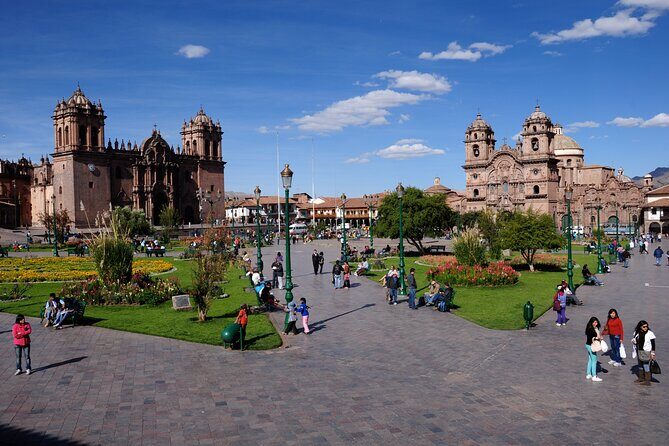
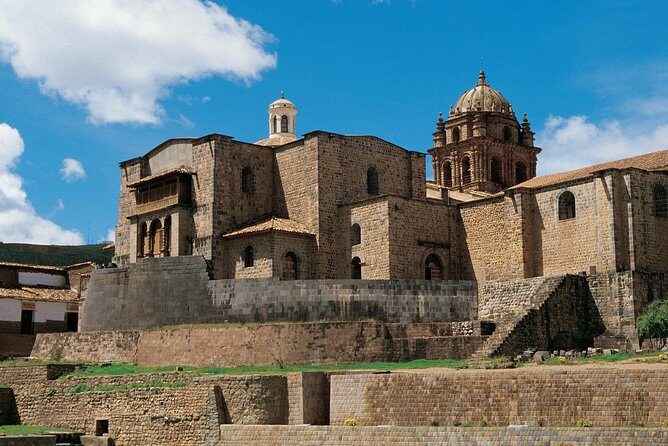
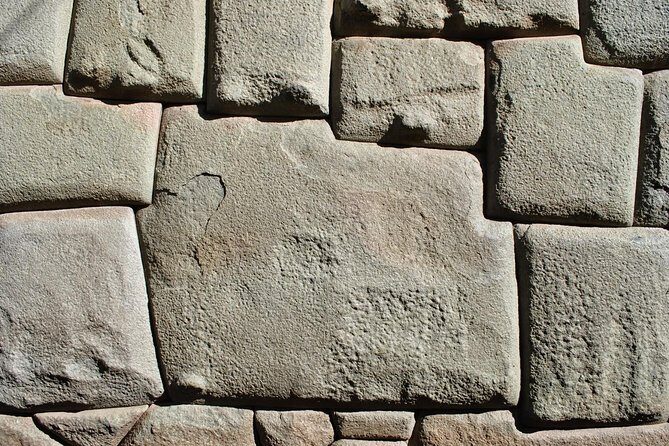
In Cusco, the tour hits Qorikancha first. This site is a key concept for understanding the whole region. The original Temple of the Sun is largely gone, and the later Convent of Santo Domingo sits on top of its foundations. That fusion matters. You see stonework meant for sacred power, then you see the colonial layer trying to overwrite it.
From Qorikancha, the tour moves to the Cusco Cathedral, which is where the story gets visually loud. The cathedral is built on foundations of an Inca palace, and inside you’ll find colonial paintings tied to the Cusco School of Art, blending European technique with indigenous symbolism. You’ll also hear about the original cross brought by the first Spanish conquistadors, which is a small but powerful detail about what conquest looked like on the ground.
Sacsayhuamán and the sacred engineering day
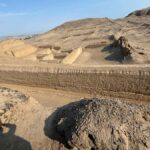
The Sacsayhuamán area is one of the strongest “wow per minute” parts of the itinerary. You ascend to the archaeological park and start at Sacsayhuamán, a fortress with massive stone blocks fitted without mortar. The tour notes blocks over 4 meters high, which gives you a scale that photos don’t fully explain.
Then the day branches to ceremonial sites: Q’enqo, carved into rock and described as a ceremonial center, and Tambomachay, sometimes called the Inca Baths, where sacred springs run through aqueducts. On the way back, you also get Puca Pucará, an ancient military outpost with panoramic views.
If you want one takeaway from this day, it’s that Inca architecture wasn’t only about monuments. It was about precision, ritual, and control of water and movement. And the views around Cusco help you understand why this city grew where it did.
Sacred Valley day: Pisac ruins plus the market you can shop
Day 3 is the classic Sacred Valley mix: ruins, then culture, then a living skills center.
You start with Pisac, an Inca archaeological site perched high above the valley. You’ll see terraces and religious structures and get panoramic views from the summit area. Then you descend into the village, which is where the trip becomes more than ruins. Streets, adobe buildings, and the feel of a working town show you how layers of history coexist.
The tour includes time at one of the region’s famous artisan markets. This is where you can shop for handmade textiles, ceramics, and silver jewelry. You’ll get the chance to interact directly with local artisans, many of whom use techniques passed down through generations. It’s one of the best ways to buy something with meaning instead of just buying a souvenir.
The day continues with Museo Inkariy, then lunch, and finally the Yucay Live Culture Center. This part is particularly valuable because it turns “see and go” into “watch and try to understand.” You’ll see traditional textile weaving and dyeing, how adobes are made, and how chicha (corn drink) is prepared. You’ll also have a close encounter with Andean camelids, llamas and alpacas.
How to make this part work for you: show up curious, not just shopping-minded. If you ask simple questions about materials and process, the experience feels personal fast.



Moray’s microclimates and Maras salt: science and surreal photos
Day 4 begins at Moray, an Inca site of circular terraces. The tour frames these as an agricultural “laboratory,” created to recreate up to 20 microclimates. That one detail makes Moray more than a ruin stop. You’re seeing environmental adaptation engineered into stone.
Moray is great for travelers who like interpretation. You’ll walk among the terraces and get a clearer sense of why the Sacred Valley was so strategically prized: climate control wasn’t abstract. It was built.
Then you go to Salinas de Maras, the salt mines near the village of Maras. The tour describes salt pans filled by salty spring water that evaporates under the sun, leaving salt in thousands of small pools carved into the mountain. The visual contrast is the headline: white pools against red clay hills.
This is also a moment where timing matters. If you go too late, the light for photos changes and the pools can look flatter. Even without chasing perfect shots, you’ll still get a strong sense of how locals keep using these pans today.
Machu Picchu day: the logistics are part of the experience
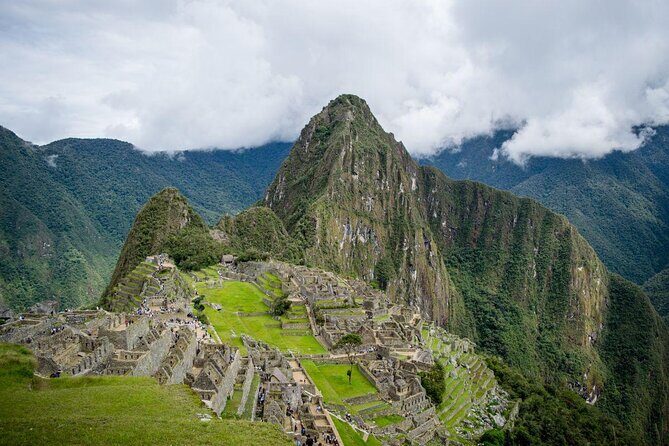
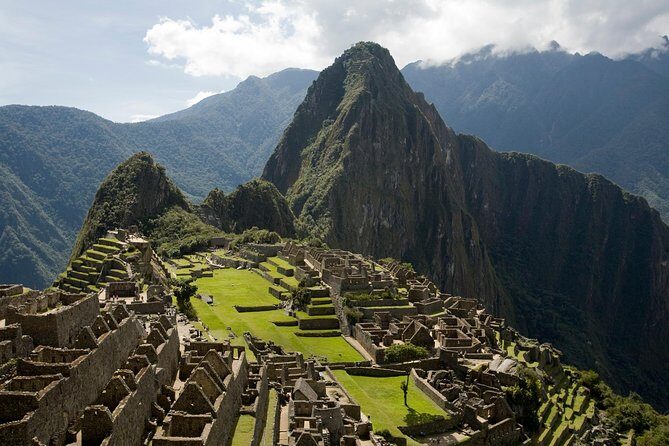
Day 5 is the big one: Machu Picchu.
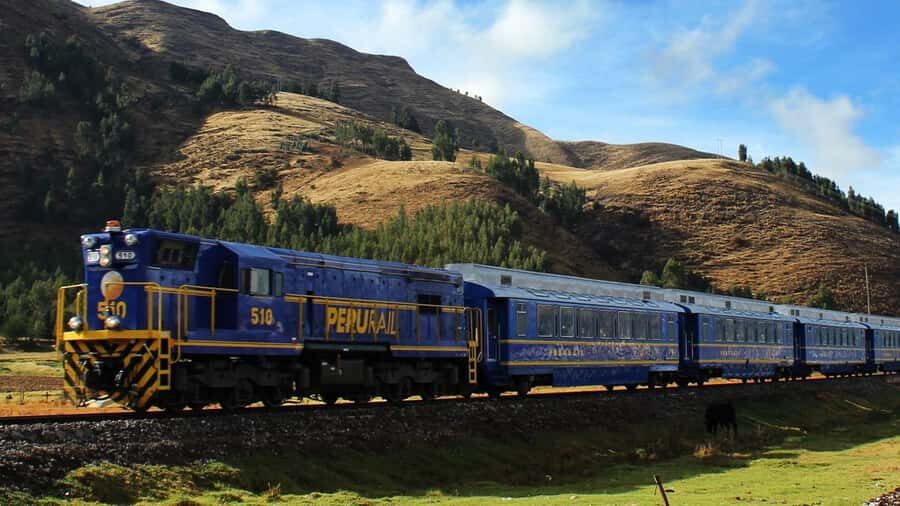
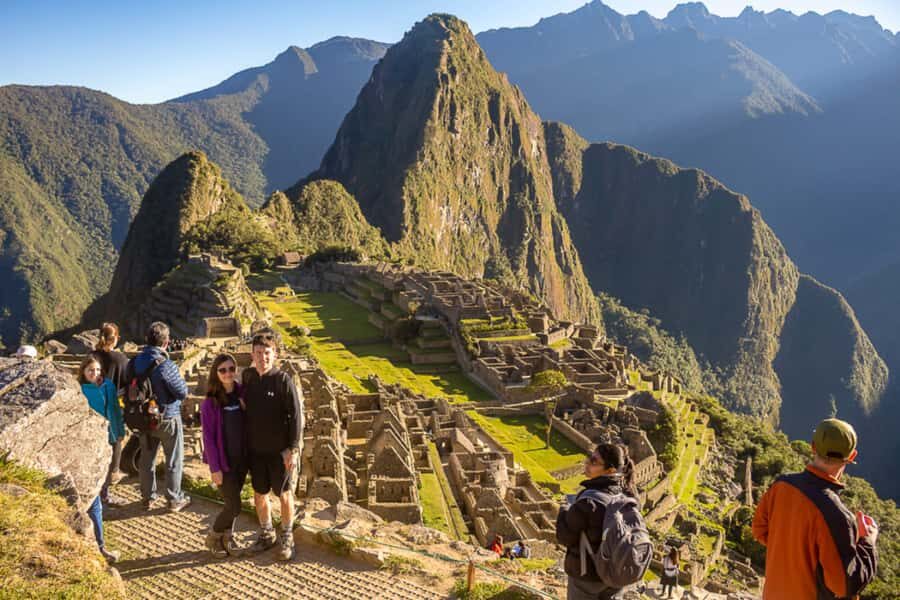
You board the train at Ollantaytambo, using the tour’s Voyager service train tickets. Once you arrive at Machu Picchu station, the staff helps you board the bus up a winding road with views over the Urubamba River canyon. Then Machu Picchu is there in front of you, terraces, staircases, ceremonial spaces, and urban areas.
The tour includes lunch at the Sanctuary Lodge restaurant, described as a buffet lunch. That matters because it keeps your day from turning into meal chaos at the wrong time. After lunch, you return by train and transfer to your hotel in Cusco.
Two practical things to plan for:
- Machu Picchu has new visitor circuits, with route 2 given priority. If route 2 isn’t available, circuit 3B or 1B may be offered, and you should confirm before tickets are issued.
- The Machu Picchu admission ticket is not refundable, and date changes or amendments aren’t accepted. Treat your visit day as fixed.
The other thing I’d watch: your “free time” after Machu Picchu can be the difference between a great day and a slightly annoying one. Since hotel arrangements are part of the package, I’d confirm where you’ll stay and what the next-day plan looks like as early as possible.
Cusco to Puno by bus: historic stops across the altiplano edge
Day 6 moves you from Cusco to Puno via bus, but it’s not a pure transfer. You get stops that make the long drive feel like more travel story than downtime.
You start with Andahuaylillas, visiting its beautiful chapel. Then you go to Racchi, the Temple of the Wiracocha god, where the walls and narrow streets are highlighted. After lunch, you stop at La Raya, described as the natural border between Cusco and Puno, which helps you mentally shift regions.
Before reaching Puno, you visit the Pucará Museum, and you even get a chance to obtain local classic bull-shaped ceramics. The tour arrives in Puno at the end of the afternoon.
If you tend to get carsick on winding routes, this is one day to plan for it. It’s scenic, but it’s also a lot of road time.
Lake Titicaca: Uros floating islands and Taquile traditions
Day 7 is a full day on Lake Titicaca, starting with the Uros Floating Islands. Here the tour focuses on the people living on handmade islands built from totora reeds. There’s a good rhythm to this stop: you see the system, you meet the inhabitants, and you get a sense of how the islands work as homes rather than just a show.
Then you head to Taquile Island, where traditions are still maintained and locals wear colorful typical clothing. The tour includes time to explore the island and gives you a top view of the lake. Lunch is provided on the island.
What’s worth your attention here is the contrast. Uros is about adaptation to water and materials. Taquile is about community and cultural continuity. Together, they keep Titicaca from feeling like one long sightseeing stop.
Departure from Puno: a clean ending point for your next step
Day 8 is simple: departure transfer and end of services. I like that the trip starts in Lima but ends in Puno. It makes it easier to continue to Bolivia or add time back in Lima without retracing every step.
Value for money: what you pay for and what you avoid
At $1,280 per person for roughly eight days, you’re paying for a lot more than tickets. The value is in the way the trip reduces friction:
- Airport pickup/drop-off at Lima and the Cusco connection keeps day one from turning into a stressful scavenger hunt.
- Group logistics handle key transitions, like train boarding at Ollantaytambo and the bus segment in Machu Picchu.
- Seven nights of accommodation are included, which is usually where unstructured trips hide costs.
- Admissions are included for multiple major stops, including Machu Picchu.
- Meals are partially included: breakfast every day (7), plus lunch on select days (3 total, including the Machu Picchu buffet).
The tradeoff is that you’re on someone else’s schedule. The itinerary is designed around major sites, so you’re not building long blank spaces for slow wandering every day. For many people, that’s exactly the point.
Who this tour suits best
This experience is a strong match if you:
- Want major Inca and colonial highlights without planning every transport link.
- Like structure more than chaos.
- Plan to visit Machu Picchu and Lake Titicaca, but don’t want to build it from scratch.
- Prefer a small group pace with set stops rather than independent decision-making.
It might be less ideal if you:
- Get upset by strict timing around Machu Picchu entry circuits and transfers.
- Need lots of independent free time after key events.
- Have a tight window for flight changes and can’t keep your Machu Picchu date locked in.
Booking checklist I recommend before you commit
Do these and you’ll reduce stress on the most important day:
- Confirm your Lima to Cusco flight is in the morning, since arrival by noon is too late.
- Get the hotel names and your day-by-day timing early enough to plan what you’ll do with gaps.
- Bring altitude sickness prevention advice from your doctor. The tour explicitly notes altitude concerns.
- Treat Machu Picchu tickets as fixed: no date shifts, no refund.
Should you book this 8-Days Peru tour?
If you want a well-paced route that strings together Lima’s colonial heart, Cusco’s Inca-meets-Spanish layers, the Sacred Valley’s agriculture and craft culture, Machu Picchu’s scale, and Titicaca’s two different ways of living, this tour makes a lot of sense. The biggest strength is how it handles logistics and transitions, letting you spend your energy actually seeing the places.
Just go in with eyes open about Machu Picchu rules and make sure your schedule details are clear before the trip locks you into firm entry times. If you handle those two issues, this is a high-value way to experience Peru’s rise of the Inca story and what came after.
FAQ
Where does the tour start and end?
It begins with arrival in Lima (airport transfer) and finishes in Puno with a departure transfer.
Are flights included?
No. Flights are not included, including the Lima to Cusco domestic flight.
Does the tour include airport transfers?
Yes. It includes round-trip arrival and departure airport transfers, plus transfers between station, hotel, and airports during the trip.
What’s included for Machu Picchu?
You’ll visit Machu Picchu with included train transport, bus to the site, admission, and a buffet lunch at the Sanctuary Lodge restaurant.
Are there restrictions for Machu Picchu entry tickets?
Yes. Machu Picchu tickets are not refundable, and date changes or amendments are not accepted. The tour also follows specific visitor circuits, with route 2 prioritized when possible.
How many people are in the group?
The tour has a maximum of 15 travelers.
What meals are included?
Breakfast is included for 7 days. Lunch is included on 3 days, including the Machu Picchu day buffet lunch and typical lunches on the Sacred Valley and Lake Titicaca portions where specified.