REVIEW · HUARAZ
Climbing Mateo – Your first 5 thousand
Book on Viator →Operated by Andean Raju Expeditions · Bookable on Viator
5,000m starts before sunrise. Mateo is the kind of high-altitude goal that feels realistic because the day is tightly guided: certified support plus technical gear to help you do a true first snow climb. I like that it’s private, so the guide can adjust pacing and focus while you’re learning. I also like the included lunch during the climb, so you’re not guessing when you’ll refuel. One drawback: it’s an early morning grind and you’ll need good fitness and altitude readiness, especially if the weather isn’t crisp.
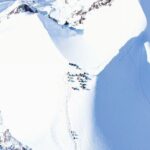
You’ll leave Huaraz at 3:00am, drive to the start area, then hike up over about 1 hour of moraine before the 1 hour 30 minute ascent toward the summit. The plan is to reach the top in the morning and catch sunrise-light on a huge view wall of mountains, including Chopicalqui, Contrahierbas, Ulta, and snow-covered Huascarán. If the sky is cloudy, the climb can feel more technical and mentally harder, but the guide’s job is to keep you moving safely.
In This Review
- Key highlights worth planning around
- Mateo’s 5,000m goal: why this climb is built for first-timers
- Timing Is Everything: leaving Huaraz at 3:00am for sunrise
- The Route in Plain Terms: moraine hike, then the summit push
- Gear and Safety: crampons, harness, helmet, ice axe, plus rope systems
- Lunch on the Mountain: energy you can count on
- Altitude Reality Check in Huaraz: condition matters more than bravery
- Views You Can Actually Name: Chopicalqui, Contrahierbas, Ulta, and Huascarán
- Price and Value: what $120 covers (and what it doesn’t)
- Who this private climb suits best (and who should reconsider)
- The bottom line: should you book Mateo at 5,000m?
- FAQ
- What time does the climb start?
- How long is the Mateo climbing experience?
- What does the $120 price include?
- Do I need to pay an entrance fee for Huascarán National Park?
- What climbing gear is provided?
- Is lunch included?
- What fitness level do I need?
- What happens if weather is poor?
- If there aren’t enough travelers, can the tour be canceled?
Key highlights worth planning around
- Private climbing day with a certified mountain guide in English and Spanish
- Technical kit included for you: crampons, harness, helmet, ice axe, and mountain boots
- Lunch included while climbing, with a vegetarian option
- Early departure at 3:00am to aim for summit timing and sunrise views
- Inside Huascarán National Park, but the park entrance fee isn’t included
- Group safety equipment included (ropes, ice screw, snow stakes, carabiners, and more)
Mateo’s 5,000m goal: why this climb is built for first-timers
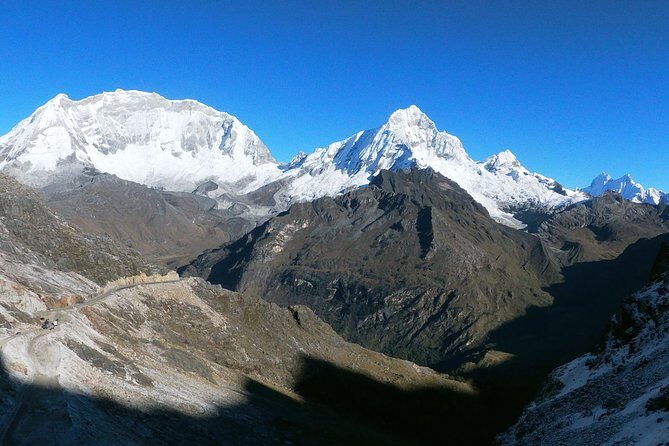
Mateo is often chosen for a very specific reason: it’s an approachable entry point into the world of 5,000-meter peaks. The mountain sits in the Contrahierbas Sur range (Denominated Mateo), and your route runs inside Huascarán National Park in the Quebrada Ulta area, near Carhuaz. That matters because you’re not just chasing a number on a summit sign. You’re climbing in a protected, dramatic zone where the landscape and mountain lineup are part of the experience.
This trip also respects the reality of first-time climbing. The kit list is serious: you’re provided crampons (for traction on ice or hard snow), a harness, a helmet, and an ice axe. That turns the day into a guided skill-building session as much as a summit attempt. You still need effort and basic comfort with cold and altitude, but you’re not walking in with only sneakers and confidence.
If you’re thinking, I want my first 5,000m, this is the kind of climb that supports that goal. It’s not “easy,” but it’s designed to be teachable and structured.
You can also read our reviews of more tours and experiences in Huaraz.
Timing Is Everything: leaving Huaraz at 3:00am for sunrise
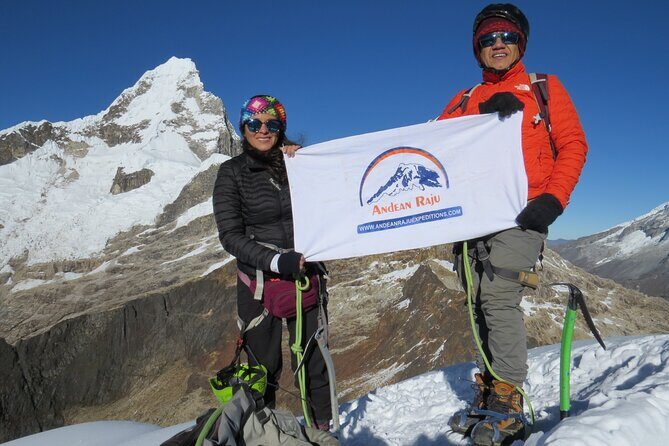
You start the day at 3:00am. Yes, it’s very early. But in high mountains, early is often the difference between a smooth climb and a messy one. The schedule is built so you can reach the summit during the morning and take advantage of sunrise light and softer conditions.
Practically, that means:
- You’ll be climbing before the mountain is fully warmed up.
- Cold mornings can be uncomfortable, but they can also help keep snow/ice in a more predictable state.
- You’re racing daylight at a pace your guide controls, not the pace you control.
One thing I really like about this approach is that it’s not “show up when you feel ready.” It’s intentional time management. If you’re new to altitude climbing, predictable timing reduces stress, and stress is the enemy of good technique.
If the weather is cloudy, you may not get that postcard sunrise. In that case, the climb can feel tougher for a first timer—mostly because visibility is worse and you’re relying more on your guide’s route choices and your own focus.
The Route in Plain Terms: moraine hike, then the summit push
The day has two main movement phases.
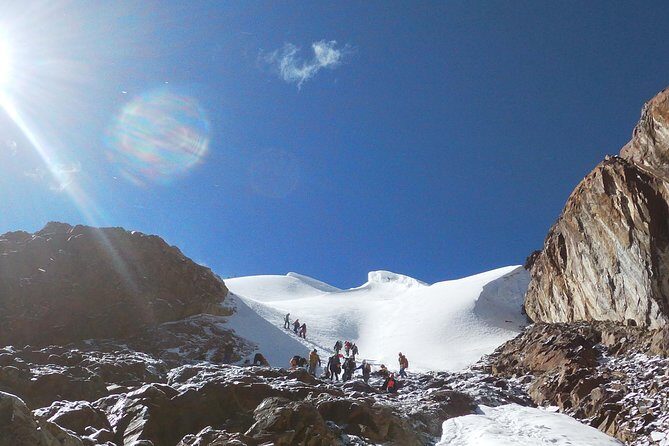
First: the moraine approach (about 1 hour). A moraine is rough ground left by moving ice, and it usually means uneven walking and lots of attention to footing. This is the “wake your legs up” section. Expect it to feel slower than you think because you’re stepping over and around things, not cruising on smooth trails.
Second: the ascent (about 1 hour 30 minutes). This is where crampons and technique matter. The guide leads, you follow, and you keep your movements efficient. On a first climb, the hardest part often isn’t the physical strain alone. It’s the mental rhythm: stay steady, keep your footing clean, don’t rush the technique.
Even if you’re in decent shape, you should plan for a “real climbing effort,” not a cardio hike. Your pace will be set around safety, snow conditions, and how you’re handling altitude.
Also, the plan is about summiting in the morning. That affects everything—how fast you move early, when you conserve energy, and why the lunch and gear checks happen when they do.
Gear and Safety: crampons, harness, helmet, ice axe, plus rope systems
This is where the value shows.
You get technical equipment for personal use including:
- crampons
- harness
- helmet
- ice axe
- mountain boots
That’s a big deal for first-timers. Buying or renting gear separately can be confusing, and the quality varies. Here, you’re starting with the right tools for the job, and they’re matched to a guided environment.
Then you also get group safety equipment such as ropes, ice screw, snow stakes, and carabiners. That doesn’t mean you’ll be roped up the entire time, but it does mean the guide has systems available if snow conditions demand it. You’ll also have a basic first aid kit present.
And you’re not left to guess language or communication. The guide is certified and works in English and Spanish, which is helpful when you’re learning technique on something as precise as ice traction and step placement.
A small but meaningful detail: the trip includes permanent and personalized assistance, which is exactly what you want on your first 5,000m. You don’t need generic advice. You need correction and reassurance at the right moments.
Lunch on the Mountain: energy you can count on
The trip includes meals during the climbing, with a vegetarian option available. Since the climb timing starts very early and the ascent is effort-heavy, this matters more than it sounds.
When food isn’t included, first-timers often end up under-eating or eating too late. Then you hit the harder part of the climb tired and irritated, which is not the best recipe for controlled steps on icy or hard snow.
With lunch included while climbing, you can plan around it. You’ll get fuel without turning the summit attempt into a scavenger hunt for snacks.
If you have specific dietary needs beyond vegetarian, you’ll want to ask when booking, since the only explicit option listed here is vegetarian.
Altitude Reality Check in Huaraz: condition matters more than bravery
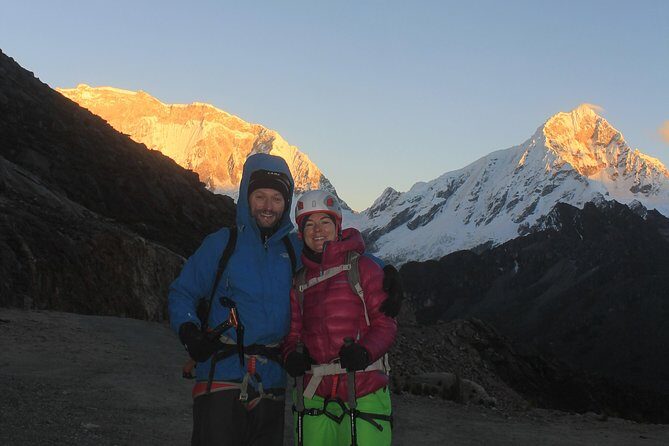
Most people can participate, but the climb is still physical. You need to be in good condition and give yourself time to adjust to altitude in Huaraz. One of the strongest pieces of advice from people who’ve done this route is to spend a few days acclimatizing before attempting a 5,000m climb.
Here’s the common-sense way to think about it:
- Altitude doesn’t just make you breathless; it affects endurance and decision-making.
- Crampons and ice axe require focus. If you’re exhausted from altitude, technique gets sloppier.
- When conditions are less than ideal (like cloudy weather), you can’t rely on nice views to keep your mind engaged.
So yes, it’s a “first summit” trip—but it still demands respect for altitude. If you’re the kind of person who pushes through discomfort without checking in with your body, you’ll want to adjust your mindset. Let the guide pace you.
Views You Can Actually Name: Chopicalqui, Contrahierbas, Ulta, and Huascarán
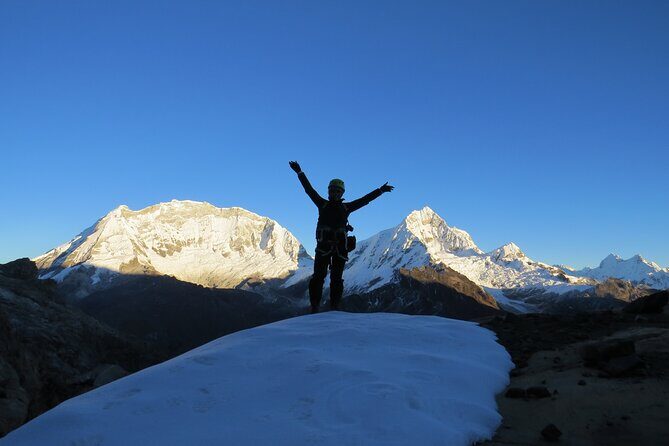
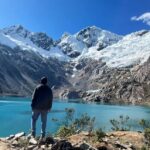
One reason people love Mateo is the view reach. The summit plan is built around morning light, and on clear mornings you get dramatic sightlines to multiple peaks around the region, including Chopicalqui, Contrahierbas, Ulta, and snow-covered Huascarán.
Even when the sky is not perfect, you still benefit from the high-mountain perspective. It changes how you understand Huaraz’s map. You stop thinking in day trips and start thinking in mountain systems.
For photography, early timing helps. For morale, it helps more. Reaching the summit while the day is still fresh makes the effort feel purposeful, even when the climb is challenging.
Price and Value: what $120 covers (and what it doesn’t)
At $120 per person for a 1-day private climb, you’re paying for more than a guide holding a clipboard. You’re paying for:
- a certified mountain guide (English/Spanish)
- private transport
- technical equipment for you (crampons, harness, helmet, ice axe, mountain boots)
- group safety systems (ropes, stakes, ice hardware)
- basic first aid kit
- meals during the climb (vegetarian option included)
- personalized assistance
That’s solid value because it removes the biggest hidden costs of a first high climb: gear setup and logistics. Add a park entrance fee on top though. The entrance fee to Huascarán National Park is S/. 30 soles and isn’t included.
Also, plan for your own essentials. Items not included include headlamp, sunglasses, appropriate clothing, and personal medications (if you need them). If you forget key cold-weather basics, you’ll feel it hard at 3:00am.
One more practical point: this experience is booked on average about 15 days in advance. If your dates are flexible, you might get lucky. If your dates are fixed, reserve earlier so you’re not trying to negotiate summit timing with limited availability.
Who this private climb suits best (and who should reconsider)
This trip is ideal for:
- People chasing a first 5,000-meter summit goal
- Climbers who want a private guide to manage pacing and safety
- Anyone comfortable working hard uphill and handling cold conditions
- You if you’re willing to acclimatize in Huaraz before attempting the climb
You might reconsider if:
- You don’t have a plan for altitude adjustment and you’re arriving to Huaraz right before the climb
- You’re unsure about your physical readiness for a moraine approach plus a 1.5-hour ascent while managing cold and gear
- You rely on guaranteed clear weather (this climb requires good weather to run as planned)
One more “real talk” tip: if you’re prone to panicking when plans change, cloudy conditions can add a mental layer. The guide helps, but your attitude still matters.
The bottom line: should you book Mateo at 5,000m?
I’d book this climb if your goal is a first serious summit in the Huascarán region, and you want the comfort of a private certified guide with full technical gear included. The combination of early start, morning summit timing, and included meal support makes this feel structured enough for first-timers while still being a legitimate mountain day.
I’d pause and ask more questions if you’re not ready for cold mornings, you haven’t acclimatized in Huaraz, or you’re expecting an easy walk-up. Mateo rewards respect, not shortcuts.
FAQ
What time does the climb start?
The meeting time is 3:00am.
How long is the Mateo climbing experience?
It runs for about 1 day (approx.).
What does the $120 price include?
It includes a certified mountain guide (English/Spanish), meals during the climb (vegetarian option), private transport, technical equipment for personal use, group safety equipment, a basic first aid kit, and personalized assistance.
Do I need to pay an entrance fee for Huascarán National Park?
Yes. The Huascarán National Park entrance fee is S/. 30 soles and is not included.
What climbing gear is provided?
You’re provided crampons, harness, helmet, ice axe, and mountain boots. Group gear like ropes and ice hardware is also provided.
Is lunch included?
Yes. Meals during the climb are included, including a vegetarian option.
What fitness level do I need?
The tour notes that most people can participate, but it requires good physical condition. If you’re new, plan to take a few days to get used to the altitude.
What happens if weather is poor?
The experience requires good weather. If it’s canceled due to poor weather, you’ll be offered a different date or a full refund.
If there aren’t enough travelers, can the tour be canceled?
Yes. If canceled because the minimum number of travelers isn’t met, you’ll be offered a different date/experience or a full refund.