REVIEW · SACRED VALLEY
Inca Trail Machu Picchu 4 Days
Book on Viator →Operated by Dreamy Tours · Bookable on Viator
Machu Picchu at dawn hits different. This 4-day Inca Trail to Machu Picchu takes you from Cusco into the Sacred Valley, over high passes, and back to the citadel in time for early views. Two things I really like are the way the team keeps the day-to-day logistics under control and the quality of the trail meals. If you want an organized, authentic-feeling trek, this one delivers.
The possible drawback is the obvious one: this is not a stroll. You’ll hike at altitude, with cold conditions on the second day, and you should plan to bring personal gear since a sleeping bag isn’t included.
In This Review
- Key highlights worth knowing before you go
- Cusco to Km. 82: the quiet start that sets the tone
- Day 1: Miskay lunch, Llactapata context, and your first night at Ayapata
- Day 2: a long day, cold weather, and the real test at Warmihuañusca
- Day 3: Wiñayhuayna rainforest, tunnels, Phuyupatamarca’s Inca baths, and the Machu Picchu tease
- Day 4: Inti Punku sunrise, a guided Machu Picchu tour, and free time to roam
- What’s included (and what that means for your comfort)
- The guiding style: small group control and culture made practical
- Camps, meals, and the tiny rhythms that keep you going
- Price and value: $905 is mostly what you’re not carrying
- Who this tour suits best (and who should think twice)
- Booking call: should you book Dreamy Tours for the Inca Trail?
- FAQ
- How long is the Inca Trail to Machu Picchu trek?
- What time do you start from Cusco?
- Where do you start the trek?
- What’s included in the price?
- What’s not included?
- Do I need a sleeping bag?
- How many people are in the group?
- How difficult is it?
- What language will the guide speak?
- Is this tour refundable if plans change?
Key highlights worth knowing before you go
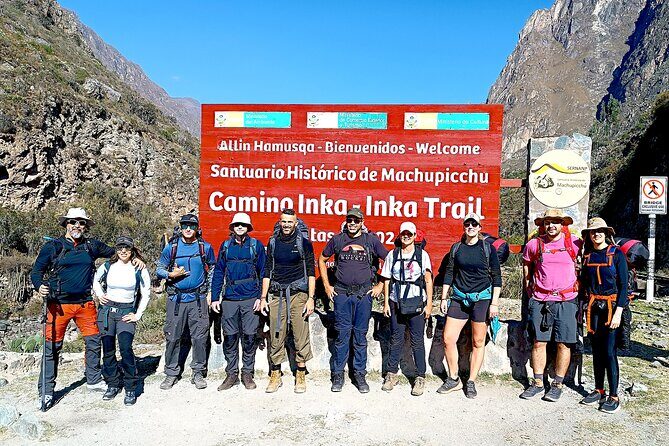
- Small group size (max 10 travelers) means less chaos and easier guiding.
- Km. 82 start with document control is scheduled early, so be ready the night before.
- Death Pass (Warmihuañusca) at 4,200m is the hardest segment of the route.
- Rainforest-to-citadel transition through Wiñayhuayna and tunnels sets up that Machu Picchu reveal.
- Sunrise at Inti Punku (La Puerta del Sol) plus a guided citadel tour around 8:00 am.
- Porters + full camping setup make the trek feel doable without hauling tents yourself.
Cusco to Km. 82: the quiet start that sets the tone
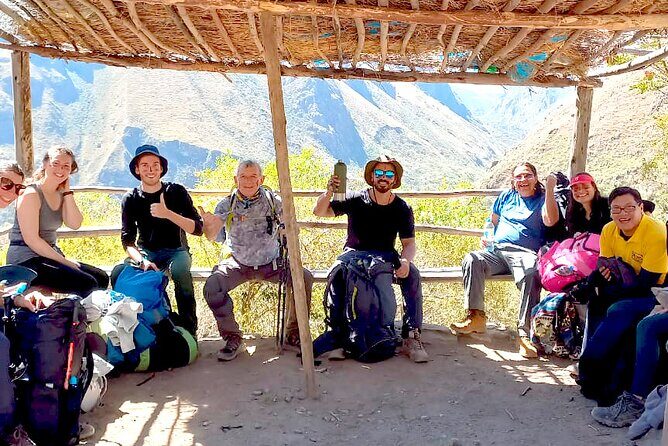
Day 1 begins early, with pickup from your Cusco hotel at 5:30 am. That matters more than you’d think. Start too late and you lose daylight, energy, and patience before you even begin the real climb.
You head toward the Sacred Valley with a brief stop in Ollantaytambo, where you can grab breakfast if you want. Then you meet the group at Kilómetro 82, where documents are checked for control and registration. It’s not glamorous, but it’s part of the reality of doing the Inca Trail the official way.
Once you cross the Urubamba River area (around 2,200m), the trail gives you that first-day “get your bearings” stretch. Day 1 is described as easy to follow, and it includes time to settle into the rhythm of walking, stopping, and breathing a little more carefully as altitude nudges upward.
You can also read our reviews of more tours and experiences in Sacred Valley.
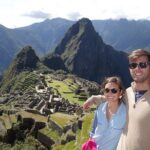
Day 1: Miskay lunch, Llactapata context, and your first night at Ayapata
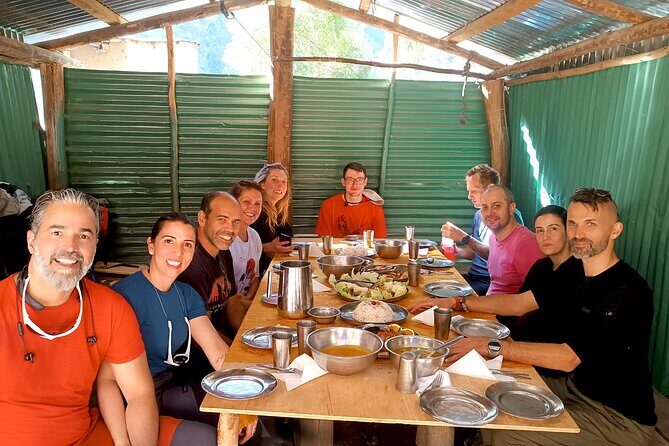
The first big win of Day 1 is that it’s paced like a on-ramp. You walk about 7 hours, not an all-day grind right out of the gate. You’ll stop for lunch at Miskay, a riverbank setting that also doubles as a good moment to slow down and listen.
Your guide will explain the archaeological complex of Llactapata. Even if you’re not seeing everything at once, that kind of context helps you understand why the Incas placed routes and viewpoints where they did. After lunch, the day turns into a steady move toward camp.
You hike on to Wayllabamba (around 3,100m / 10,170 ft) and then ascend to Ayapata, where you spend the night. Ayapata is your first camp step, and it’s a useful one: you learn how to handle early cold, how long it takes to get yourself settled, and what “camp life” feels like when you’re already walking all day.
Practical note: you won’t have breakfast included on the first morning, so treat the Ollantaytambo stop as your chance to eat before the trek begins.
Day 2: a long day, cold weather, and the real test at Warmihuañusca
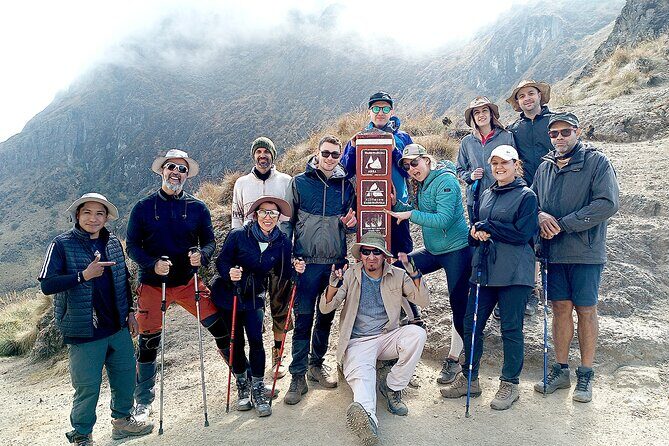
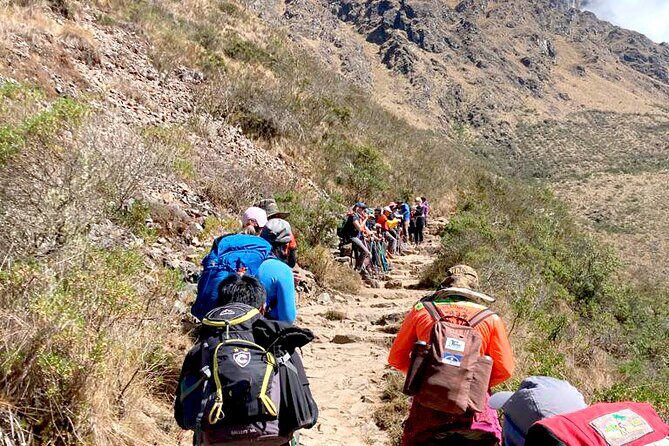
Day 2 is where the Inca Trail stops pretending it’s easy. The walk is listed at about 9 hours, and it’s explicitly described as cold weather. Dress like you mean it: layers that you can add or shed fast keep you warm during climbs without overheating during steady walking.
This is also the “walking day at a leisurely pace.” That phrasing can sound contradictory with a 9-hour hike, but it’s really about how the day is managed. The route includes short stops, and the group is expected to walk at their own pace. That flexibility is useful when some people hit the wall faster than others.
The morning leads you to Llulluchapampa (around 3,850m), where you pass through rainforest and hear water. You get time to look around, not just count steps. Then you follow the trail for 2–3 hours toward the highest point of the day.
That highest point is Warmihuañusca, often called the Death Pass, at about 4,200m. It’s the standout challenge of the trek. The good news: after you reach the summit, you get a brief stop, then the day shifts into descent and recovery mode.
From there you hike with a long and steep slope toward the Pacaymayu River, passing toward Runkurakay pass (around 3,050m). You finish the day at Chaquicocha camp (around 3,650m). Once you arrive, the best move is simple: relax, hydrate, and let your body catch up.
Day 3: Wiñayhuayna rainforest, tunnels, Phuyupatamarca’s Inca baths, and the Machu Picchu tease
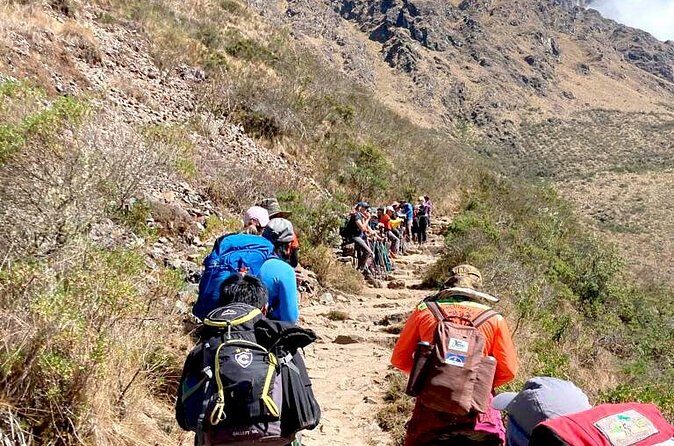
Day 3 is listed at about 6 hours, and it’s described as the most beautiful. That fits the pattern: after the big altitude test of Day 2, Day 3 often feels more rewarding because your energy has something to aim for.
You start at Chaquicocha and move into a shift in ecosystem as you walk through rainforest around Wiñayhuayna. The route includes passing two small lakes at the top of the second pass (around 3,950m). You’ll also experience a gentle ascent through a small Inca tunnel, with a view over the Urubamba River in the Sacred Valley.
Then you reach the next camp area: Phuyupatamarca, literally meaning “the city above the clouds,” at about 3,600m. This is a well-preserved place, and the highlight here is a long chain Inca bath. It’s not just scenery. It’s engineering you can feel when you walk through the layout and see how water management ties into architecture.
After another Inca tunnel, you visit the Wiñayhuayna complex, often translated as Forever young (around 2,650m). Then you descend, and this is where the day turns into anticipation: you get your first views of the Machu Picchu mountain.
That’s an important emotional moment. You’re not at the citadel yet, but you’re starting to see the finish line. It changes how the last day feels, even if your legs are already tired.
Day 4: Inti Punku sunrise, a guided Machu Picchu tour, and free time to roam
Day 4 starts with breakfast, then you hike to Inti Punku (La Puerta del Sol). The point is the first big reveal: to have views of Machu Picchu and see the sunrise.
After the viewpoint, there’s a final slope that takes close to an hour before you arrive at the citadel area (around 2,400m). The scheduled arrival for the visit is around 8:00 am, with a guided tour of about two hours. That guide time is your best insurance policy against seeing only random stones. With the right explanation, you start to connect terraces, water flow, and the spiritual layout into one system.
After the guided portion, you get free time to explore at your own pace. You can head toward the Inca Bridge, wander through the monuments, and you can climb Huayna Picchu if that’s on your wish list and your ticket allows it. (The tour data mentions this as an option during free time.)
Then you descend to Aguas Calientes for lunch, followed by the return train to Ollantaytambo and Cusco. Return train is described as depending on availability, so if you’re planning a connection, build in slack.
What’s included (and what that means for your comfort)
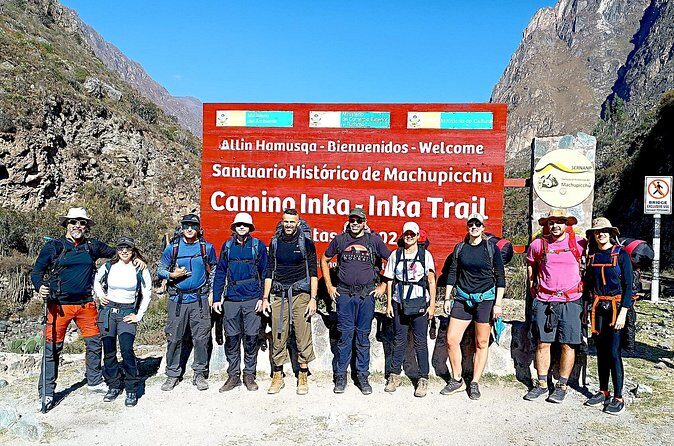
This trek is good value because so much of the hard work is taken off your plate.
Included items cover:
- Entrance to the Inca Trail and Machu Picchu
- Cusco ↔ Km. 82 transport
- Ollantaytambo ↔ Cusco transport
- Consettur bus from Machu Picchu Pueblo (Aguas Calientes) to the archaeological site
- Camping equipment: tents, mats, bathroom setup, dining area furniture
- A dedicated cook plus kitchen gear
- Food: breakfast (for 3 days), 3 lunches, 3 dinners, and 3 snacks
- Oxygen and first aid
- A return train from Machu Picchu Pueblo to Ollantaytambo (depending on availability)
There are a few non-included items that matter:
- Sleeping bag isn’t included
- Breakfast on the first day isn’t included (you can grab breakfast in Ollantaytambo)
- Lunch at Machu Picchu site or Aguas Calientes isn’t included
- Extra carriers aren’t included
From the reviews, one theme comes up clearly: porters make this feel realistic. You’re not carrying the entire camp system yourself, and that’s the difference between arriving exhausted and arriving able to enjoy the place you worked so hard to reach.
The guiding style: small group control and culture made practical
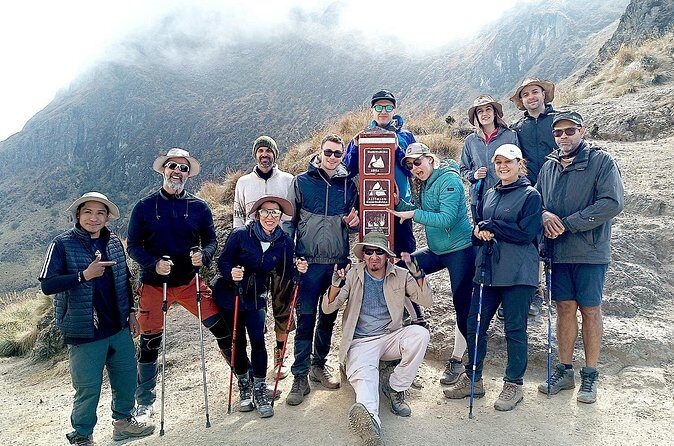
Your guide is a core part of the experience here. The tour includes a professional guide in Portuguese or Spanish (language on request).
In the feedback, I saw names like Franklin and Giuliana showing up for praise. The recurring pattern is their balance: keeping the group together while staying flexible when people want to look longer at a viewpoint or take a slower moment to catch their breath. That kind of guiding isn’t just nice. It prevents wasted time and keeps you moving safely at altitude.
You’ll also notice the guide doesn’t only narrate. They connect what you’re seeing to Inca use and purpose—like explaining Llactapata during Day 1 and grounding Wiñayhuayna and tunnel stops in how the complex works.
If you’re the kind of person who likes photos, you’ll still get that. But if you want meaning, the guide time is where you get it.
Camps, meals, and the tiny rhythms that keep you going
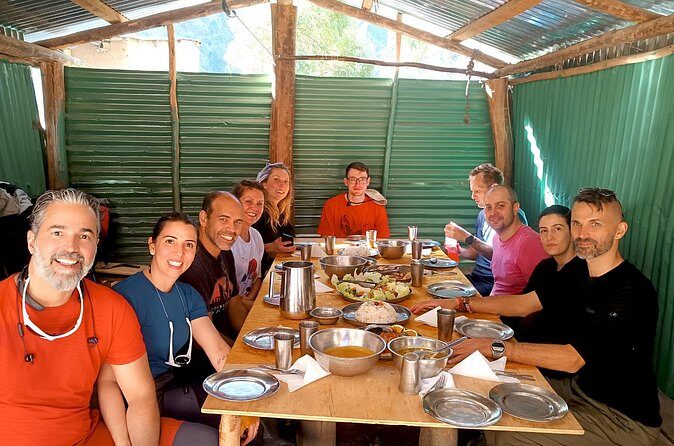
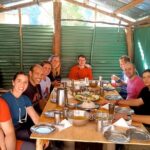
One detail that matters on multi-day treks is how you eat and how you recover each night. Here, your camp setup includes cooking and dining structure, plus portable bathroom equipment. That helps you avoid the end-of-day chaos that ruins morale on big hikes.
The food is a standout in the reviews. For a trek of this length, people consistently mention meals as better than expected. One review even noted that the cooks could bake a cake for one night. That’s the kind of small effort that keeps morale from sinking on cold nights.
A realistic rhythm looks like this: hike hard, arrive at camp, get food sorted, then spend the evening talking with your group instead of arguing with gear. In one review, there was also mention of a tea-time routine before dinner. Even if every day isn’t identical, it shows the team is trying to make camp feel like camp, not just survival.
Price and value: $905 is mostly what you’re not carrying
At $905 per person, this isn’t a cheap whim. But you’re paying for real costs: official entry, guided time, transport across multiple legs, and a full camp operation with porters, cooking, and gear.
If you tried to DIY it, the biggest expenses you’d still face are permits and the logistical support that makes the trek workable. Here, the tour bundles the pieces: camping setup, food service, and the train plus bus connections around Machu Picchu.
So the value isn’t just that the price includes tickets. It’s that it includes the infrastructure that protects your time and energy. And that’s what lets you focus on what you came for: the passes, the tunnels, and the sunrise entrance.
Who this tour suits best (and who should think twice)
This tour is best for you if you want:
- A structured, small-group Inca Trail crossing
- A guided Machu Picchu citadel visit that helps the site click
- A trek where you don’t carry camping equipment
- Early-morning sunrise views at Inti Punku
You should think twice if:
- You don’t handle cold well, because Day 2 can be cold
- You’re not confident with altitude, since the day hits up to 4,200m at Warmihuañusca
- You don’t plan on bringing a sleeping bag (you’ll feel it)
Also, the tour expects a strong physical fitness level. That doesn’t mean you need to be a runner, but it does mean you should be comfortable with long hiking days.
Booking call: should you book Dreamy Tours for the Inca Trail?
If you want a balanced mix of challenge and comfort, I think this is a smart booking. The small group cap (max 10), the included camping support, and the focus on a guided experience at Machu Picchu make it feel less like a scramble and more like a real trip with a plan.
I’d book if:
- You’re excited about sunrise at Inti Punku
- You want the historical context as you walk, not after
- You prefer having oxygen and first aid included instead of rolling the dice
I’d hesitate if:
- You’re hoping for a casual hike with little physical strain
- You don’t want to prepare for cold nights and high altitude
- You’d rather manage permits and transport yourself
One last tip: go in rested, hydrate, and bring layers. The trail gives you big rewards, but it expects effort in return.
FAQ
How long is the Inca Trail to Machu Picchu trek?
The tour is listed as approximately 4 days, with multiple day hikes and nights spent at camps on Days 1 through 3, plus the Machu Picchu visit on Day 4.
What time do you start from Cusco?
Pickup from your Cusco hotel is at 5:30 am on the first day.
Where do you start the trek?
You meet the group at Km. 82 before beginning the Inca Trail, after a brief stop in Ollantaytambo.
What’s included in the price?
Entrance to the Inca Trail and Machu Picchu, transport (Cusco–Km. 82 and Ollantaytambo–Cusco), a professional guide in Portuguese/Spanish on request, camping equipment, a cook, meals during the trek, oxygen and first aid, and return train to Ollantaytambo depending on availability.
What’s not included?
A sleeping bag is not included, breakfast on the first day is not included, and lunch at Machu Picchu/Aguas Calientes is not included. Extra carrier service is also not included.
Do I need a sleeping bag?
Yes. The tour data states that sleeping bag is not included, so you should plan to bring or arrange one.
How many people are in the group?
The tour has a maximum of 10 travelers.
How difficult is it?
It requires a strong physical fitness level. Day 2 includes cold weather and includes the Warmihuañusca (Death Pass) climb at about 4,200m, which is described as the most difficult part.
What language will the guide speak?
The guide is listed as Portuguese/Spanish, with the language available on request.
Is this tour refundable if plans change?
No. The experience is non-refundable and cannot be changed for any reason.