REVIEW · LIMA
Lima: Spiritual Healing with Xanga – The Smokeable Ayahuasca
Book on GetYourGuide →Operated by Xangaperu · Bookable on GetYourGuide
This isn’t the usual jungle Ayahuasca. It’s a Lima-based ceremony with Xanga, a smokeable plant medicine.
What I like most is the shorter 15–30 minute experience (so you’re not tied up for hours in altered states), and the way Paul keeps the process structured, calm, and supported. The one drawback to consider: even though nausea is much less likely than with drinkable ayahuasca, this is still an intense spiritual experience with clear rules and health screening.
You’ll start at Huaca de La Luna and do a mountain hike to the ceremony area. Paul, trained in Andean shamanic traditions, guides the full flow in English or Spanish in a small group of up to 4.
In This Review
- Xanga with Paul in Lima: the big idea and why it’s interesting
- Key highlights I’d plan around
- Xanga vs drinkable ayahuasca: what’s really different
- Huaca de La Luna 420: where the ceremony day starts
- The hike up: clearing your head before the rituals
- The guided part on the mountain: the cleansing that sets the tone
- Hapé ceremony and sound therapy: the supporting acts that matter
- The Xanga ceremony: your 15–30 minute medicine journey
- Integration time: fruit, refreshments, and therapy support
- Paul’s role: calm structure, clear expectations, and presence
- Practicalities in Lima: timing, group size, and what to pack
- Price and value: is $300 worth it?
- Who this suits best (and who should skip it)
- Should you book Xanga with Paul in Lima?
- FAQ
- How long is the Xanga ceremony experience?
- Where is the meeting point for the tour?
- What is Xanga, and how long do the effects last?
- Is nausea common compared to drinkable ayahuasca?
- Who is it not suitable for?
- What should I avoid before the ceremony?
Xanga with Paul in Lima: the big idea and why it’s interesting
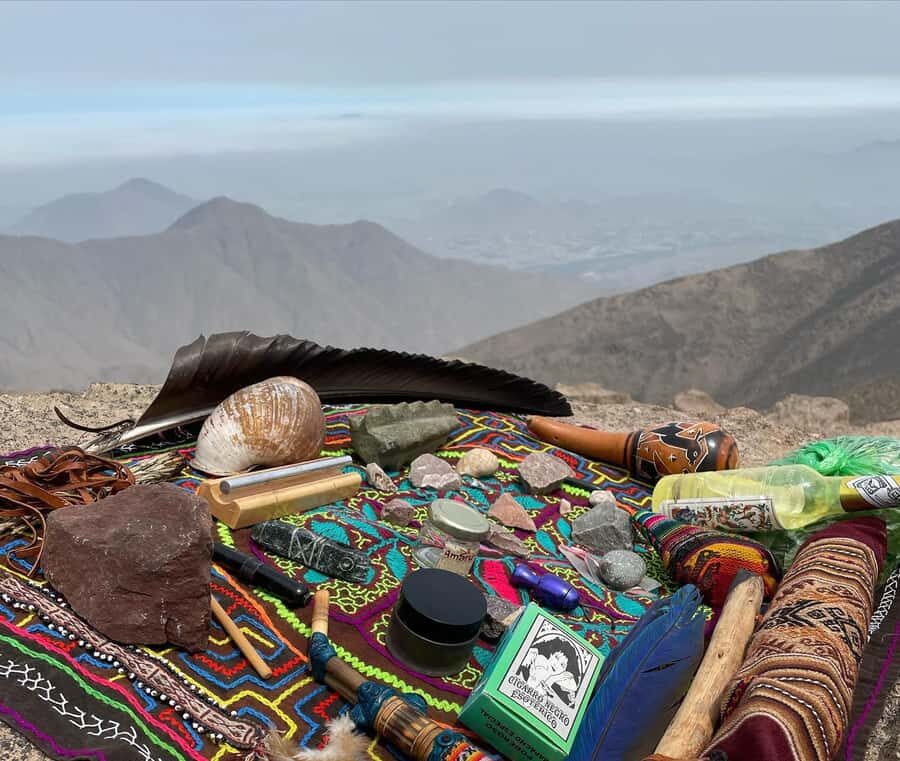
If you want the spirit of ayahuasca-style healing but with a more time-friendly format, Xanga is built for that. It uses the same active ingredient as ayahuasca, but the ceremony experience is shorter—typically 15–30 minutes once the medicine journey begins.
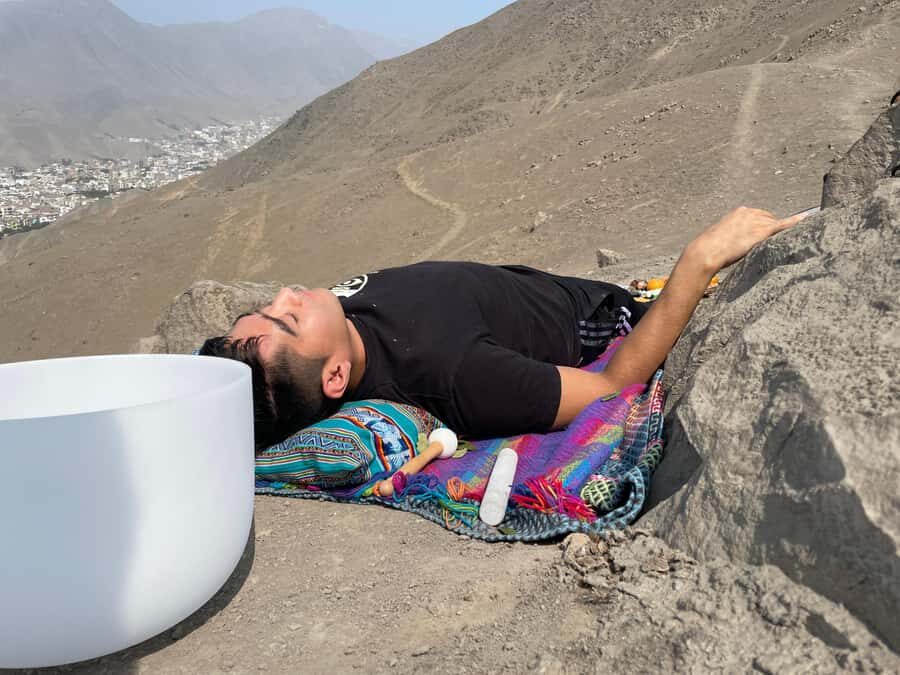
The setting matters too. You’re not sitting in a crowded room; you’re doing it on a serene mountaintop with an itinerary that includes a hike, cleansing rituals, an offering to Pachamama, and sound therapy for emotional and mental steadiness.
Key highlights I’d plan around
- Same active ingredient as ayahuasca, but effects are usually 15–30 minutes
- Much less likely nausea compared to drinkable ayahuasca, with a quicker return to normal
- Mountain-top ceremony in Lima, complete with a view that shifts through the day
- Andean tradition touchpoints: Palo Santo, White Mexican sage, Pachamama offering, coca ceremony, Hapé ceremony
- Small group capped at 4 participants, so you’re not just one face in a crowd
You can also read our reviews of more tours and experiences in Lima.
Xanga vs drinkable ayahuasca: what’s really different
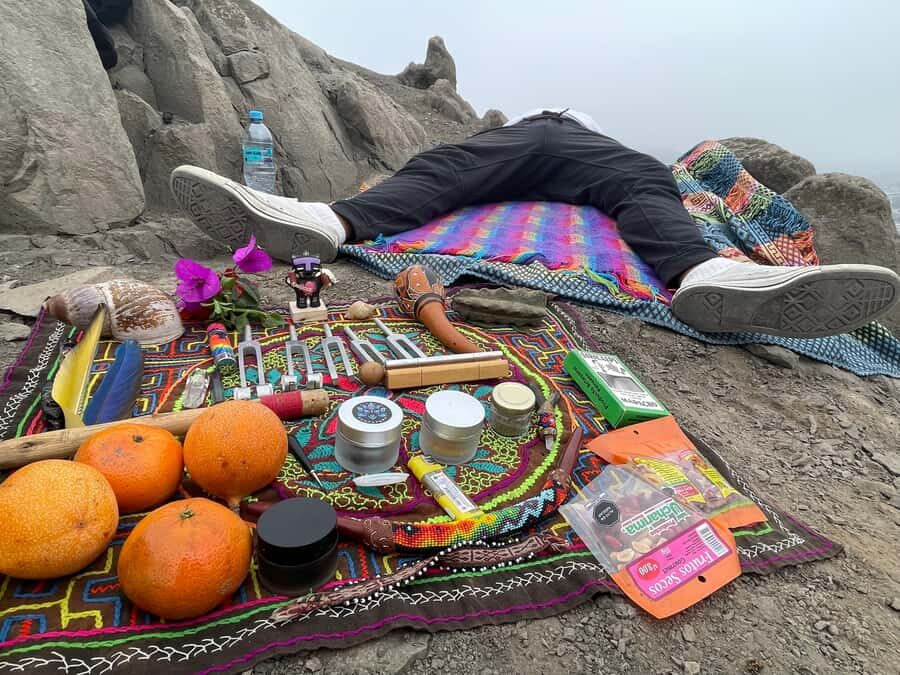
Xanga is a smokeable plant medicine prepared in house, made from Mimosa Hostilis as its principal ingredient. It’s combined with other master plants including Egyptian Blue Lotus and Syrian Rue, plus additional plants used to round out the formulation.
Functionally, here’s what that means for you. The ceremony aims to deliver the same kind of active ingredient experience you’d associate with ayahuasca, but in a format that’s easier to fit into a travel day. You’re looking at a shorter medicine window, and Paul’s approach also allows for multiple journeys during the ceremony if you feel called to continue exploring.
The other difference is how your body usually responds. The program is designed so Xanga is much less likely to cause nausea, vomiting, or other undesired effects that can happen with drinkable ayahuasca. That doesn’t mean you’ll feel nothing. It means the protocol is oriented toward a smoother physical experience so you can focus on the spiritual and emotional work.
Huaca de La Luna 420: where the ceremony day starts
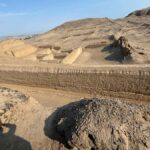
You begin at Huaca de La Luna 420. It’s not just a random starting point—it’s a meaningful local setting in Lima Province where you’ll gather before the hike.
Meeting up is practical and specific. You’ll be passing Ovalo de los condores, continuing up Los Fresnos past the church, then up prolongacion de Los Fresnos toward Vilcabamba. Turn left and continue down Vilcabamba until you reach Huaca de La Luna, then turn right and keep going up Huaca de La Luna to the grey building marked 420. You’re opposite a building with no number and wooden garage doors. Call Paul or press the top right button on the intercom when you’re outside.
Why I think this matters: you’ll want your nerves to be calm before anything starts. A clear meeting point and a guide who’s easy to contact reduces the frantic pre-ceremony chaos that can sabotage a grounded mindset.
The hike up: clearing your head before the rituals
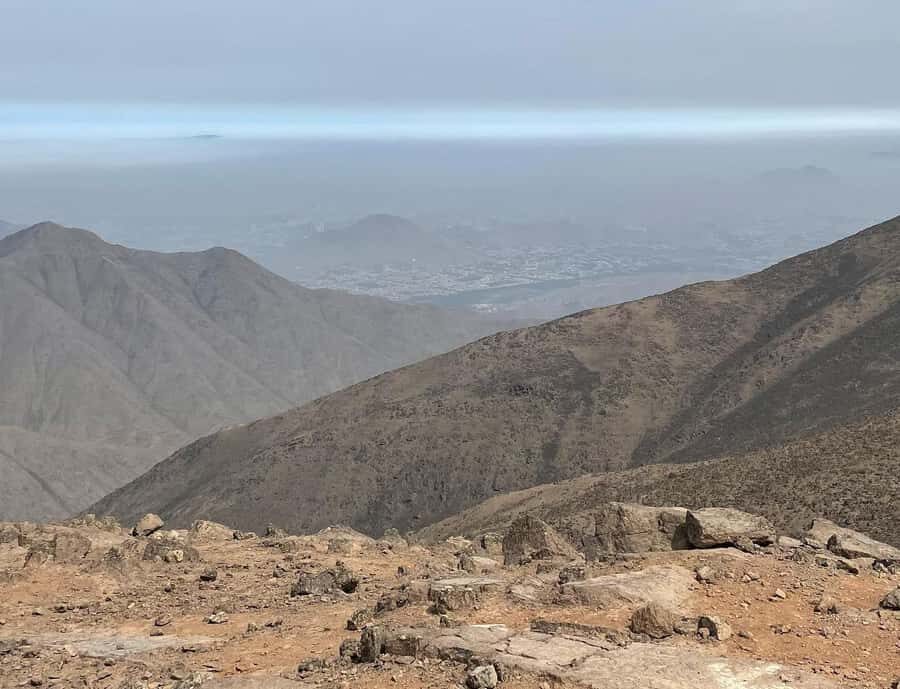
After you start, you’ll hike for about 30 minutes toward the ceremony space. The broader timing info also points to a hike around 20 minutes, so plan for roughly a half-hour climb each way depending on pace and conditions.
This part isn’t filler. Movement helps you arrive in your body. It also gives you something tangible to focus on while you’re transitioning into a different mental space—breath, steps, and the effort of getting higher.
Practical note: bring what you need for the Lima sun and changing mountain air. Wear comfortable clothes, and include a sun hat. A light jacket is also a good idea since the mountain can feel cooler than you expect.
The guided part on the mountain: the cleansing that sets the tone
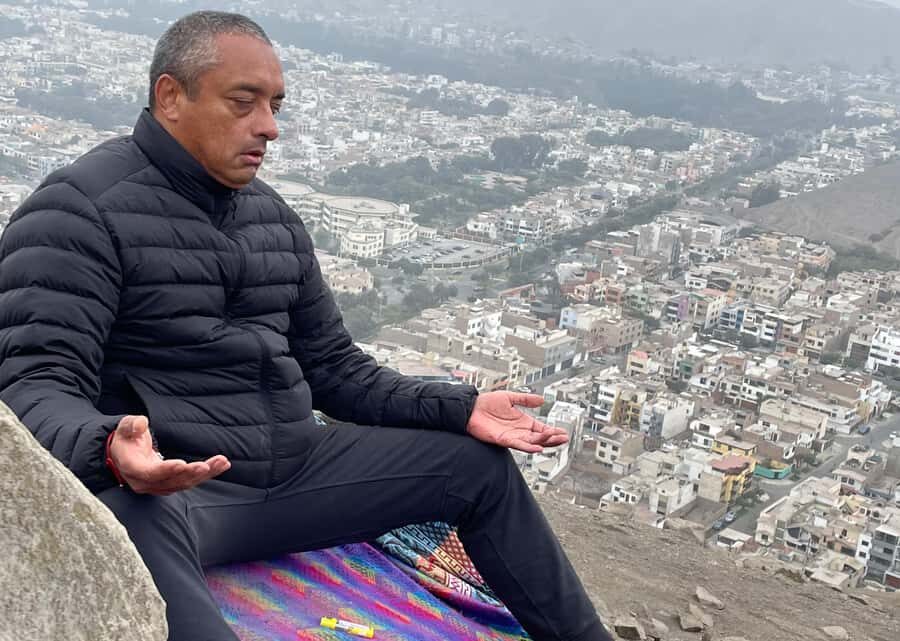
Once you reach the ceremony area, the main guided portion takes about 3 hours. Think of it as a sequence designed to prepare you, open you, and then help you integrate—without rushing.
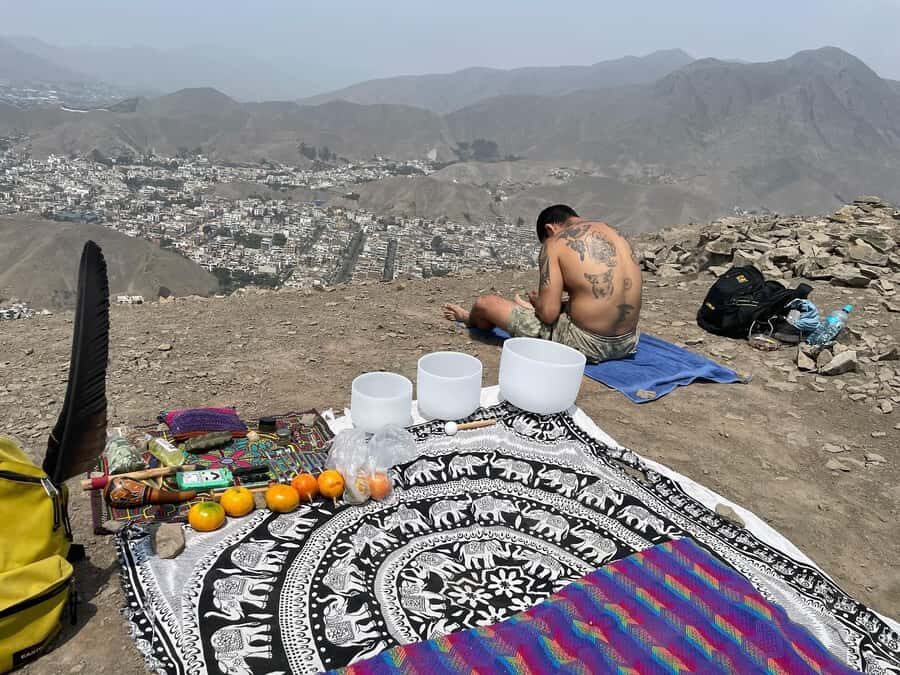
The first layer is a cleansing ritual with Palo Santo, White Mexican sage, and sacred essences. For you, the value here is psychological and spiritual at the same time: the ritual gives you an intentional start. Instead of wondering how to act or what to expect, the ceremony itself tells your nervous system: we’re doing this properly.
Next comes an offering to Pachamama (Mother Earth). It’s a gratitude act, and you’ll feel the difference when the tone shifts from self-focus to relationship—nature, place, and respect.
Then there’s a coca ceremony, aimed at connecting with ancestral energies. Even if you don’t have deep background in Andean traditions, this moment helps you slow down and recognize that you’re not only taking something from the experience. You’re participating in a cultural and spiritual framework that’s been practiced long before modern tourists arrive.

Hapé ceremony and sound therapy: the supporting acts that matter
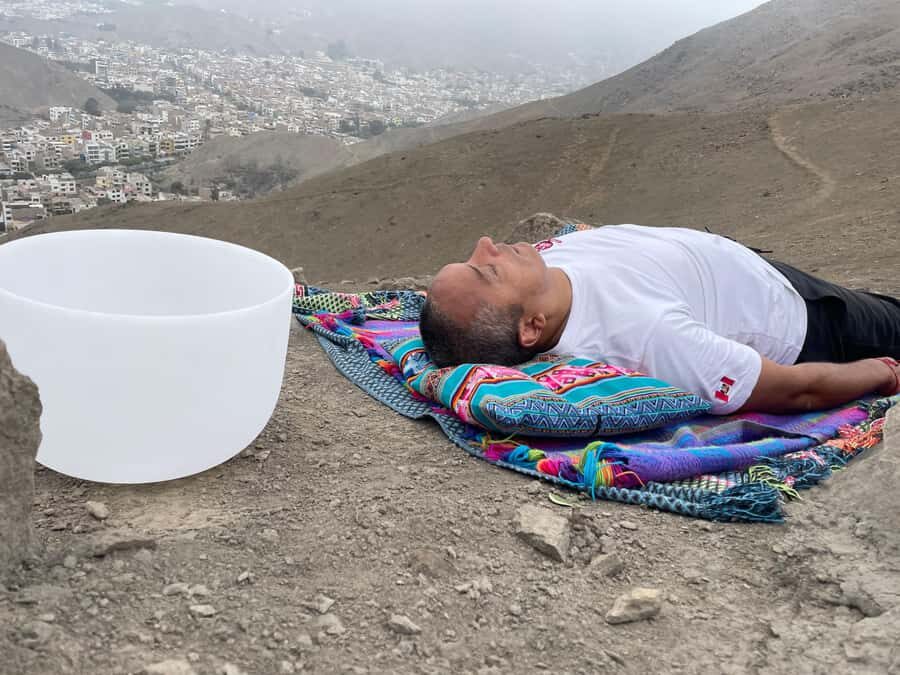
After the cleansing and nature-focused steps, you’ll do a Hapé ceremony. Hapé is mentioned directly as part of the protocol, and the purpose given is to cleanse and open your energetic channels.
What that means in plain terms: it’s another stage of preparation before the medicine journey. It’s not just ceremony for ceremony’s sake. It’s structured to help you feel more centered, which can make the medicine effects feel less chaotic and more readable.
Then comes sound therapy. Sound is often underestimated, but in this kind of work it can help you stay with what you’re feeling instead of fighting it. If you’re sensitive to anxiety or mental spirals, steady guidance and sound can act like emotional rails.
The Xanga ceremony: your 15–30 minute medicine journey
Here’s the heart of it: the Xanga ceremony with the smokeable plant medicine. The medicine effects typically last around 15 to 30 minutes, which is a huge difference from traditional brewed ayahuasca timing.
You can also journey various times during the ceremony. That flexibility matters because not everyone needs the same level of exploration. Some people want one focused pass; others want to go a bit deeper or repeat in a guided rhythm.
The program also emphasizes that by the end, participants can return to complete normality with no undesired after-effects. I’d interpret that as a strong design goal rather than a guarantee that you’ll never feel emotional residue. In practice, you should still treat the day like a serious healing session: plan to be respectful, quiet, and ready for reflection.
What to watch for internally
- Expect a transcendental journey and personal insights.
- The intention includes emotional stabilization, enhanced mental clarity, and a break from addictive behaviors.
- You may feel a stronger connection to spirituality and the natural world.
And yes, intensity is part of the deal. Even when the physical side effects are less likely, this is not a light wellness activity. If you’re coming in expecting a spa reset, you’ll be disappointed. If you’re coming in ready for change, it can be powerful.
Integration time: fruit, refreshments, and therapy support
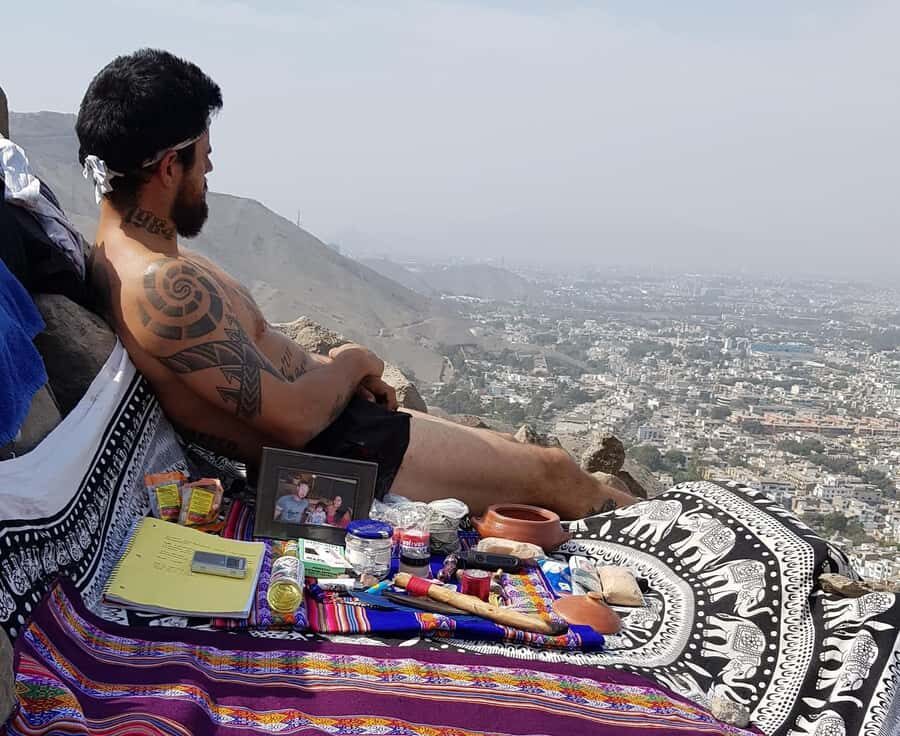
After the medicine journey, you’ll have fruit, refreshments, and integration therapy. This is where you make sense of what happened. Without integration, spiritual experiences can blur into confusion.
The structure helps you do this in a supportive environment. You’re guided to reflect and connect after the ceremony, not just released back into daily life.
Then you’ll hike back down for about 30 minutes and return to Huaca de La Luna 420.
Why integration is the make-or-break moment
A shorter medicine experience is easier to schedule, but it still needs processing. Integration therapy gives your brain a chance to translate emotion, imagery, and intuition into something you can carry forward.
Paul’s role: calm structure, clear expectations, and presence
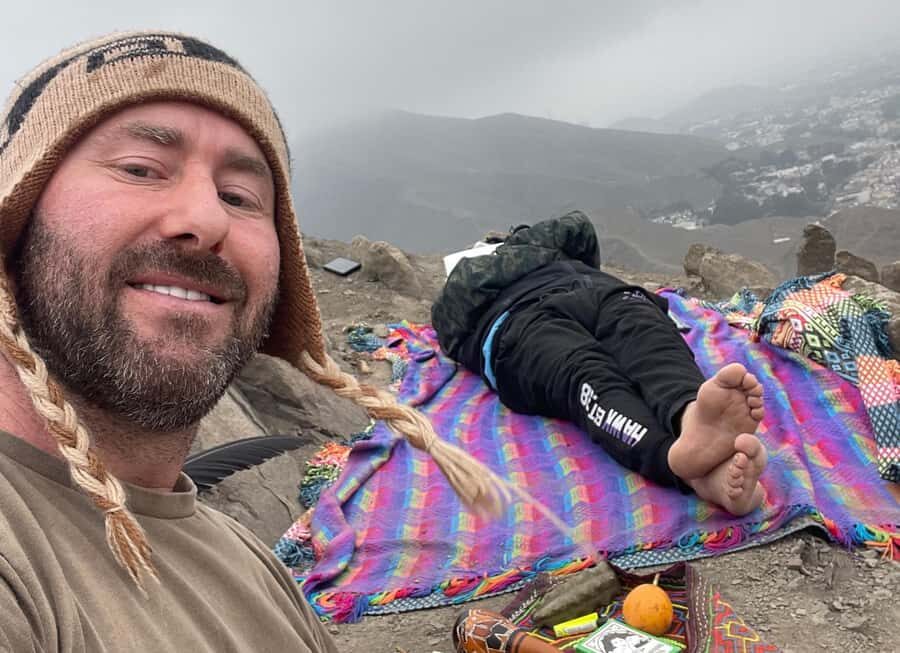
Paul is the facilitator. He’s described as an experienced practitioner trained in Andean shamanic traditions.
What stands out for you as a participant is how the process is explained and supported. The ceremony is not treated like a mystery box. You’re given clear expectations, space to reflect afterward, and steady guidance during the journey. That’s especially important if this is your first time with Xanga or any ayahuasca-style medicine.
In practical terms, Paul’s presence reduces the common fear pattern: will I be left alone if things get intense? The way the experience is framed suggests you won’t be.
Practicalities in Lima: timing, group size, and what to pack
This is a 4-hour activity in total, with check availability for starting times. It’s a small group experience limited to 4 participants, which helps with individualized attention and makes the atmosphere quieter.
The ceremony is not suitable for pregnant women or children under 18. You’ll also want to avoid alcohol and drugs. The guidance is clear: don’t consume alcohol or other drugs for at least 48 hours prior to the ceremony.
What to bring
- Sun hat
- Jacket (light layer for mountain air)
- Comfortable clothes
Not included
- Transportation to the venue
- Personal expenses
So before you book, I’d plan your transport timeline like a pro. You’re doing a hike and a structured ceremony, so late pickups and confused schedules can mess with your head.
Language support
English and Spanish are offered.
Price and value: is $300 worth it?
At $300 per person for about 4 hours, this isn’t a bargain price. But it also isn’t a casual add-on, either. You’re paying for a guided medicine ceremony with multiple ritual components, a small group limit, and the preparation of the medicine in house.
Here’s the value equation I’d use:
- You save time versus the longer brew format because the medicine effects are usually 15–30 minutes
- You’re in Lima rather than coordinating an entire jungle retreat
- The protocol aims to reduce nausea and unwanted effects compared to drinkable ayahuasca
- Integration therapy and a careful ritual sequence help the experience land in your life afterward
If you’re someone who wants the spiritual healing potential without losing an entire day to traditional brew timing, that $300 can feel reasonable. If you’re simply curious and want a low-commitment experiment, it may feel steep—because it’s still serious work with clear restrictions.
Who this suits best (and who should skip it)
This works best for you if:
- You’re drawn to Andean shamanic tradition and a structured ceremonial flow
- You want an ayahuasca-style active ingredient experience but in a shorter format
- You prefer a setting that’s more grounded and supported than a purely experimental setting
- You appreciate a small group atmosphere and a guide who explains expectations clearly
You should skip it if:
- You’re pregnant
- You’re under 18
- You have health problems or you’re on prescription medications without first contacting the provider for advice
- You’ve had alcohol or other drugs within the last 48 hours
Also, if you’re prone to panic, this is still intense medicine work. The ceremony aims to create safety and support, but you should treat it with respect, not bravado.
Should you book Xanga with Paul in Lima?
If you want a serious healing ceremony, but you don’t want to take on the long timing and more intense physical side effects that can come with drinkable ayahuasca, I’d strongly consider booking. The mountaintop Lima setting, the Andean ritual sequence (Pachamama offering, coca ceremony, Hapé, sound therapy), and the shorter 15–30 minute medicine window make this a smart option for people who want change without losing a whole travel week.
Book it if you’re ready to follow the rules, show up with an open mind, and treat integration as part of the experience—not optional homework. Skip it if you’re looking for a casual wellness afternoon, or if you don’t meet the eligibility requirements (especially pregnancy and age).
FAQ
How long is the Xanga ceremony experience?
The total duration is about 4 hours. The ceremony itself is around 3–4 hours and includes mountain hiking.
Where is the meeting point for the tour?
The meeting point is Huaca de La Luna 420. The instructions direct you to a grey building marked 420, opposite a building with no number and wooden garage doors, where you should call Paul or use the intercom button.
What is Xanga, and how long do the effects last?
Xanga is a smokeable plant medicine made from Mimosa Hostilis as the main ingredient, along with Egyptian Blue Lotus, Syrian Rue, and other plants. The effects last approximately 15 to 30 minutes, and you can journey various times during the ceremony.
Is nausea common compared to drinkable ayahuasca?
Xanga is much less likely to cause nausea, vomiting, or other undesired effects than drinkable ayahuasca, and it rarely causes nausea. The goal is a smoother experience with no unwanted after-effects by the end of the ceremony.
Who is it not suitable for?
It is not suitable for pregnant women or children under 18.
What should I avoid before the ceremony?
You should not have consumed alcohol or other drugs for at least 48 hours prior to the ceremony. Alcohol and drugs are also not allowed during the experience.