REVIEW · HUARAZ
Ancash: Lagoon Route 69 – trekking guide |Full day|
Book on GetYourGuide →Operated by Uyuni Experience EIRL · Bookable on GetYourGuide
Laguna 69 is the kind of hike you remember. From Huascarán National Park’s Llanganuco Valley to the intense turquoise of a glacial lake, this full-day trek is built around scenery, timing, and that big payoff view of Chacraraju.
I like how the day balances driving with hiking, so you don’t feel rushed before you even start. I also like the small-group format (up to 15 people), which makes the day feel calmer as you move from stop to stop. One thing to consider: the tour promises live guiding in English and Spanish, but if language is your top priority, you should confirm expectations before booking.
In This Review
- Key Highlights You Should Actually Care About
- Laguna 69 in Huascarán: why this hike has big gravity
- The 5:00 a.m. departure from Huaraz (and why it’s worth it)
- Entering Huascarán and reaching Llanganuco Valley lakes
- Cebollapampa: the start of the hike and how to pace your climb
- Laguna 69 arrival: turquoise color, viewpoint, and the Chacraraju wall
- Heading down: 2 hours back to Cebollapampa and your timing buffer
- The small-group feel and the language reality check
- Transportation, stops, and why the schedule needs respect
- Who should book this Laguna 69 day hike
- Should you book this Laguna 69 trek with Uyuni Experience EIRL?
- FAQ
- What time does the Laguna 69 tour start?
- How long is the hike to Laguna 69?
- Where do we start the hike?
- What stops are made before reaching the hike area?
- How long is the stop at Chinancocha?
- What will I see at the top?
- What time will I return to Huaraz?
- What language options are offered by the tour guide?
- How big is the group?
Key Highlights You Should Actually Care About
- 5:00 a.m. start keeps you on the trail early, which matters in the mountains
- Chinancocha photo stop is short (around 10 minutes), so plan to move fast and save energy
- 3 hours up, 2 hours down gives a clear sense of what your legs will handle
- Laguna 69 viewpoint to the lake turns a picture moment into a real walk
- Chacraraju backdrop at 6,108 meters is the main visual reward at the top
Laguna 69 in Huascarán: why this hike has big gravity
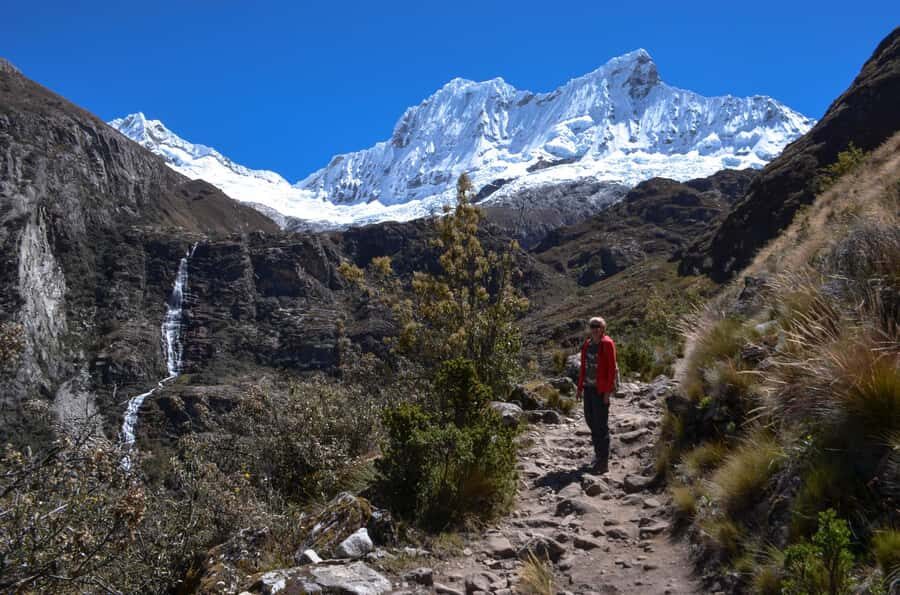
Laguna 69 is one of those hikes that shows up on almost every serious route list for Peru’s Cordillera Blanca. The reason is simple: you hike into a glacial setting, and the lake color and surrounding peaks do the heavy lifting. When you’re standing there, it’s hard not to understand why guides talk about it like a must-see.
What I like most is that the experience is visual from start to finish. You get valley views along the way, then the big reveal at the lake level, with Chacraraju looming at 6,108 meters. It’s not a slow sightseeing stroll; it’s a day where the scenery grows more intense as you gain altitude.
The other thing you should know: this is a hike with a purpose. The walking time is meaningful, the stops are brief, and the payoff is tied to reaching Laguna 69 and taking in that turquoise color plus the mountain drama around it.
You can also read our reviews of more tours and experiences in Huaraz.
The 5:00 a.m. departure from Huaraz (and why it’s worth it)
Your day begins early, with departure from Huaraz around 5:00 a.m. in tourist transportation, either private or shared. You drive north through Yungay and onward toward the Callejón de Huaylas, which is the classic Andean valley corridor connecting high-mountain scenery with road access.
Early starts are never fun, but they work here. They help you reach the hiking area with enough time to climb steadily, pause when you need photos, and still get back before evening. In a place where weather can change quickly, getting an early start is often what separates a smooth day from a rushed one.
You’ll stop for breakfast in Huashao, near Huascarán National Park. That break matters because the hike begins at Cebollapampa and includes a solid ascent. If you skip breakfast, you’ll feel it before you even hit the steep part.
Entering Huascarán and reaching Llanganuco Valley lakes
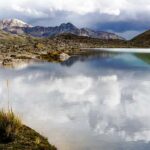
Once you’re inside Huascarán National Park, the drive focuses on the Llanganuco Valley area. Along the way, you pass Chinancocha and Orconcocha, which are part of the region’s high-mountain lake system.
Here’s the practical part: in Chinancocha, there’s a brief photo stop of about 10 minutes. Ten minutes sounds like nothing until you realize you’re also loading your camera, checking your footing, and trying to capture the scene before the group moves on. I’d treat it like a quick reset, not a long break.
This stop is also useful for setting expectations. You’ll see the kind of glacial, high-altitude color palette you’re working toward later at Laguna 69. It’s a small preview that makes the main viewpoint feel like a payoff rather than a surprise.
Cebollapampa: the start of the hike and how to pace your climb
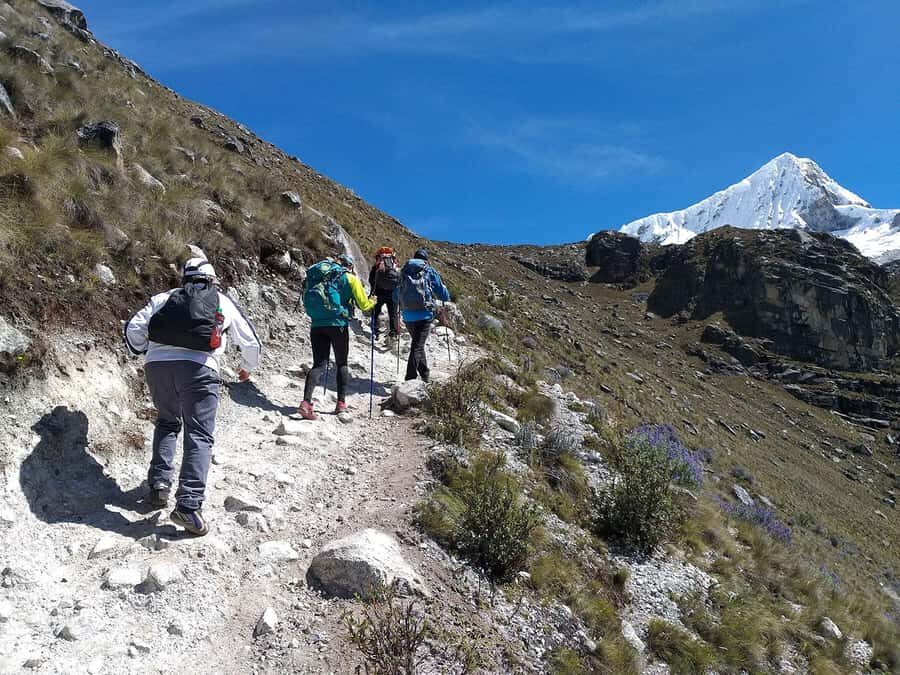
From the lakes drive, you head to Cebollapampa, the hike starting point. The trek begins with an ascent of about 3 hours, and this is the core physical block of the day.
The best way to enjoy this part is to stop thinking in terms of speed and start thinking in terms of rhythm. Three hours uphill in altitude country usually feels better when you move steadily, breathe deliberately, and don’t try to “win” the climb. I find it helps to keep your eyes alternating between your footing and the broader mountain lines so you don’t miss the changing views as you gain elevation.
This hike is famous for its scenery, but the ascent is still work. If you go out too hard, you’ll arrive at the top feeling drained. Save your energy for the final stretch and the time you spend actually looking at Laguna 69 and the mountains behind it.
Laguna 69 arrival: turquoise color, viewpoint, and the Chacraraju wall
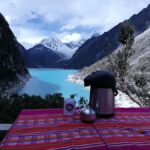
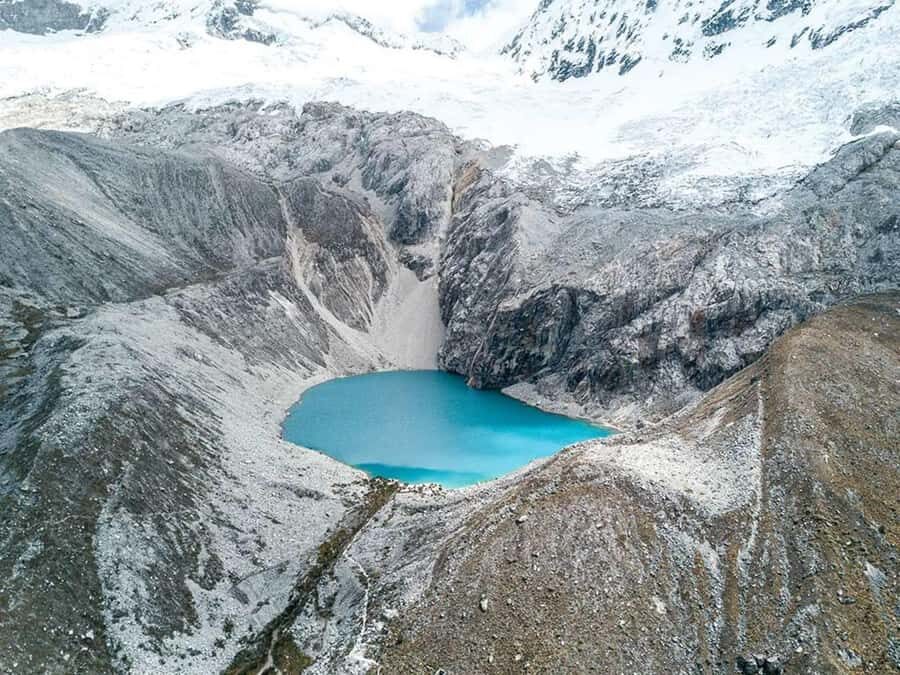
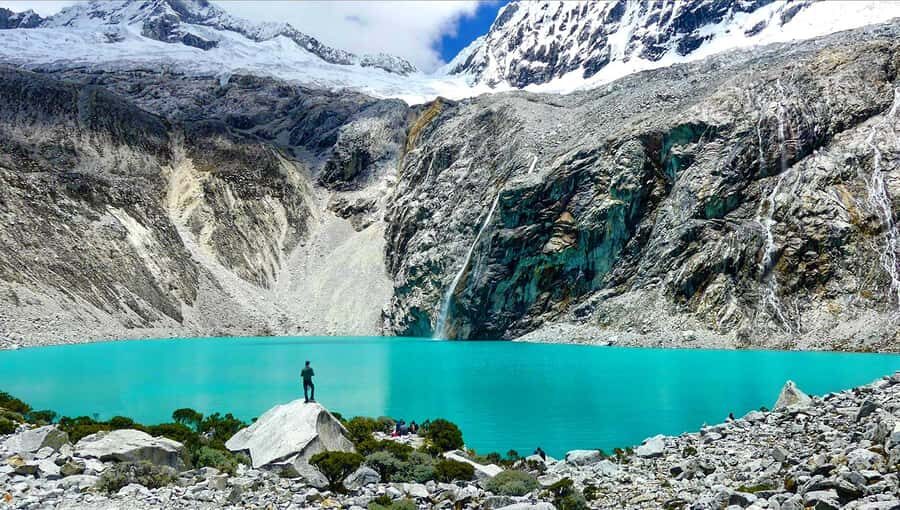
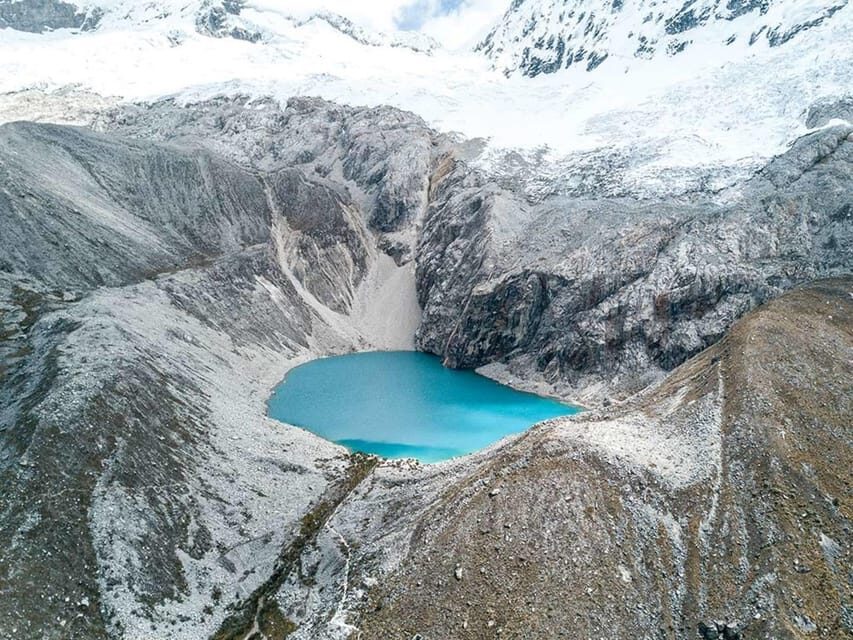
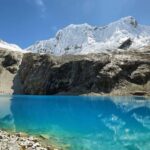
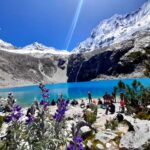
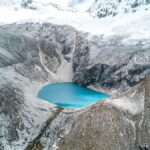
When you arrive at Laguna 69, the whole day locks into place. The highlights are exactly what you’d hope for: the lake’s spectacular turquoise color and the imposing view of Chacraraju, sitting at 6,108 meters above sea level.
Even at the top, the experience isn’t only standing still for photos. You’ll have the chance to contemplate the view, but you’ll also walk from the viewpoint to Lake 69, which turns it from a drive-by shot into a real destination moment. That short walk is worth it because it changes the angle and gives you a better sense of the lake’s scale.
One thing I’d keep in mind: at this altitude zone, your senses get sharper. The mountain silhouettes feel more defined, and the water color stands out more than you expect from a distance. If you’re hoping for a “wow” moment, this is where it happens.
You can also read our reviews of more hiking tours in Huaraz

Heading down: 2 hours back to Cebollapampa and your timing buffer
After the Laguna 69 time, you return to Cebollapampa, where the transportation is waiting for you. The hike back includes a descent of about 2 hours, which is usually easier than the climb, but still can be tough on knees and quads.
Descent days are where many people either feel great or feel regret. I recommend a controlled pace, short steps, and staying aware of footing. Your legs will still be working when the day feels “almost over,” and that matters because your ride back to Huaraz is planned for late afternoon into early evening.
According to the schedule, the return trip follows the same route and you should reach Huaraz at about 6:00 p.m. That means the top-of-hike viewing time is important, but so is how you handle the way down.
The small-group feel and the language reality check
This activity is set up as a small group limited to 15 participants, with a live tour guide in English and Spanish. In practice, that structure is a good sign for both attention and comfort. You’re not lost in a huge crowd, and you’re more likely to get clear explanations while moving between stops.
Still, language can make or break your enjoyment. One recent experience shared that the guide’s explanations were much heavier in Spanish than English, and the English parts felt much shorter than expected. Another issue raised was that the end timing didn’t match what the group expected, with the bus leaving more than an hour late.
I’m sharing this because it’s exactly the kind of detail that affects your day. If you need consistent English explanations throughout, I’d treat this as a cue to message the provider in advance and ask how they balance languages during the trek. If you’re comfortable with Spanish basics or you’re mainly there for the hiking and views, you may not feel it as strongly.
Transportation, stops, and why the schedule needs respect
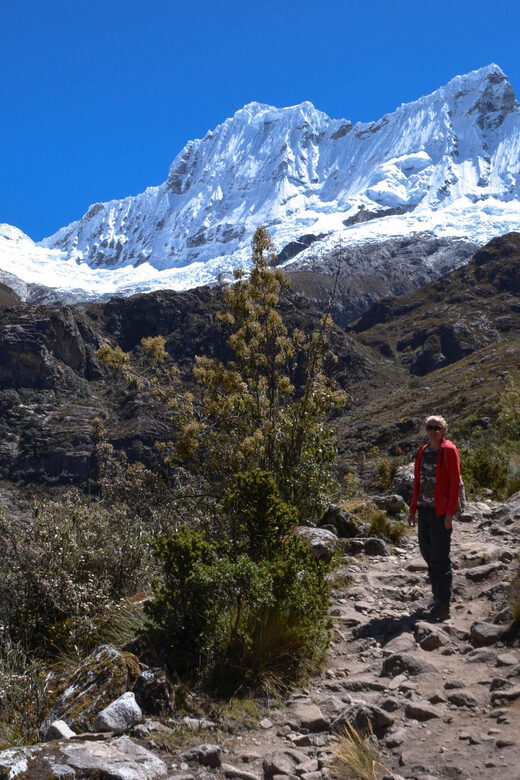
This tour is built around a full-day flow: early departure, a breakfast stop, lake viewing along the drive, the main hike, and then the return to Huaraz. That structure is great for people who want one big outing without the complexity of multi-day trekking.
But it’s also why you should respect timing. The Chinancocha stop is only around 10 minutes, the climb is about 3 hours, and the descent is about 2 hours. Those are fixed blocks, so if you’re the type who wants unlimited wandering time at each viewpoint, this day won’t match that style.
The upside is that you’ll leave Huaraz and return in daylight hours with a plan that makes sense. The downside is that it’s not a slow, flexible wander. This is a guided day hike with a defined rhythm.
Who should book this Laguna 69 day hike
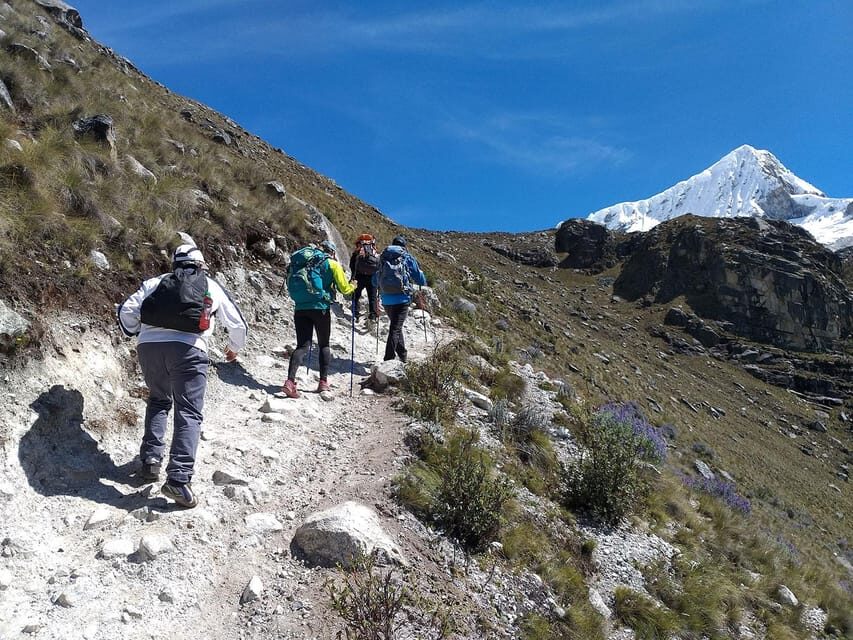
This is a strong match if you want the Cordillera Blanca experience in one day, and if you’re comfortable with a hike that’s mostly effort-focused: a 3-hour ascent and 2-hour descent. You’ll enjoy it most if you care about views and you can handle an early start without needing a second day just to recover.
You’ll also like it if you appreciate seeing more than one element of the region. You’re not just hiking to a lake; you’re also passing through the Llanganuco Valley and stopping briefly at Chinancocha and Orconcocha along the way. That helps the day feel like a mountain route, not only a single destination.
I’d be more careful if your top priority is English-only guiding. The tour lists English and Spanish, but real-world language balance can vary, and one negative experience highlighted exactly that mismatch. If you’re a strict language-first traveler, ask the provider directly how they handle both languages during the full day.
Should you book this Laguna 69 trek with Uyuni Experience EIRL?
If you want a classic Laguna 69 day hike from Huaraz with a real high-mountain setting and a big view payoff, this tour format makes sense. The combination of glacial-lake scenery, the walk from the viewpoint to the lake, and the Chacraraju backdrop is the reason you’re coming.
I’d only hesitate if you have very specific needs around English guiding consistency or you’re sensitive to schedule slippage. The structure is clear, but one reported experience mentioned both language mismatch and a late bus departure.
If that doesn’t scare you, book with confidence. Just do one smart thing first: message the provider to confirm how English will be used during the hike and at key points. If that’s sorted, you’ll be set up for a memorable, scenery-first day in Huascarán.
FAQ
What time does the Laguna 69 tour start?
The tour begins with departure from Huaraz at about 5:00 a.m.
How long is the hike to Laguna 69?
The hike includes about 3 hours of ascent and about 2 hours of descent.
Where do we start the hike?
The hike starts at Cebollapampa.
What stops are made before reaching the hike area?
You drive north through Yungay, stop for breakfast near Huascarán National Park in Huashao, then reach the Llanganuco Valley with stops around Chinancocha and Orconcocha.
How long is the stop at Chinancocha?
There is a brief photo stop of about 10 minutes at Chinancocha.
What will I see at the top?
At Laguna 69, you’ll see the lake’s turquoise color and a major view of Chacraraju (6,108 meters), and you’ll also walk from the viewpoint to Lake 69.
What time will I return to Huaraz?
The schedule calls for returning to Huaraz at approximately 6:00 p.m.
What language options are offered by the tour guide?
The tour lists live guiding in English and Spanish.
How big is the group?
The group is limited to 15 participants.