REVIEW · AGUAS CALIENTES
“Glamping Sky Lodge Domes” 2-Day Humantay Lake & Salkantay
Book on GetYourGuide →Operated by Quechuas Expeditions Peru S.A.C. · Bookable on GetYourGuide
Waking up before dawn changes the whole pace. This is a 2-day Salkantay-to-Humantay experience that mixes big-Andes views with glamping domes at high altitude, plus service that keeps you focused on the trail and the scenery. I love how the route moves from Cusco-country comfort into serious mountain air fast.
I also like that the trek isn’t just scenery—it’s time on the Salkantay trail with the feeling of older pathways under your boots, and it culminates at a high pass with classic glacier-and-peak views. The second big win for me is the support system: a professional bilingual guide, cook-led camp meals, and even an oxygen tank for peace of mind.
One thing to plan around: high altitude is still high altitude. Even with the stove warming the room at night, cold conditions can hit hard, and one guest noted a bathroom shower that wasn’t as hot as expected.
In This Review
- Key things to know before you go
- Salkantay and Humantay in 2 Days: Why This Route Feels Big
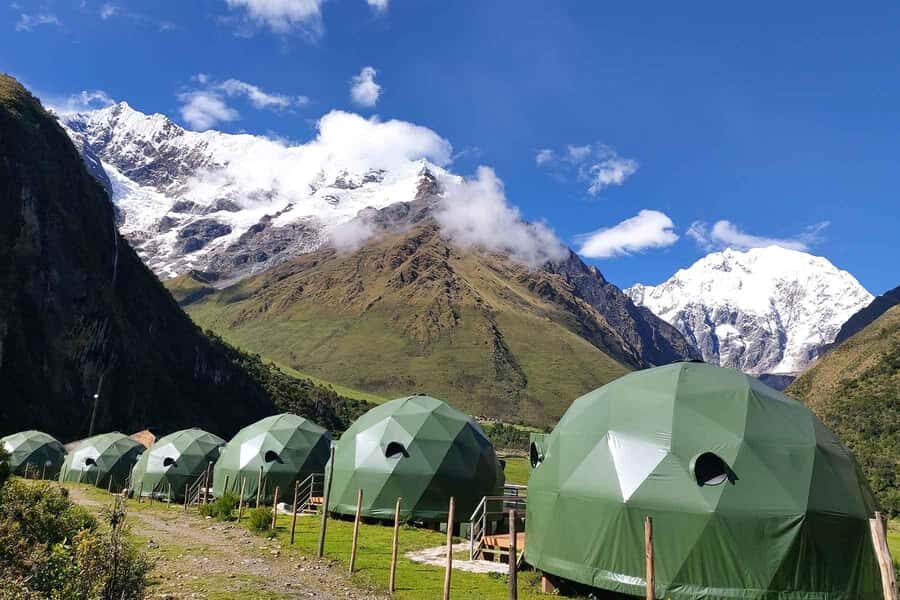
- Sky Lodge Domes at Soraypampa: Glamping Comfort at High Altitude
- Day 1: Cusco to Challacancha, the Water Channel, and Up to Soraypampa
- The first uphill: Water Channel panoramas
- Toward Soraypampa: cooler air, higher altitude, big silhouettes
- Day 1 Highlights: Why Humantay Lake at Camp Altitude Hits Different
- Day 2: The Salkantay Pass at ~4,650m (and the Snow Possibility)
- Pace and power: how to handle the climb
- Food, Guides, and the Small-Group Feel That Makes It Work
- Price and Logistics: Is $340 Good Value for This Kind of Trek?
- Entrance Fees, Gear Rentals, and What to Pack (Without Guessing)
- Who This Tour Fits Best (and Who Might Want Something Else)
- Should You Book This Glamping Sky Lodge Domes Tour?
- FAQ
- Where does the tour start and pick up?
- How long is the trek?
- What’s included in the price?
- What is not included?
- What language(s) is the guide?
- How big is the group?
- Is the oxygen tank included?
- What should I expect for sleeping arrangements?
- What’s the main hike schedule?
Key things to know before you go
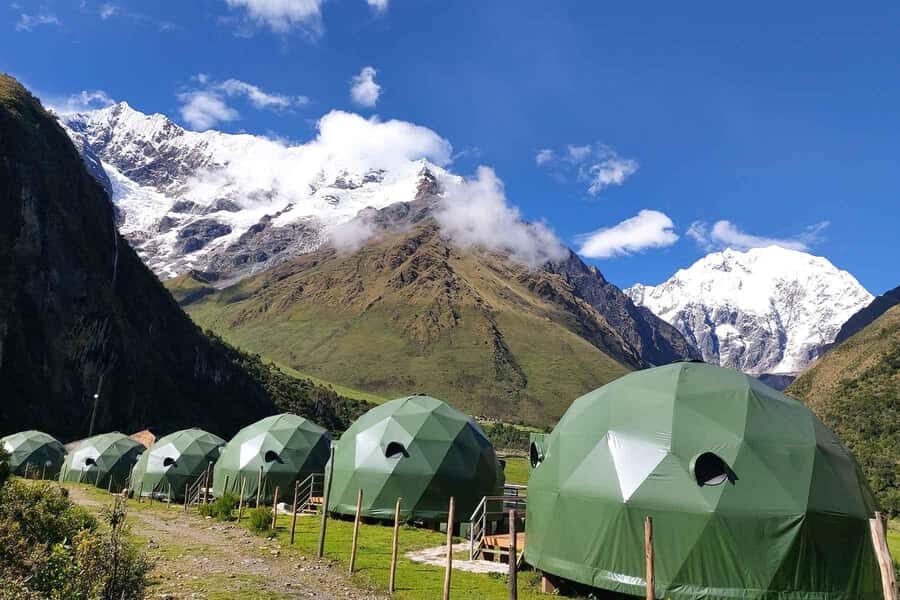
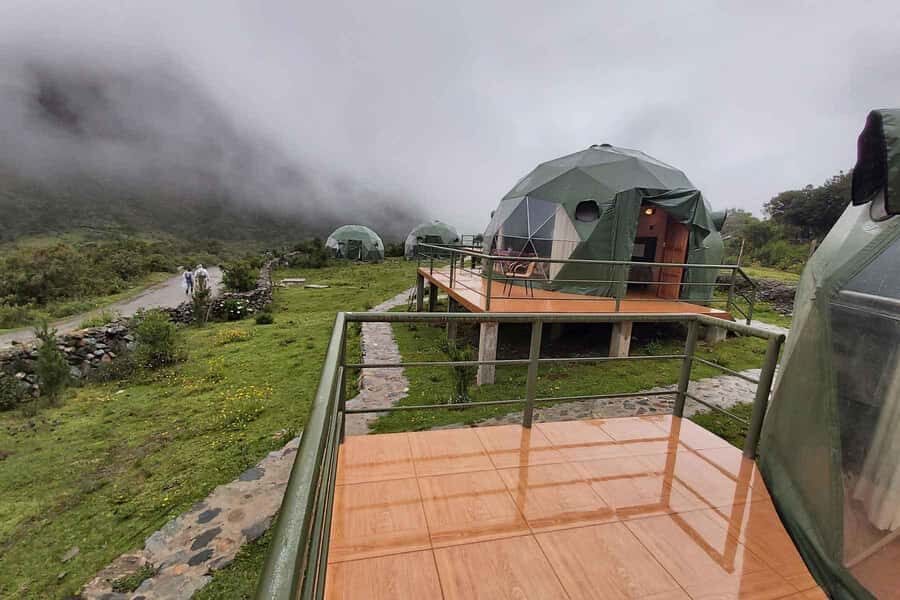
- Sky Lodge Domes at Soraypampa: private bathroom and hot shower included, plus a heater/stove used at night for comfort
- Early, efficient start: pickup at 4:30 a.m. gets you moving while the mountains are at their most dramatic
- Water Channel viewpoints: a short, steep opener that rewards you with big panoramas fast
- A real high pass on Day 2: the Salkantay Trek Pass sits around 4,650m, with a chance of snow
- Support that’s built for small groups: limited to 8 participants, with a guide plus a dedicated cook/chef
- Oxygen tank included: not a guarantee against altitude effects, but it adds reassurance
Salkantay and Humantay in 2 Days: Why This Route Feels Big
If you want the Andes look—peaks, glaciers, and that turquoise glacial-lake color—you’ll get it here without signing up for a week-long trek. The trick is pacing. You start early, hike through the cool hours, then you sleep high enough to feel the altitude without spending days in the tent.
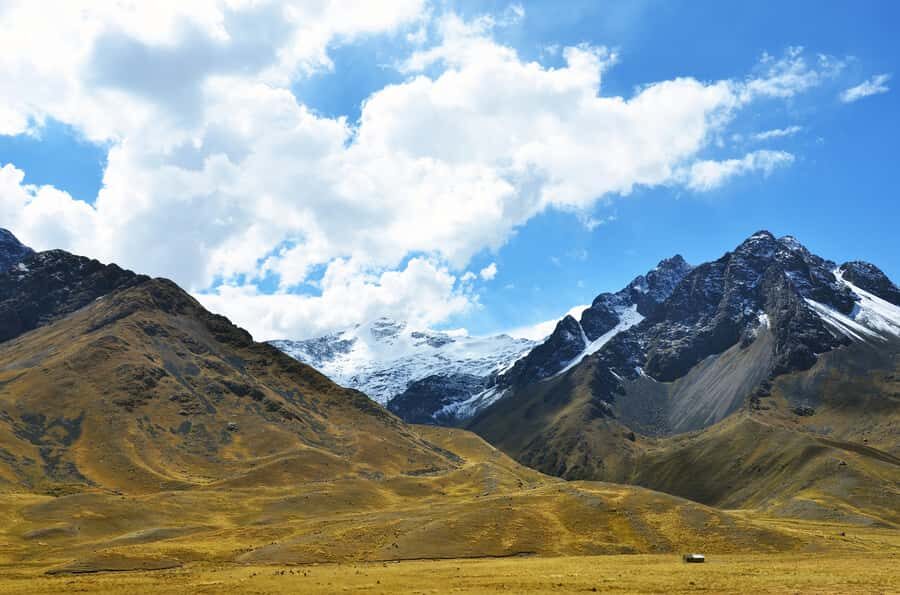
The route also hits two different kinds of mountain scenery. Day 1 sets you up with dramatic views of snow-capped giants like Humantay (4,120m / 13,500ft) and Salkantay (6,271m / 20,575ft). Day 2 pushes you toward the highest point area of this trek, with a pass between towering mountains and a genuine sense of being on a high ridge in the clouds.
You should know this isn’t a stroll. It’s a hike with uphill sections and cold conditions. The good news: the small-group setup, cook-run meals, and high-end camp comfort make it feel manageable for many travelers who want adventure but not chaos.
A few more Aguas Calientes tours and experiences worth a look
Sky Lodge Domes at Soraypampa: Glamping Comfort at High Altitude
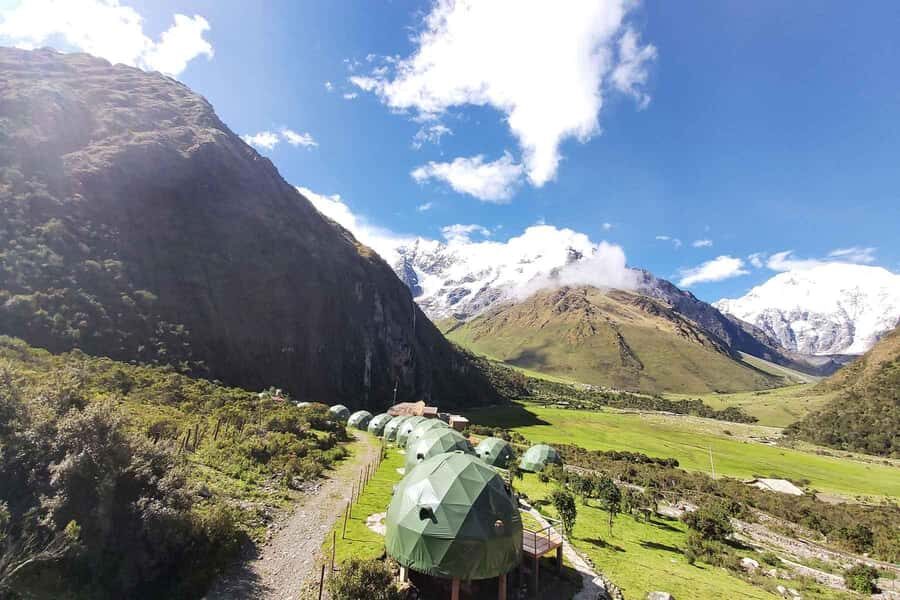
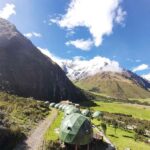
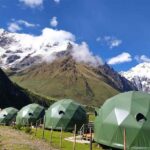
Soraypampa is the camp that matters. It’s high—around 3,800m (11,750ft)—and it’s described as the coldest point on the trek. That’s why the glamping domes feel like more than a gimmick. At that altitude, comfort isn’t about luxury points; it’s about helping your body recover so you can tackle Day 2.
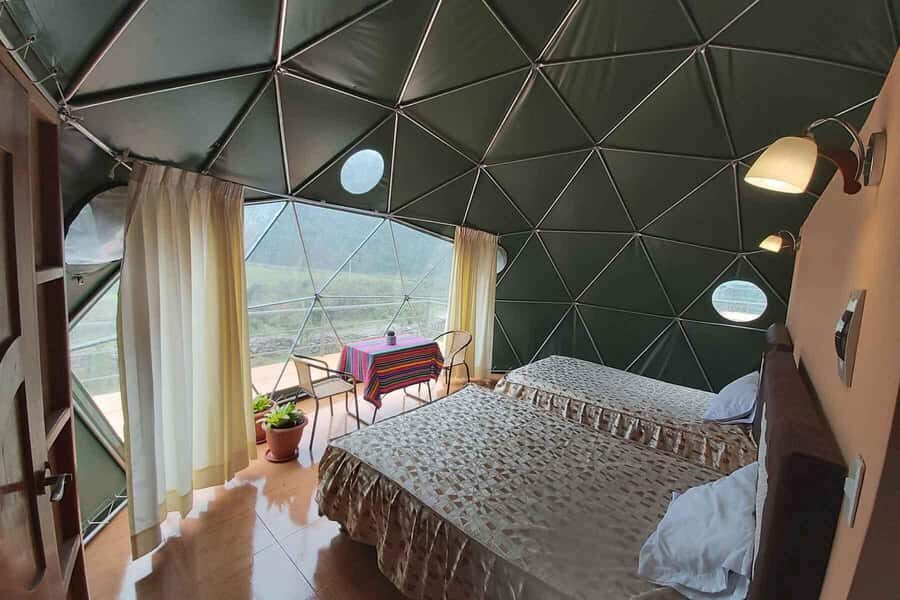
The domes come with a private bathroom and a hot shower. That’s a big deal at altitude, especially after hiking. Still, one guest flagged that the shower felt cold, even though the team turns on a stove in the room before bed to take the edge off. So think of it like this: you get the setup for hot water, but mountain weather can be unpredictable, and you’ll feel the cold until the heat kicks in.
Another highlight from reviews is the night sky. With the air clear and elevation high, you get those starry skies that make you forget you’re tired. It’s one of those moments that doesn’t need a photo app—just your eyes and a few minutes after you settle in.
Day 1: Cusco to Challacancha, the Water Channel, and Up to Soraypampa
Your day begins with a pickup at 4:30 a.m. from your hotel. Then you drive about 2.5 hours to Mollepata, where breakfast happens. That early timing matters. Starting before sunrise means you avoid the hottest part of the day and you arrive at the trail while your energy is still intact.
From there, you continue to Challacancha, where the hike begins. At this point, you shift gears: the cook and horseman load camping and cooking gear onto horses, and you walk with the essentials. Even though you’re trekking, it doesn’t feel like you’re carrying everything. You can focus on footwork, breathing, and staying present with the views.
The first uphill: Water Channel panoramas
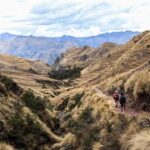
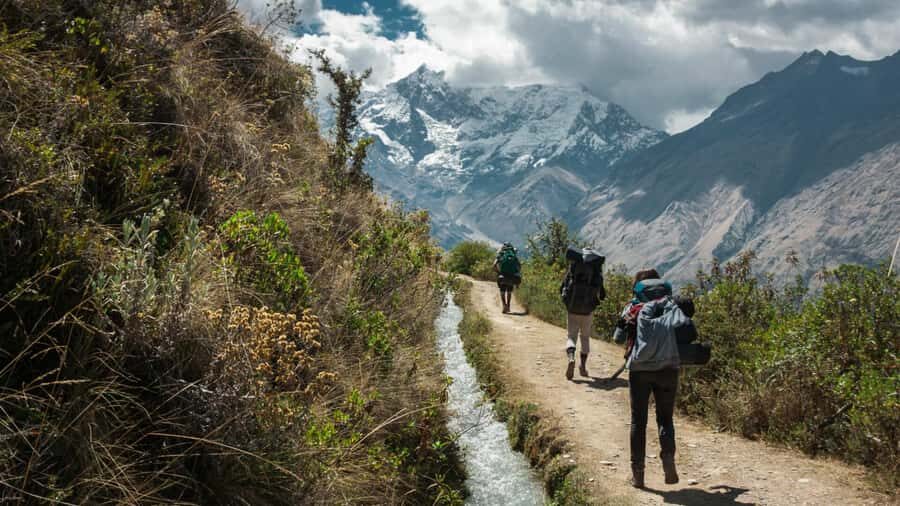
The first 25 minutes are uphill to reach the Water Channel. This is a smart design of the first day: you get a steep warm-up that quickly opens the landscape. You’ll see panoramic views of Humantay and Salkantay, and you can get a feel for how massive the mountains are compared to you.
In plain terms: this is where the trek starts to feel real. If you go too fast here, you’ll pay for it later. The best move is steady effort—short steps, calm breathing, and letting the guide set the pace.
Toward Soraypampa: cooler air, higher altitude, big silhouettes
You continue hiking on the Salkantay route toward Soraypampa, your first campsite at 3,800m. After lunch, you head to Humantay Lake to explore the area before descending back to Soraypampa for the best campsite of the day.
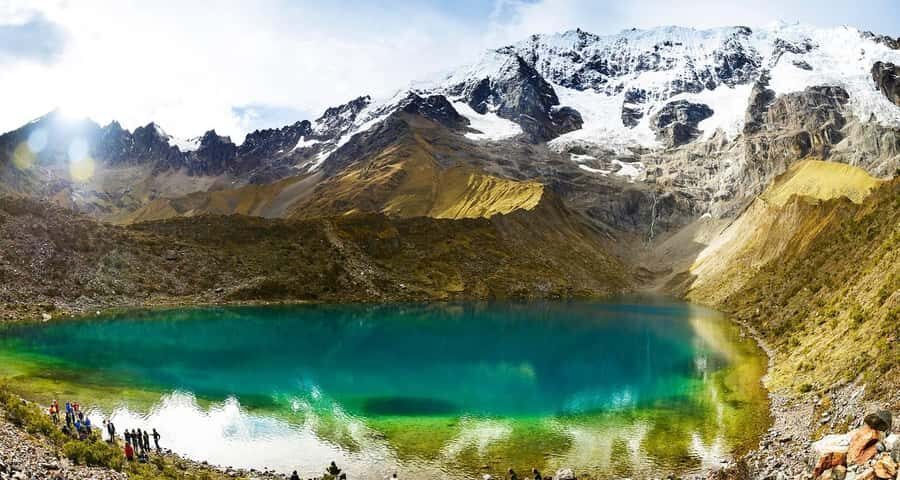
This is the payoff structure. First you climb and establish yourself at camp height, then you go out to the lake and come back to sleep warm-ish (with the stove) and eat well. Humantay Lake is described as turquoise and glacial, framed by snow-peaked mountains. Even in moments of cloud, the contrast is striking—light on ice, dark rock, bright water.
One drawback to plan for: the hike is demanding enough that you might want to treat the lake walk as time to savor rather than to rush. If you’re tired, give yourself permission to take it slow around the lake edge.
Day 1 Highlights: Why Humantay Lake at Camp Altitude Hits Different
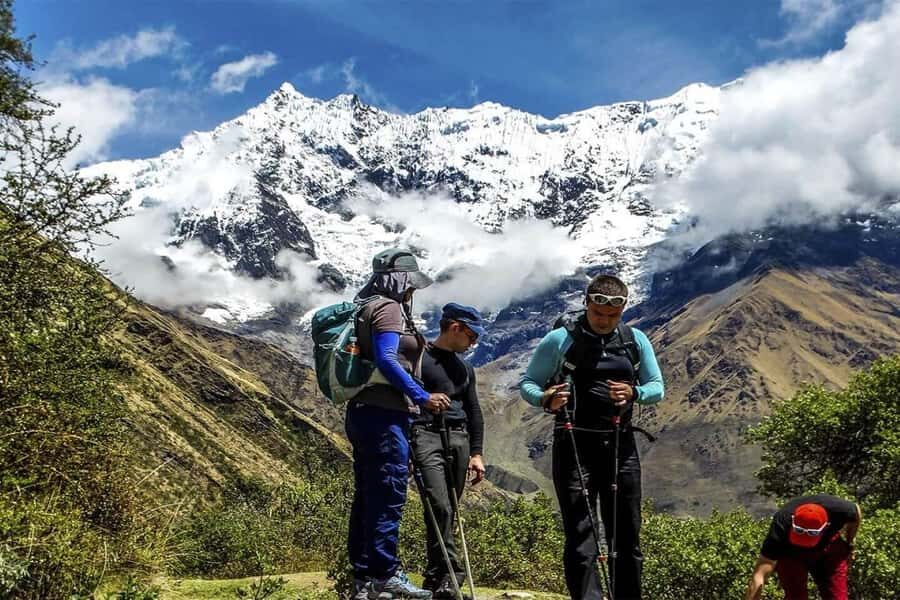
Humantay Lake isn’t just a photo stop. Because it’s part of a high-altitude trek day, it lands differently than if you visited it from a lower viewpoint. When your body is already adjusting to altitude, you feel the cold in your lungs and the crispness in your skin. That makes the turquoise water look even more unreal.
Also, you’re not doing everything in a single long, exhausting push. Lunch first. Then lake time. Then back to camp. The rhythm is practical, and that matters on a two-day program.
Keep your expectations real: you’ll likely feel wind and cold near the lake. Bring layers that you can manage quickly so you’re not fighting your clothes while trying to enjoy the views.
Day 2: The Salkantay Pass at ~4,650m (and the Snow Possibility)
You’ll start hiking again around 6:30 a.m. after breakfast. This is your big climb: about 4 hours uphill to reach the highest point of the Salkantay trek on this route, around 4,650m (15,200ft).
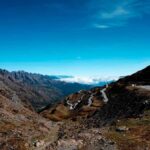
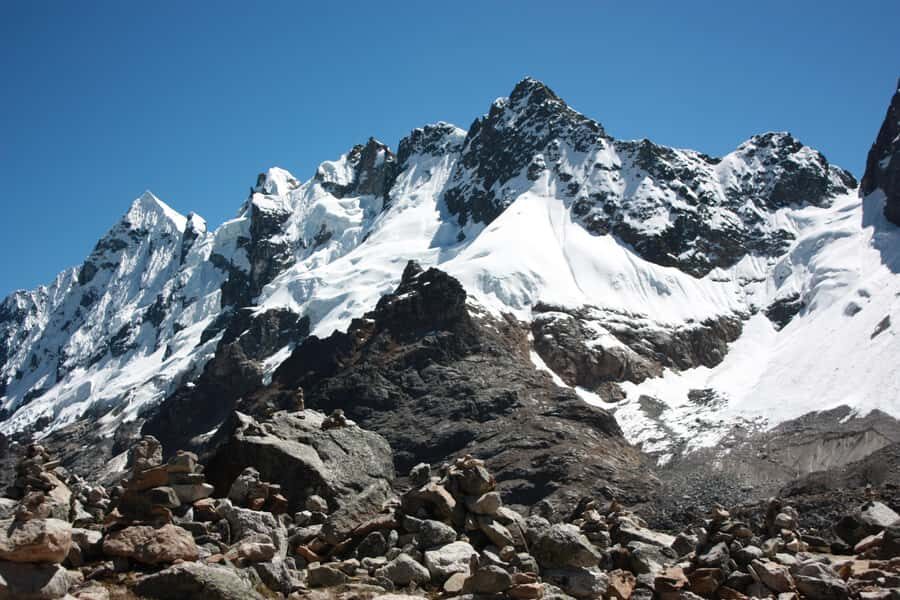
The pass sits between major mountains: Salkantay on the right and Tucarhuay on the left. Standing there is the moment when the landscape snaps into focus—ridges, glaciers, and wide sky. The route also notes a chance of snow at this altitude. Even if you don’t get snow, conditions can shift fast here, so you want to be layered and ready.
Pace and power: how to handle the climb
This is the stretch where trekking poles would normally help, but the tour offers rentals if you want them. The more important thing is how you move: don’t sprint. Save your energy for the higher zones and the view time afterward.
Once you reach the pass, you take a rest and get a group photo. Then you retrace steps downhill to Soraypampa, where you enjoy lunch and relaxation time. After that, you board the bus back to Cusco.
That order is smart. Downhill is tough on knees if you go too fast, so the “retrace and relax” approach gives you a controlled finish rather than forcing you into an extra hike after you’re tired.
Food, Guides, and the Small-Group Feel That Makes It Work
This trip stays small—limited to 8 participants—and that size changes the vibe. You get a real back-and-forth with the guide, plus less waiting around. It also makes group photo moments less like chaos and more like something you can actually enjoy.
You’ll have a professional bilingual guide in English and Spanish. In reviews, guides such as Adele, Reynaldo, and Nildo came up as standouts. That range of names is a reminder of the human side of this trek: you’re not just following marks on a map. You’re learning how to pace, where to look, and how to read the conditions as you go.
Food is another strong point. You get 2 breakfasts, 2 lunches, and 1 dinner in the camps, cooked by a professional cook/chef. Reviews specifically mention Santiago for the cooking quality, and that fits what matters most on this route: warm, filling meals at altitude. On cold days, good food isn’t a luxury—it’s fuel.
One practical note: the tour says the last dinner isn’t included. That means you’ll want a plan for your first post-trek meal back near Cusco.
Price and Logistics: Is $340 Good Value for This Kind of Trek?
Let’s talk value, because $340 for 2 days sounds like a lot until you see what’s bundled.
You’re paying for:
- Private tourist transportation between Cusco and key trailheads (Cusco–Mollepata–Challacancha–Cusco)
- A bilingual professional guide
- Camp operations: cook/chef, meal service, and gear handling (horses for camp/cooking equipment)
- One night in a glamping dome at Soraypampa with a private bathroom and hot shower
- Practical safety items like a first aid kit and an oxygen tank
What’s not included is also clear: entrance fees for Salkantay and Humantay Lake (listed as 20 soles), plus the last dinner, and optional comfort gear like a sleeping bag and trekking poles (rentable from the provider).
So is it worth it? For me, it reads as solid value if you want the mountain experience but you don’t want to manage the heavy logistics yourself. If you’re the kind of traveler who enjoys planning every detail—routes, gear, and camp basics—you might find cheaper DIY options. But if you want to show up, hike, eat, and sleep with everything handled, $340 starts to make sense.
Entrance Fees, Gear Rentals, and What to Pack (Without Guessing)
There are a few extra costs you should budget for. The tour lists Salkantay and Humantay Lake entrance fees at 20 soles. Also, the last dinner is not included, so plan to eat in Cusco when you return.
Gear-wise, you might be offered rentals for:
- a sleeping bag
- trekking poles
If you already own trekking poles, bring them. If not, renting can be the easiest way to avoid arriving unprepared for higher, colder sections and downhill impacts.
For packing, the key is staying warm and dry through a fast-changing altitude day. You’ll start early, then hike high and cold, and you’ll likely feel that in layers. Keep your clothing system simple: warm base, insulating layer, and a windproof outer layer. If you tend to get cold easily, treat warmth as your priority, not comfort.
Who This Tour Fits Best (and Who Might Want Something Else)
This tour fits well if you want:
- A short trek with major Andes scenery
- Small-group hiking
- Camp comfort that makes altitude feel more manageable
- Meals and a guide that handle the hard parts
It also works nicely if you’re traveling with mixed fitness levels. The group size is limited, and the camp support makes the difference between a trek you “survive” and a trek you actually enjoy.
I’d be cautious if you have limited hiking tolerance. You’re doing a significant uphill Day 1 to Soraypampa and then another demanding climb to a high pass on Day 2. Cold and altitude are real here, even with dome comfort and an oxygen tank.
Should You Book This Glamping Sky Lodge Domes Tour?
I’d book it if you want the Salkantay and Humantay combo with a setup that feels taken care of—especially the dome night at Soraypampa and the fact that you’ll be supported by a bilingual guide and an actual cook/chef.
Skip it or reconsider if you’re chasing a low-effort vacation. This is a real mountain hike with early mornings, uphill climbs, and potential snow conditions near the pass.
If your goal is to get big views, sleep high, eat warm food, and keep logistics under control, this is a strong match.
FAQ
Where does the tour start and pick up?
You’re picked up from your Cusco hotel by your guide at about 4:30 a.m., with a briefing the night before at 5:00 p.m.
How long is the trek?
The experience runs for 2 days.
What’s included in the price?
It includes private transportation between Cusco and the trailheads, a bilingual English/Spanish guide, camp meals (2 breakfasts, 2 lunches, 1 dinner), one night glamping at Sky Lodge Domes at Soraypampa with private bathroom and hot shower, a first aid kit, and an oxygen tank.
What is not included?
Not included are Salkantay and Humantay Lake entrance fees (20 soles), the last dinner, and sleeping bag and trekking poles (both can be rented from the provider).
What language(s) is the guide?
The tour offers a professional bilingual guide in English and Spanish.
How big is the group?
It’s a small group limited to 8 participants.
Is the oxygen tank included?
Yes. An oxygen tank is included as part of the included safety items.
What should I expect for sleeping arrangements?
You sleep one night in Glamping Sky Lodge Domes at Soraypampa, with a private bathroom and hot shower.
What’s the main hike schedule?
Day 1 runs from Cusco to the hike start at Challacancha, then onward to Soraypampa and a visit to Humantay Lake. Day 2 includes breakfast, a high uphill climb to the Salkantay Trek Pass, then a descent back to Soraypampa and a bus ride back to Cusco.