REVIEW · LIMA
Lima: Historical, Colonial, and Modern City Tour
Book on GetYourGuide →Operated by PVTravel · Bookable on GetYourGuide
Four hours can fix your Lima orientation. This guided route stitches together pre-Hispanic, colonial, and modern Lima, so you see how the city layers over time. I really liked starting with the panoramic look at Huaca Pucllana, then getting to the San Francisco Convent complex and its underground catacombs.
You’ll also get a clear, bilingual explanation as you move between neighborhoods like San Isidro’s El Olivar area and Miraflores/Larcomar. The main thing to keep in mind: the tour is only 4 hours, so you may get more of a viewpoint and photo stop at Pucllana than a slow, up-close visit.
If you want an organized introduction that includes transport and entry, this is a solid value at $40.
In This Review
- Key highlights worth your time
- Starting in Miraflores and San Isidro, then getting your bearings fast
- Pucllana Pyramid views: the pre-Hispanic chapter of Lima
- Entering the San Francisco Convent: colonial Lima’s art and power
- The catacombs underneath: why the vaults hit harder than the photos
- El Olivar and the residential contrast in San Isidro
- Miraflores and Love Park: modern Lima with photo-friendly energy
- Larcomar passes and panoramic moments
- How the 3 historical periods connect in one loop
- Price and value: is $40 a good deal for 4 hours?
- Guide quality and timing: what to watch for
- What I’d bring and how to plan your day around it
- Who this tour suits best
- Should you book Lima’s Historical, Colonial, and Modern City Tour?
- FAQ
- What sites do you visit on this Lima historical city tour?
- How long is the tour and what time does it start?
- Is pickup included?
- What’s included in the ticket price?
- Are the catacombs part of the experience?
- How much does the tour cost?
- What is the cancellation policy?
Key highlights worth your time
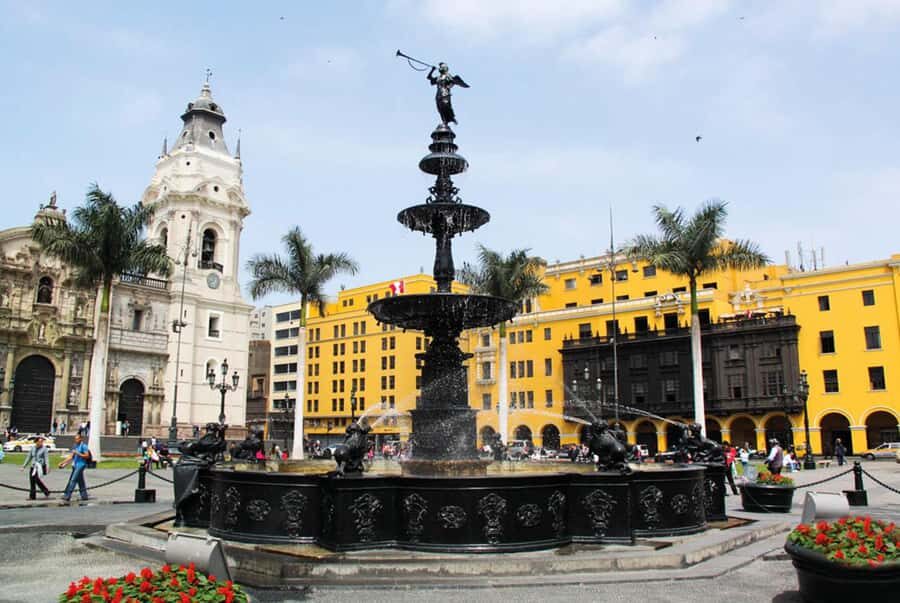
- Pucllana Pyramid panoramic stop: built in the 4th century AD, tied to a sacred village role under the Incas
- San Francisco Convent and catacombs: you’ll see the largest collection of religious art in America and then head underground to the vaults
- Three-era storyline: pre-Hispanic to colonial to modern in one smooth loop
- Modern Lima viewpoints: Love Park in Miraflores and scenic passes around Larcomar
- El Olivar area in San Isidro: a quick look at a quieter, residential contrast to the center
Starting in Miraflores and San Isidro, then getting your bearings fast
This tour begins with pickup in Miraflores or San Isidro at around 09:00 AM, which is a big help in Lima. Once you’re loaded into the transport, you can stop thinking about routes and start thinking about what you’re seeing.
What I like about this structure is that it builds context while you’re still fresh. Lima can feel confusing at first, with its mix of coastal modern districts and older, denser parts of town. A guided format helps you connect the dots: where you are today, what the colonial city looked like, and how much older Peru reaches beneath it all.
Also, you’ll have a bilingual guide (English and Spanish). That matters here because the tour covers religious art, historical periods, and place names that are easier to follow with a real explanation than with a phone alone.
You can also read our reviews of more city tours in Lima



Pucllana Pyramid views: the pre-Hispanic chapter of Lima
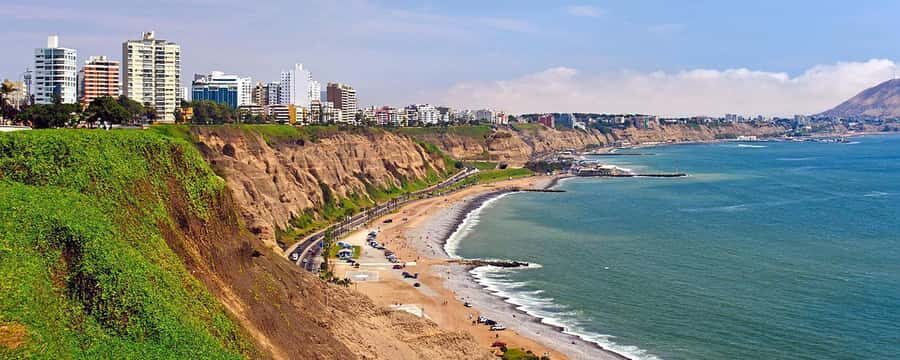
The morning opener is a panoramic look at Pucllana Pyramid (Huaca Pucllana). This ceremonial and archaeological center dates to the 4th century AD and was considered a sacred village by the Incas.
Even if you’re not going to spend a long stretch there, this viewpoint sets the tone. It’s one of those spots that makes Lima feel less like a single city and more like multiple cities stacked together. The Incas are a later chapter than the pyramid itself, so hearing that timeline in plain language is genuinely useful.
Practical way to enjoy this stop:
- Bring your camera and assume you’ll want a few angles from the viewpoint area.
- Use the guide’s talking points as your photo captions. If your guide explains what you’re seeing, you’ll know what to capture instead of just snapping buildings and sky.
One consideration: if you’re hoping for an extended, up-close exploration of Pucllana, this tour is structured more around the first panoramic view than a long walk-through. If you want extra time at Pucllana, you may want to plan a separate visit on another day.
Entering the San Francisco Convent: colonial Lima’s art and power
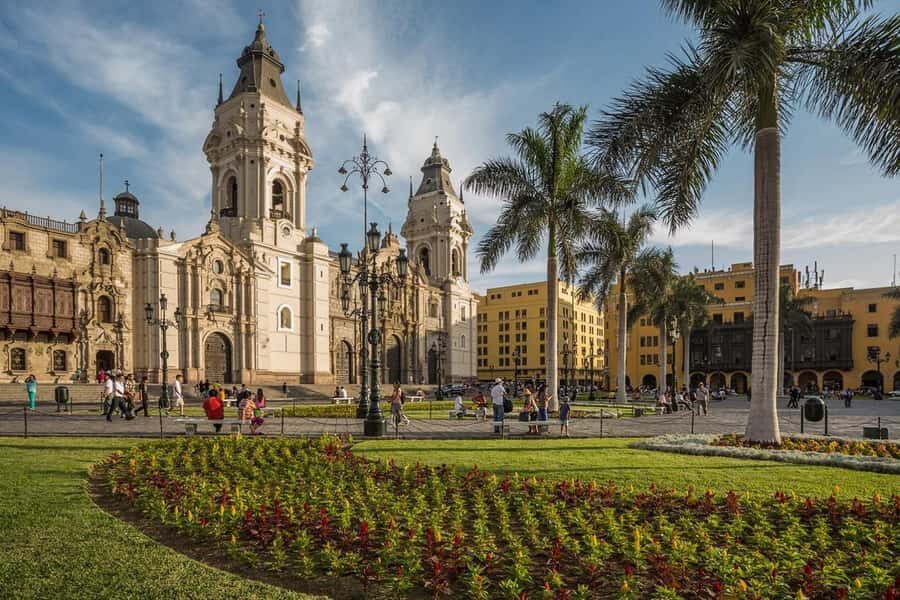
Next comes the standout colonial stop: the San Francisco Convent. The tour takes you to one of Lima’s most monumental religious complexes, known for having the largest collection of religious art in America.
That sounds like a big claim, but what it means in real terms is that you’re not just touring a church doorway. This is a place where art, architecture, and religious storytelling are tightly linked. The guide’s job here is key: you’ll get explanations as you move, so you’re not just seeing objects—you’re understanding why they matter in the building’s world.
The convent visit is also the part that tends to deliver the most satisfaction if you’re the type of person who enjoys history with details. Religious art can be a bit abstract on your own. With a guide, it becomes more specific: where you’re standing, what traditions shaped the display, and how the convent’s role grew through time.
The catacombs underneath: why the vaults hit harder than the photos
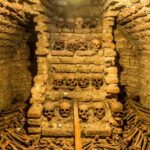
After the convent areas, the tour highlights the underground vaults—Lima’s famous catacombs. This is the part you can picture in your head even before you arrive: an underground space that feels removed from the modern street noise.
Why I think this stop is worth it: catacombs aren’t just “dark tunnels.” They connect to how the city organized life, death, and religious space. When your guide explains the context (not just the fact that they exist), you feel the logic behind what you’re seeing.
A tip for maximizing this section:
- Slow down your pace. The catacombs are the kind of place where stopping makes a difference.
- Keep your attention on what the guide is pointing out rather than treating it like a quick photo run.
Based on real experiences, the convent and catacombs portion is also the strongest part of the day for many visitors. If you care most about colonial Lima’s religious side, your time here is the best match.
El Olivar and the residential contrast in San Isidro
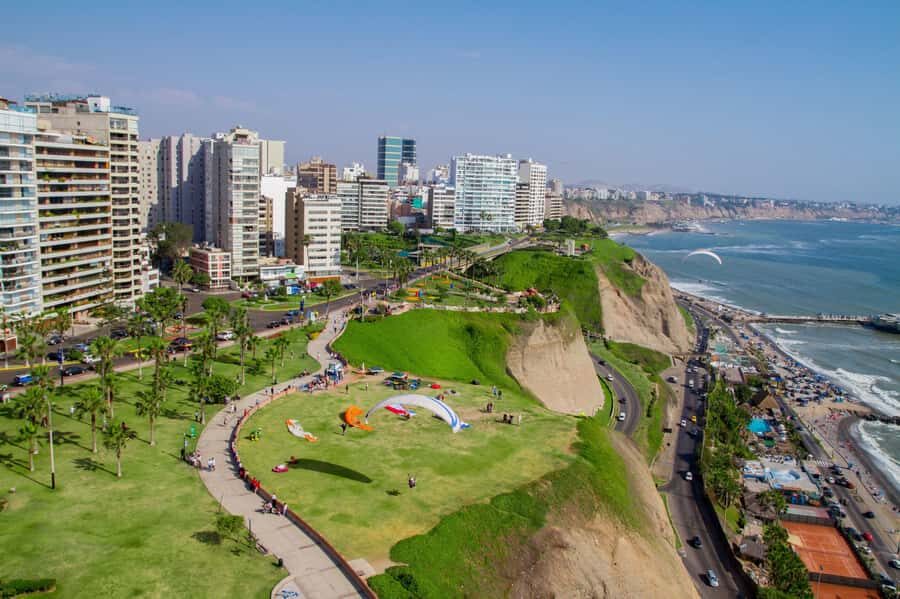
Between major landmarks, the tour moves through more everyday areas—especially traditional residential zones like El Olivar of San Isidro.
This stop matters because it breaks the pattern of only visiting “attractions.” A city tour can become a checklist fast. Adding El Olivar helps you see Lima as a lived-in place, not only a museum town. It also gives you a change of pace after the weight of the convent and underground vaults.
Even if you’re only there briefly, the contrast makes everything else clearer. You start noticing how Lima’s geography shapes what’s preserved and what’s rebuilt.
You can also read our reviews of more historical tours in Lima






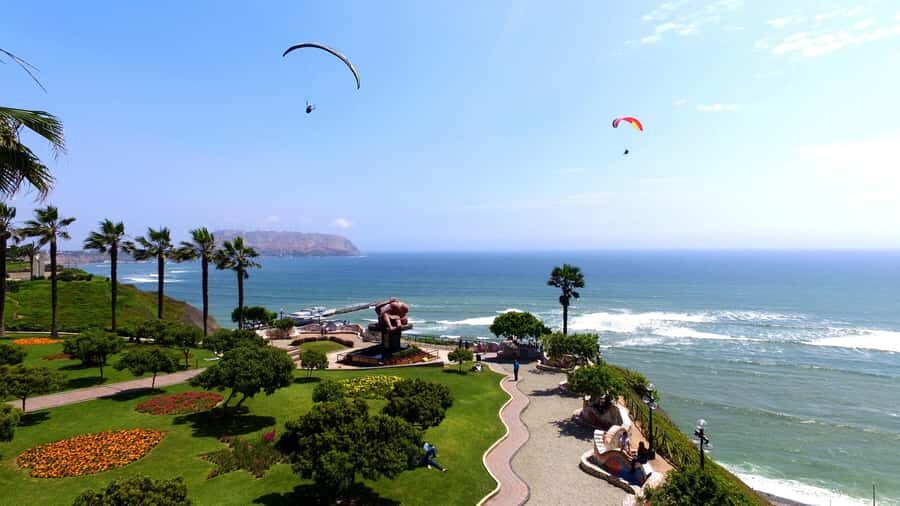
Miraflores and Love Park: modern Lima with photo-friendly energy
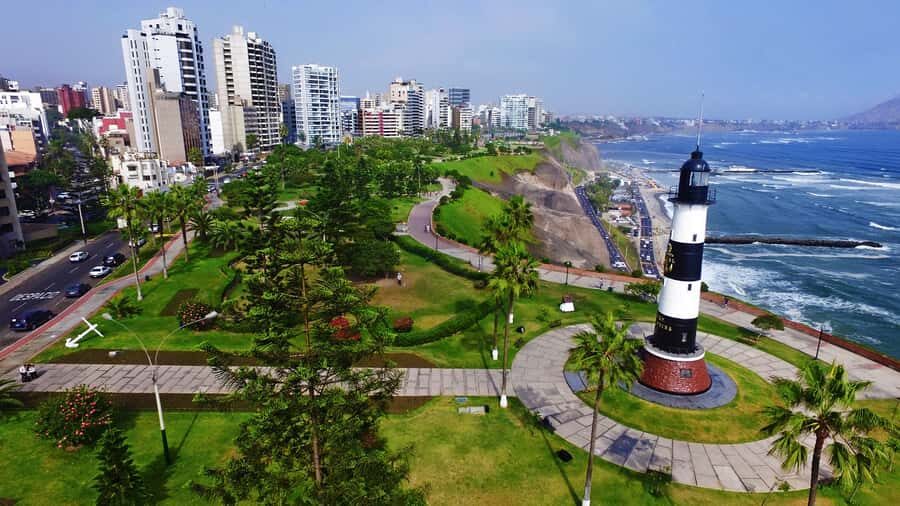
After the older sites, the tour shifts to Miraflores and its lively modern identity. One named highlight is Love Park.
Love Park is useful on a city tour because it’s a recognizable spot in the district and a good lens for modern Lima life. It’s not trying to be ancient. It’s showing you the city as people actually experience it—walkable areas, open views, and a coastal-district feel.
If you love photos, this is where you’ll likely feel more relaxed. The early part of the day is heavy on historic detail. Love Park and the Miraflores surroundings give you a change: you can take pictures, notice the architecture and street layout, and absorb a different side of the city.
Larcomar passes and panoramic moments
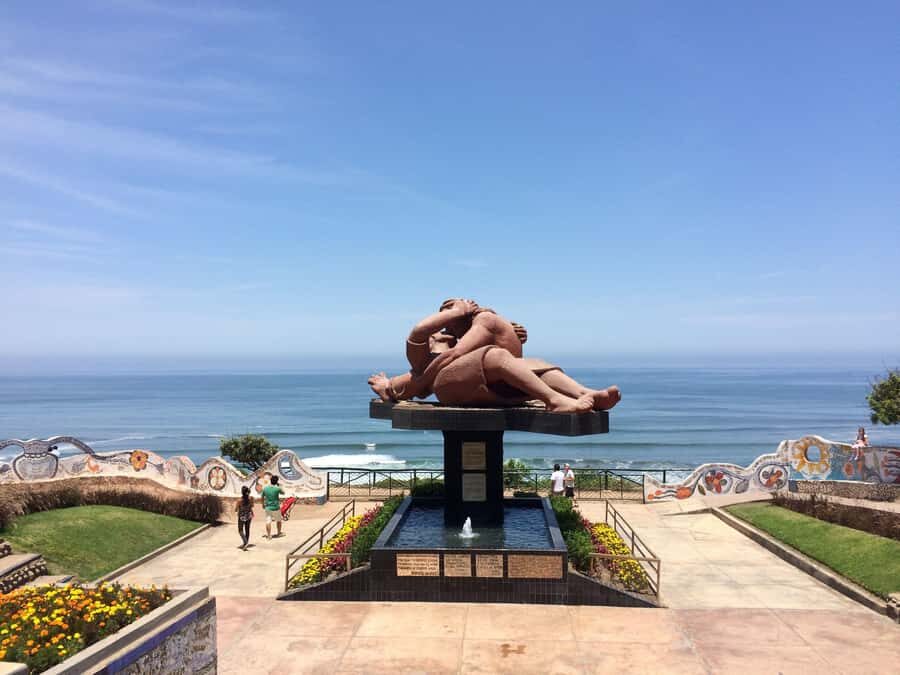
The tour also includes the Larcomar area. Larcomar is the kind of spot where modern design and ocean-adjacent scenery blend into something instantly “Lima.”
On a time-limited tour, the Larcomar portion works best as a scenic stop and orientation point. You might not get an extended exploration here, but you do get a clearer sense of where modern Lima’s energy lives and how Miraflores connects to it.
If you’re the type who likes to plan your next day while you’re on the current one, this is smart time to do that. Notice where you’d want to return for a longer walk later.
How the 3 historical periods connect in one loop
What makes this tour feel like more than separate stops is the storyline across three periods: pre-Hispanic, colonial, and modern.
Here’s how you can think about the day:
- Pre-Hispanic: Pucllana frames Lima as a place with deep roots long before the colonial era.
- Colonial: San Francisco Convent and the catacombs show how religious power shaped space and art.
- Modern: Miraflores, Love Park, and Larcomar reveal the contemporary city experience on top of those older layers.
This “stacked timeline” is where the tour adds value. You’re not just visiting famous sites; you’re learning how to read the city. After a loop like this, it’s easier to understand what you see later on your own—especially in Lima, where history doesn’t disappear when new neighborhoods rise.
Price and value: is $40 a good deal for 4 hours?
At $40 per person for a 4-hour guided tour with pickup/drop-off, transport, and San Francisco entry, this can be good value—especially if you’d otherwise spend time figuring out transit and paying separate admission tickets.
The cost adds up when you do it independently:
- Getting around Lima with a planned route takes effort.
- Paying for entry on your own can add friction.
- A bilingual guide helps you understand what you’re seeing, which you can’t easily replicate with an audio guide unless you’re extremely prepared.
Where you should be cautious: because time is limited, you won’t get a deep, slow experience at every site. If your priority is extended time at Huaca Pucllana or multiple stops beyond what’s listed, you may want to pair this with additional independent exploration later.
Guide quality and timing: what to watch for
The tour includes a bilingual guide, and the storytelling is a big part of the value. The most common praise is for the introduction and for the convent/catacombs segment.
The main practical risk isn’t the subject matter—it’s pacing. If pickup runs late, the schedule can feel compressed, and you might get fewer chances to slow down or ask extra questions. Since the tour is only 4 hours long, a delayed start can noticeably change the feel of the day.
My advice: if you’re prone to tight schedules, build in a little buffer for the morning. Then use the guide’s explanations well—ask one or two targeted questions early, so even if the pace quickens, you still get the core value.
What I’d bring and how to plan your day around it
Since the tour is city-based and moves between multiple districts, treat it like a structured walk-and-ride day: you’ll want to feel comfortable enough to stand, look around, and take photos.
I’d plan your schedule so you’re not rushing to another appointment right after 02:00 PM. That return time helps—you can head back, eat, and decide what you want to repeat or expand.
If you’re planning extra Lima time, use what you learn here:
- If Pucllana feels meaningful, consider adding a separate stop for more time.
- If the catacombs grabbed your attention, you’ll likely enjoy returning with a more relaxed pace later.
- If Miraflores/Larcomar is your vibe, plan an afternoon stroll in that area after you’ve already gotten orientation.
Who this tour suits best
This experience is a good fit if you:
- want a guided introduction across pre-Hispanic, colonial, and modern Lima
- care most about San Francisco Convent and its catacombs
- prefer pickup and transport so you can spend your morning looking instead of planning
- like a day that mixes heavyweight history with modern city views
It may be less ideal if you’re the type who needs long time in one place. The schedule gives breadth, not depth everywhere. Still, the convent and catacombs are the part that usually justifies the trip time.
Should you book Lima’s Historical, Colonial, and Modern City Tour?
Yes, I’d book it if you want an organized way to understand Lima’s layers in one morning-to-early-afternoon window. The San Francisco Convent and catacombs are the anchor, and Pucllana plus Miraflores/Larcomar give you a balanced view rather than a single-theme day.
If you’re the type who hates time limits, or you really want an up-close Pucllana experience, consider booking this as your orientation tour and adding separate time later. Done that way, you get the best of both worlds: guided context first, free exploration after.
FAQ
What sites do you visit on this Lima historical city tour?
You’ll see Pucllana Pyramid from a panoramic viewpoint, visit the San Francisco Convent and catacombs, and also visit areas including El Olivar of San Isidro, Miraflores (including Love Park), and Larcomar.
How long is the tour and what time does it start?
The tour lasts 4 hours and starts with pickup around 09:00 AM from Miraflores or San Isidro.
Is pickup included?
Yes. Pickup and drop-off are included for hotels in Miraflores or San Isidro. If your accommodation is outside this area, you’ll set a meeting place.
What’s included in the ticket price?
The tour includes pickup and drop-off, transport, entry to the San Francisco site, and a bilingual guide (English and Spanish).
Are the catacombs part of the experience?
Yes. The tour includes the underground vaults, known as the catacombs, as part of the San Francisco Convent visit.
How much does the tour cost?
The price is $40 per person.
What is the cancellation policy?
Free cancellation is available up to 24 hours in advance for a full refund.