REVIEW · LIMA
Pre Inca Temple of Pachacamac Half-Day Tour from Lima
Book on Viator →Operated by VIPAC Travel · Bookable on Viator
Pachacamac is Lima’s time machine, minus the jet lag. I love the small group feel and how the tour handles the basics so you can focus on the site. The admission tickets included part is a big value win. One possible drawback: with a half-day format, you may feel a bit rushed if you want extra time at every single viewpoint, including the Temple of the Sun.
This tour also works because it’s not just ruins-on-a-map. You’ll get a guide who connects what you see to the people who built and used Pachacamac over time, with explanations reaching back to pre-Inca groups like the Moche and Huari. You’ll ride in an air-conditioned minivan from central Lima, then head back the same day with your brain full and your legs still intact.
In This Review
- Key points to know before you go
- Why Pachacamac feels different from other Lima ruins
- Getting there: central Lima pick-up and a coastal drive
- The Sanctuary of Pachacamac: adobe walls with sea views
- Temple of the Sun and Temple of the Moon: what to look for
- The Site Museum: artifacts that connect the dots
- How the tour connects Moche, Huari, and Inca layers
- Pacing and walking: half-day rules apply
- Bathrooms and small realities you’ll be glad you know
- Price and value: why $79 makes sense here
- Who should book this Pachacamac half-day tour
- Should you book? My take
- FAQ
- FAQ
- How long is the Pre Inca Temple of Pachacamac half-day tour from Lima?
- What time does the tour start?
- How far is Pachacamac from Lima?
- What’s included in the price?
- What group size should I expect?
- What will we see during the tour?
- Is the Site Museum included?
- Is the tour suitable for most people?
- Can I cancel for free?
- What’s the cancellation cut-off time based on?
Key points to know before you go
- Small group size (max 12) means you’ll actually get answers, not just background noise.
- Tickets are included, so you’re not stopping to figure out pricing and paperwork.
- Temple of the Sun and Temple of the Moon are the stars, built from massive sun-dried clay bricks.
- Site Museum helps you understand what you’re looking at, not just when it was built.
- Bilingual guide (English-Spanish) keeps explanations clear for mixed groups.
- Bring patience for walking: the “quick” tour still includes steps and uneven surfaces.
Why Pachacamac feels different from other Lima ruins
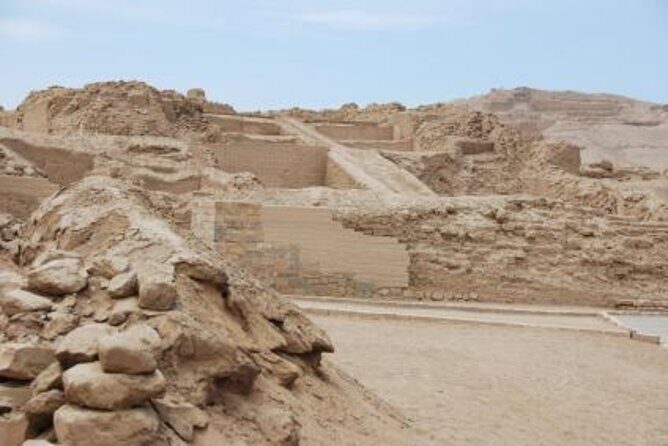
If you’re already in Lima, Pachacamac is the kind of day-trip that changes your sense of Peru’s timeline. It isn’t a single empire story. It’s a religious center that drew worship and attention for generations, with later cultures adapting the space they inherited.
The good part is that the tour doesn’t treat Pachacamac like a checklist. You get a guided walk through the compound, plus museum time to translate the walls, platforms, and brickwork into something human. You’ll learn how the Incas made adjustments to the site after arriving, without erasing what was already there.
And the setting helps. Pachacamac sits about 30 km south of Lima, overlooking the sea and the Lurin River valley. Even when you’re standing among ancient adobe and clay, you’re still aware of how the coast shaped life here—wind, light, and long sightlines.
A few more Lima tours and experiences worth a look


Getting there: central Lima pick-up and a coastal drive
This tour starts in the morning (9:00 am), with pick-up and drop-off from your hotel or lodging. You ride in an air-conditioned minivan, which is a big deal in Peru when the coast can still feel warm and windy depending on the day.
The drive is part of the experience. It’s not just transportation; it’s a smooth hand-off from modern Lima to the ancient sanctuary outside the city. When you finally arrive, the change of pace feels real, not like you just popped in and out of a room.
This format is also practical for one reason: you don’t spend your time sorting buses, timetables, or taxi math. You sit back, get dropped at the entrance, and your guide starts turning the site into a story right away.
The Sanctuary of Pachacamac: adobe walls with sea views
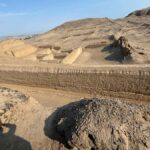
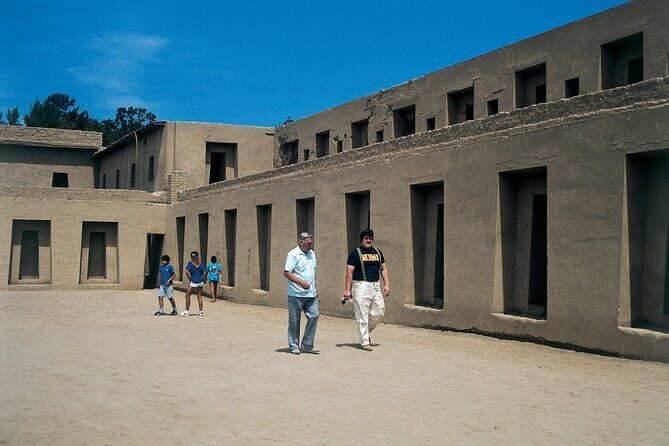
When you arrive at the Archeological Sanctuary of Pachacamac, you’re stepping into a place built in adobe with views toward the sea and the Lurin River valley. That positioning matters. These were not random ruins. This sanctuary was meant to be seen, approached, and used—by people traveling for pilgrimage.
You’ll walk through key areas connected with religious and administrative life. Your guide may point out structures such as the Temple of the Sun, the Acllahuasi, the Palace of Taurichumbi, and the Pilgrimage Plaza. Even if you’re not a full-time archaeology nerd, these names help you keep track of what each space was for.
One thing I like about this kind of guided visit is that you get cues for what to notice. For example, some walls at Pachacamac are relayed or restored in a way that helps you understand original construction details. That can make a difference when you’re trying to picture how the sanctuary looked when it was active.
Temple of the Sun and Temple of the Moon: what to look for
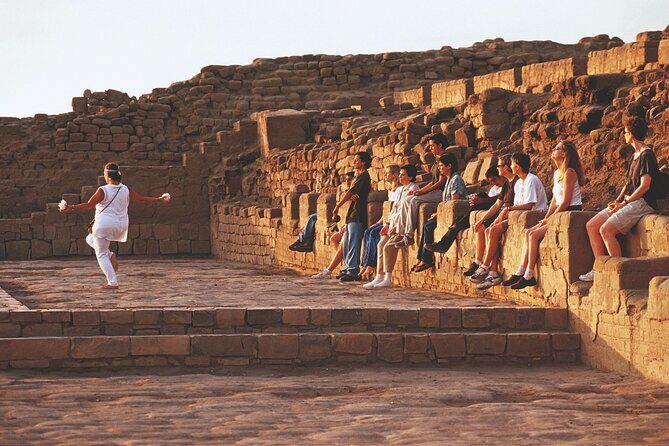
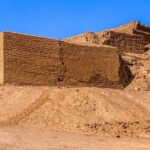
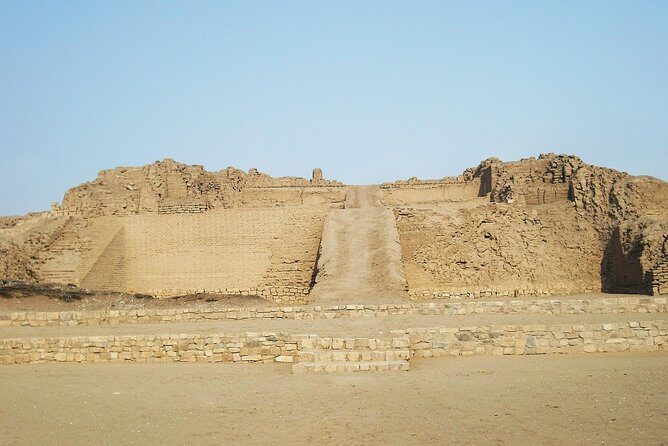
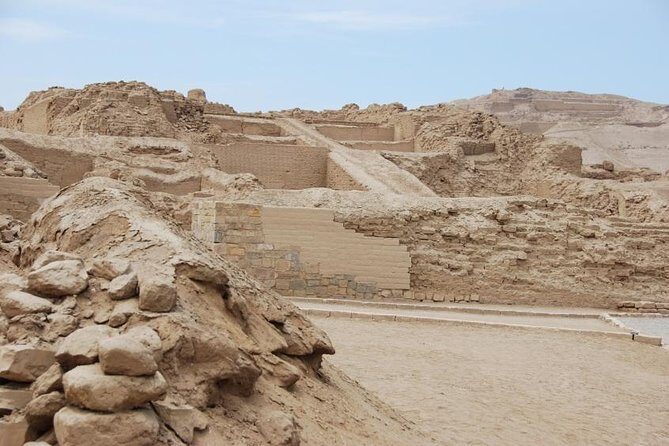
The temples are the headline. The Temples of the Sun and the Moon are the compound’s most striking features, and you’ll see why fast once you’re close. The scale is hard to grasp until you’re standing in front of it.
Here’s the standout construction detail: the Temple of the Sun alone used an estimated 50 million sun-dried bricks. That kind of number doesn’t just sound impressive. It hints at the labor, organization, and long-term commitment it took to build and maintain sacred architecture out of clay.
Your guide will also point out how the compound includes colorful murals and architectural choices tied to different cultural periods. You’ll learn that the site isn’t just one “Inca moment.” Excavations continue to reveal more about pre-Inca cultures, including the Moche and Huari, from roughly 200 to 800 AD.
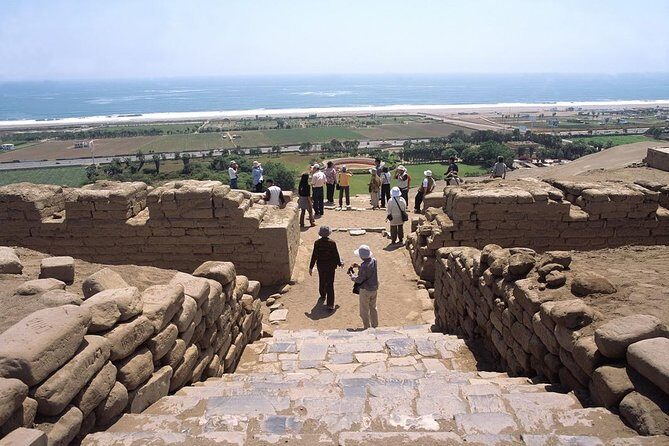
At the same time, you still get the big visual payoff. Reviews highlight how you can climb up toward the top and catch wide ocean views. That’s the kind of payoff you want from a morning or half-day tour: a reward that’s physical, not just informational.
The Site Museum: artifacts that connect the dots
A smart part of this tour is the museum stop. You don’t just walk past walls and hope they make sense. You first see salvaged remnants and artifacts tied to the area, which gives you a mental map for what you’re about to encounter in the ruins.
This matters because Pachacamac can feel complex if you arrive with zero context. Museum objects—plus guided explanations—help you connect construction styles, materials, and changing uses of the site over time.
You might also see how textiles and other finds help show daily life and belief systems tied to these cultures. One guide’s approach (seen in past tours) is especially effective here: starting with objects, then walking you to the places those ideas would have mattered.
If you’re the type who needs a reason to care, the museum provides it. It makes the ruins feel less like a photo stop and more like a place where real people practiced faith, built community, and kept returning.





How the tour connects Moche, Huari, and Inca layers
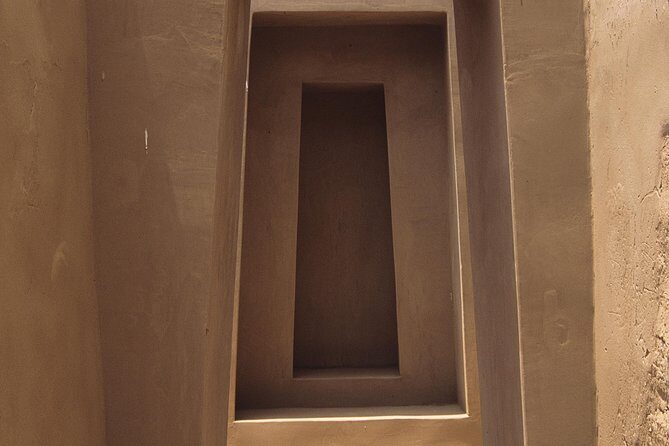
Pachacamac is a layered story, and the tour’s value is in how it explains that layering.
You’ll get historical explanations connecting what you see to multiple cultures. The focus includes pre-Inca groups such as the Moche and Huari, then the later Inca period when the complex was adapted into an administrative center while respecting and incorporating local constructions.
This kind of explanation helps you avoid a common trap: treating every stone wall as if it belongs to one moment in time. Here, you’re seeing a pilgrimage center that kept shifting roles, but stayed sacred.
Guides are often praised for their storytelling style. In past tours, you may be led by people like Mario or Eduardo, and others like Nataly (with drivers such as Luis) have been noted for pairing clear explanations with an easy, friendly pace. You might also get a guide like Mila Campos, Edwin, Willian, or Victor, each bringing their own rhythm to the walk.
Bottom line: you’re not just reading plaques. You’re learning how the site worked as a living space over centuries.
Pacing and walking: half-day rules apply
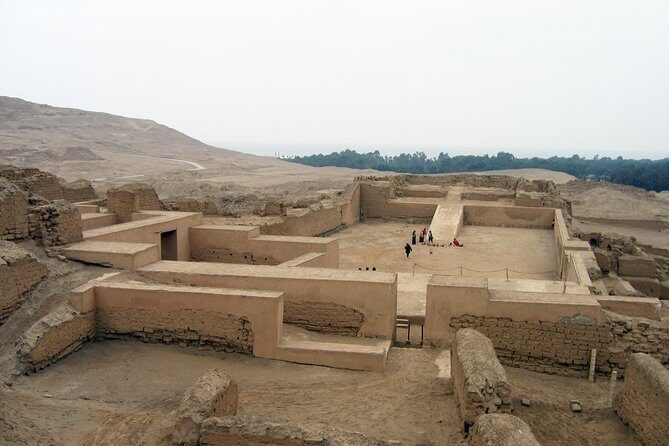
This is a 3.5-hour tour (approx.), with about 3 hours on site. That’s a decent run for a single morning, especially when you’re also including museum time and a full guided route through major areas.
But here’s the honest consideration: half-day pacing is still half-day pacing. One visitor found that the Temple of the Sun time felt limited for deeper exploring. So if your dream is lingering on every mural, photographing every corner, and sitting down at multiple viewpoints, you might feel it’s moving.
The walk can include steps, and some parts are uphill. Reviews also note that the climb can lead to an excellent view toward the ocean. That’s a trade-off: you’ll earn the views with some effort.
If you want the best balance, keep your focus on the main temples and the viewpoints your guide recommends. Then treat the rest like bonus exploration rather than a requirement.
Bathrooms and small realities you’ll be glad you know
I love big ancient sites. I do not love the modern surprise of not having a toilet when your body insists you do.
A practical tip from past visitors: plan to use the bathroom at the entrance area near the ticket office. Reports note there aren’t bathrooms along the route, so people tend to rush at the end of the tour.
It’s such a small thing, but it can make your experience feel smooth instead of stressful. Do yourself a favor and handle it early.
Price and value: why $79 makes sense here
At $79 per person for a half-day, this tour can feel pricey—until you look at what’s included.
You get:
- pick-up and drop-off from your lodging
- an air-conditioned minivan
- a professional bilingual English-Spanish guide
- admission tickets to the Temple of Pachacamac and the Site Museum
That admission piece matters. Many tours sell the guide experience and charge you extra for entry. Here, the ticket is part of the package, so you can compare apples to apples against DIY options.
Also, the small group size (max 12) boosts value. A larger bus tour can be cheap but feel crowded and rushed. With a smaller group, you’re more likely to get good answers and stay oriented while walking.
In short: you’re paying for time-saving logistics plus guided interpretation, with the gate costs handled up front.
Who should book this Pachacamac half-day tour
This is a great fit if you want:
- an easy, structured way to see Pachacamac in one morning
- clear explanations about how pre-Inca cultures and the Inca period connect at the site
- a comfortable trip from Lima with hotel pick-up
It also suits you if you’re combining Lima with other Peru classics. People often pair this with Cusco-area plans, and the theme works well: understanding Peru’s ancient cultures beyond just one famous landmark.
You might want a different plan if:
- you have zero tolerance for stepping uphill
- you want lots of unstructured time to wander alone for hours
- you’re expecting a slow museum-style crawl rather than a guided route
But for most visitors, this half-day structure hits the sweet spot between “I saw the highlights” and “I understood what I saw.”
Should you book? My take
I’d book this tour if you’re in Lima and want one high-impact ancient stop that doesn’t eat your whole day. Pachacamac gives you that rare mix: major monumental architecture (Sun and Moon Temples) plus context from the Site Museum, all within a manageable timeline.
The best reason to choose it is the combination of included admission and a guide who connects the site’s layers—Moche, Huari, and Inca—so your visit feels like more than impressive bricks. The half-day pace can be a little tight for ultra-slow explorers, but if you go in with a clear focus on the main temples and viewpoints, it’s a strong use of time.
If you want a simple win in Lima, this is it.
FAQ
FAQ
How long is the Pre Inca Temple of Pachacamac half-day tour from Lima?
It runs for about 3 hours 30 minutes (approx.).
What time does the tour start?
The start time is 9:00 am.
How far is Pachacamac from Lima?
Pachacamac is about 30 km south of Lima.
What’s included in the price?
The tour includes a bilingual English-Spanish speaking guide, pick-up and drop-off from your hotel or lodging, an admission ticket to the Temple of Pachacamac and the Site Museum, and an air-conditioned vehicle.
What group size should I expect?
The maximum group size is 12 travelers.
What will we see during the tour?
You’ll visit the Archeological Sanctuary of Pachacamac and the main ruins, including areas such as the Temple of the Sun and Temple of the Moon, plus the Site Museum.
Is the Site Museum included?
Yes. Admission to the Site Museum is included, and you’ll have time to visit it as part of the tour.
Is the tour suitable for most people?
Most travelers can participate.
Can I cancel for free?
Yes. You can cancel up to 24 hours in advance for a full refund.
What’s the cancellation cut-off time based on?
Cut-off times are based on the experience’s local time.