REVIEW · TRUJILLO
Guided Walking Tour in Trujillo Through the Centuries
Book on Viator →Operated by Guadalupe Parrón Bravo · Bookable on Viator
Trujillo history is written in stone. This guided walking tour pulls you through the city’s big eras with Guadalupe Parrón Bravo as your guide, from the older fortress roots to the palace streets of later centuries—plus photo stops along the way. I like how the stories are grounded in what you’re actually standing in front of, not just a lecture from a distance.
I also love the mix of sights and viewpoints: Torre Julia for sweeping views, and time in the medieval warren inside the walls so the place starts to make sense fast. One consideration: entrances to monuments are not included, so you may want to budget a little extra if you plan to go into the church tower, the castle areas, and the Pizarro museum.
In This Review
- Key highlights you’ll actually feel on your feet
- A 2–2.5 hour walk that fixes your sense of place
- Start at Plaza Mayor, with Francisco Pizarro’s statue as your compass
- Iglesia de Santa María la Mayor and the Torre Julia climb
- Castillo de Trujillo: enter the parade ground and walk the battlements
- Plaza Mayor de Trujillo: palaces and medieval houses close together
- The Pizarro House Museum: family story, not just dates
- Inside the walls: Casas Fuertes, Orellana, and the Alberca pool
- A quick stop for film-fame trivia: Trujillo cinema and La Casa del Dragón
- Finishing at the Alcazaba: 10th-century roots and a strong ending view
- Price and value: $13.76 for a guided timeline, plus optional ticket costs
- Who this walking tour is best for
- When to bring your own plan (and when to let the guide lead)
- Should you book this walking tour of Trujillo through the Centuries?
- FAQ
- How long is the guided walking tour in Trujillo through the Centuries?
- Where does the tour start and end?
- What time does the tour begin?
- What’s included in the price?
- Are monument entrance fees included?
- How many people are in the group?
- Do I need to print anything?
- Are service animals allowed?
- What happens if the tour is canceled due to not meeting the minimum number of travelers?
Key highlights you’ll actually feel on your feet
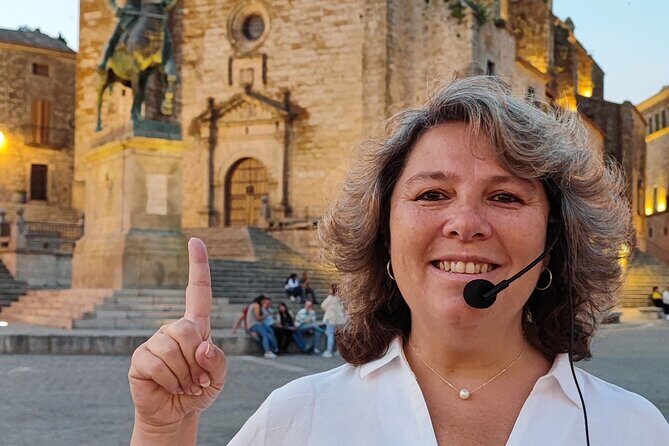
- A small group (max 15) keeps the pace friendly and questions easy
- Official guiding with named stories focused on Francisco Pizarro and Francisco de Orellana
- Photo-minded stops with recommended viewpoints as you walk
- Climb time included for Torre Julia and the castle battlements (ticket fees not included)
- A timeline you can follow from the Alcazaba era through medieval and 16th-century Trujillo
A 2–2.5 hour walk that fixes your sense of place
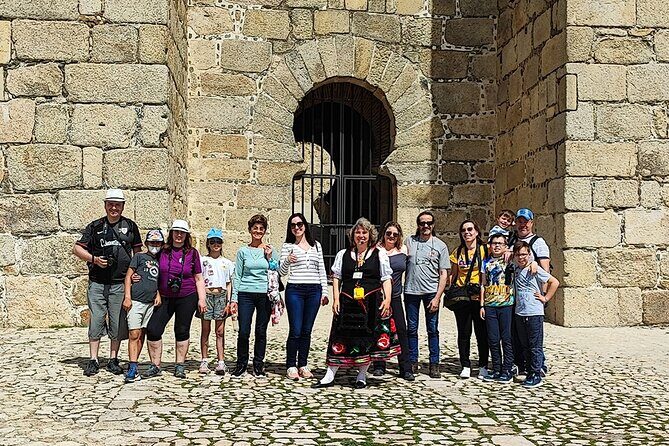
This is the kind of tour that helps you see the city in order. You start with the broad historical map right in the main square, then you work your way inward and upward toward the castle finish at the Alcazaba. The pacing is built for walking plus short stops, so you get movement without feeling rushed.
You’ll also cover more than just the postcard stops. The route threads through the areas tied to the city’s fortifications and famous residents, and it doesn’t skip the quieter details that explain how Trujillo functioned.
You can also read our reviews of more tours and experiences in Trujillo.

Start at Plaza Mayor, with Francisco Pizarro’s statue as your compass
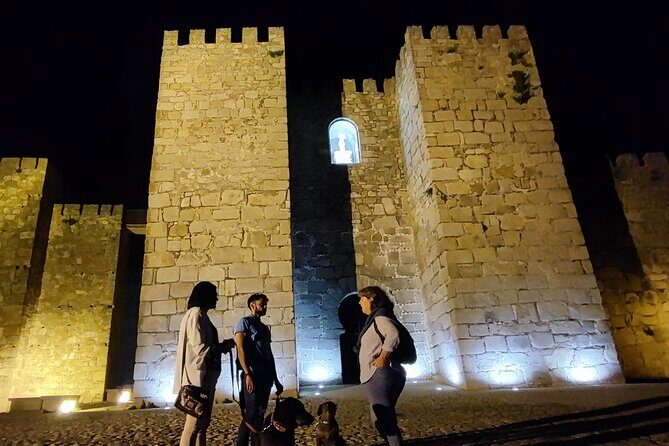
The meeting point is the Francisco Pizarro Equestrian Monument at Plaza Mayor (Pl. Mayor, 14). Starting there matters, because you begin with context in the center of town—so when the tour later climbs into the walled area, you know what you’re looking at.
From the start square, your guide sets the stage outside the walls and talks you through the city in time. That early orientation is a big reason people leave with a stronger understanding, not just photos.
Iglesia de Santa María la Mayor and the Torre Julia climb
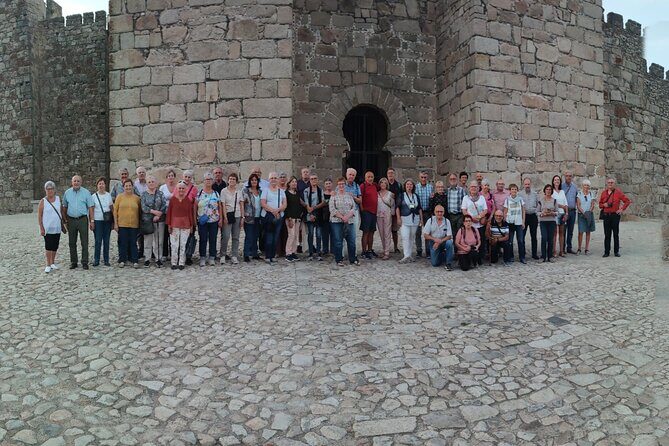
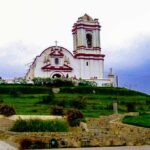
One key stop is Iglesia de Santa María la Mayor, where you can enter the church and climb the Torre Julia. The big payoff here is the view: from up there, you can take in the walled city and the surrounding area, then connect what you see to what you heard at the earlier stops.
There’s also a fun detail tied to the tower: the mysterious shield associated with the Julia Tower. It’s the kind of thing that turns a climb into more than just sightseeing—suddenly you’re looking for symbols and clues, not only roofs and streets.
Practical note: this is listed as 15 minutes, and entrance tickets are not included. If you’re keen on going up, try to plan for the extra cost so it doesn’t feel like a surprise halfway through.
Castillo de Trujillo: enter the parade ground and walk the battlements
Next comes Castillo de Trujillo. You can enter the parade ground and then climb the battlements, so you get to walk part of the upper perimeter rather than just stare from below.
This is one of those spots where the history turns physical. Seeing the castle from the inside edge helps you understand how this place could protect itself, control movement, and define power. It also creates the best angles for photos because you’re higher than the streets and can see the shape of the fortifications.
Time is listed as about 20 minutes, and again ticketed entry is not included. If you’re the type who enjoys climbs and viewpoints, this stop is a main reason to book.
Plaza Mayor de Trujillo: palaces and medieval houses close together
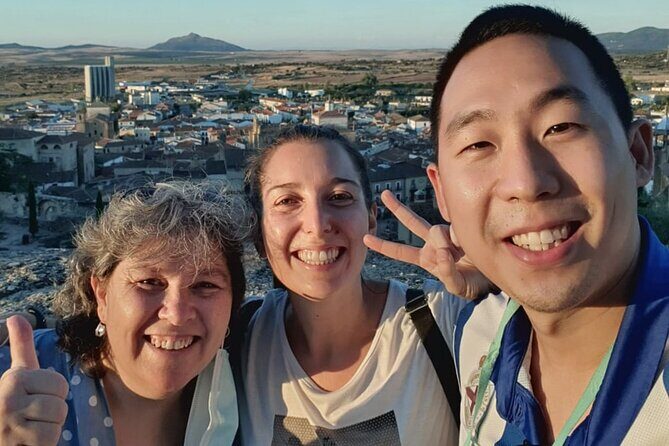
Back at street level, the tour gives you time at Plaza Mayor de Trujillo for about 30 minutes. This stop is practical: you get to see the palaces and medieval houses clustered around the square, and you’re able to absorb the city’s layout without climbing.
Plaza Mayor is also where you can slow down just enough to notice styles and building functions. The tour’s talking points help you connect why those buildings sit where they do, especially after you’ve been up at Torre Julia and the castle battlements.
Admission is listed as free here, so this is a low-cost way to enjoy a high-return viewing experience.
You can also read our reviews of more guided tours in Trujillo

The Pizarro House Museum: family story, not just dates
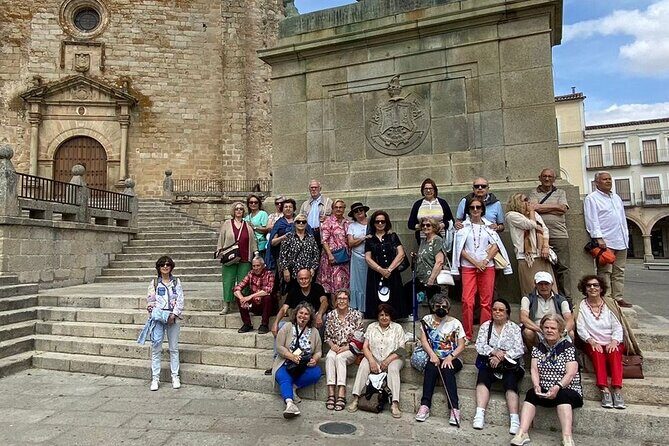
A short stop that packs real narrative power is the Pizarro House Museum. Here, your guide focuses on the story of the Pizarro family, giving you names and context you can carry to the rest of the walk.
This kind of stop works well because you don’t just hear about people—you see how the story connects to the city’s identity. Even if you’re not a history fanatic, it helps you understand why certain places matter when the tour later references Francisco Pizarro again.
The museum time is listed at about 10 minutes, and entrance is not included. If you’re on a tighter budget, consider whether you’ll prioritize the museum over other paid monument entries.
Inside the walls: Casas Fuertes, Orellana, and the Alberca pool
The heart of the experience happens in the walk through the medieval village inside the walls. This is listed as about 1 hour, and it’s where the tour shifts from big landmarks to the dense streetscape that makes Trujillo feel like a living timeline.
You’ll pass or focus on Casas Fuertes, the strong houses that reflect the city’s medieval defensive mindset. You also get time tied to Francisco de Orellana, along with the house of Francisco de Orellana and houses connected to the hidalgos.
A detail I think is especially worth noticing is the Alberca, described as a pool you can see on the route. Water features like this can be easy to overlook on your own, but with a guide’s pointers you start understanding how daily life and survival worked in older towns.
This segment also includes time spent around notable religious architecture beyond the main church stop—like the tour’s coverage of the Church of San Martín and the presence of 16th-century palaces in the story. When those references show up as you walk, the city’s timeline becomes clearer.
A quick stop for film-fame trivia: Trujillo cinema and La Casa del Dragón
One of the more modern threads woven into the walk is the Trujillo cinema, mentioned as a place where series such as La Casa del Dragón are recorded. It’s not the main reason to go, but it adds a light touch of present-day relevance.
If you like travel stories that mix past and present, this moment helps. You’re walking through a historic city, yet you see it’s still active and used—not turned into a museum only.
Finishing at the Alcazaba: 10th-century roots and a strong ending view
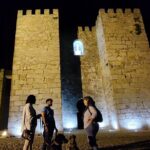
The tour ends at Trujillo Alcazaba (Pl. del Castillo, 1). The Alcazaba is described as an Arab castle from the 10th century, and that detail is a great final anchor. You end with a long-term origin story after spending time with later palaces and medieval neighborhoods.
Ending at the Alcazaba also makes sense because the day naturally climbs from center to fortress edge. If you’ve been paying attention to the route, this finish gives you a final “put it all together” moment—how the strongest older structures relate to the later buildings around them.
Price and value: $13.76 for a guided timeline, plus optional ticket costs
At $13.76 per person, this tour is priced as an easy add-on to your day—especially because it includes an official tourist guide and a route that covers multiple key areas of Trujillo. For the time you get (about 2 to 2.5 hours) and the small group size (max 15), it’s good value if you like learning while walking.
The main cost factor to plan for is simple: entrances to monuments are not included. That means Torre Julia, castle areas, and the Pizarro House Museum may require separate tickets depending on what you choose to enter. If you’re building your budget, treat the $13.76 as the guided experience cost, then add a bit more for the climbs and indoor stops.
Who this walking tour is best for
This is a strong choice if you want:
- A clear historical timeline without sorting information yourself
- Views and climbs, not only street-level wandering
- A guide who focuses on places connected to major figures like Francisco Pizarro and Francisco de Orellana
- A shorter plan you can fit into a midday slot (it starts at 12:00 pm)
It’s also a good match if you like photography and enjoy being directed to viewpoints. The tour explicitly recommends spectacular photo points, which matters when you’re in a walled city where angles can be hit-or-miss without help.
When to bring your own plan (and when to let the guide lead)
You don’t need a lot of extra planning to enjoy this. The best way to get value is to show up ready to walk and accept that some stops have separate entry costs.
If you care most about the big visual payoffs, prioritize the Torre Julia climb and the castle battlements. If you care most about story and context tied to a specific family, the Pizarro House Museum becomes the priority.
And because the route goes through older streets and involves climbs, comfortable shoes are non-negotiable. Plan for uphill bits and steps, especially at the tower and castle segments.
Should you book this walking tour of Trujillo through the Centuries?
I think you should book if you want a fast, structured way to understand Trujillo—especially if you enjoy history as something you can point to on the ground. With Guadalupe Parrón Bravo leading a small group, the experience feels like guided “city reading,” where anecdotes and legends connect directly to churches, palaces, strong houses, and the fortress finish.
I’d skip it only if you hate extra entrance fees or you want a purely free, all-outdoors route. The guided part is great value, but monument entries are a separate decision you’ll need to make.
If you’re the type who likes to leave with both photos and a mental map, this is a very sensible way to spend a focused couple of hours in Extremadura.
FAQ
How long is the guided walking tour in Trujillo through the Centuries?
It lasts about 2 hours to 2 hours 30 minutes.
Where does the tour start and end?
It starts at the Francisco Pizarro Equestrian Monument, Pl. Mayor, 14, Trujillo. It ends at Trujillo Alcazaba, Pl. del Castillo, 1.
What time does the tour begin?
The start time is 12:00 pm.
What’s included in the price?
The tour includes an official tourist guide.
Are monument entrance fees included?
No. Entrance to monuments is not included. Some stops list tickets as not included, while Plaza Mayor is listed as free.
How many people are in the group?
The tour has a maximum of 15 travelers.
Do I need to print anything?
You use a mobile ticket.
Are service animals allowed?
Yes, service animals are allowed.
What happens if the tour is canceled due to not meeting the minimum number of travelers?
If it’s canceled for that reason, you’ll be offered a different date/experience or a full refund.