REVIEW · TRUJILLO
Shore Excursion from Salaverry port
Book on GetYourGuide →Operated by JD ADVENTURE TRAVEL · Bookable on GetYourGuide
Five hours can rewire how you see Peru. This Salaverry shore excursion strings together Moche and Chimú sites in one smooth run, with big adobe temples, a museum stop, and the UNESCO-listed city of Chan Chan. I especially like the way the guide explains how these places were built and used over centuries, and I like that you’re not stuck in one stop—you move through the story in a logical order. One caution: entrance fees and food/drinks are not included, so you’ll want cash on hand and a plan for what you’ll eat later.
What makes this trip feel worth it is the human touch. Guides like Alfredo and William are known for staying organized and hitting the right moments with clear explanations, not long tangents. You also get hassle-free round-trip transport from the port and a small group setup, which helps you keep your day on schedule.
In This Review
- Key highlights you should care about
- How this 5-hour tour fits the Moche-to-Chimú story
- From Salaverry port to the sites: timing and meeting point reality
- Huaca del Sol and Huaca de la Luna: adobe pyramids with layers of power
- Huacas de Moche Museum: why the artifacts help you read the huacas
- Huaca Arcos Iris (El Dragon): niches, carvings, and the Takaynamo legend
- Chan Chan UNESCO city: the Chimú empire’s adobe capital
- Guide quality and small-group pacing: why it feels smoother
- Price and value: what $80 covers, and what you’ll still need
- Practical tips that keep your day easy
- Should you book this Salaverry shore excursion?
- FAQ
- What time does the tour start?
- How long is the excursion?
- Is pickup and drop-off from Salaverry port included?
- What languages are available for the guide?
- Does the tour include entrance fees?
- Is food or drinks included?
- Where is the meeting point?
- Do I need a mobile number for the tour?
- What should I bring and what is not allowed?
Key highlights you should care about
- Huaca del Sol & Huaca de la Luna: massive Moche adobe mounds used for religion and administration
- Layered construction at the huacas: platforms built over centuries, with rulers sealed and covered
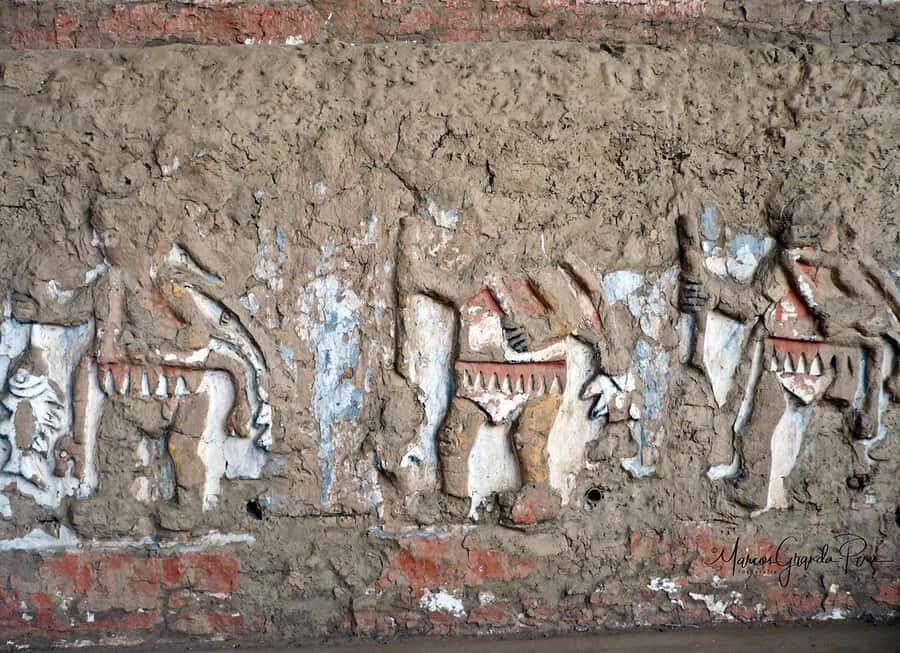
- Huaca Arcos Iris (Rainbow Temple / El Dragon): Chimú-era temple with niches and carved adobe panels
- Huacas de Moche Museum: ceramics, utensils, tombs, and artifacts that explain daily and ceremonial life
- Chan Chan (UNESCO World Heritage Site): the largest pre-Columbian adobe city in America and Chimú empire capital
- Port-to-port convenience: pickup and drop-off from Salaverry, plus a small-group English/Spanish guide
How this 5-hour tour fits the Moche-to-Chimú story
This itinerary is built for short port time. In about five hours, you cover two major Moche huacas (Sun and Moon), then you shift forward to Chimú influence at Huaca Arcos Iris, and you finish at Chan Chan, the Chimú world-famous adobe city.
You’ll get the best experience if you treat the route like a timeline. The Moche sites help you understand construction methods and ritual use. The Chimú stops show how later cultures reused sacred ideas and built their own expression on top of earlier landscapes. And the museum stop acts like your decoder ring—so the carvings, niches, and tomb references make more sense when you see them in person.
A few more Trujillo tours and experiences worth a look

From Salaverry port to the sites: timing and meeting point reality

You start at 08:30am from Salaverry port. The tour includes round-trip pickup and drop-off, and that matters because shore days in Peru can get tight when you’re balancing ship schedules, traffic, and entrance lines.
Here’s how to avoid stress on arrival:
- When you disembark, use the cruise ship shuttle bus to Salaverry Plaza (about 10 minutes).
- Look for a sign for JD ADVENTURE.
- If anything feels off, contact the team for help.
- Full details for the meeting point are provided about two days before your arrival.
Before you go, make sure you can be reached easily. You’ll need a valid mobile number for WhatsApp, and you should keep checking your email for possible updates to the departure time. Also include the full information about your arrival/departure time and your ship name—this helps keep the logistics aligned with your docking schedule.
Huaca del Sol and Huaca de la Luna: adobe pyramids with layers of power
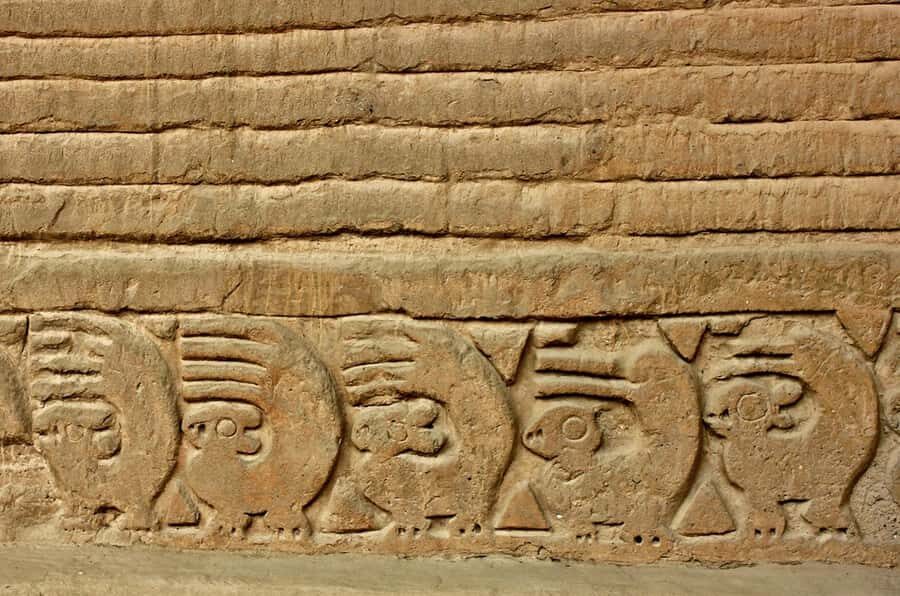
Your morning drive takes you first to the Sun and Moon Huacas, also known as Huaca del Sol and Huaca de la Luna. These enormous adobe mounds were built during the Moche empire, and they’re not just impressive because they’re big. They’re impressive because of how they were built over time.
What to notice as you look around:
- Huaca de la Luna was used as a religious complex.
- Huaca del Sol functioned as an administrative center.
- The temples evolved across centuries in platforms, not in one single build.
One of the most striking ideas the guide covers is the way the Moche handled rulers and construction. Every century, bodies of dead rulers were sealed into the temple, and then the existing platform was covered with a newer one. Over roughly 700 years, that repeated building behavior turned the temples into a huge stepped pyramid—so you’re literally seeing time stacked in layers.
Practical consideration: this part of the day is where you’ll want to pace yourself. Even if the route is short, these sites involve walking on uneven ground and moving between viewpoints.
Huacas de Moche Museum: why the artifacts help you read the huacas
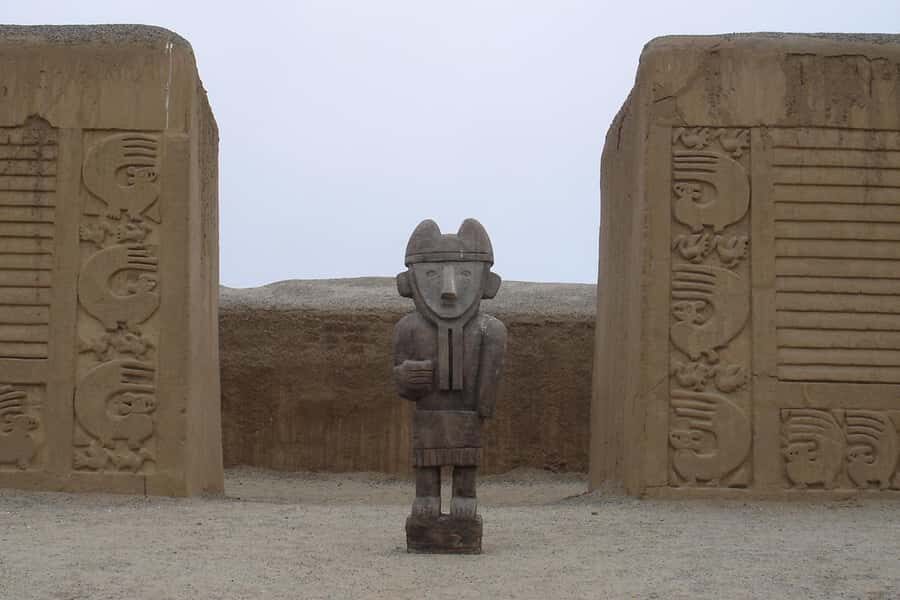
After the huacas, you visit the Huacas de Moche Museum. This stop is valuable because it takes things that could feel abstract in the open air and gives them context. You’ll see an assortment of artifacts, including ceramics, utensils, and tomb-related materials.
The museum helps you connect three dots:
- What people used in everyday life.
- What people built and stored in sacred spaces.
- Why the huacas were not only monuments, but functional religious and political centers.
It also gives you something concrete to listen for from the guide. When you return to the imagery—tombs, ritual objects, niche-like spaces—you’ll understand what those references are pointing to instead of just hearing names and dates.
Huaca Arcos Iris (El Dragon): niches, carvings, and the Takaynamo legend
Next is Huaca Arcos Iris, also called the Rainbow Temple or El Dragon. This is a different world from the Moche huacas—built by the Chimú around A.D. 1200.
As you explore, pay attention to the temple’s two platforms. The guide points out carved adobe panels and niches. Those niches mattered because they were once used to store ritual objects. So this is not decoration for decoration’s sake—it’s part of how ceremonies were staged.
You’ll also hear the local legend about Takaynamo, a mythical man believed to have founded Chan Chan. Even if you take the legend symbolically, it gives you a useful lens: sacred sites often get tied to origins and authority stories, which helps explain why cultures build and rebuild in meaningful places.

Chan Chan UNESCO city: the Chimú empire’s adobe capital
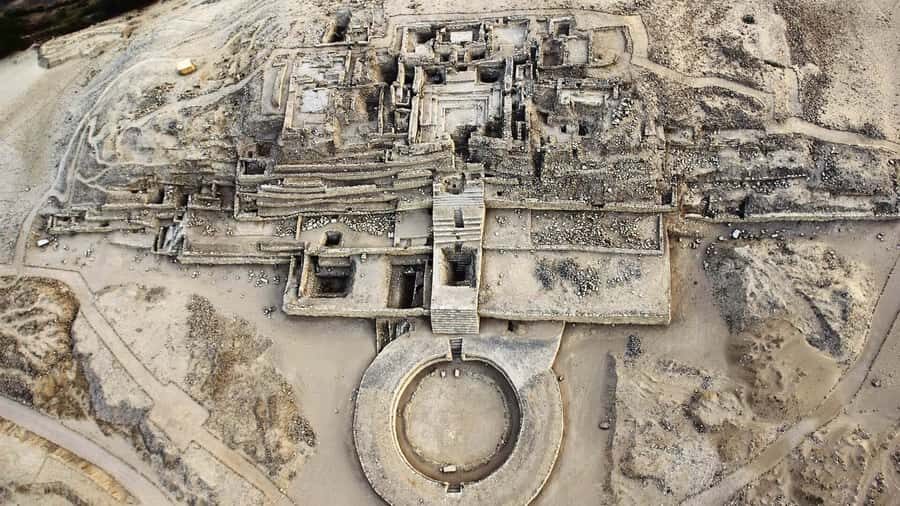
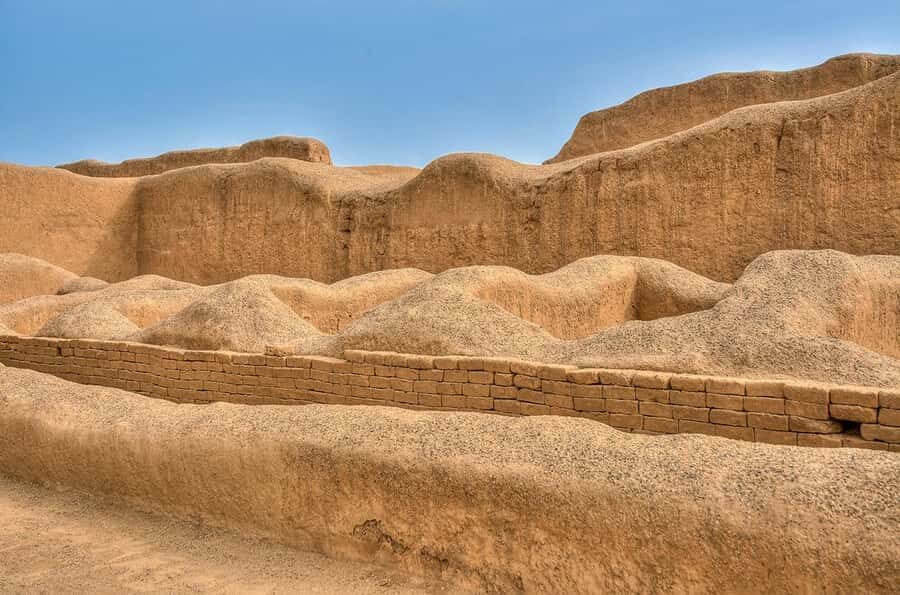
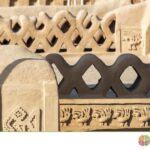
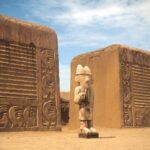
Your final major stop is Chan Chan, the UNESCO World Heritage Site declared in 1986. This is the largest pre-Columbian adobe city in America, and it once served as the capital of the Chimú empire.
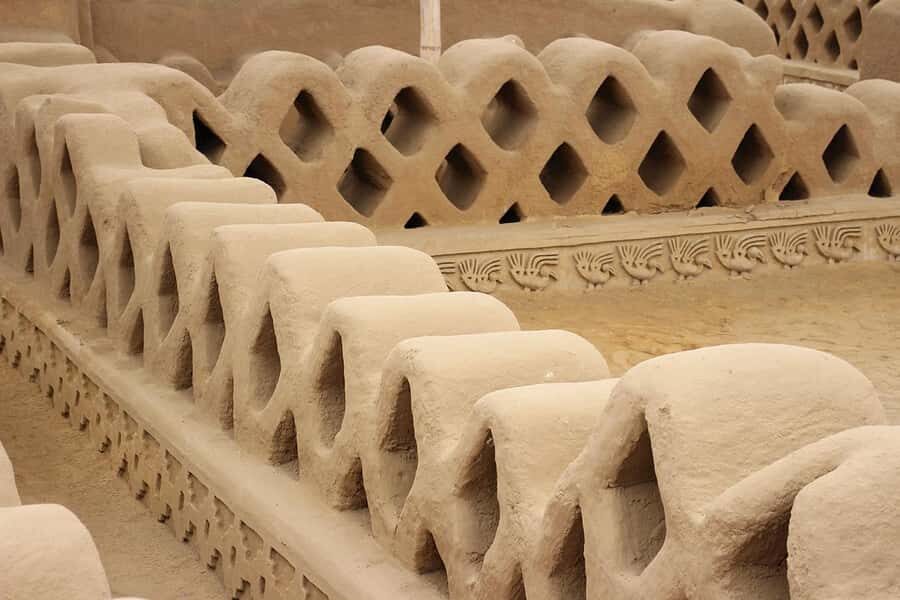
Here’s what makes Chan Chan stand out in a good way: it doesn’t feel like one temple. It feels like a city made of compounds—courtyards, terraces, palaces, and gardens—shaped for living, ruling, and ceremony.
Size can be hard to picture, so it helps to have a number in mind. Estimates suggest 30,000 to 60,000 people lived here. That population context makes the scale of the adobe spaces easier to understand: this wasn’t a tiny ritual center. It was an entire urban system.
What to do while you’re there:
- Let the guide explain how the Chimú designed the built environment for social and political life.
- Notice that adobe structures require time and care to survive—so your vantage points matter.
- Take your photos, but also slow down for the explanations. Chan Chan is best when you understand what you’re looking at.
Guide quality and small-group pacing: why it feels smoother
This is a small group tour with an English and Spanish speaking guide. That bilingual structure is more than convenience. It helps you catch details even if you miss a word, and it keeps everyone moving at the same pace.
In particular, guides like Alfredo and William are praised for being structured and timing their commentary well. For you, that means less wandering and fewer hours of unfocused talking. You get the important points when you’re standing in front of what they refer to.
Also, the tour includes skip the ticket line. In a short shore-day window, that one perk can save enough time to keep the day feeling calm instead of rushed.
Price and value: what $80 covers, and what you’ll still need
At $80 per person, you’re paying for the essentials that are hardest to DIY from a port day:
- Round-trip transport between Salaverry port and the sites
- A small-group guide in English/Spanish
- The main site experience flow (including skip the ticket line)
- Pick-up and drop-off, so you don’t have to solve transport mid-day
What’s not included:
- Entrance fees
- Food and drinks
- Personal travel insurance
So the value equation depends on how you handle the “not included” items. If you bring cash and plan for a meal outside the tour cost, the price feels fair for the number of major sites you cover. If you expect food to be included, you’ll need to adjust—because the itinerary doesn’t include it.
Practical tips that keep your day easy
This excursion is straightforward, but a few rules are worth taking seriously.
Bring:
- Cash (specifically listed)
Don’t bring:
- Backpacks
- Pets
- Alcohol and drugs
Stay connected:
- Provide a mobile number for WhatsApp.
- Keep checking email for updates to departure time.
Know who it may not fit:
- Pregnant women
- People with mobility impairments
- People with altitude sickness
- People with pre-existing medical conditions
- People over 95
A common-sense takeaway: if you’ll struggle with walking and uneven surfaces, or if your health needs extra planning, you may want a different option with fewer sites.
Should you book this Salaverry shore excursion?
Book it if you want a one-day sampler that still feels meaningful: Moche huacas, museum context, a Chimú temple with ritual niches, and then Chan Chan as the big finale. The combination of port-to-port convenience, a small-group guided format, and a tight five-hour structure makes it one of the more practical ways to see major archaeological highlights without turning your ship day into a logistics puzzle.
Skip it (or pick something gentler) if:
- You don’t want to pay separate entrance fees
- You’d rather have food included in the plan
- Your mobility, health, or comfort needs make multiple archaeological stops difficult
If you’re prepared with cash, wear comfortable walking shoes, and stay alert to WhatsApp/email updates, this is a solid way to turn your Salaverry stop into a real cultural day.
FAQ
What time does the tour start?
The tour begins at 08:30am from Salaverry port.
How long is the excursion?
The duration is 5 hours.
Is pickup and drop-off from Salaverry port included?
Yes. Pickup and drop-off from/to Salaverry port are included.
What languages are available for the guide?
The guide speaks English and Spanish.
Does the tour include entrance fees?
No. Entrance fees are not included.
Is food or drinks included?
No. Food and drinks are not included.
Where is the meeting point?
You’ll take the cruise shuttle bus to Salaverry Plaza (about 10 minutes). Meet at the spot where you see the JD ADVENTURE sign. Full details are provided about two days before arrival.
Do I need a mobile number for the tour?
Yes. You must provide a valid mobile number so they can contact you via WhatsApp.
What should I bring and what is not allowed?
Bring cash. Pets, backpacks, and alcohol/drugs are not allowed.