REVIEW · AREQUIPA
Arequipa: Walking Tour and Santa Catalina Monastery
Book on GetYourGuide →Operated by Tangol · Bookable on GetYourGuide
Arequipa’s beauty starts in plain streets. I love the sillar-stone lanes of San Lázaro and the way the Santa Catalina Monastery feels like a whole city made for quiet life. One drawback to keep in mind: this isn’t suitable for wheelchair users, and the walking can be a bit uneven in historic neighborhoods.
You’ll get a focused 3-hour route that mixes neighborhoods, colonial architecture, and UNESCO sights without turning into a marathon. Guides speak Spanish and English, and they keep the story moving from one stop to the next (plus you’ll have real time for photos inside the monastery).
In This Review
- Key highlights you’ll care about
- San Lázaro’s Sillar Streets: Where Arequipa Gets Its Look
- Barrio del Solar by the River Chili: Tambos and Merchant Life
- Tambo El Matadero: A 17th-Century Stop With Strange Gravity
- Tambo La Cabezona: Colonial Houses, a Communal Entrance, and an Early Mill
- Plaza de Armas: Quick Panoramic Views and the Cathedral Area
- Santa Catalina Monastery: The Cloister City in 20,000 Square Meters
- Guides and Group Rhythm: What Makes This Tour Feel Easy
- Price and Value: Why $35 Works (And When It Changes)
- Before You Go: Meeting Points, What to Bring, and Tiny Planning Wins
- Should You Book This Arequipa Walk?
- FAQ
- How long is the Arequipa walking tour and monastery visit?
- Where does the tour start if my hotel is not in the Historic Center?
- Is hotel pickup and drop-off included?
- Does the tour include the Santa Catalina Monastery entrance fee?
- When is the Santa Catalina Monastery closed?
- What languages are the guides?
- What should I bring and is it okay for children?
Key highlights you’ll care about
- San Lázaro (5 blocks from Plaza de Armas): small streets, white walls, and sillar stone that gives Arequipa its look
- Barrio del Solar near the River Chili: traditional colonial buildings and merchant lodging centers called tambos
- Tambo stops with real contrasts: Tambo El Matadero and Tambo La Cabezona are both unforgettable for different reasons
- Plaza de Armas viewpoints: a quick, high-impact look at the city’s main gathering square and cathedral area
- Santa Catalina Monastery (UNESCO): 20,000 square meters of cloisters, patios, churches, and streets
- Practical guidance: you’ll walk with a guide and get photo-friendly moments, including key quiet spaces
San Lázaro’s Sillar Streets: Where Arequipa Gets Its Look
The tour starts in the historic center area of Arequipa, with pickup options and a launch point near Santa Catalina at Calle Zela 301. From there, you begin in San Lázaro, a district only about five blocks from Plaza de Armas. That short distance matters. You feel the “old city” right away, without spending your energy on transfers.
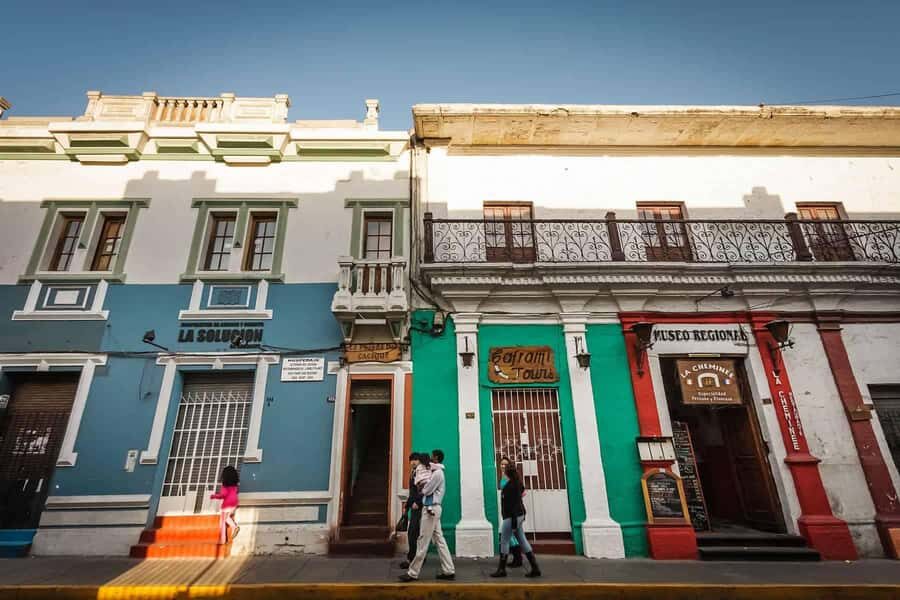
San Lázaro is known for compact lanes, small squares, and houses built with sillar, a volcanic stone used all over Arequipa. The result is a look that’s clean and bright, especially in contrast with the darker sky and mountain light. You’ll also notice the area’s long timeline: the district was occupied by pre-Inca and Inca cultures, and later Spanish settlers built some of the first houses during the city’s foundation.
This is the part of the experience I’d call grounding. Big landmarks are great, but you need a feel for how the city actually holds itself together. San Lázaro gives you that. It’s also where your guide can translate stone and street layout into meaning, so the rest of the day lands better.
What to watch for: because you’re in older streets and alleys, expect uneven paving and occasional narrow corners. Comfortable shoes beat stylish shoes here.
You can also read our reviews of more walking tours in Arequipa
Barrio del Solar by the River Chili: Tambos and Merchant Life
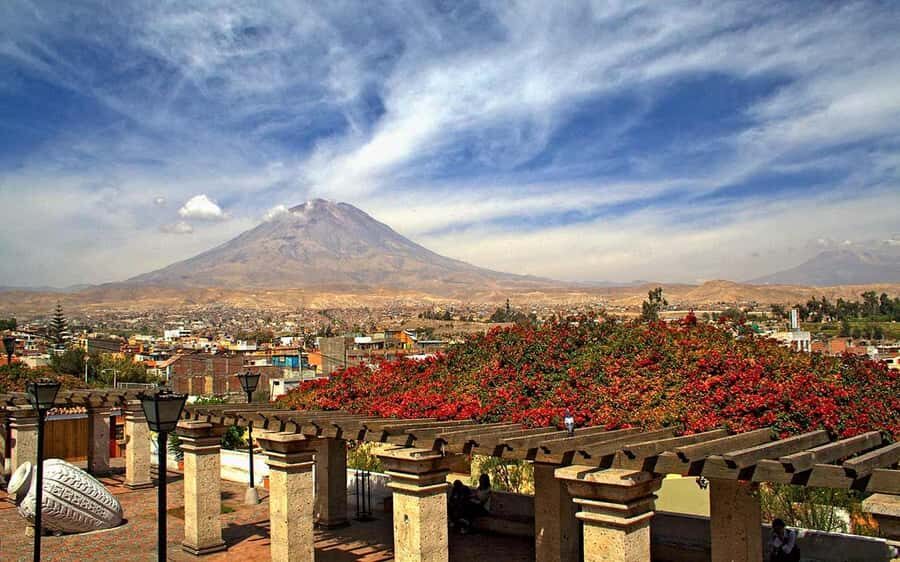
After you get your bearings, the tour moves toward Barrio del Solar near the River Chili. This area is full of traditional and colonial buildings, and it helps you understand how Arequipa worked when travel and trade were the main engines of daily life.
You’re going to hear the word tambo a lot. Tambos were lodging centers where merchants could rest during the colonial era. In other words, these weren’t romantic inns. They were practical stops in the flow of goods, people, and money. When you see these spaces with a guide explaining their role, they stop being “cool old buildings” and start feeling like part of a system.
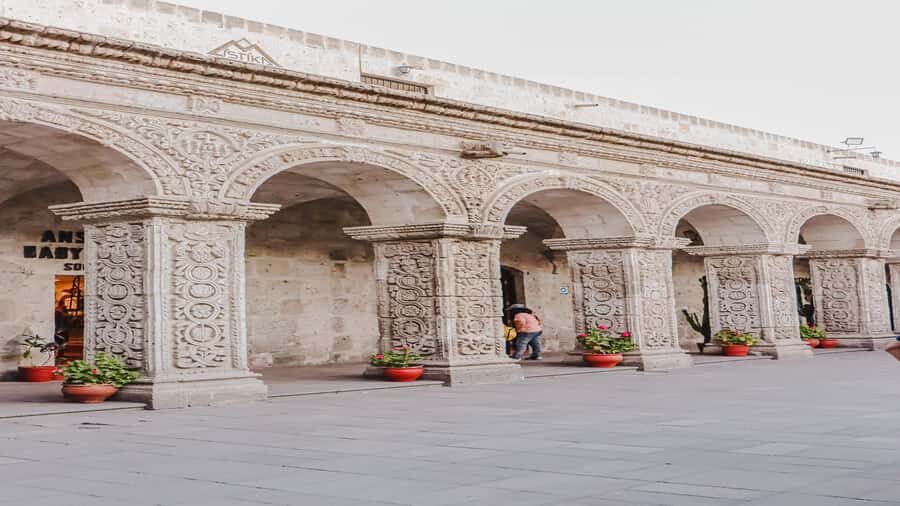
You’ll also get photo moments during this stretch. That’s important because colonial-era stonework in Arequipa rewards slow looking. The details are there, but you won’t catch them if you’re rushing.
Tambo El Matadero: A 17th-Century Stop With Strange Gravity
One of the most striking parts of the day is Tambo El Matadero. The building dates to the seventeenth century and was used to sacrifice animals. That’s a heavy detail, and it changes how you look at the space.
Today, it’s not just an artifact. Around 30 families live there. So you’re seeing history that didn’t get sealed behind glass. It’s also a reminder that the past and present overlap in Arequipa in very real ways.
This stop can feel emotionally jarring compared with the brighter sillar streets you saw earlier. A good guide is key here, because they help connect why something like this existed and how the neighborhood continues to function. If you like tours that treat history honestly instead of smoothing it out, you’ll probably appreciate this moment.
Tip: take a quiet minute before photos. It’s the kind of place where fast clicking feels disrespectful.
Tambo La Cabezona: Colonial Houses, a Communal Entrance, and an Early Mill
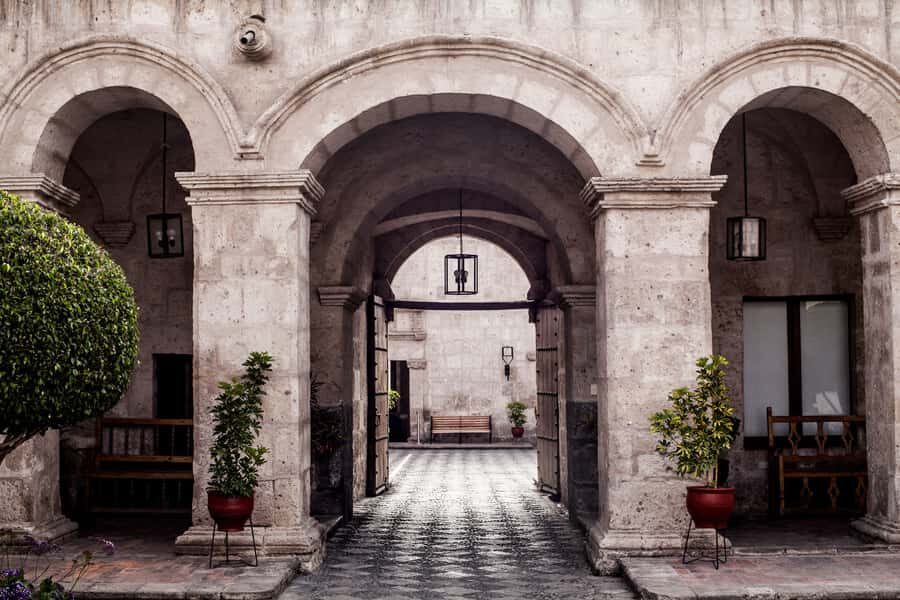
Next up is Tambo La Cabezona, another colonial complex, but with a different vibe. This group of houses includes a communal entrance dating to the sixteenth century. Instead of focusing on a grim function, the story leans toward how people lived and worked together.
You’ll also hear about how one of Arequipa’s first mills operated here. A mill doesn’t sound glamorous, but it’s the kind of infrastructure that makes a city real. Grain needed processing. People needed routine. Trade needed organization. This stop helps you picture the city’s “work behind the scenes.”
Together, the two tambos create a strong contrast: one side of colonial life was about logistics and industry, and another was about darker duties. That range is part of why this walking route works.
Plaza de Armas: Quick Panoramic Views and the Cathedral Area
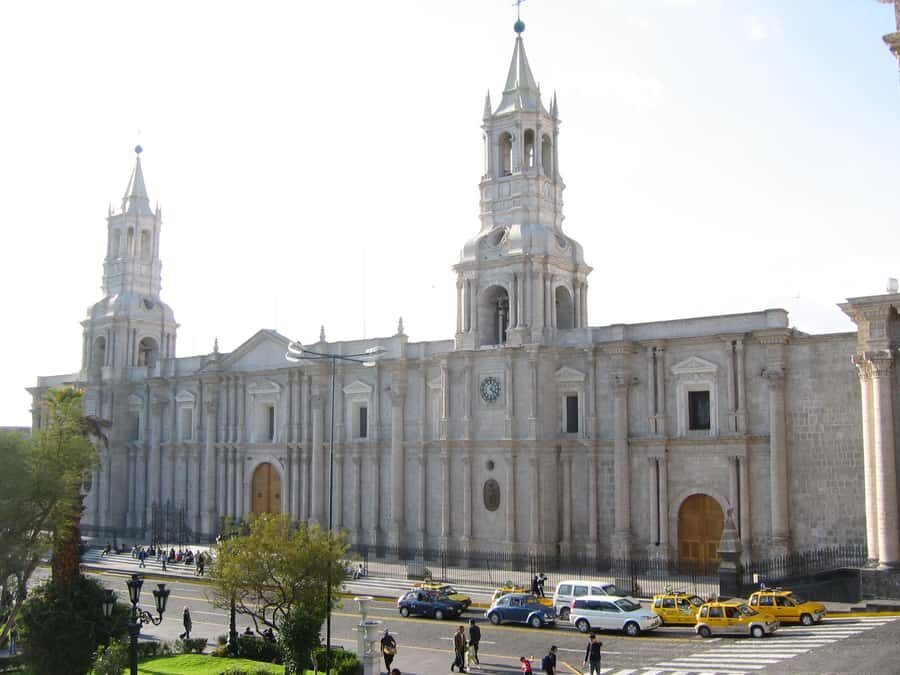
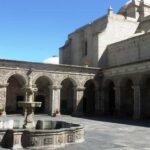
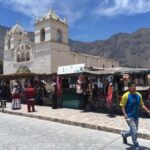
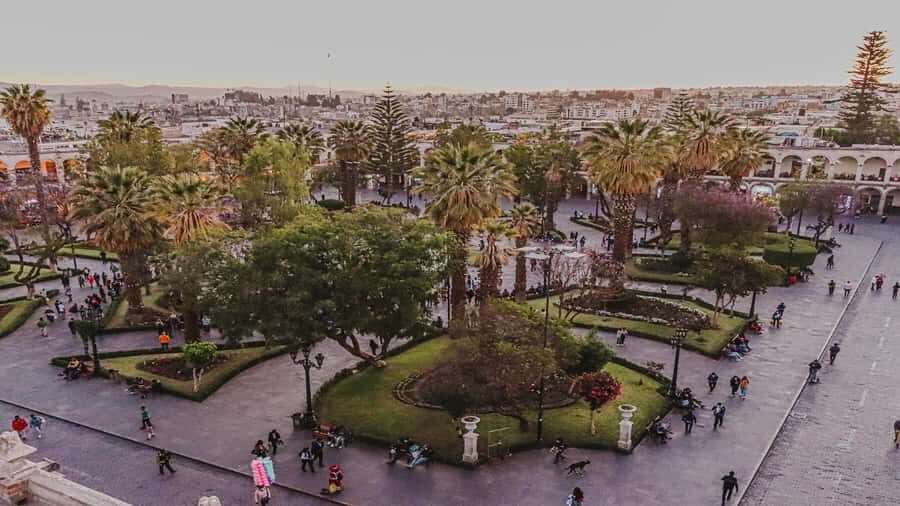
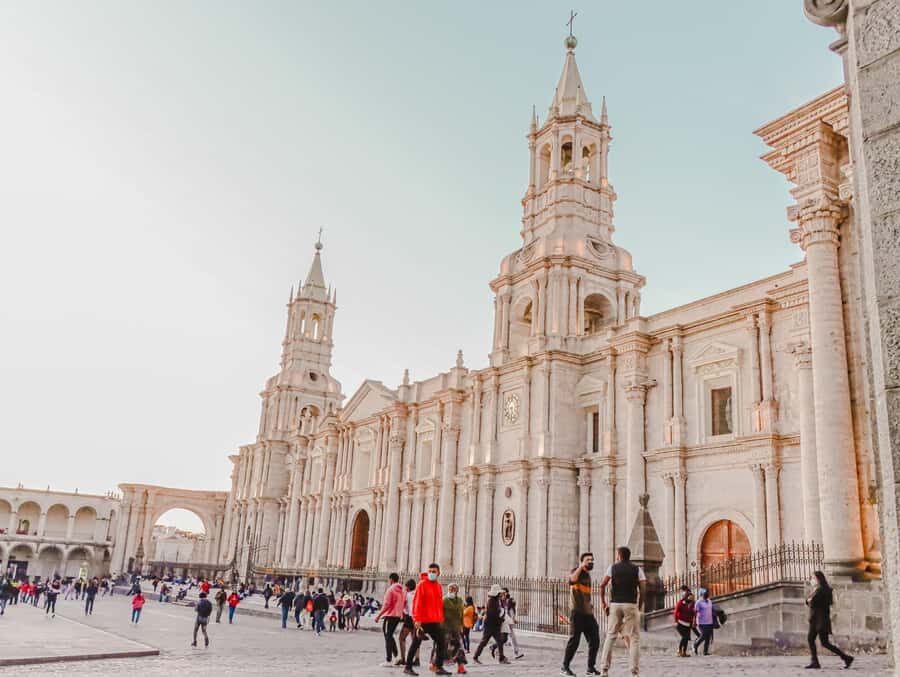
Then you move to Plaza de Armas, Arequipa’s main meeting point for locals and one of the best ways to grasp how the city centers itself. The cathedral of Arequipa is located nearby, and the square is surrounded by portals—arcade-style facades that frame the open space.
There’s also a bronze fountain in the middle. It’s one of those details that feels small until you’re standing there and see how it anchors the whole square.
This stop lasts long enough to matter—about a half hour—with guide context and time to look around. You’ll probably feel a quick shift here: you go from compact neighborhood streets to a wide open central public space. That’s a good pacing trick. It gives your legs a mental break too.
What I’d do for photos: don’t only aim at the cathedral area. Step back into the portals view as well. The framing is part of the architecture.

Santa Catalina Monastery: The Cloister City in 20,000 Square Meters
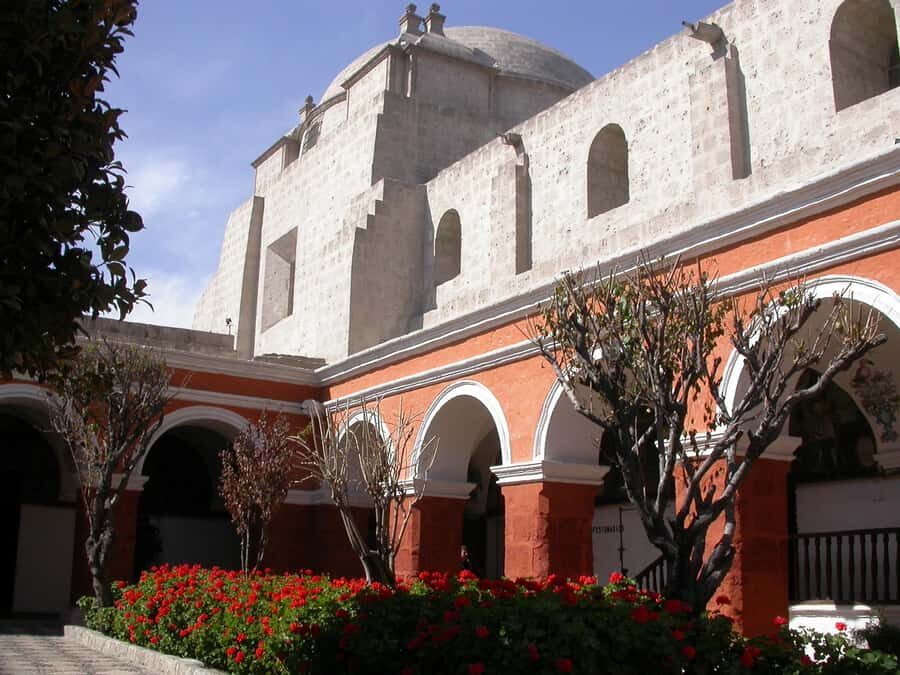
The highlight of the day is Santa Catalina Monastery. Founded in 1579, it spreads across about 20,000 square meters and is organized with cloisters, patios, squares, streets, a bell tower, and a church. Yes, it feels like a city inside a city, because it functioned that way for the women who lived there.
The guiding story is especially strong. During the viceroyalty, Doña Maria de Guzmán was wealthy and donated her properties, choosing to live as a cloister nun. The convent drew women from wealthy families, and it still has cloister nuns living at Santa Catalina today.
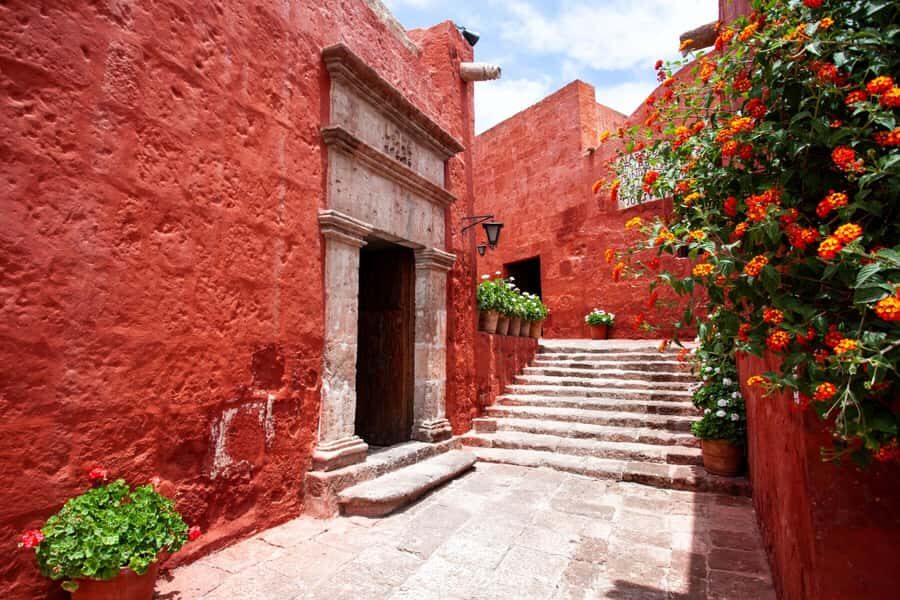
Visually, you’ll notice the ground you walk on—ashlar stone—and the monastery’s natural colored red walls in some areas. It’s a pleasing color palette under the right light, and you’ll have time for photos without feeling like someone is chasing you.
You’ll visit key spaces such as the Patio del Silencio, a place where the nuns met to pray and read the Bible in silence. That name alone sets the mood. Even when you’re just a visitor, you’ll feel the difference in how people naturally lower their voices in that kind of space.
And yes, the monastery is UNESCO World Cultural Heritage. But the real value is that UNESCO label doesn’t explain what you actually experience: walkable streets, hidden courtyards, and the logic of cloister life that becomes visible only when you’re inside.
Closure note: the monastery closes on December 25th and Good Friday, so plan your dates accordingly.
Guides and Group Rhythm: What Makes This Tour Feel Easy
The tour is structured as a guided walk with a couple of short van segments. That matters because Arequipa’s historic center is compact, but not perfectly smooth. You’ll walk enough to feel the neighborhoods, then get brief movement by van when it helps keep the day comfortable and time-efficient.
Guide quality is a big deal on a tour like this because you’re seeing places that could easily become “just beautiful buildings” without context. The guides on this experience operate in both Spanish and English. In the feedback you’ll see strong praise for guides who are kind, empathetic, and precise in explanations, including named guides like Gisela and Milei.
A well-run guide also handles pacing: giving you time to absorb, not just pass through. You’ll get photo stops during the walking parts, and inside Santa Catalina you’ll have about an hour to explore with a guide.
Practical expectation: this is not wheelchair-friendly, and the route is best for people who can handle walking on uneven historic surfaces for a few hours.
Price and Value: Why $35 Works (And When It Changes)
The headline price is $35 per person for a 3-hour experience, which is pretty reasonable when you factor in a professional guide and the fact that you’re covering multiple neighborhoods plus the UNESCO monastery.
What changes the final cost is whether the monastery entrance fee is included. The experience offers options:
- With monastery entrance fee included (locally guided)
- Without entrance fee included, where you pay locally
If you choose not to include the entrance fee, you’ll pay at the monastery: 25.00 PEN for ages 7 to 21 and 45.00 PEN for adults. Those numbers matter because they can shift the total in your budget, especially if you’re traveling as a group.
So is the tour worth it? For me, the value comes from the guide doing the hard job: connecting sillar architecture, colonial tambos, and cloister life into one coherent story. Without that, you’d still see the sites—but you’d miss the meaning that makes the day feel purposeful.
Good fit for value seekers: travelers who like walking tours that cover more than one “type” of attraction—neighborhood texture plus a major UNESCO site.
Before You Go: Meeting Points, What to Bring, and Tiny Planning Wins
Plan around the fact that pickup and drop-off depend on where your hotel is. If your hotel is within the Historic Center, hotel pickup and drop-off may be available. If not, you’ll need to reach the meeting point at Calle Zela 301, next to the Convent of Santa Catalina (near Hotel Mirador del Monasterio). The meeting time is confirmed after booking.
Order of visits can vary, but the main sequence stays focused: neighborhoods first, then Plaza de Armas, then Santa Catalina.
Pack like a realist:
- Sunscreen and sunglasses (sun protection)
- Insect repellent
- Comfortable clothes and a hat
- Comfortable shoes for uneven stone and historic streets
Also note the itinerary isn’t built for speed through attractions. The day includes time for photos, especially at Santa Catalina, so arrive ready to slow down a little.
If you’re sensitive to closures, remember Santa Catalina closes on December 25th and Good Friday.
Should You Book This Arequipa Walk?
Book it if you want a smart first-or-second visit to Arequipa that links architecture to everyday colonial life. This route gives you sillar streets in San Lázaro, merchant-tambo context in Barrio del Solar, and then a full UNESCO experience at Santa Catalina.
Skip it if you need wheelchair accessibility (this one isn’t suitable), or if you hate the idea of walking through older neighborhoods where surfaces can be uneven and streets can feel tight. Also, if monastery closures affect your travel dates, double-check your calendar since Santa Catalina shuts on December 25th and Good Friday.
For most people, it hits the sweet spot: three hours, a strong guide, and a finale that actually changes how you see Arequipa.
FAQ
How long is the Arequipa walking tour and monastery visit?
The tour lasts about 3 hours.
Where does the tour start if my hotel is not in the Historic Center?
You should go to the meeting point at Calle Zela 301, next to the Convent of Santa Catalina (Hotel Mirador del Monasterio).
Is hotel pickup and drop-off included?
Hotel pickup and drop-off are optional, and only available for hotels located within the Historic Center. If your hotel is outside that area, you’ll use the meeting point instead.
Does the tour include the Santa Catalina Monastery entrance fee?
It depends on the option you select. Some options include the entrance fee with a local guide, while other options require paying locally.
When is the Santa Catalina Monastery closed?
The monastery closes on December 25th and Good Friday.
What languages are the guides?
The guides operate in Spanish and English.
What should I bring and is it okay for children?
Bring sunscreen, sunglasses, insect repellent, comfortable clothes, and a hat. Children 4 and younger are complimentary.