REVIEW · AREQUIPA
Arequipa: Catarata de Pillones and Bosque de Piedras Tour
Book on GetYourGuide →Operated by GONDOLA TOURS SAC · Bookable on GetYourGuide
Cold air, big water, and strange stone animals. Starting early at 6:00 AM, this day trip brings you to Catarata de Pillones, where a river cuts through erosion-shaped rocks and gives you a solid window to photograph the falls.
I also love the surreal Bosque de Piedras de Puruña, where stone columns look like prehistoric creatures frozen in place. One thing to weigh is the altitude and chilly mornings around 4,000 meters, plus a rocky descent before the waterfall, so you’ll want sturdy shoes and warm layers.
In This Review
- Key points before you go
- Early 6:00 AM start: why the schedule actually works
- Where you meet and how the guide finds you
- Pampa de Arrieros: a quick stop with real local travel context
- Pampa Cañahuas Reserve: vicuñas and the Misti Volcano in one sweep
- Patahuasi: breakfast or Andean tea to take the edge off altitude
- Catarata de Pillones: the 20-minute rocky descent and river walk
- Bosque de Piedras de Puruña/Imata: where stone looks alive
- Lunch near the middle: a local restaurant pit stop
- Price and value: what $32 gets you (and what it doesn’t)
- What to bring: the practical checklist for 4,000 meters
- Who this tour suits best (and who should skip it)
- Should you book this Catarata de Pillones and Bosque de Piedras tour?
- FAQ
- How long is the Arequipa Catarata de Pillones and Bosque de Piedras tour?
- What is included in the tour price?
- Is lunch included?
- Where do I meet the guide?
- What should I bring for the day?
- Is the tour suitable for kids or people with mobility issues?
Key points before you go
- 6:00 AM start to fit two big nature sights into one smooth day.
- Pampa Cañahuas views with vicuñas and the Misti Volcano in the same frame.
- Warm-up stop at Patahuasi with breakfast or Andean teas before colder walking.
- Catarata de Pillones photo time with a 45-minute stay at the waterfall.
- Rock erosion “animal” formations at Bosque de Piedras de Puruña/Puruña-Imata area.
- Private tour comfort with air-conditioned transportation and a professional guide.
Early 6:00 AM start: why the schedule actually works
This is the kind of Arequipa day trip that makes sense only if you’re okay with an early start. You’ll meet around 6:00 AM, then you’re out of town while the air is still crisp and the route is planned for timing. The payoff is you get enough daylight and energy to reach both Catarata de Pillones and the stone forest without feeling rushed.
I like that the day doesn’t try to squeeze in five random stops. You focus on two main natural stars, plus a reserve and a culture stop that add context. If you’ve ever done a day tour where you bounce from place to place with no time to really look, this one feels more balanced.
Just remember: altitude around 4,000 meters means cold can hit fast. Even if the sun is bright, you’ll be glad you planned warm clothing from the start.
You can also read our reviews of more tours and experiences in Arequipa.
Where you meet and how the guide finds you
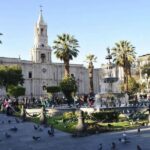
Your meeting point is easy to anchor: the main entrance of the cathedral area is used as the reference point, and guides are recognizable by their company uniform. If you’re staying in the historic center, pickup is available from your hotel, which removes one hassle.
There’s also a specific office reference on Jerusalén Street 515 in case you’re meeting there instead of being picked up. The day runs with straightforward coordination, including phone contact so you can find your guide quickly.
Once you’re matched up, you’ll ride in air-conditioned transportation. That matters on a long day because it keeps you from arriving sweaty and chilled at the wrong moments—especially when you’re about to step into cold altitude air.
Pampa de Arrieros: a quick stop with real local travel context
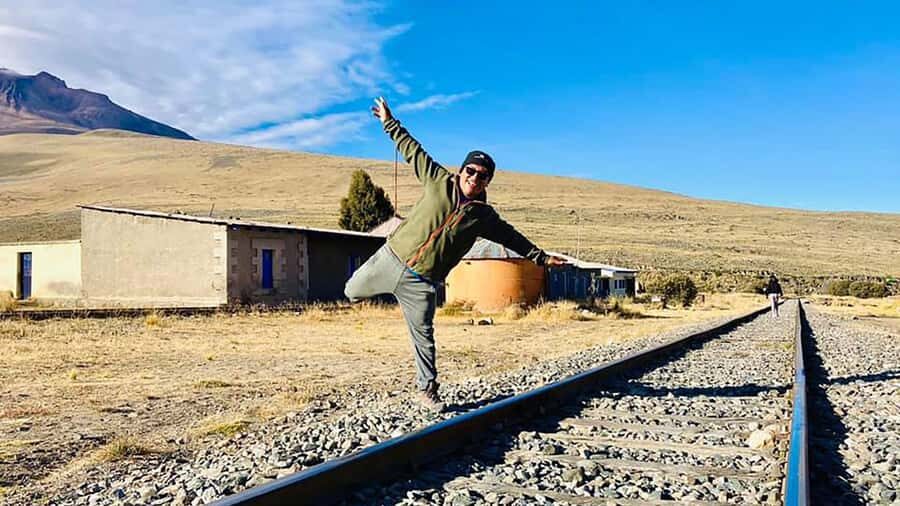
The first named stop after leaving Arequipa heads to Pampa de Arrieros. This is described as an important station for travelers who arrived by train in the city known as the White City. Even if you only get a brief visit and photo break, the purpose is clear: you’re starting your day with a bit of local movement history.
In practical terms, this early stop helps you:
- get your bearings before higher-altitude viewpoints
- settle into the route with a guided explanation
- take quick photos before the day stretches longer
If you’re the type who likes to understand where you’re standing, this part gives you that extra layer without slowing down the trip.
Pampa Cañahuas Reserve: vicuñas and the Misti Volcano in one sweep
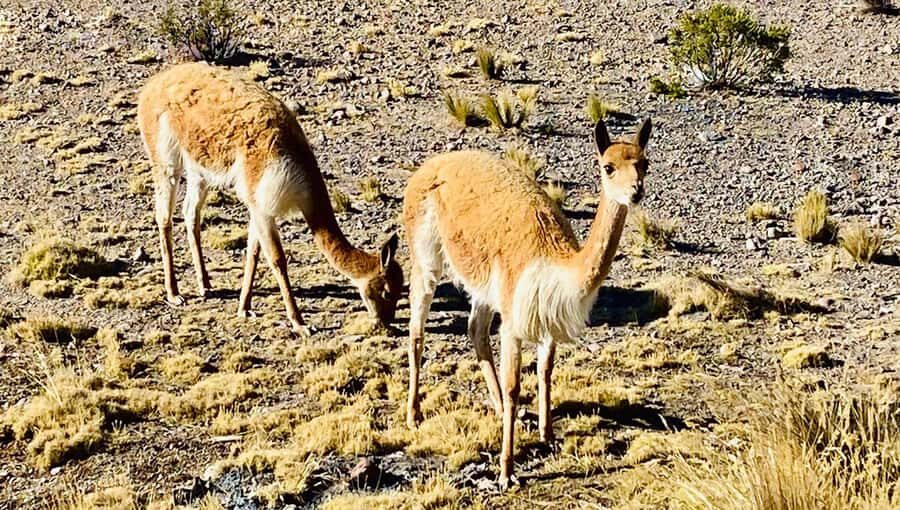
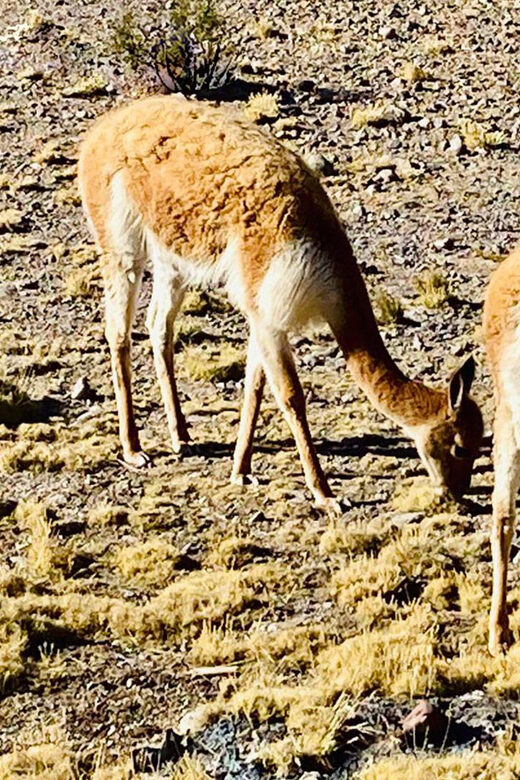
Next you reach Pampa Cañahuas National Reserve, where you’ll have another photo stop plus a guided look. The big attraction here is the chance to see vicuñas, with the Misti Volcano sitting behind them.
I like this stop because it’s not just about scenery. It connects the wildlife setting to the dramatic Andean backdrop. Even when you only get brief sightings, the combination of animals and volcanic skyline is exactly the kind of Arequipa moment that feels distinctly high Andes.
The timing also helps. You’re moving through the day with enough breaks to keep you functioning at altitude, rather than jumping straight into the most physical walking.
Patahuasi: breakfast or Andean tea to take the edge off altitude
Before the waterfall, you reach Patahuasi, where you can have breakfast or drink Andean teas, plus local snacks. This is a smart pacing choice because you’re going to be colder and more active right after.
Plan for the weather here. The day notes cold conditions due to altitude (about 4,000 meters above sea level). You might feel fine early on and then realize you’re underdressed when the route turns into walking time.
A warm drink also helps you stay alert. If you’re prone to feeling lightheaded at altitude, this is the moment you’ll appreciate most—you’re giving your body a calmer runway before the descent.
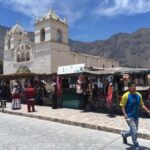
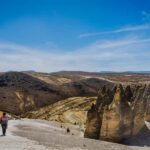
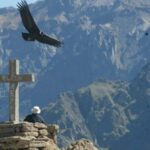
Catarata de Pillones: the 20-minute rocky descent and river walk
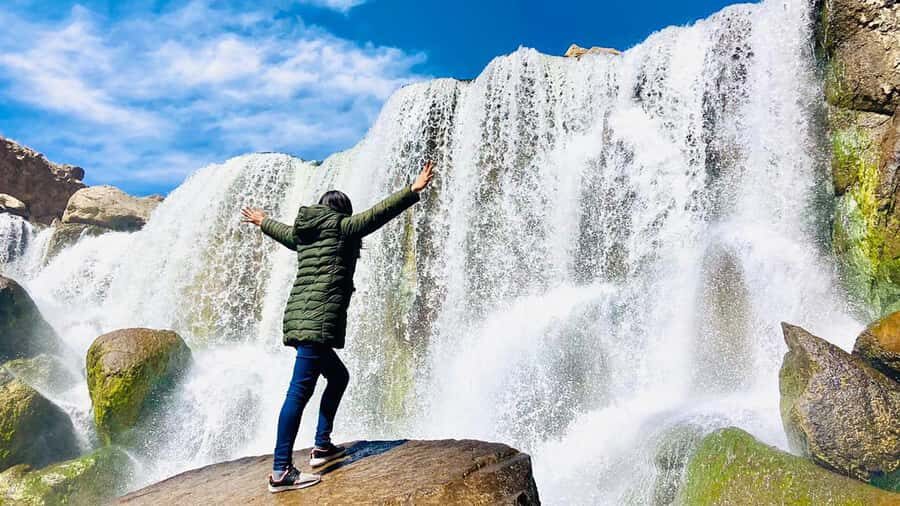
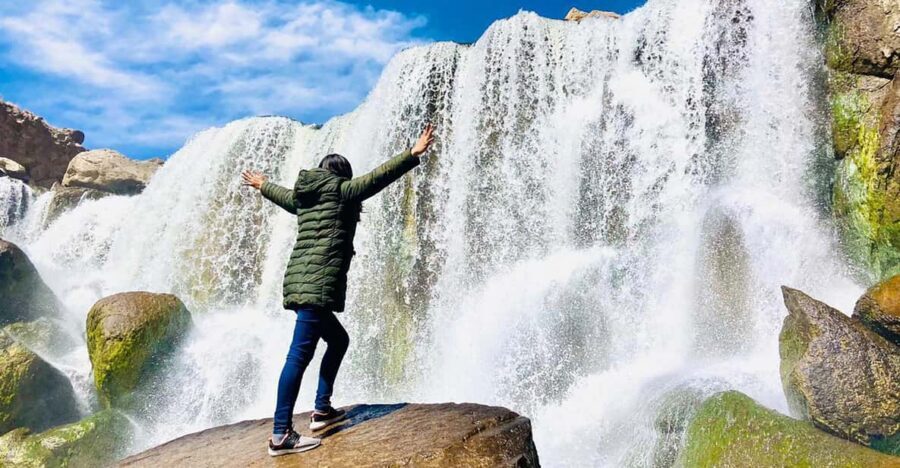
Now for the headline: Catarata de Pillones (also listed on the route as Pillone–Pauza). You’ll have two ways to experience it—there’s an option to see it from above, and the better experience is the one that includes a descent.
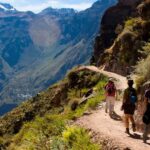
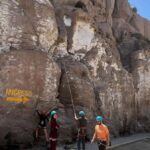
From the pre-waterfall area, you’ll take a 20-minute descent until you reach Catarata de Pillones. The route includes careful footing down a rocky slope, followed by a walk along a river before you arrive at the falls themselves.
When you get there, you’ll have about 45 minutes for photos and soaking in the sound and spray. I love this setup because you’re not rushed at the exact moment you’ll want to pause. And waterfalls at altitude have a very different feel than the ones lower down—they can feel sharper, colder, and more dramatic.
Practical note: this is the most physically demanding part of the day. Go slow on the slope, keep your attention on your feet, and treat the shoes you brought as part of your safety plan.
Bosque de Piedras de Puruña/Imata: where stone looks alive
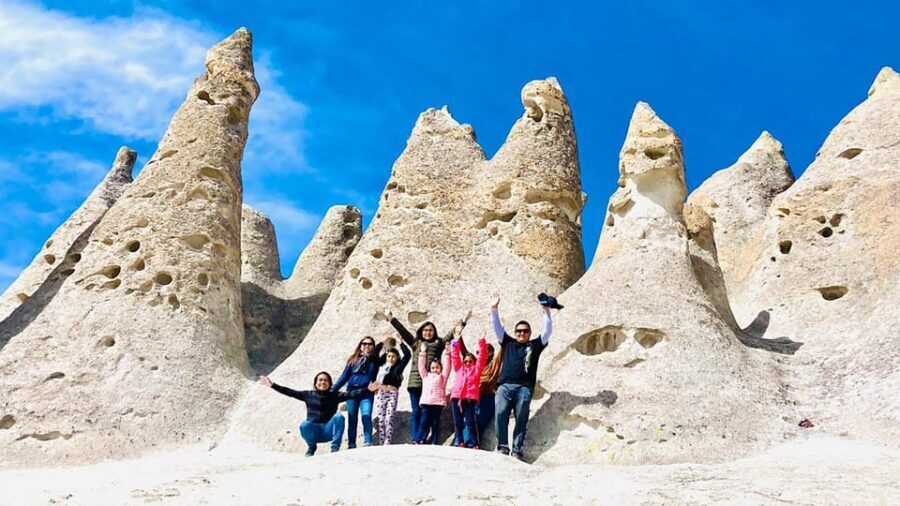
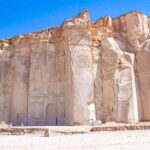
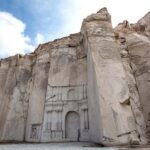
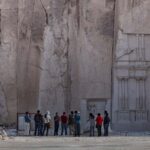
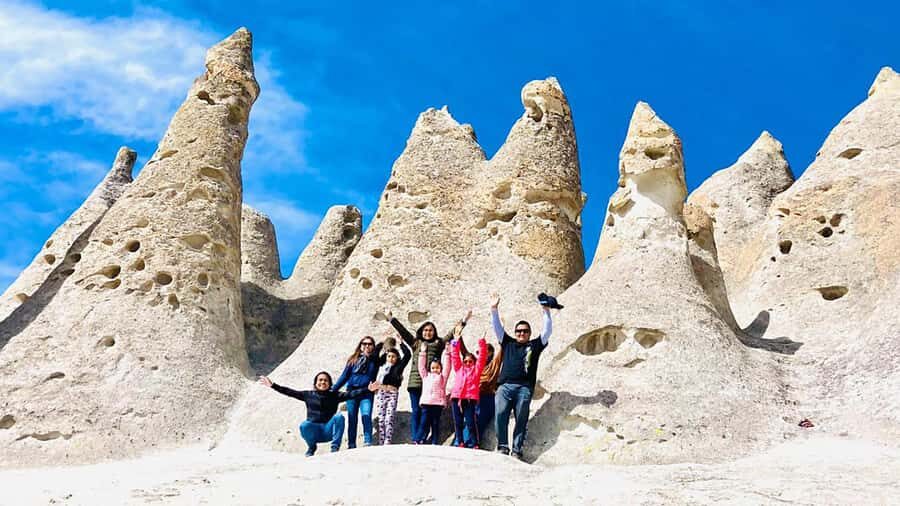
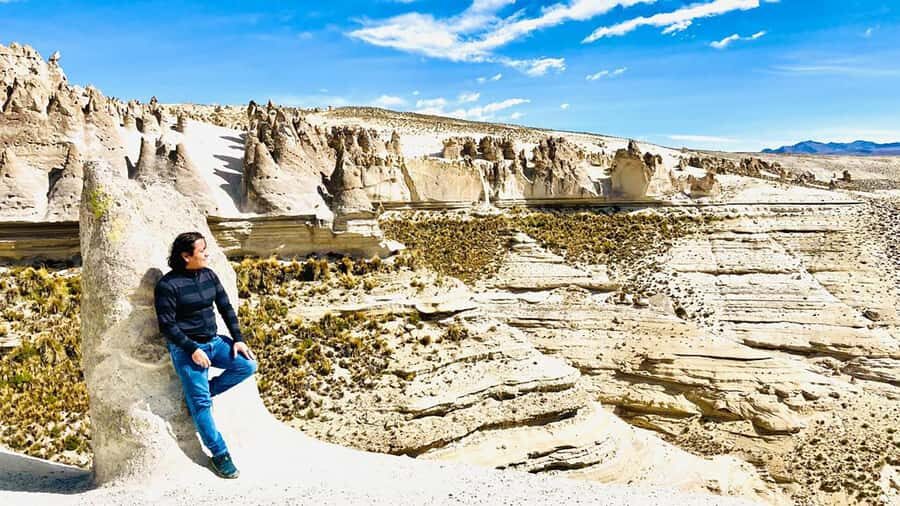
At 10:30 AM, your expedition continues toward Bosque de Piedras—named in the highlights as Bosque de Piedras de Puruña, and later referenced in the route as Bosque de Piedras de Imata. Either way, you’re walking among natural stone formations shaped by water erosion over time.
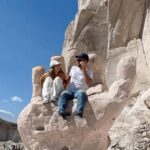
This is the part that feels almost sci-fi. The rocks are described as resembling prehistoric animals, which is exactly how it lands when you’re there: you look at a column and your brain wants to label it as a creature. The effect is why the area is often described like an enchanted or petrified forest.
You’ll get photo stops and a guided tour, so you’re not wandering without a clue. If you enjoy geology in a hands-on way, this is a great match because you’re seeing the result of erosion and time directly, not just reading about it.
It’s also a helpful break from the waterfall’s damp atmosphere. You still need layers, but the walking feels different—more visual, more still, and very photo-friendly.
Lunch near the middle: a local restaurant pit stop
At 12:30 PM, you’ll enjoy lunch at a local restaurant. Lunch is clearly part of the day plan, but it isn’t included in your tour price as a blanket statement—so you should expect to cover it separately or follow whatever the operator indicates on the day.
I like that lunch happens around mid-afternoon, not at the very beginning. You’ve already done the most “cold and active” parts, so you can eat while you’re thinking clearly.
After lunch, the day turns back toward Arequipa. The tour is designed to finish at 4:00 PM near the Plaza de Armas, which means you still have time to shower, recharge, and plan an evening in the historic center.
Price and value: what $32 gets you (and what it doesn’t)
The price is $32 per person for a 1-day tour, and the value comes from the structure: you’re paying for guided access, transportation, and a full itinerary across two major natural areas.
Included:
- Professional guide
- Hotel pick-up (for hotels in the historic center)
- Private tour with group size limits (up to 19)
- Air-conditioned transportation
- Special activities tied to the stops
Not included:
- Food and drinks
- Lunch
- Entrance tickets
So is it worth it? In my view, it’s a good value if you want an organized day without coordinating public transport to high-altitude areas, and if you value someone else managing timing between Pillones, the reserve, and the stone formations. You’re also paying for guided context, not just rides.
If you already know the route and feel comfortable driving and navigating timing solo, you could potentially spend less. But for most visitors, the saved hassle is the real bargain here—especially with the early start and cold-altitude walking.
What to bring: the practical checklist for 4,000 meters
This tour gives you enough walking and time outdoors that packing wrong will show up quickly. Bring:
- Comfortable shoes with solid grip
- Warm clothing (layers beat one bulky item)
- Camera
- Snacks
- Water
You’ll also be outdoors for long stretches, so snacks and water help you avoid the dip that comes from cold and altitude. If you’re the type who gets chilly fast, consider extra layers for the descent and waterfall waiting time.
Also note the tour says sport clothing is recommended. That’s not about style—it’s about movement and traction when the ground turns rocky near the waterfall.
One more rule: no smoking during the tour.
Who this tour suits best (and who should skip it)
This day trip is designed for active travelers. It lists an age range of 8 to 50 years, with children under 8 not suitable. It also isn’t recommended for:
- pregnant women
- people with mobility impairments
If you’re comfortable with a rocky descent and you can handle cold mornings, you’ll likely enjoy it a lot. The itinerary includes walking along a river and exploring two outdoor natural zones, so even though it’s a guided day, you’re still doing real steps.
The good news is that it’s one day, not a multi-day expedition. You get big scenery and a strong sense of place without needing to build stamina over several days first.
Should you book this Catarata de Pillones and Bosque de Piedras tour?
I’d book it if you want a high-Andes day that feels grounded in nature and doesn’t require you to figure out logistics. Catarata de Pillones gives you the kind of photo time most day trips don’t, and the Bosque de Piedras stop is memorable in a very specific way: stone columns that look like animals frozen mid-gesture.
You should think twice if cold weather and altitude walking are tough for you. The descent before the waterfall is the real test of comfort, so if your footing isn’t confident, or if you don’t tolerate high elevations well, look for a less demanding option.
If you’re traveling with the right expectations—comfortable shoes, warm layers, and a camera ready—you’ll get a full day’s worth of Arequipa drama without turning your schedule into a blur.
FAQ
How long is the Arequipa Catarata de Pillones and Bosque de Piedras tour?
It’s a one-day tour (about 1 day), with the itinerary starting in the early morning and returning around 4:00 PM near the Plaza de Armas.
What is included in the tour price?
The tour includes a professional guide, hotel pick-up (if you’re in the historic center), a private tour with group limits, special activities, and air-conditioned transportation.
Is lunch included?
Lunch is not included in the tour price. The schedule includes a lunch stop at a local restaurant around 12:30 PM, but you should expect to pay for food.
Where do I meet the guide?
The reference point is the main entrance of the cathedral area. Guides are recognizable by their company uniform, and they coordinate via phone. If you prefer, there’s also an office reference on Jerusalén Street 515, and hotel pick-up is available for stays in the historic center.
What should I bring for the day?
Bring comfortable shoes, warm clothing, a camera, snacks, and water.
Is the tour suitable for kids or people with mobility issues?
The age limit is 8–50 years. It’s not suitable for children under 8, pregnant women, or people with mobility impairments.