REVIEW · AREQUIPA
Arequipa: Walk through the Historic Center of the City
Book on GetYourGuide →Operated by Huallata Experiences · Bookable on GetYourGuide
Arequipa’s old streets have a pulse. This 2-hour walk through the Historic Center puts you face-to-face with the city’s standout cathedral, colonial cloisters, and ancient tambos, then finishes with a high-energy view over volcanoes like Misti and Chachani. I especially like how the guide-led storytelling makes the buildings feel personal, and I also love the small-group feel (up to 6) that keeps questions flowing. One thing to consider: it’s a walking-heavy experience, so if you want step-by-step commentary on every single street corner, you may wish for a bit more “street level” detail.
I also liked the way the tour is built around real movement: cobblestone streets, stops at multiple historical sites (5 total), and then an active finale that’s about 1.5 hours to the lookout viewpoint. Guides such as Joss/Joseph/José (the names show up across bookings) come across as professional and friendly, and they tend to share practical recommendations after the tour. The possible drawback is pacing: some feedback points out that the route includes stretches of walking time, so you’ll want comfy shoes and a willingness to just follow along and absorb as you go.
In This Review
- Key Highlights You’ll Actually Notice
- Setting Off from Campo Redondo San Lázaro
- Cathedral First: Seeing Why Arequipa Starts Here
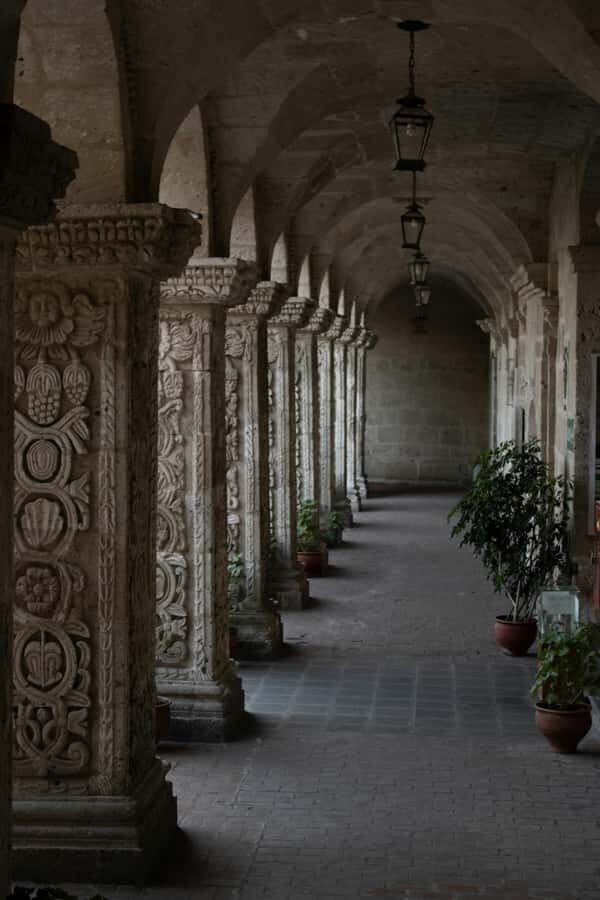
- Colonial Cloisters: Architecture That Explains Itself
- Tambos: Ancient Lodging, Not Just a Word
- Cobblestone Stories: Legends and Traditions Along the Way
- The Volcano View Finale: Misti, Chachani, and Pichu Pichu
- What the “5 Historical Sites” Format Means for You
- Guide Energy and the Small-Group Advantage
- Price and Value: Is $15 Worth It?
- When This Tour Is the Best Fit
- Quick Reality Check: What Might Feel Off
- Should You Book This Walk?
- FAQ
- How long is the Arequipa Historic Center walking tour?
- What’s the price per person?
- Where is the meeting point?
- What language options do you get with the guide?
- How big is the group?
- Which sites does the tour include?
- What can you see at the end of the tour?
Key Highlights You’ll Actually Notice
- Small group (max 6): easier Q&A and a more personal pace.
- Cathedral + cloisters + tambos: you see Arequipa’s architecture in layers, not as random stops.
- Local legends on cobblestones: stories and traditions that help the city make sense.
- Lookout finale with volcano views: panoramas over Misti, Chachani, and Pichu Pichu.
- Guide recommendations: tips for where to go next in Arequipa and Peru.
Setting Off from Campo Redondo San Lázaro
This tour starts with a pickup at Campo Redondo San Lázaro (coordinates -16.3934138, -71.5336117). That matters because Arequipa’s Historic Center is made for wandering, and you don’t want to waste your first hour hunting for where to begin.
From there, you’ll move through the core of the White City with a live guide in English or Spanish. The “small group” limit (6 participants) is a real advantage here: you’re not competing for attention, and it’s easier for the guide to adjust the pace if someone needs a moment.
You can also read our reviews of more walking tours in Arequipa
Cathedral First: Seeing Why Arequipa Starts Here
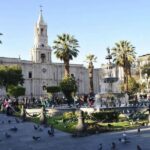
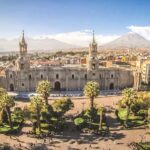
The tour opens with the majestic Cathedral, one of the city’s most iconic emblems. Starting here is smart. You get a visual anchor early, and the guide can frame later stops—cloisters, tomb-like corners of history, and the practical logic of old religious and colonial spaces.
What I like about a cathedral start is that it sets tone. Arequipa’s Historic Center isn’t just pretty buildings; it’s a place where architecture carries social history. By the time you step away from the main landmark, you’ll be looking at details with more purpose—how space was organized, why certain structures feel built for both faith and community.
Colonial Cloisters: Architecture That Explains Itself
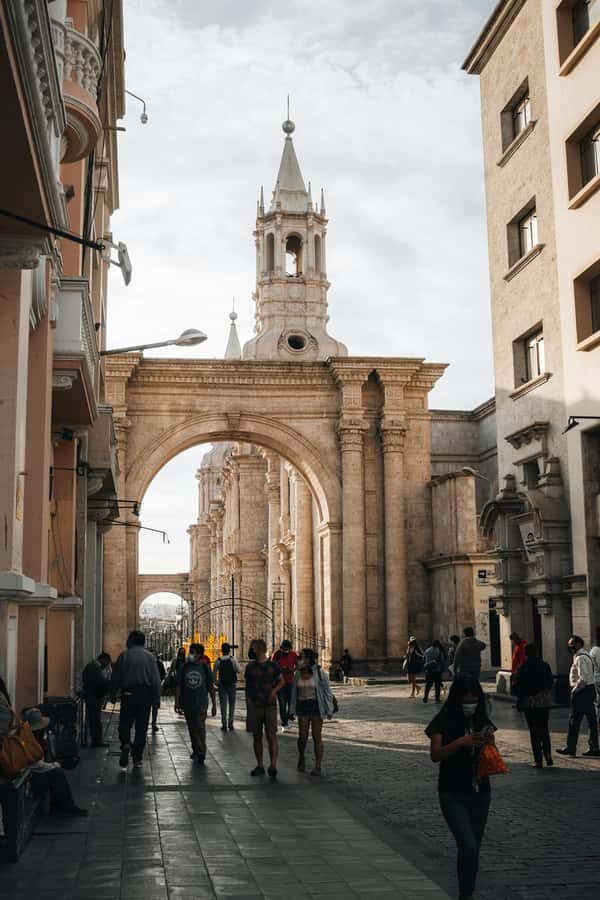
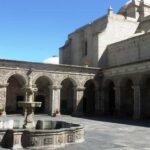
After the cathedral, you continue to explore colonial cloisters, where you can admire the architecture and hear the history behind it. Cloisters can feel repetitive in other cities—pretty courtyards with long corridors—but here the value is in the way the guide ties those spaces to how people lived and moved.
Look for the quiet geometry: the way passageways guide your eye, how the buildings hold light and shade, and how the “in-between” spaces matter. This is where the walking tour format pays off. Instead of reading about cloisters in a guidebook, you get to feel their scale and layout as you go.
Potential drawback: cloisters are still buildings—you may cover multiple interiors or semi-interiors within a short stretch. If you’re hoping for the kind of museum-by-museum pacing that turns each site into a deep session, you’ll be doing more “see and learn” than “linger and study.” Still, for a 2-hour experience, it’s a good match.
Tambos: Ancient Lodging, Not Just a Word
One of the most interesting parts is the visit to tambos, ancient lodgings that played a fundamental role in life in Arequipa for centuries. This stop changes how you see the Historic Center. It’s not only about official institutions like cathedrals and colonial religious sites; it’s also about the infrastructure that supported travelers, work, and daily routines.
When a guide connects the architecture to human needs—where people stayed, how journeys were supported—you get a clearer picture of why certain areas developed when they did. Tambos are also a reminder that history isn’t only “important events.” It’s systems: roads, stops, and the practical places where life happened while people moved through the region.
Cobblestone Stories: Legends and Traditions Along the Way
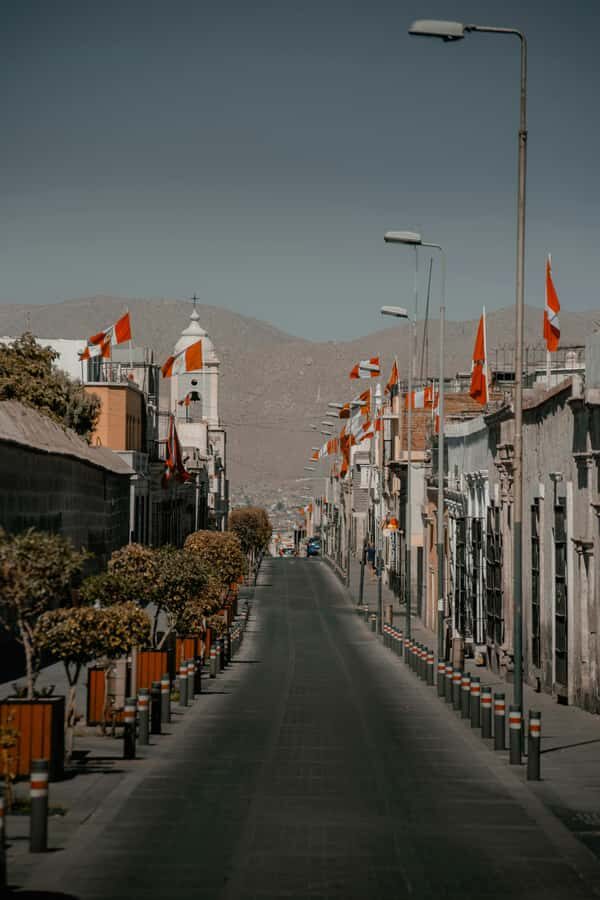
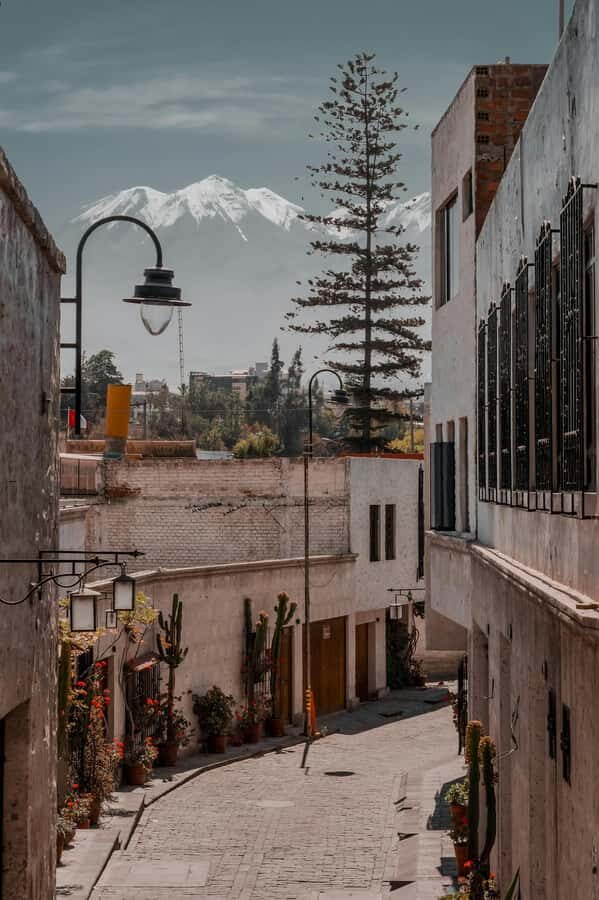
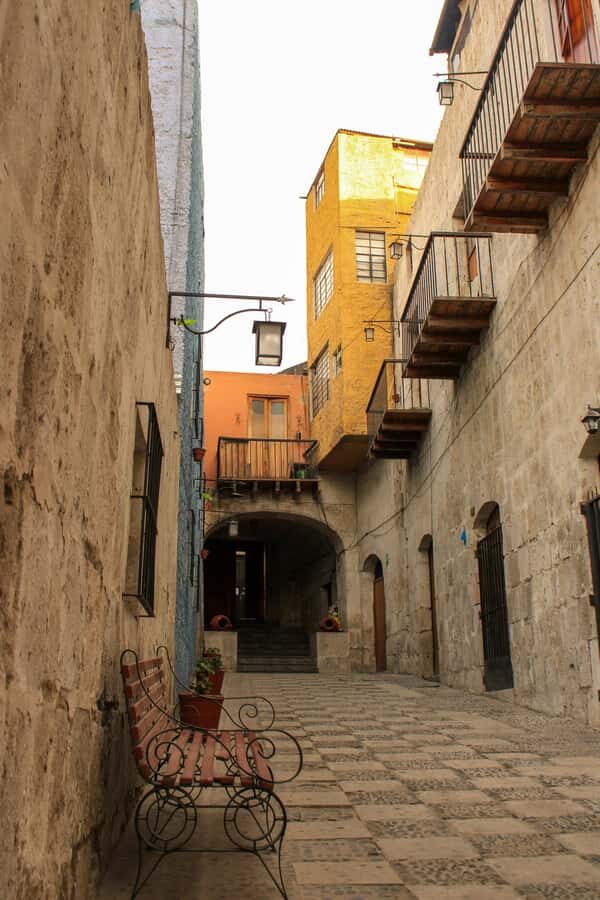
Between major stops, you’ll walk the picturesque cobblestone streets, and the guide shares legends, traditions, and curious facts passed down through generations. This is the section that turns the route into more than a highlight reel.
In a good walking tour, storytelling should do a job: it helps you notice what you might otherwise miss. Here, the stories are meant to enrich the cultural experience while you move. So pay attention to street corners, doorways, and architectural transitions—because that’s where the guide’s narrative tends to land.
You can also read our reviews of more city tours in Arequipa

The Volcano View Finale: Misti, Chachani, and Pichu Pichu
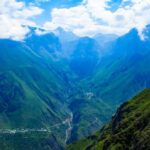
The tour culminates at a lookout point with a panoramic view of the volcanoes that surround Arequipa—especially Misti, Chachani, and Pichu Pichu. The total walking plus the climb to the viewpoint is described as about 1.5 hours, and the tour’s overall duration is 2 hours, so expect that the finale is the “big moment.”
This is where you stop thinking like a tourist and start seeing the city in context. Arequipa’s buildings sit inside a dramatic natural frame. A viewpoint finish also gives you a natural “reset point” after several architectural stops: you’ll feel the scale of the city, then the guide can wrap up the themes you picked up along the route.
One practical note: because it’s an active finale, wear shoes that handle cobblestones confidently. Don’t plan on perfect photo angles if you’re balancing on uneven stones—focus on safe footing, then enjoy the view.
What the “5 Historical Sites” Format Means for You
The tour includes 5 wonderful historical sites, but the real value isn’t the number—it’s how the stops connect into a story. In a short time, you’re seeing three different lenses on Arequipa:
- Religious power (Cathedral)
- Colonial design and social space (cloisters)
- Travel and daily life logistics (tambos)
That mix helps you avoid the common “checklist tour” problem, where you collect landmarks but still can’t explain what made the city grow and how people used it. Here, the architecture and the stories are meant to work together.
Also included are stories, legends, and curious facts, plus recommendations in the city and tips to do in Peru. And there’s an extra social layer: cultural exchange, which is often the difference between a tour you forget and one that gives you a better itinerary for the rest of your stay.
Guide Energy and the Small-Group Advantage
A big reason people rate this tour extremely high is the guide experience. Names like Jose, Joss, and Joseph come up repeatedly across bookings, and the theme is consistent: friendly, professional, and eager to answer questions.
Small group size (up to 6) matters more here than in bigger sightseeing formats. You’ll likely get guidance that feels tailored—extra context on what you’re seeing, plus follow-up suggestions. Some bookings also mention the guide sharing recommendations after the tour (like where to eat and drink), which is exactly what you want from a first-time Arequipa walk: help beyond the walk itself.
Price and Value: Is $15 Worth It?
At $15 per person for a 2-hour tour, this is priced like a smart local experience, not a luxury production. The value comes from several concrete elements:
- You’re getting a live guide in English or Spanish
- You visit about five historical sites
- You get stories and legends tied to what you’re seeing
- You end with a viewpoint over major volcanoes
- You leave with recommendations for what to do next
If you’re comparing against “sit-and-stare” city tours, this format is more hands-on. If you’re comparing against free walking tours, this isn’t just a route—it’s the cathedral-to-cloister-to-tambos arc, plus the active viewpoint finish.
Possible mismatch: if you’re the type who wants long pauses inside every building and lots of detailed commentary at each street segment, you might feel the tour is compact. But for most first-timers, the tight structure is exactly the point.
When This Tour Is the Best Fit
I’d put this tour on your shortlist if you want:
- A first introduction to Arequipa that explains what you’re looking at
- A Historic Center walk that includes less obvious layers like tambos
- A small group with a guide who answers questions and shares recommendations
- A finish that includes the volcano panoramas around the city
It also works well if you like practical travel notes. The guide isn’t just pointing; the experience is meant to help you plan the rest of your time.
Quick Reality Check: What Might Feel Off
One downside shows up in the feedback: the tour can feel like a lot of walking, and if you want extra explanation for every street and building you pass, you may want more depth than the schedule allows. This is common with compact walking itineraries.
If that sounds like you, go in with the right expectations. Think of this as a guided orientation and story trail. You’ll get the key sites and the main threads. Then you can choose what to revisit on your own later.
Should You Book This Walk?
Yes—if you want an efficient, locally guided way to get your bearings in Arequipa. I’d book it early in your stay because the guide recommendations and the way the route builds understanding (cathedral → cloisters → tambos → viewpoint) make the rest of your trip easier.
Skip it only if you strongly prefer slow museum-style pacing or you dislike tours where walking segments are a big part of the experience. For most people, the small group size, the architectural variety, and the volcano viewpoint finale make this one a clear win for value and first impressions.
FAQ
How long is the Arequipa Historic Center walking tour?
The tour lasts 2 hours.
What’s the price per person?
The price is $15 per person.
Where is the meeting point?
The pickup meeting point is Campo Redondo San Lázaro (coordinates -16.3934138, -71.5336117).
What language options do you get with the guide?
The tour is offered with a live guide in English and Spanish.
How big is the group?
This is a small group limited to 6 participants.
Which sites does the tour include?
It includes 5 historical sites, starting with the Cathedral, plus colonial cloisters and visits to tambos, along with time on cobblestone streets and a final viewpoint.
What can you see at the end of the tour?
The tour ends at a lookout point with panoramic views of the volcanoes around Arequipa, including Misti, Chachani, and Pichu Pichu.