REVIEW · AREQUIPA
Arequipa Food Tour: Ancestral Cuisine & City Tour
Book on GetYourGuide →Operated by Exquisito Peru – Food Tours · Bookable on GetYourGuide
Cuy and volcano views, all in one walk. This Arequipa food tour ties San Camilo Market tastings to historic stops and ends at Yanahuara for dessert, with a small-group feel. You also get a real look at the Ciudad Blanca streets, not just food-on-the-go.
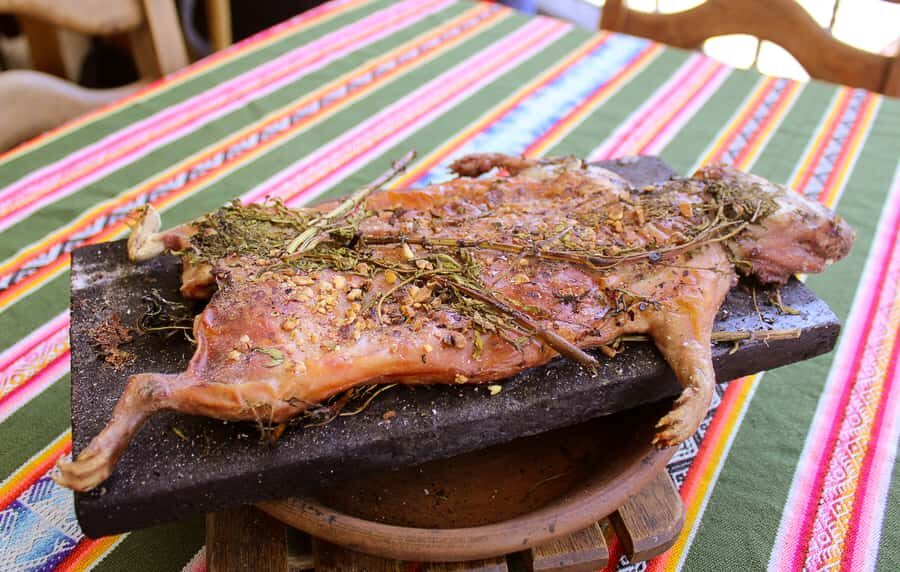
I love the chance to taste cuy and alpaca alongside local drinks like chichas and pisco. I also like the way you learn ocopa hands-on, using a traditional batán instead of only watching from the sidelines.
One possible drawback: this is not a fit for everyone. The experience isn’t designed for vegans or vegetarians, and it’s also not suitable if you have gluten intolerance or struggle with walking for several hours.
In This Review
- Key highlights
- San Camilo Market to Yanahuara: food first, then the City Blanca story
- Your 4-hour route through Arequipa’s landmarks
- Cuy, alpaca, rocoto relleno, ocopa, queso helado: what you taste
- Cooking ocopa with a traditional batán: the hands-on moment
- Chicha, pisco, and the Misti-area scenery breaks
- Price, pacing, and who this tour fits
- Should you book this Arequipa Food Tour?
- FAQ
- How long is the Arequipa Food Tour: Ancestral Cuisine & City Tour?
- Where do I meet the tour guide?
- What food and drinks are included?
- Is the tour suitable for vegans, vegetarians, or gluten intolerance?
- Is the tour offered in English?
- How big is the group?
- Does the tour include hotel pickup and drop-off?
- Can I get the 18% sales tax exonerated?
Key highlights
- San Camilo Market tastings at the start, right where locals actually eat and shop
- Sampling signature plates like rocoto relleno and regional treats like queso helado
- A hands-on ocopa lesson using a traditional batán
- City photos and strolling through iconic stops like Plaza de Armas and the cloisters of The Company
- Yanahuara dessert plus scenic views along the route, including Misti-area lookouts
San Camilo Market to Yanahuara: food first, then the City Blanca story
This tour works because it links flavor to place. I like that you’re not just ticking off dishes; you’re walking through Arequipa while your guide explains how food fits local culture. You start near the action of San Camilo Market, then shift into the historic center, and end with the kind of viewpoint where you finally slow down and let the city sink in.
The other big win is the pacing. It’s long enough to feel like a proper experience (4 hours), but it’s broken into short walking segments plus seated tastings. That balance matters in Arequipa, where the sun can be intense and you’ll want steady breaks.
You should also know the tour’s food focus is very real. You’ll try cuy and alpaca, plus classic Arequipa dishes and drinks. If you’re expecting a light snack-and-sip crawl, this isn’t it. You’ll leave full, and you’ll likely be thinking about rocoto heat and pisco after you’ve gone.
You can also read our reviews of more food & drink experiences in Arequipa


Your 4-hour route through Arequipa’s landmarks
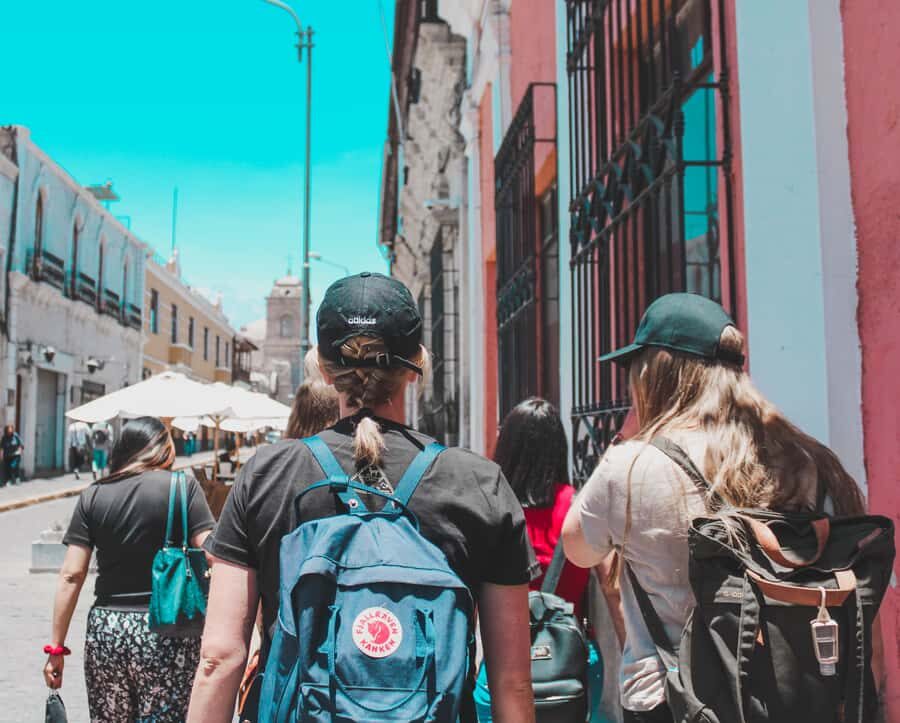
The meeting point is straightforward: the guide waits right by the front door of the Compartamos Financiera building, facing the main entrance of San Camilo Market. From there, you ease into the city with a market start and then a sequence of photo stops and short walks.
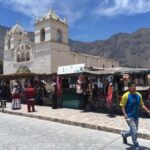
San Camilo Market is where the tour gets its grounding. You get around 30 minutes for a food-market visit and tastings. This is the part that helps you understand what you’re about to eat later, because you see where local ingredients show up and how people actually shop. It also sets a relaxed tone for the group, especially since the tour is limited to just 10 participants.
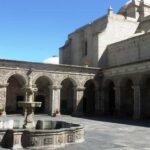
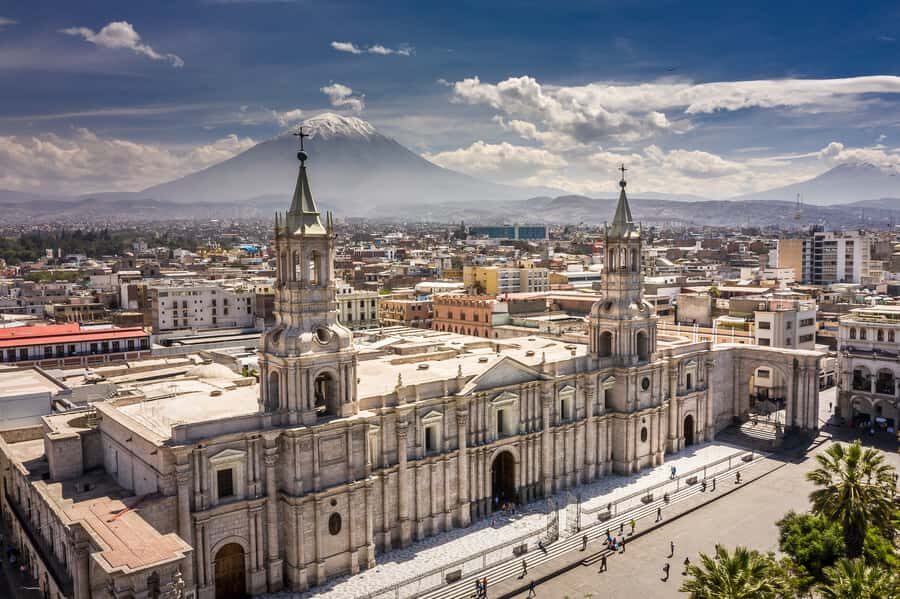
Next come short walking and sightseeing moments around the historic core. You’ll have a photo stop at the Cloisters of The Company, plus additional sightseeing stops that keep the experience moving. These breaks aren’t just for pictures; they give context for why Arequipa’s architecture and neighborhood layout matter to everyday life, from the market’s energy to the central plaza vibe.
Then you hit multiple local restaurant stops, each with a chunk of time for tastings (40 minutes, then 40 minutes again, then a longer final restaurant stop). That structure is smart. Instead of cramming everything into standing-only samples, you get time to actually taste, ask questions, and compare dishes as you go.
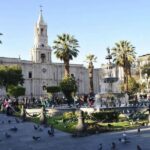
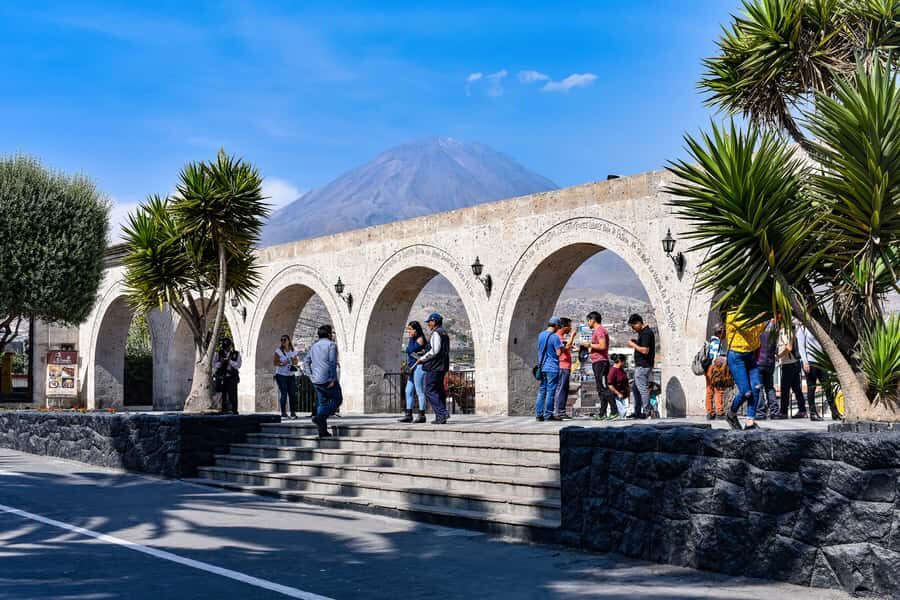
The walk also includes Plaza de Armas Arequipa for a photo stop and sightseeing. After that, you continue along the route toward the Malecón Bolognesi area for scenic views along the way, with another photo stop. One of the nice surprises is that the scenery isn’t just distant mountains—it’s also about the city’s riverside feel and the way people move through it, like a normal day.
Finally, you reach Yanahuara Scenic Overlook for dessert (about 15 minutes) and the tour ends there. It’s a good landing point because it ties together your walking loop with a big view moment, and dessert gives your day that final sweet finish.
Cuy, alpaca, rocoto relleno, ocopa, queso helado: what you taste
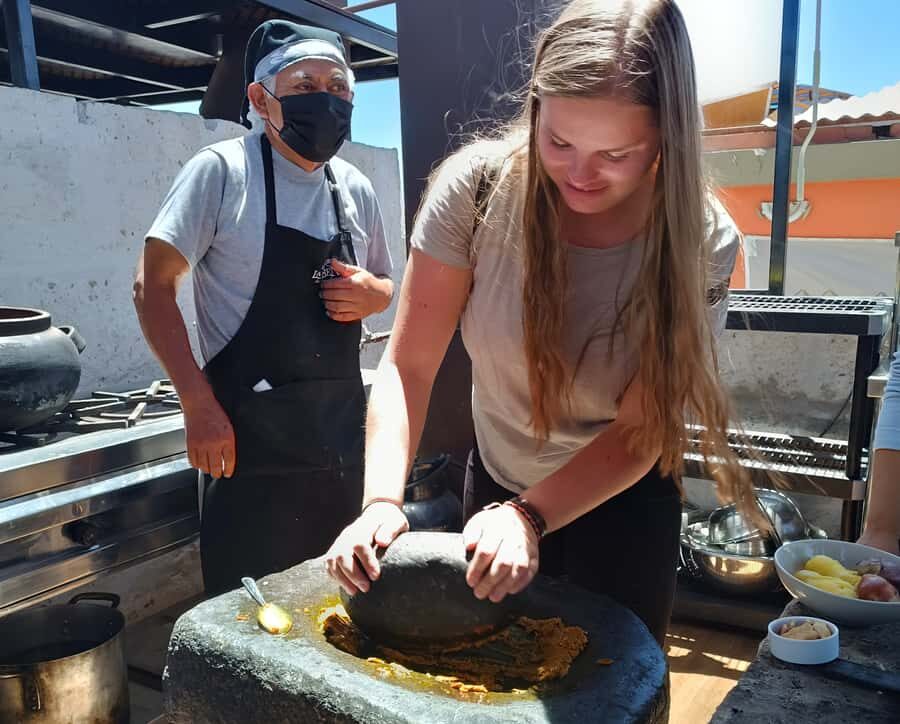
The headline for this Arequipa food tour is the variety. You’re not eating one style of food at one place. You’re trying a lineup of dishes that represent the local palate, including items that many visitors only see once they’re already in Peru.
Here’s what the tour focuses on:
- Cuy (guinea pig)
- Alpaca
- Rocoto relleno
- Ocopa (including a traditional batán preparation)
- Queso helado
- Chichas (different types) and pisco
That combination is a good representation of Arequipa’s food identity: hearty comfort plates plus regional drinks, plus a dessert that’s distinctly local. The rocoto relleno part is especially memorable because rocoto is known for its peppery bite, so it’s the kind of dish that gives you a clear Arequipa flavor signature in one go.
The chicha and pisco also matter. Chicha can be sweet or tangy depending on the type, and pisco gives you a different flavor rhythm than the typical soft drink stop you might expect. The result is that your tasting list feels like culture, not a checklist.
A practical note: the tour includes all food and drinks, so you should plan for an eating-heavy itinerary. If you’re the type who usually eats light while sightseeing, you may want to skip breakfast or at least go easy beforehand. You’ll get plenty during the route and at the restaurants.
Cooking ocopa with a traditional batán: the hands-on moment
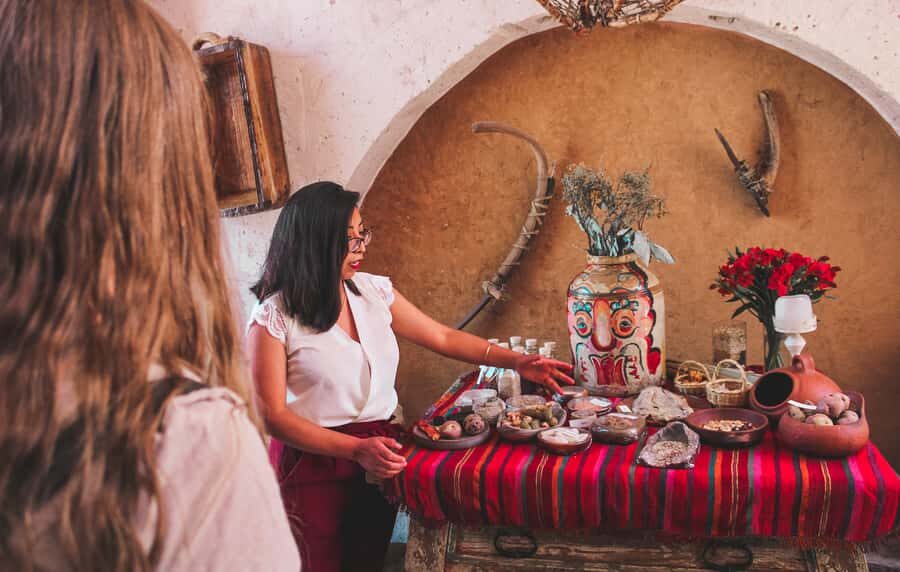
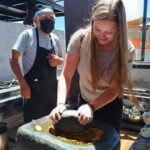
The most distinctive feature here is the ocopa preparation using a traditional batán. This is the kind of activity that turns a dish into a story you can taste.
Ocopa is tied to Arequipa’s identity, and learning it the traditional way adds meaning fast. You’re not just being served something. You’re getting a feel for the technique and why the sauce ends up with its texture and flavor. Even if you already know ocopa from a menu back home, this hands-on step is the difference between remembering a plate and understanding how it comes together.
This is also where the guide’s English explanations can really shine. Guides like Clara and Caro are praised for keeping the pace friendly and for talking through customs and local context as you eat. That matters because batán cooking isn’t the sort of thing most people encounter casually. When your guide can explain what you’re doing and why it matters, the whole experience sticks.
If you enjoy interactive food experiences, you’ll likely consider this the main event. If you prefer strictly passive sightseeing, it might still be fun, but you’ll get more out of it if you’re curious about how local cooking methods work.
Chicha, pisco, and the Misti-area scenery breaks
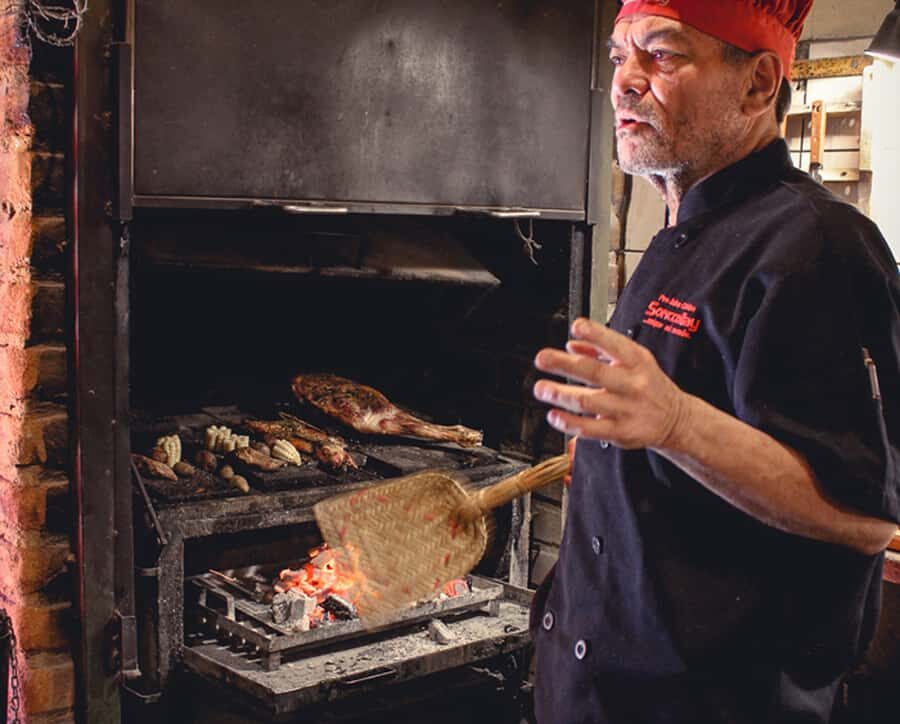
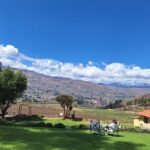
Arequipa has a way of pairing food with views, and this tour uses that well. You’ll get photo stops and scenic breaks that let you breathe between heavier tastings, including the Malecón Bolognesi stretch and then the Yanahuara lookout at the end.
Sun matters here. The tour explicitly notes that Arequipa’s sun can be strong, so bring a hat and sunscreen and wear comfortable shoes. I also recommend carrying water, even though the tour keeps you fed and moving. Your body will thank you, especially if you’re sensitive to altitude sun glare.
The scenic stops aren’t just decoration. They help you reset your focus after a meal and give your guide space to talk about the city. One review mentioned the Chili River as part of the day’s atmosphere, and that tracks with the route’s Malecón Bolognesi segment—this is where the city’s geography becomes part of the story, not just the background.
On the drinks side, the tour includes different types of chichas and pisco. This is another reason the stops feel well timed. The day’s pacing helps you compare flavors while they’re fresh in your mind. If you’re drinking alcohol, keep it steady and sip slowly, especially with hot peppers like rocoto on the menu.
Also remember the tour rule: don’t bring outside alcohol or drugs. The experience includes drinks, so there’s no need to add anything from your own bag.

Price, pacing, and who this tour fits
The price is $79 per person for a 4-hour, small-group experience with all food and drinks included. On paper, that sounds simple. In practice, it’s good value if you factor in two things: the amount of tasting time, and the fact you’re paying for guide-led access to multiple stops in the historic core.
You’re also getting multiple “types” of value:
- Food value: cuy, alpaca, rocoto relleno, ocopa, queso helado, plus several drinks
- Learning value: ocopa prepared with a traditional batán
- Sightseeing value: market to Plaza de Armas, cloisters, scenic Malecón Bolognesi breaks, and Yanahuara dessert
That’s why it doesn’t feel like a cheap snack tour. It feels closer to a guided day plan that happens to be edible.
Pacing wise, you’ll walk through the center and between restaurants. It’s not described as intense hiking, but it is still a walking route. The tour is marked as wheelchair accessible, but it’s also listed as not suitable for people with mobility impairments and for people with low fitness. So if mobility is a concern, take that seriously and choose based on how far you can comfortably walk.
Food restrictions are also important. The tour isn’t suitable for vegans, vegetarians, and people with gluten intolerance. If that affects you, you’ll likely be forced into substitutions that the tour doesn’t promise.
Language is another key point: this tour is English only with a licensed guide, and the guide won’t guide in multiple languages. If you’re comfortable with English, you’ll likely get a lot from the explanations and the Q&A vibe.
One last logistics note: there’s no hotel pickup or drop-off included. You’ll meet near San Camilo Market and finish at Yanahuara Scenic Overlook. If you’re planning your next stop, map out how you’ll get from Yanahuara back into town.
Should you book this Arequipa Food Tour?
Book it if you want a guided Arequipa day that balances food, history stops, and viewpoints without feeling rushed. The ocopa-on-a-batán part is the standout, and the lineup of local specialties makes it a strong choice if you like trying foods you can’t easily find elsewhere. Also, the small group size (limited to 10) is the kind of detail that can make questions and conversation easier during tastings.
Skip it if you’re vegan, vegetarian, gluten intolerant, or you know you won’t enjoy a menu that includes cuy and pepper-forward dishes like rocoto relleno. Also skip if you can’t handle a walking loop in strong sun, even with breaks.
If you’re excited by the idea of learning ocopa the traditional way while standing in the streets of Arequipa’s historic center, this is a well-structured use of 4 hours.
FAQ
How long is the Arequipa Food Tour: Ancestral Cuisine & City Tour?
It lasts 4 hours.
Where do I meet the tour guide?
Meet at the Compartamos Financiera building, right next to the front door, facing the main entrance of San Camilo Market (C. San Camilo 207).
What food and drinks are included?
All food and drinks are included, including tastings such as cuy, alpaca, rocoto relleno, ocopa made with a traditional batán, queso helado, and different types of chichas and pisco.
Is the tour suitable for vegans, vegetarians, or gluten intolerance?
No. It is not suitable for vegans, vegetarians, or people with gluten intolerance.
Is the tour offered in English?
Yes. The tour guide speaks English only.
How big is the group?
The group is small and limited to 10 participants.
Does the tour include hotel pickup and drop-off?
No. Hotel pickup and drop-off are not included.
Can I get the 18% sales tax exonerated?
It can be exonerated by sending your passport number, country of issue, and date of entry in Peru for each participant.