REVIEW · TRUJILLO
Trujillo Shore Excursion from Salaverry Port
Book on GetYourGuide →Operated by TOURS EN TRUJILLO -NORTE EXPEDITION · Bookable on GetYourGuide
Moche and Chimu ruins in one port day sounds intense. You get Huacas Sol y Luna and Chan Chan in the same route, then swap into colonial Trujillo and the working fishing village of Huanchaco.
I especially like how the day is paced for a cruise schedule, with real stops and not just quick passes. And I like the English-guided history style, where the guide explains what you’re looking at in plain terms and keeps it moving, even when you’re in a big site.
One thing to plan for: the city time is short. You only get about 20 minutes in Trujillo’s center, and your Huanchaco lunch depends on timing.
In This Review
- Key highlights you’ll care about
- A 6-Hour Port Day Through Moche, Chimu, and Colonial Trujillo
- Meeting in Salaverry Without Wasting Time
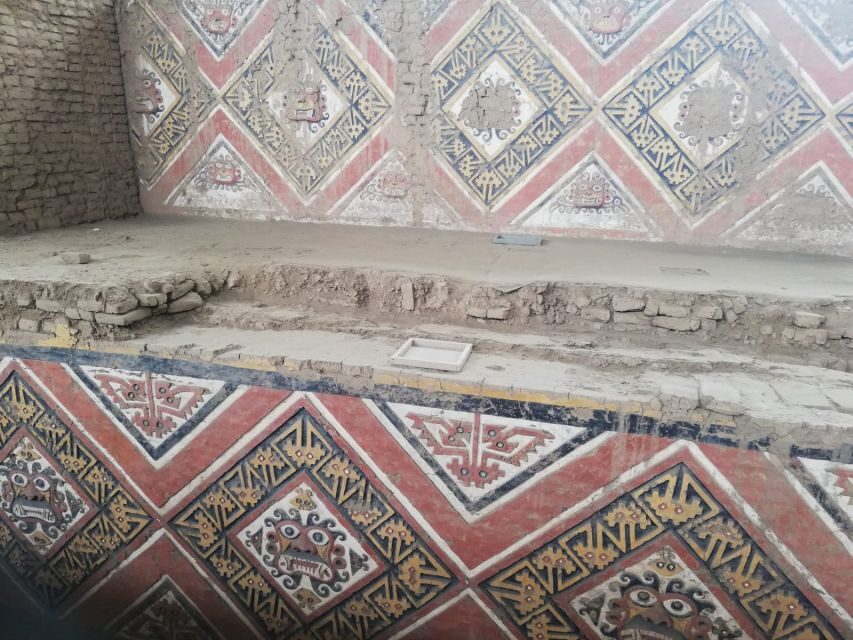
- Huacas Sol y Luna: Your First Look at Moche Worship
- Plaza de Armas Trujillo: 20 Minutes for Colonial Photos
- Chan Chan: America’s Largest Adobe City, About 20 Square Kilometers
- Huanchaco Fishing Village: Caballitos de Totora and (Sometimes) Lunch
- Price and Value for a $95 Shore Excursion
- What to Bring (So the Day Doesn’t Feel Like a Sprint)
- Who This Tour Fits Best (and Who Should Skip It)
- Should You Book This Trujillo Shore Excursion from Salaverry?
- FAQ
- What’s the duration of the Trujillo shore excursion from Salaverry?
- How much does it cost per person?
- What’s included in the price?
- Are meals and drinks included?
- Where does the pickup happen?
- Do I need to take another bus from Salaverry or meet outside the port?
- Do you skip the ticket line?
- What are the main stops on the itinerary?
- Is there free time in Trujillo?
- Is this tour suitable for very elderly passengers?
Key highlights you’ll care about
- Huacas Sol y Luna (Moche, 100–900 AD): see the flat-topped huacas tied to religious life.
- Plaza de Armas Trujillo photo break: quick, focused free time with classic colonial views.
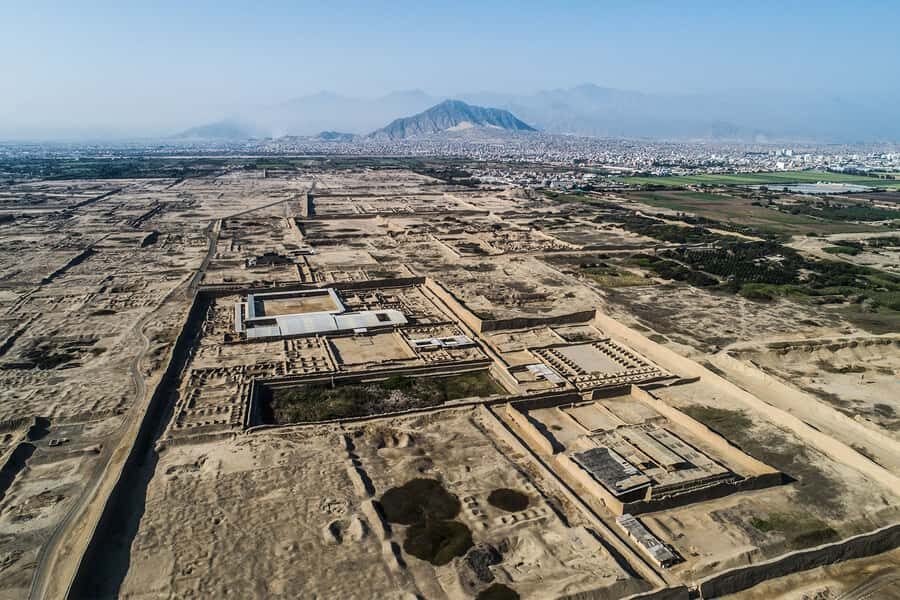
- Chan Chan adobe complex: the largest adobe city in America, spread over about 20 square kilometers.
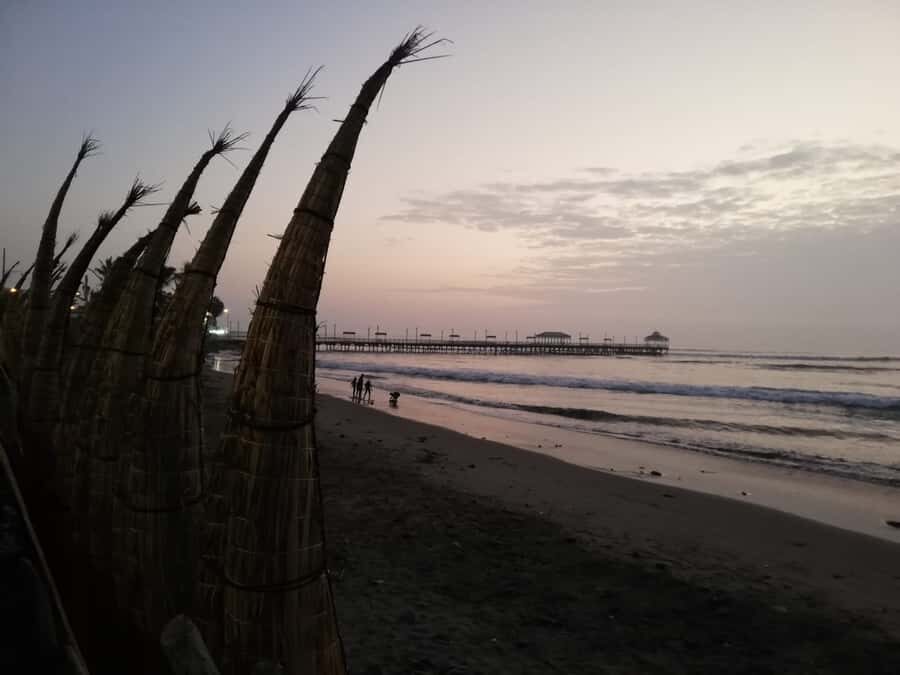
- Huanchaco’s caballitos de totora: traditional reed boats still used for fishing.
- English tour guidance: I found the explanations clear, with guides like Wilmer and Edwin calling out details in a way you can actually use.
A 6-Hour Port Day Through Moche, Chimu, and Colonial Trujillo
This is a classic “see the big three” shore excursion: Moche temples, Chimu urban power, and a colonial city stop, plus the coast at Huanchaco. It’s designed around your ship day, so the route tries to hit the most memorable parts without turning your afternoon into a long transit marathon.
You’ll spend time at archaeological sites that are still more than ruins. The goal isn’t only to say the names of places; it’s to understand what they meant to the cultures that built them. After that, the vibe shifts quickly into Trujillo center for photos and then into Huanchaco, where you can watch traditional fishing boats out in use.
A few more Trujillo tours and experiences worth a look

Meeting in Salaverry Without Wasting Time
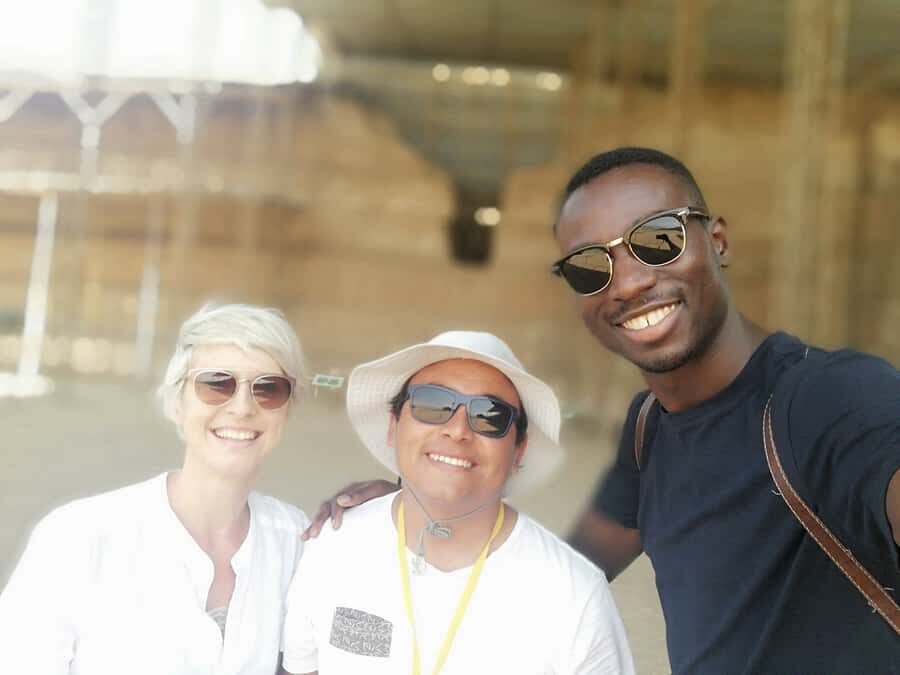
This tour is built for port-day timing, and that matters. Pickup happens inside the Salaverry port, starting from the bus parking area. You don’t want to guess and wander outside the port flow.
A few practical rules make the day smoother:
- You’re supposed to walk from the ship to the bus parking area inside the port (about 20 meters).
- Your staff is identified with the NORTE EXPEDITION logo.
- You’ll be added to a group WhatsApp about 24 hours before for pickup coordination.
I like when a company clearly tells you where to stand and what to look for. It reduces that last-minute cruise stress where everyone is checking messages and hoping the driver found you.
Huacas Sol y Luna: Your First Look at Moche Worship
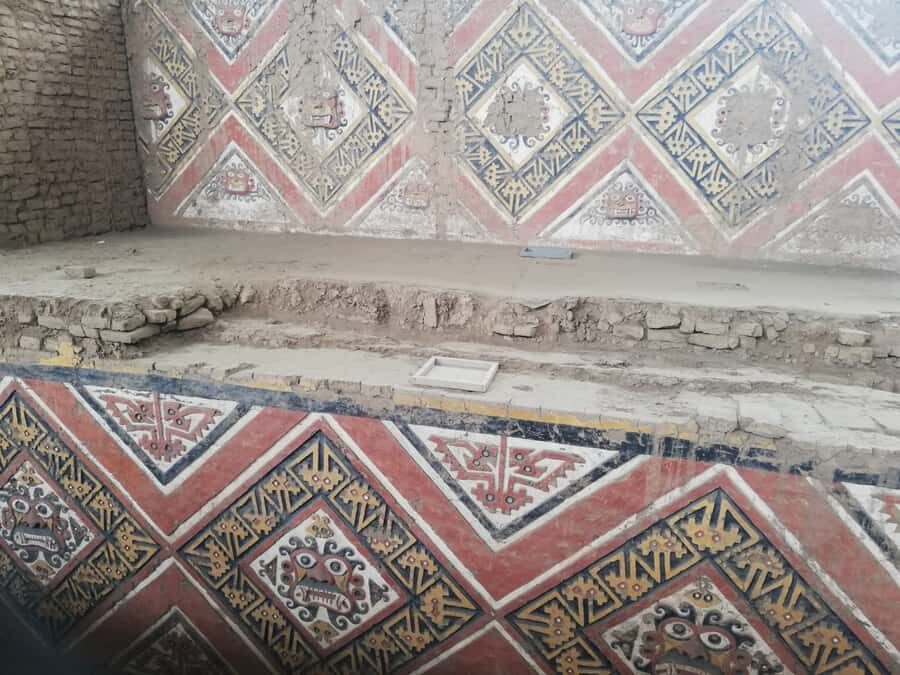
The day starts at the Moche religious center known for the temples of the Sun and the Moon. The Moche culture developed between about 100 and 900 AD, and this complex shows how the society organized ritual life around major structures.
What to look for here:
- The two large pyramids with flat tops, known as huacas.
- The way the complex reads as a planned space, not random monuments.
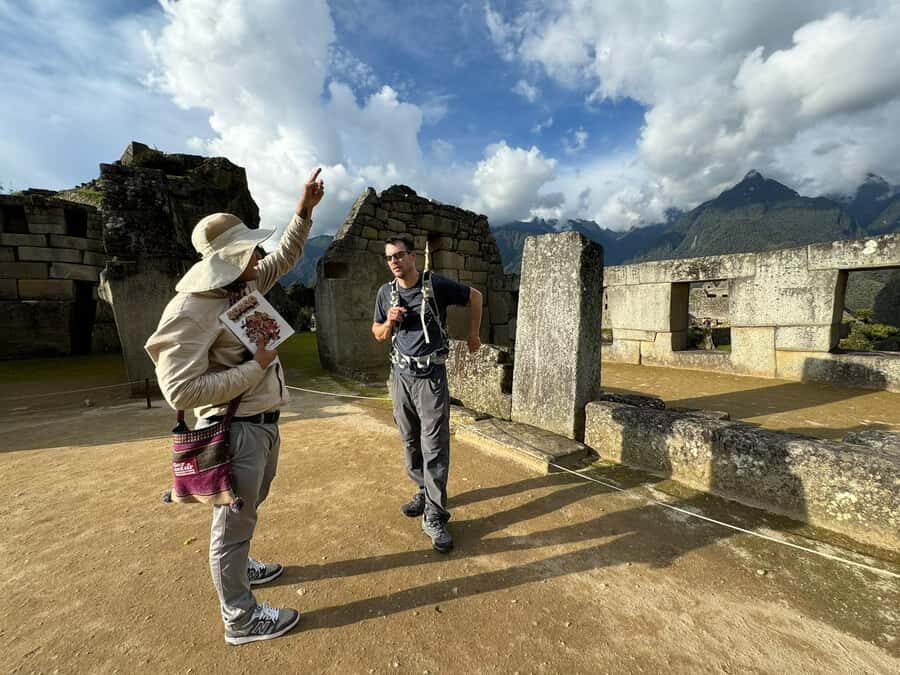
The guide’s job is to make the architecture make sense. In past tours I’ve taken, this kind of site can blur together fast if the explanation stays general. Here, guides like Wilmer have a way of bringing details alive with descriptions tied to what you’re seeing, including reference points you can follow while you’re standing on-site.
Practical tip: bring your hat and wear comfortable clothes. These sites can get sun-heavy, and you’ll be walking and looking up.
Plaza de Armas Trujillo: 20 Minutes for Colonial Photos
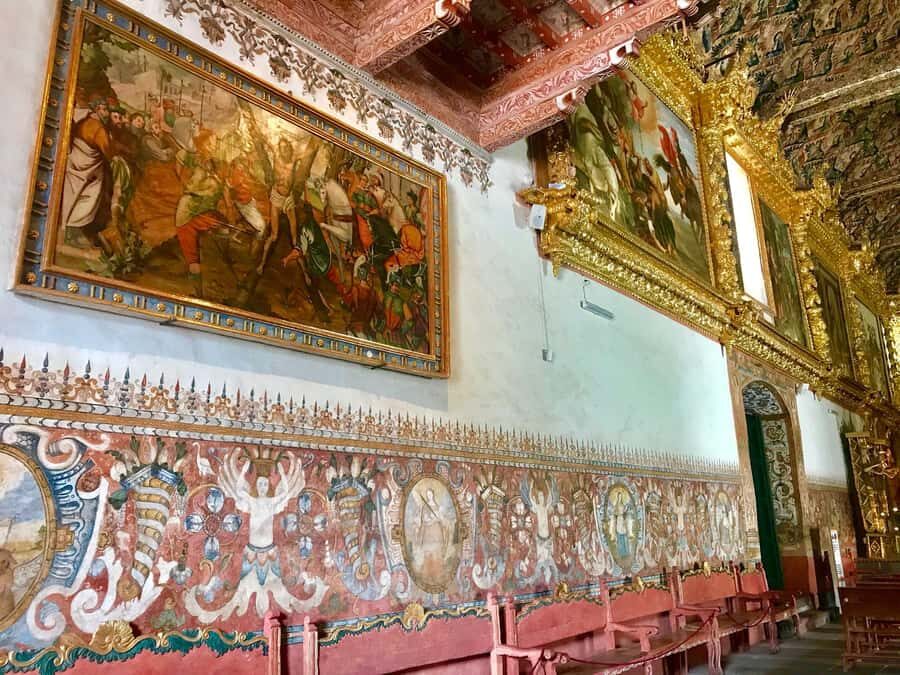
After the temple stop, you head into the center of Trujillo. This is where you switch gears from archaeology into colonial-era city life.
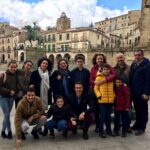
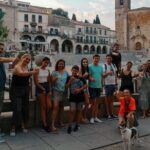
You’ll visit the colonial section known for well-preserved mansions, and the best quick-photo stop is the Plaza de Armas. You get free time of about 20 minutes, which is short, but it’s enough to do two things well:
- Grab your photos around the plaza area.
- Take a quick orientation so you know where you are when you explore later.
Here’s how I’d use it: choose one main angle for a photo first, then spend the rest of the time strolling to get a second perspective. With only 20 minutes, you want a plan, not just wandering and hoping time holds.
Chan Chan: America’s Largest Adobe City, About 20 Square Kilometers
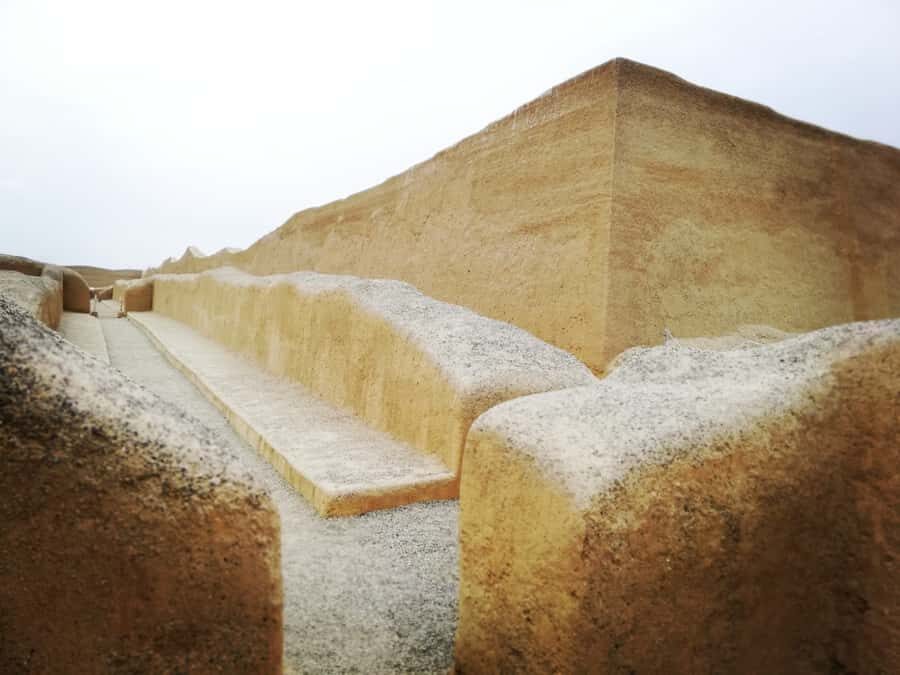
Next comes Chan Chan, and it’s the stop that usually makes people go quiet in a good way. You’re visiting the largest adobe city in America, built by the Chimu, covering about 20 square kilometers.
Adobe cities are tricky to “get” from far away, because they’re not stone temples that scream from every angle. Chan Chan rewards slow attention. You’ll want to look at the scale and the construction style, and also listen carefully to how the guide explains what the complex represents.
Why this stop is worth your time:
- Chan Chan isn’t just one monument. It’s a large complex, which helps you understand how a powerful culture organized space.
- The guide can connect structures to how the city functioned, not only to its appearance.
I also like that the tour keeps Chan Chan in the middle of the route. That way you’re not rushing out of one extreme to another. By the time you arrive, you’ve got enough energy to walk and enough mental space to absorb what the guide is telling you.

Huanchaco Fishing Village: Caballitos de Totora and (Sometimes) Lunch
Then you head up to Huanchaco, an ancient fishing village. It’s famous not only for its beach reputation, but for the working tradition you can see right there: the traditional fishing boats called caballitos de totora, still used today.
If you care about authentic travel moments, this is the part of the day that feels the most alive. You’re not just looking at the past—you’re seeing a practice that continues, which changes the tone of the entire excursion.
Lunch timing is the variable. The tour includes time for a good lunch based on seafood or a chance to focus on photos, depending on how much time you have. In other words, don’t assume a guaranteed long sit-down meal. Build your expectations around timing.
One more tip: for photos, give yourself a few minutes just to watch how locals and boats move. Even if you only have your phone, it helps your shots because you’ll catch the boats in action, not just parked in the background.
Price and Value for a $95 Shore Excursion
At $95 per person for about 6 hours, this tour prices itself as a value-forward port day: you’re paying for transportation inside Salaverry, an English live guide, and site entry where tickets matter.
Here’s how the cost makes sense in real terms:
- Pickup and drop-off are included from the Salaverry Port Gate area (inside the port, at the bus parking zone).
- You get a live guide in English (with Spanish guide support).
- Entrance tickets are included, so you’re not scrambling at each site.
What’s not included: meals and drinks. That’s important because you might expect lunch to always be part of the itinerary. It can be, but the schedule may shift, especially with cruise-day timing. If you want full control over what you eat, plan to have some cash available for snacks or drinks.
To me, the value hinges on two things: whether you care about seeing Moche + Chimu sites in one day, and whether you appreciate a guide who can explain clearly. In the guidance I’ve seen from this operation, people come away satisfied with the English and the way the story connects to the ruins.
What to Bring (So the Day Doesn’t Feel Like a Sprint)
You’re walking enough that footwear matters. I’d pack with a simple checklist:
- Comfortable shoes (archaeology sites are not smooth, and you’ll be standing and walking).
- Hat and sunscreen (strong sun is common in coastal Peru).
- Camera or phone with storage cleared.
- Comfortable clothes for warm weather.
- Cash in case you want drinks or extra food.
Also, if you get motion-sick easily, it may help to bring what you normally use for a vehicle day. This tour is port-paced, but you are still riding between multiple stops.
Who This Tour Fits Best (and Who Should Skip It)
This excursion is a good match if you want a structured, high-impact day without planning. It suits:
- Cruise passengers who want archaeology plus coastal culture.
- Photo-minded visitors who care about Plaza de Armas and Huanchaco’s boats.
- People who prefer a guided narrative rather than wandering alone.
It’s explicitly not suitable for people over 95 years. If you’re near that upper range, check with the provider before booking.
If you’re someone who needs lots of free time to explore at your own pace, the schedule may feel tight—especially with the short stop in Trujillo center and the timing-dependent lunch near Huanchaco.
Should You Book This Trujillo Shore Excursion from Salaverry?
Yes, if you want a well-run port day that hits the major cultural anchors: Moche temples (Huacas Sol y Luna), Chimu power (Chan Chan), and a working fishing village (Huanchaco), plus a quick colonial photo break in Trujillo.
I’d book it particularly if you care about guidance that makes sites understandable. Guides like Wilmer and Edwin have stood out for clear English and explanations tied directly to what you’re looking at. One practical note: sometimes the narration can run fast, so if that’s a concern, you should feel free to ask for a slower pace or clarification in the moment.
Skip it if you mostly want long beach time or you’re hoping for a relaxed, hour-by-hour free itinerary. This is a “see and learn” day, not a slow stroll day.
FAQ
What’s the duration of the Trujillo shore excursion from Salaverry?
The tour lasts about 6 hours.
How much does it cost per person?
It costs $95 per person.
What’s included in the price?
Included are pick-up and drop-off from Salaverry Port Gate, an English live tour guide (Spanish guide support), and entrance tickets.
Are meals and drinks included?
No. Meals and drinks are not included.
Where does the pickup happen?
Pickup starts inside the Salaverry port at the bus parking area. You walk from the ship to the parking area inside the port.
Do I need to take another bus from Salaverry or meet outside the port?
No. You should not take other buses from Salaverry or meet outside the port. Staff and buses are inside Salaverry, identified with the NORTE EXPEDITION logo.
Do you skip the ticket line?
Yes. The tour includes skipping the ticket line.
What are the main stops on the itinerary?
You’ll visit the Huacas Sol y Luna temples, Trujillo’s colonial center and Plaza de Armas, Chan Chan, and the Huanchaco fishing village.
Is there free time in Trujillo?
Yes. You get about 20 minutes in Trujillo’s Plaza de Armas area.
Is this tour suitable for very elderly passengers?
It is not suitable for people over 95 years.