REVIEW · CUSCO
Cusco 4-Hour Private Tour Including Sacsayhuaman and Qenqo
Book on Viator →Operated by Rainbow Mountain Cusco Agency · Bookable on Viator
Cusco can feel huge. This 4-hour private tour turns it into a clear, walkable story from major Inca sites to the Spanish-era heart of town. I like that you’re not doing this piecemeal; you cover Saqsayhuaman plus several nearby Inca landmarks in one tight route.
You’ll also appreciate the private guide setup, usually with strong English or Spanish, plus hotel pickup and drop-off. And yes, the day includes practical touches like snacks—small thing, big deal when you’re adjusting to altitude.
One consideration: the headline sites aren’t fully included in the price. You’ll still pay entrance fees on top (especially Saqsayhuaman and Qorikancha), so budget for tickets before you arrive.
In This Review
- Key highlights worth knowing
- How this 4-hour private Cusco tour works (and why it feels efficient)
- Saqsayhuaman: the Inca citadel on Cusco’s northern edge
- Plaza de Armas: the colonial center that grew from earlier Cusco
- Cusco Cathedral on the Plaza: Roman Catholic architecture in the Inca city center
- Qorikancha: Inti’s temple, then repurposed after conflict and earthquakes
- Puka Pukara, Q’enqo, and Tambomachay: checkpoints, rituals, and waterworks
- Puka Pukara: red watchtower and a key road role
- Q’enqo: the zig-zag canal with ritual theories
- Tambomachay: the so-called bath of the Inca
- The guide and private setup: where the experience really wins
- Price check: what $87 covers, and what you’ll likely pay at the door
- Optional textile factory stop: the practical cultural bonus
- Who should book this tour, and who might want something else
- Quick practical tips before you go
- Should you book this Cusco private 4-hour highlights tour?
- FAQ
- Which sites are included on this 4-hour Cusco private tour?
- Are entrance fees included in the tour price?
- Does the tour include pickup and drop-off?
- Is this a private tour or a shared group?
- What’s included for food and transport?
- Is there free cancellation?
Key highlights worth knowing
- Saqsayhuaman first: start at the Inca citadel north of town while your energy is still good
- Plaza de Armas included: you get inside the main square area early, before moving outward
- Qorikancha’s layered history: Inti’s temple, destroyed, then repurposed into later convent foundations
- Q’enqo’s zig-zag canal mysteries: a ritual site where the original liquid purpose is still debated
- A smart mix of walking and car time: helpful when Cusco altitude is messing with your rhythm
- Optional textile factory stop: a no-cost add-on if you want to see fibers become cloth
How this 4-hour private Cusco tour works (and why it feels efficient)
This is a half-day format designed for real time limits. You get a private vehicle, hotel pickup, and drop-off, so you’re not spending your precious hours figuring out local transport. The tour runs about four hours, and it’s booked well in advance on average—so if you’re traveling during peak season, I’d treat it like a “plan now” item rather than a last-minute experiment.
What makes this route work is the pacing. You hit the major Inca/near-Cusco sites in the order that keeps travel time from chewing up the schedule. You also get short stops at each location rather than long, exhausting hikes. In Cusco, that’s not a small point; the altitude can turn an ordinary afternoon into a slow shuffle. A schedule like this is built for getting the story, not just collecting photos.
And because it’s private, you can move at a pace that makes sense for your group. If you need extra minutes to look closely at stonework (or to stare at a wall because it’s way cooler than you expected), you’re not stuck behind a large-group time stamp.
You can also read our reviews of more private tours in Cusco
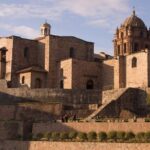
Saqsayhuaman: the Inca citadel on Cusco’s northern edge
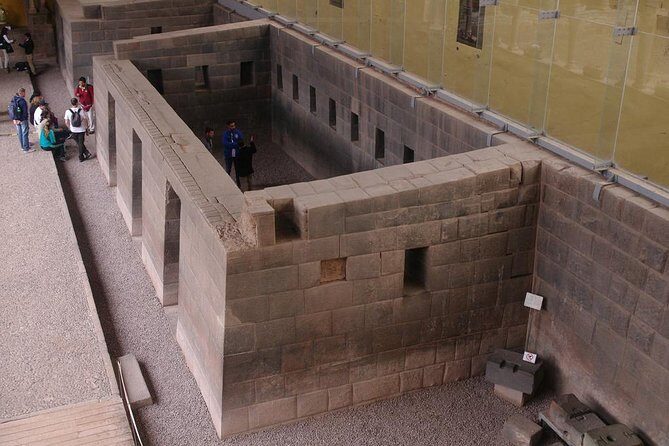
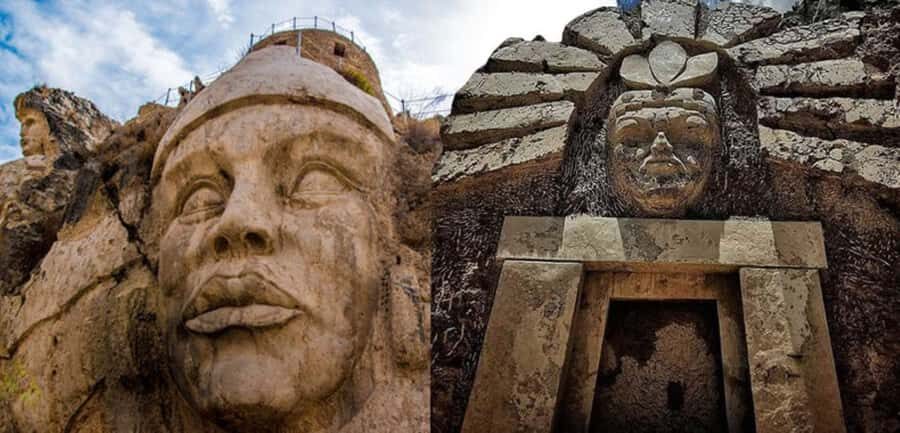
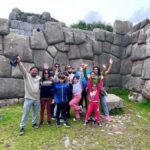
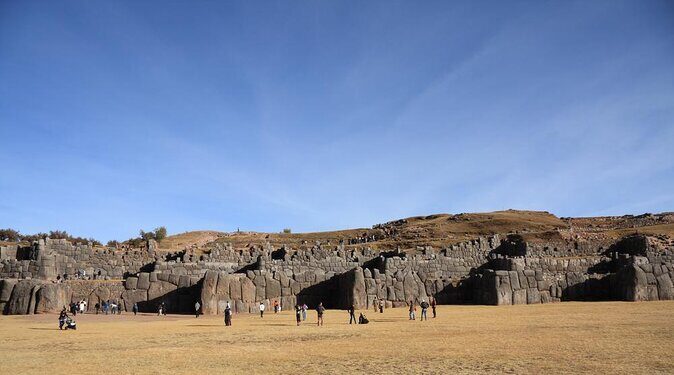
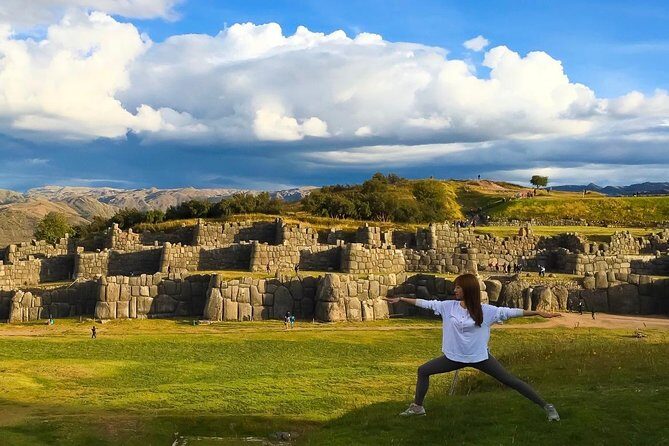
Saqsayhuaman (spelled a bunch of ways) sits on the northern outskirts of Cusco and is one of the easiest places to “get” what Inca engineering meant. The big picture: sections were first built around 1100 CE by the Killke culture, which had been in the region since about 900 CE. That means you’re not looking at one simple snapshot of the Inca—this place has deeper layers than the label on the map.
What I like about starting here is timing and mood. You’re outside the city center first, so you’re more likely to absorb the scale. You get time to walk through the area and take in the stonework before you head back into the busier Plaza de Armas core.
A practical heads-up: entrance fees apply here, and they’re a bigger line item than some other stops. That doesn’t make it “not worth it,” but it does mean you should have cash or a plan for tickets. Also, wear shoes you can trust on uneven ground. This isn’t dangerous trekking, but it’s not a museum floor either.
Plaza de Armas: the colonial center that grew from earlier Cusco
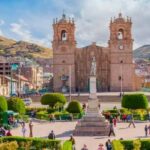
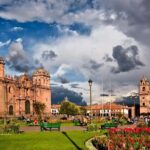
From Saqsayhuaman, the tour swings back into town and lands at the Plaza de Armas. This is the one everyone knows, but it’s still worth treating it like a historical clue, not just a postcard.
Here’s the key idea: the Spanish conquerors left strong architectural fingerprints, but the Plaza de Armas wasn’t invented after the Conquest. It was chosen as a starting point for developing the Imperial City that became the Inca capital. So you’re standing in the center of overlapping eras—Spanish stone forms on top of older urban logic.
This stop is short, and that’s fine. The goal isn’t to linger for an hour; it’s to orient you for the rest of the day. If you’re new to Cusco, this is where you start mentally mapping how the city’s layers relate.
Bonus: the Plaza de Armas entrance ticket is included in the tour package, which saves you hassle when you’re juggling multiple sites.
Cusco Cathedral on the Plaza: Roman Catholic architecture in the Inca city center
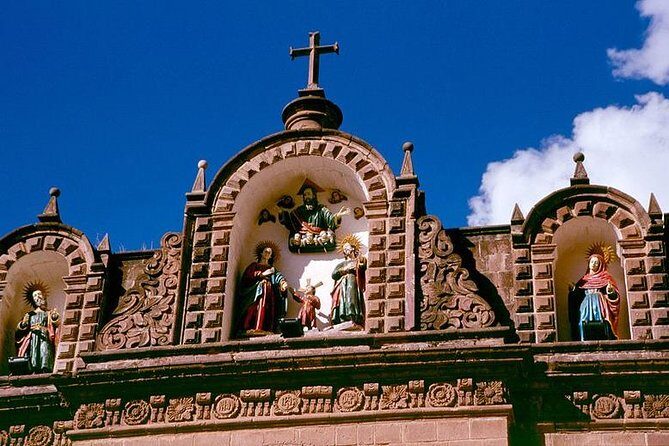
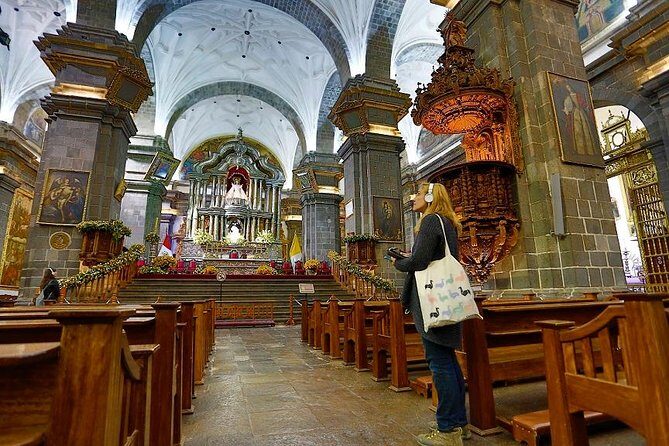
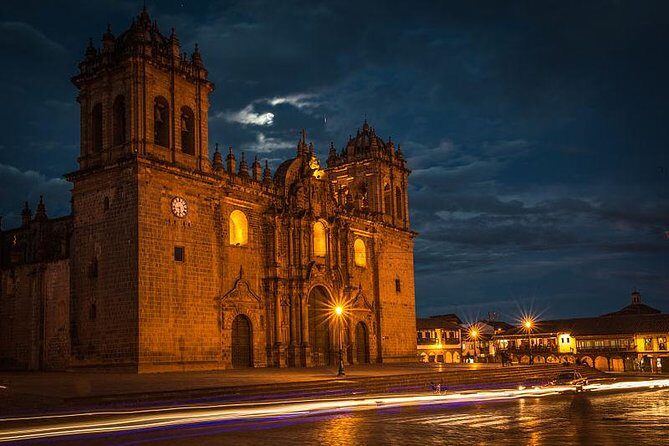
Right on the Plaza de Armas sits the Cusco Cathedral, officially the Cathedral Basilica of the Assumption of the Virgin. It’s the mother church of the Roman Catholic Archdiocese of Cusco, and it anchors the Spanish-era religious footprint right in the middle of the city’s power zone.
The cathedral visit is a nice contrast after the outdoor Inca sites. The stones, the layout, the way light hits the interior—these things feel different from the archaeological stops, even when the exact details depend on what’s accessible at the time of your visit.
The main catch is simple: you’ll need to purchase the entrance ticket separately here. If you’re trying to keep costs down, you may want to decide ahead of time whether you care about a full cathedral visit or if a quick look at the highlights is enough.
Qorikancha: Inti’s temple, then repurposed after conflict and earthquakes
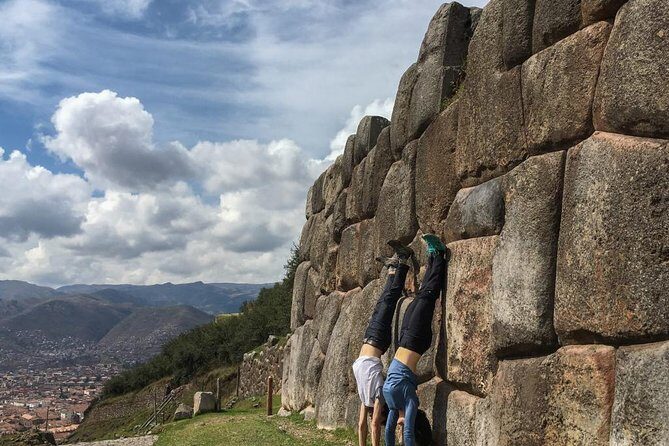
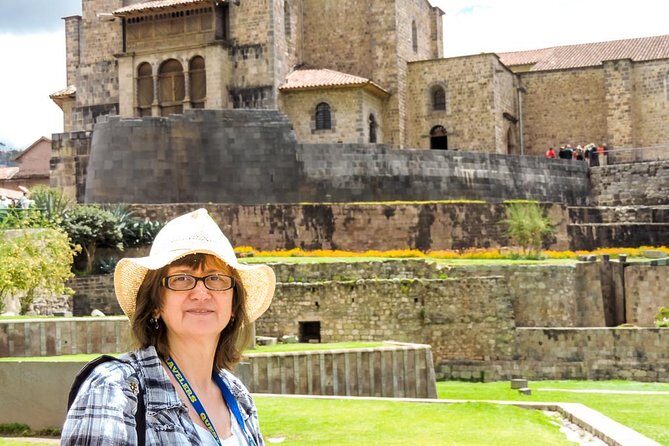
Qorikancha is the kind of place where history hits in layers. The site was originally known as Intikancha (or Intiwasi) and dedicated to Inti, the sun. After the 16th-century war with Spanish conquistadors, most of the temple was destroyed—and then, settlers took the stonework apart to build their own churches and residences.
Here’s the part that makes Qorikancha more than a single “ruins photo”: much of the Inca stone ended up as the foundation for the Santo Domingo Convent, built in the 17th century. That convent was later rebuilt after the 1650 earthquake destroyed the first Dominican convent.
So when you look at what remains, you’re seeing a timeline of reuse: sacred architecture transformed into later colonial construction. It’s a hard story, but it’s also one of the most important to understand Cusco’s physical layout.
Qorikancha has an entrance fee that’s not included, so factor that into your budget. If you’re a photo person, bring your camera—you’ll have plenty to capture, including angles where the stonework makes the “layers” concept instantly visible.
Puka Pukara, Q’enqo, and Tambomachay: checkpoints, rituals, and waterworks
This is where the tour earns its name as an Inca-sights sampler. You go from one purpose-built structure to another, each with a different role in how the Inca lived, traveled, and performed rituals.
Puka Pukara: red watchtower and a key road role
Puka Pukara is about 6 kilometers from Cusco. The name comes from Quechua: “puca” means red, and “pucara” means fortress-watchtower. This wasn’t random construction. It sat at a strategic point along the road toward the Antisuyo—the jungle region of the Inca empire.
Think of it as a checkpoint and a control node. It served as a military and administrative center, helping the Inca manage movement along a major route. If you like feeling the logic behind location choices, this stop gives you that.
No entrance ticket is included here, so again: tickets add up, but the sites are quieter and less crowded than some of the big-city highlights.
Q’enqo: the zig-zag canal with ritual theories
Q’enqo (meaning labyrinth or zig-zag) is named for a crooked canal cut into the rock. The canal clearly carried some kind of liquid, but the original purpose isn’t proven. Researchers have proposed several possibilities: holy water, chicha (corn beer), or blood.
You don’t need to pick which theory is correct to appreciate why Q’enqo matters. It points to death rituals and the idea that ritual liquid could be used to embalm bodies or to detect whether someone lived a good life, based on how the liquid behaved.
This stop is shorter, but it’s memorable because it’s a physical reminder that “religion” in the Inca world wasn’t abstract. It had objects, stone channels, and specific procedures.
Tambomachay: the so-called bath of the Inca
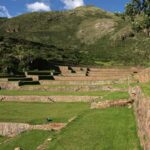
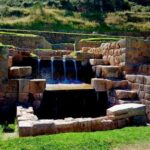
Tambomachay is associated with the Inca Empire and sits near Cusco. Its alternate Spanish name is El Baño del Inca. What you see here is a series of aqueducts, canals, and waterfalls running through terraced rocks.
This is one of the reasons people like this tour: it’s not only temples and fortresses. You also get an engineered water system tied to sacred or cultural use. The terracing helps the site feel “readable”—you can track the channels with your eyes as water would have moved through the system.
Again, entrance fees apply. Still, if you want an Inca site that feels different from the others on your list, Tambomachay is a strong final chapter before heading back toward central Cusco.
The guide and private setup: where the experience really wins
This tour lives or dies on the guide. The good news is you’ll be in a private group with a dedicated guide speaking English or Spanish. That matters because the sites are full of details—and you’ll get more out of them if someone can connect the dots fast.
From the guides commonly highlighted for this tour, you’ll see names like Alfredo, Patricia, Ruben (or Reuben), Soledad (or Solidad), and Victor. What they tend to bring up in explanations is how Inca power shows up in different forms: architecture, administration, ritual practice, and how Spanish-era Cusco was built on top of it all.
Also, the schedule is built for comfort. You’re not stuck in long lines for a group bus. You’re not wandering between sites without a plan. Plus, the snacks are genuinely useful—especially if you’re feeling that early-afternoon dip.
If you’ve dealt with altitude sickness in Cusco before, you’ll likely appreciate the mix of car time and shorter walks. A few reviews point out that this “not too far on foot” style helps when your body is still negotiating with elevation.
Price check: what $87 covers, and what you’ll likely pay at the door
At $87 per person for a 4-hour private tour, you’re paying for a dedicated guide, pickup/drop-off, transport by private vehicle, and snacks. That’s a fair bundle in Cusco because it removes the friction of logistics, and it keeps your time tight.
But don’t be surprised by add-on entrance fees. The tour explicitly doesn’t include tickets for:
- Saqsayhuaman
- Qorikancha
- and Cusco Cathedral
Tickets may change over time, but the key point is budgeting: entrance fees make up a meaningful part of your on-the-ground costs. I’d treat this as a “guide + transport + most coordination included” price, plus “expect to buy major site tickets” on top.
If you’re traveling with another person, a private tour can start to make sense faster because you’re splitting transportation costs that you’d otherwise pay through taxis or multiple tickets.
Optional textile factory stop: the practical cultural bonus
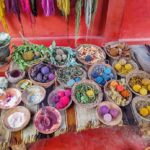
One more feature you should consider is an optional visit to a textile factory, included at no additional charge. If you’re into craft and want something hands-on (or at least visual) beyond ruins and churches, this can be a great palate cleanser.
This stop also fits well with the rest of the day because it shifts the focus from stone monuments to everyday skill—how fibers become cloth, and how traditions survive through material culture.
If you’re not interested in textiles, you can treat it as optional. But if you are, it’s a strong value add.
Who should book this tour, and who might want something else
This is a great fit for:
- first-timers in Cusco who want a structured “best of the area” overview in one afternoon
- people who prefer private pacing rather than crowd shuffling
- travelers who want both major ruins and a Plaza de Armas orientation
- families or anyone who needs shorter walking segments plus car time
You might want a different format if:
- you’re a hardcore archaeologist who wants longer, slower, fully independent site time
- you hate buying multiple entrance tickets during one half-day
- you want zero walking at all (this tour includes several archaeological stops that require moving around)
Also, plan your clothing for the season. Cusco weather can change, and archaeological sites don’t care about your schedule. Bring layers, and use shoes you can move safely in.
Quick practical tips before you go
- Bring your camera, since you’ll have many angles across ruins, plazas, and the canal and terrace features at Q’enqo and Tambomachay.
- If you’re sensitive to altitude, take it easy at the start. Saqsayhuaman is a strong first stop, so go slow and let your body adjust.
- If you’re booking for a specific time window, remember this tour is commonly reserved about 60 days in advance on average.
- Keep an eye on the weather. This experience requires good weather, and poor conditions can shift or cancel your day.
Should you book this Cusco private 4-hour highlights tour?
If you want a tight, readable Cusco itinerary that connects Inca power to Spanish-era central Cusco, I think this is a smart buy. The best part isn’t any single site—it’s the way Saqsayhuaman, Qorikancha, Q’enqo, and Tambomachay fit together as a coherent story inside a half-day plan, with hotel pickup, transport, and snacks to keep you comfortable.
Book it if you’re traveling with limited time and you want value you can feel—not just a list of places. Skip it only if you’re trying to avoid entrance fees or you want longer stays at fewer sites.
FAQ
Which sites are included on this 4-hour Cusco private tour?
You’ll visit Saqsayhuaman, Plaza de Armas, Cusco Cathedral, Qorikancha, Puka Pukara, Q’enqo, and Tambomachay.
Are entrance fees included in the tour price?
No. Entrance fees are not included for Saqsayhuaman, Cusco Cathedral, and Qorikancha. Plaza de Armas entrance is included.
Does the tour include pickup and drop-off?
Yes. Hotel pickup and drop-off are included.
Is this a private tour or a shared group?
It’s private. Only your group participates.
What’s included for food and transport?
You get snacks and transport by private vehicle, along with a private English- or Spanish-speaking guide.
Is there free cancellation?
Yes, you can cancel for a full refund up to 24 hours in advance. If it’s canceled due to poor weather, you’ll be offered a different date or a full refund.