REVIEW · CUSCO
Excursion + Sillar and Culebrillas Route in Arequipa
Book on GetYourGuide →Operated by Inspires Viagens · Bookable on GetYourGuide
Arequipa’s stone story feels close today. This 4-hour excursion connects the Sillar Route with working quarries and the Culebrillas canyon, where you’ll walk into water-cut walls and see ancient petroglyphs.
I especially like the focus on the stone itself. You don’t just look at rock—you learn how sillar is produced, then you get a chance to experience cutting a stone block alongside the quarry work.
One thing to plan for: the day runs on a group schedule, and transport comfort can be basic. If you’re sensitive to delays or heat, come ready with patience and a water bottle.
In This Review
- Key highlights to know before you go
- 09:15 start and the rhythm of a 4-hour Arequipa loop
- First stop: volcano views and the Chilina Valley outlook
- Añashuayco Quarry: ignimbrite cliffs, mega-carving, and stonecutting
- Moving to the canyon: Quebrada de Culebrillas on the way back
- Wari petroglyphs inside the canyon walls
- Apachetas on the return: stone stacks, gratitude, and luck
- Back to Arequipa near Plaza de Armas
- Price and value: what $14 covers and what costs extra
- Who should book this Sillar and Culebrillas route
- Should you book this tour?
- FAQ
- What time does the tour start and when do I return?
- What’s included in the $14 price?
- Are entrance tickets included?
- How long is the walk in Culebrillas?
- What languages is the guide available in?
- Is it easy to cancel or change plans?
Key highlights to know before you go
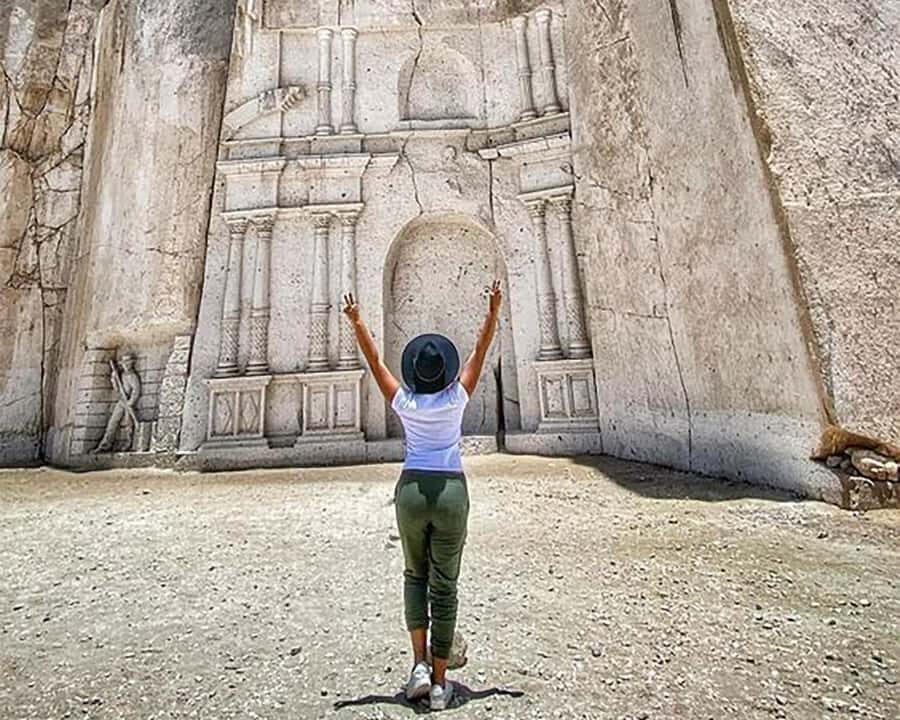
- Añashuayco Quarry: massive ignimbrite canyon walls where quarrying shaped the sillar landscape
- Mega-carving of the Church of the Society of Jesus: made by the stonemasons themselves
- Hands-on quarry moment: you may visit a quarry worker and try cutting a stone block
- Quebrada de Culebrillas walk: about 20 minutes inside the canyon with walls rising to 15–20 meters
- Wari petroglyphs: carved over a thousand years ago, deep in the canyon walk
- Apachetas: stone stacks tied to gratitude, good luck, and a lightly mystical vibe
09:15 start and the rhythm of a 4-hour Arequipa loop
This tour is built for people who want more than one photo stop, without losing half a day. You start at 09:15, head out from Arequipa by tourist transport, and you’re back around 13:30 near the Plaza de Armas.
The route is also offered in a 2:00 pm shift, so you’re not locked into only one departure time. That matters in Arequipa, where the day can get bright and busy fast.
Quick practical note: you’ll be moving between sites with stops along the way. If you know you run hot or get uncomfortable in basic vehicles, plan for it—bring water and something light for sun.
You can also read our reviews of more tours and experiences in Cusco.

First stop: volcano views and the Chilina Valley outlook
Before you get into the quarries, the day gives you a strategic viewpoint break. Early on, you cross an emblematic spot where you can see the volcanoes and the Chilina Valley.
Depending on the time of year, the tour may swap the opening viewpoint for another traditional vantage point with similar views. I like this approach because it keeps the scenery part of the tour tied to what’s most visible that day.
This stop is brief, but it works as a mental warm-up. Once you understand where the valleys and volcanoes sit, the geology you’ll see later in the quarry has more meaning.
Añashuayco Quarry: ignimbrite cliffs, mega-carving, and stonecutting
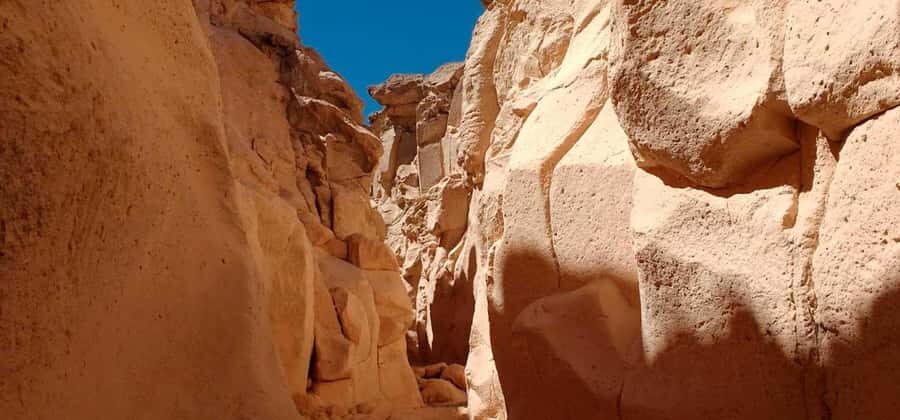
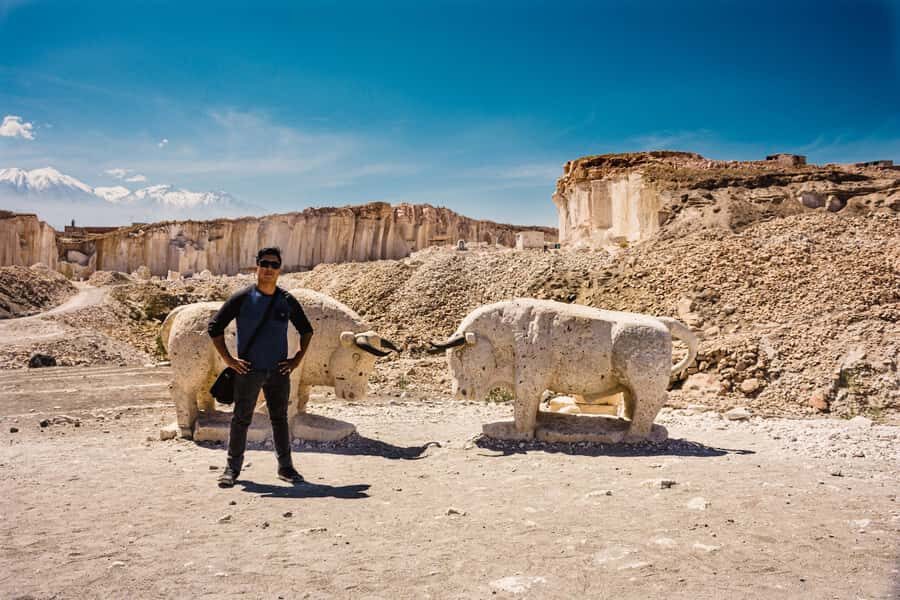
About 45 minutes into the morning, you reach Añashuayco Quarry. This is not a staged ruin. It’s currently in operation, and the quarrymen do their work very early.
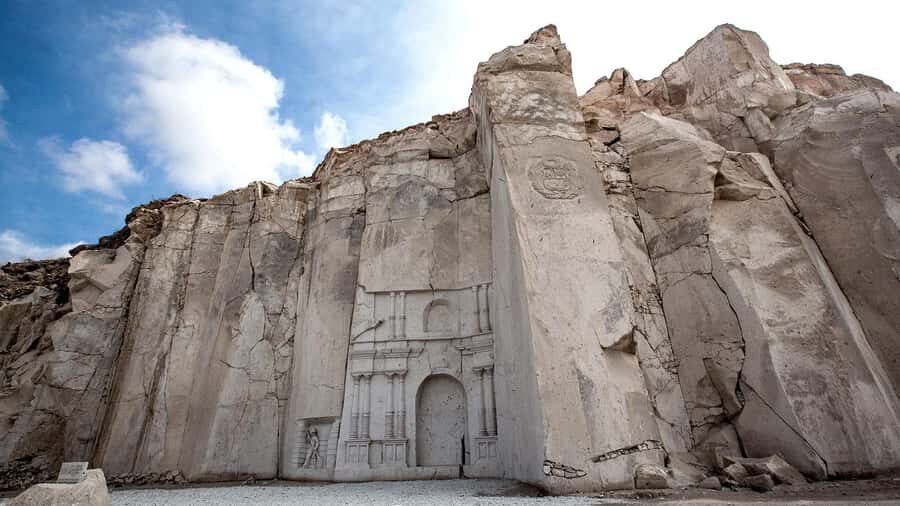
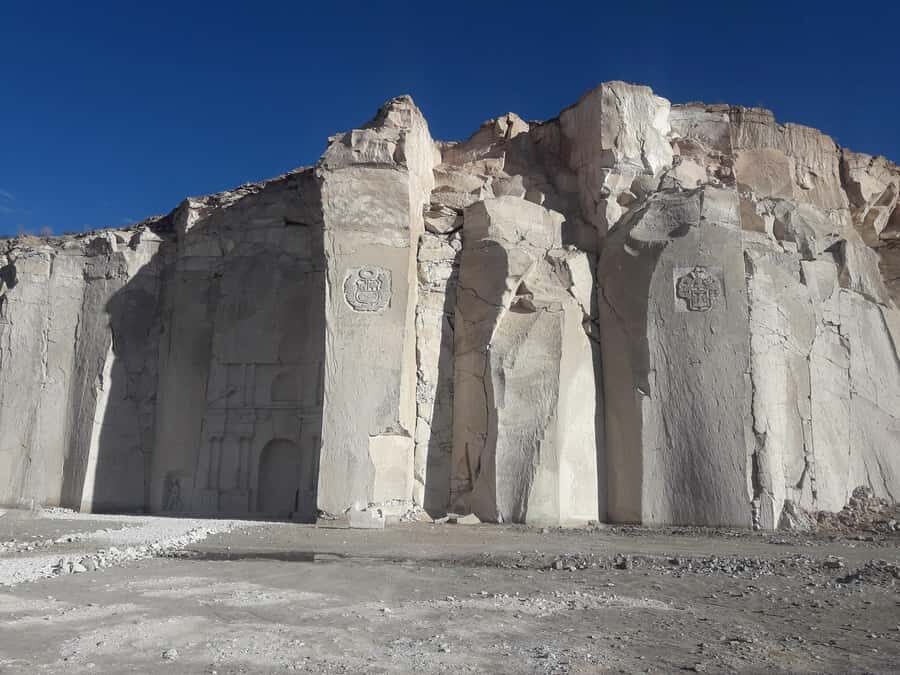
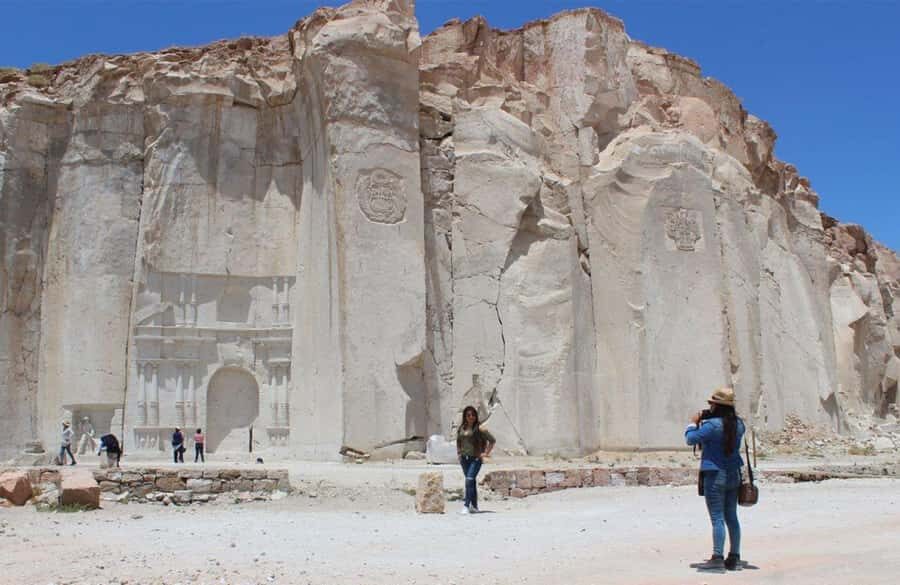
What you’re looking at is big and dramatic: an immense canyon of extraction with high cliffs—ignimbrite walls formed by removing stone for the production of sillares. The guide’s job here is to connect the physical space to the story of sillar: how it’s produced and how it has been used over time.
One of the most specific and memorable moments is the mega-carving of the Church of the Society of Jesus. It’s carved directly in the quarry, and the carving was made by the stonemasons themselves. That’s the kind of detail that makes the quarry feel like a living workshop, not a museum.
You’ll also have the chance to visit one of the quarrymen and hear what daily work looks like. If the activity is running, you can even experience cutting one of the stone blocks yourself. Even for beginners, this is usually the part that turns a geology lesson into something you’ll remember.
Moving to the canyon: Quebrada de Culebrillas on the way back
After Añashuayco, the tour travels about 30 minutes to Quebrada de Culebrillas. The transition is quick, and you’re ready for a different kind of scenery: not cliffs of quarrying, but a canyon carved by water.
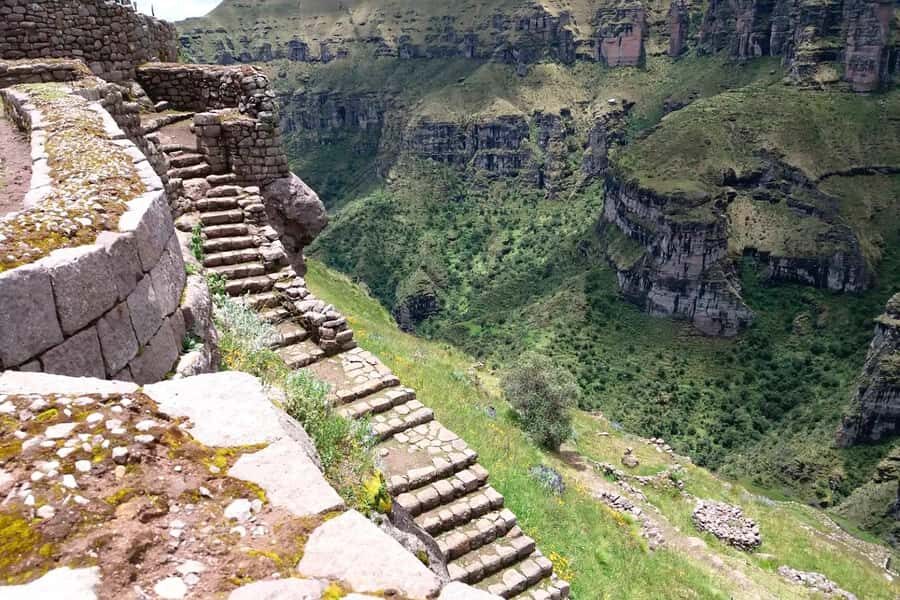
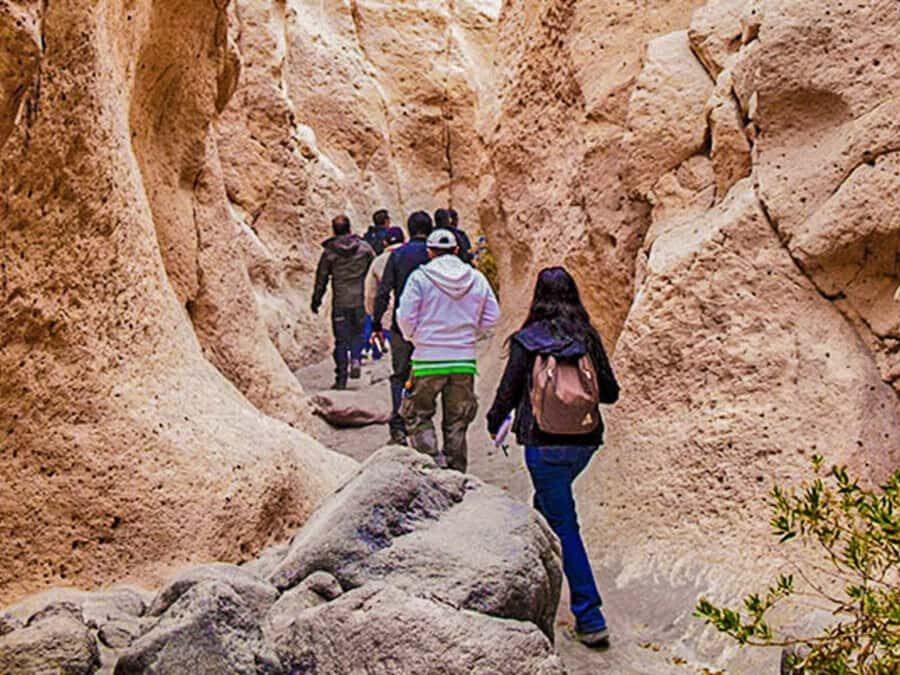
Once you arrive, you take a walk of about 20 minutes inside the small canyon. The walls are roughly 15 to 20 meters high, and as you walk deeper the canyon gets taller and more enclosed.
This is where I recommend you slow down. The canyon is short, so you’ll be tempted to rush for the petroglyphs. But the real payoff is noticing how the light changes and how the water-shaped walls create different textures as you move.
Wari petroglyphs inside the canyon walls
Near the end of the Culebrillas walk, you reach the highlight most people came for: petroglyphs made by the Wari culture, created more than a thousand years ago.
Because the canyon narrows and darkens slightly as you go in, the petroglyphs feel like they’re sitting in their own pocket of time. The guide can help you look at what you’re seeing in context, not just as random markings.
This stop is also a good reminder of why short nature walks can be more valuable than longer ones. You don’t need hours to feel a shift in environment. In 20 minutes, you go from bright open air into a stone passage with ancient human traces.

Apachetas on the return: stone stacks, gratitude, and luck
Before heading back toward Arequipa, the tour observes Apachetas. These are stone formations placed one on top of the other.
They carry meaning: a symbol of gratitude toward nature and also an attraction of good luck. The guide frames them as something that can create a slightly mystical sensation—less like a “sight” and more like a local ritual you pass on your way.
If you like cultural details that don’t require big museums, this is a nice closing note. It’s simple, visual, and it ties the route back to how people relate to the land in everyday life.
Back to Arequipa near Plaza de Armas
The return trip starts around 12:30 pm. You’ll reach the center of Arequipa and be dropped off near the Plaza de Armas around 1:30 pm for the morning shift.
If you take the afternoon shift, your day will still follow the same pattern. That consistency is part of what makes this tour work: a clear flow from viewpoint to quarry to canyon and back.
If you have lunch plans, I’d treat this as an afternoon starter. You’ll likely want time afterward to decompress, especially if you’re trying to photograph the canyon and then tour the center of town.
Price and value: what $14 covers and what costs extra
The price is $14 per person, and what you get for that is meaningful: tourist transport plus a professional guide. For a route that combines three locations and includes both viewpoint stops and guided walking, this is fairly straightforward value.
The main extra cost is entrance fees: 10 soles for tickets to the places. That’s not a dealbreaker, but it is worth budgeting for so you don’t get surprised on arrival.
When I judge value, I look at effort versus time. Here, in only 4 hours, you get:
- a quarry visit that’s tied to real production,
- a canyon walk with ancient petroglyphs,
- and a cultural stop with apachetas.
That mix is the strength. Many city half-day tours give you one “wow” stop. This one stacks three.
Who should book this Sillar and Culebrillas route
This is a great match if you want a short, story-driven day in Arequipa that mixes geology, culture, and a walk you can actually finish without planning your whole life around it.
You’ll likely enjoy it most if you:
- like hands-on experiences (like seeing quarry work and trying cutting a stone block),
- enjoy guided explanations at real sites, not just viewpoints,
- want an easy half-day plan with clear timing and a drop near Plaza de Armas.
It may be less ideal if you:
- dislike group timing, since you may have to wait briefly for everyone to be ready,
- get uncomfortable in basic transport conditions, especially in warmer parts of the day,
- want more time than a short canyon walk (it’s about 20 minutes inside).
Should you book this tour?
Yes, if you want a compact, high-impact Arequipa route that goes beyond surface sightseeing. The big selling points are practical: a working quarry with the mega-carving, a guided walk into Quebrada de Culebrillas for Wari petroglyphs, and meaningful stops like the apachetas.
Book it especially if you care about seeing how things are made, not only how they look. If you’re the type who likes to understand why a place exists, you’ll get a lot out of the guide’s focus on sillar production and the quarrymen’s daily work.
If you’re choosing between options and you hate logistics, this tour still keeps things simple: transport, guide, a short walking segment, and a drop near the center.
FAQ
What time does the tour start and when do I return?
The morning shift starts at 09:15 and returns around 13:30, with drop-off near Plaza de Armas. There is also a 2:00 pm shift.
What’s included in the $14 price?
The price includes tourist transport and a professional guide.
Are entrance tickets included?
No. Entrance tickets cost 10 soles.
How long is the walk in Culebrillas?
You’ll walk for about 20 minutes inside the Culebrillas canyon.
What languages is the guide available in?
The guide works in Spanish and English.
Is it easy to cancel or change plans?
You can cancel up to 24 hours in advance for a full refund, and you can reserve now and pay later.