REVIEW · CUSCO
Moray and Maras half day tour
Book on GetYourGuide →Operated by tour machupicchu best E.i.r.l · Bookable on GetYourGuide
Two sites, one lesson in adaptation. I love how Moray’s terraces show the Inca thinking about microclimates, and how Maras Salt Mines let you watch a centuries-old salt extraction system up close. The trade-off is that this is a tight schedule, and you may feel a bit of pressure during the included shopping stops.
This half-day trip runs about 5 hours, with hotel-area pickup from Cusco’s historic center and a bilingual guide. You’ll also want to plan for the missing entrance fees: you must bring cash (80 soles) for Moray and the salt mines.
In This Review
- Key highlights you’ll actually feel
- Moray and Maras in Five Hours: How the route really works
- 8:20 am pickup in Cusco and the Chinchero textile stop
- Moray’s circular terraces: why this Inca site feels like an outdoor science lab
- The Maras Salt Mines drive: what that 45 minutes sets up
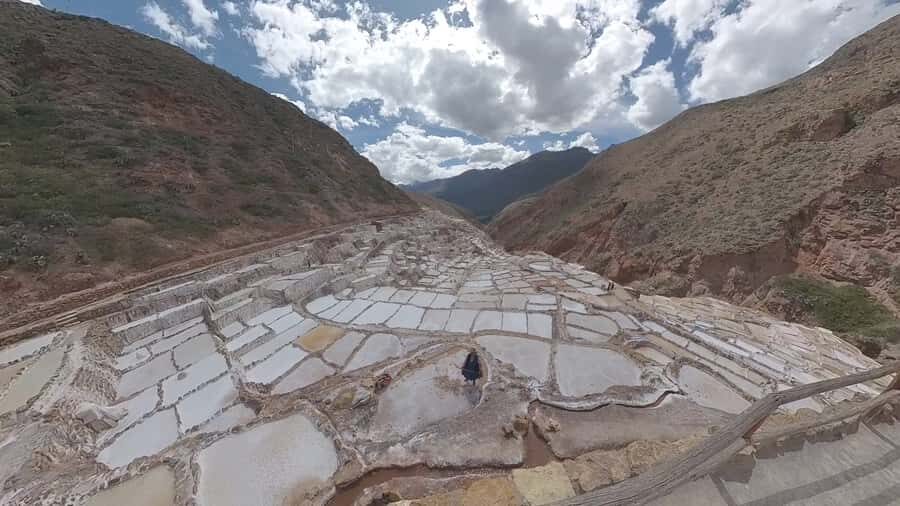
- Inside Maras Salt Mines: seeing how white gold is extracted
- Shopping stops, short site times, and how to protect your experience
- Price and logistics: what you’re really paying for at $14
- What to bring and how to avoid a cash-day headache
- Who this half-day tour suits best
- The provider detail you should know
- Should you book Moray and Maras? My practical take
- FAQ
- How long is the Moray and Maras half day tour?
- What is the price for this tour?
- What’s included in the price?
- Are entrance tickets included for Moray and the salt mines?
- Where are pickups and where does the tour end?
- What stops are included besides Moray and Maras?
- What languages does the guide speak?
Key highlights you’ll actually feel
- Moray’s circular terraces: a hands-on look at Inca agriculture experiments tied to altitude and weather
- A Chinchero textile stop: watch wool dyeing using natural products, then see how fabric production works
- Quick rhythm across three districts: bus time is built in so you still cover two major sights in one morning
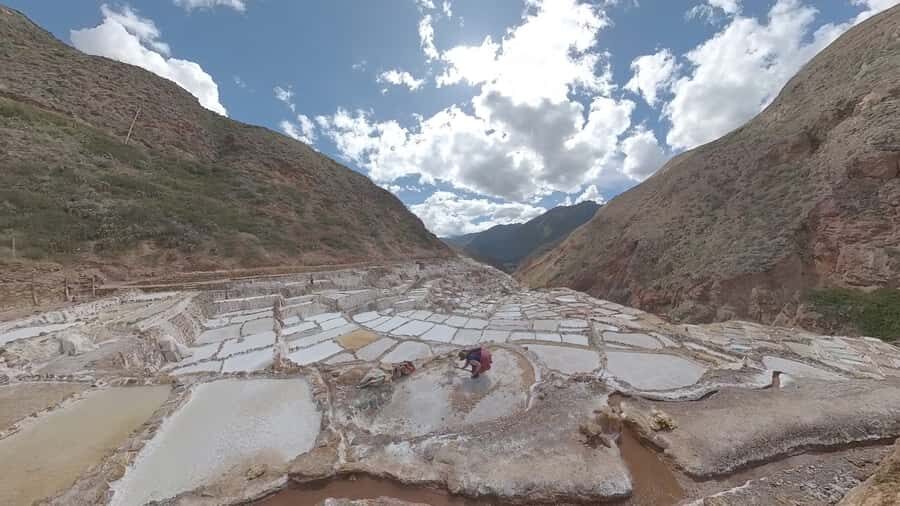
- Maras salt extraction in motion: see how workers have exploited this natural wealth for centuries
- Time spent at each site is short: plan your expectations for a “see it and learn it” pace
Moray and Maras in Five Hours: How the route really works
This is a half-day “big hits” format. You’re not doing one long hike. You’re moving between Cusco-area points, spending a set amount of time at each place, and using a guide to connect the dots fast.
That pace is the real feature. Moray and Maras are far enough apart that a full day is common elsewhere. Here, the tour keeps it doable by tightening the on-site visits to around 40 minutes each, with travel time filling the gaps. If you like structured sightseeing and hate wasting daylight, you’ll probably appreciate the efficiency.
One practical note: you start in the morning, then you’re back by about 2:20 pm, ending near Plaza Kusipata. If you want a second plan afterward, this tour is built for it.
You can also read our reviews of more tours and experiences in Cusco.


8:20 am pickup in Cusco and the Chinchero textile stop
You’ll get picked up from the main square area of Cusco around 8:20 am. Then you transfer by vehicle toward Chinchero, which takes about 40 minutes.
Chinchero is where the tour adds culture and context before the archaeological sites. You’ll visit a textile store and learn how wool can be colored with natural products, plus the fabric production process. This is a good warm-up stop because it slows the day down just enough for you to understand what’s going on in the region before you reach Moray and the salt flats.
Here’s the consideration to keep in mind. Some textile stops can feel like a sales moment, not just a demonstration. I’d go in with a clear mindset: look, ask questions, and only buy if you genuinely want to. If shopping isn’t your thing, you may want to keep your participation minimal so you don’t lose time you expected to spend at the main sights.
Moray’s circular terraces: why this Inca site feels like an outdoor science lab
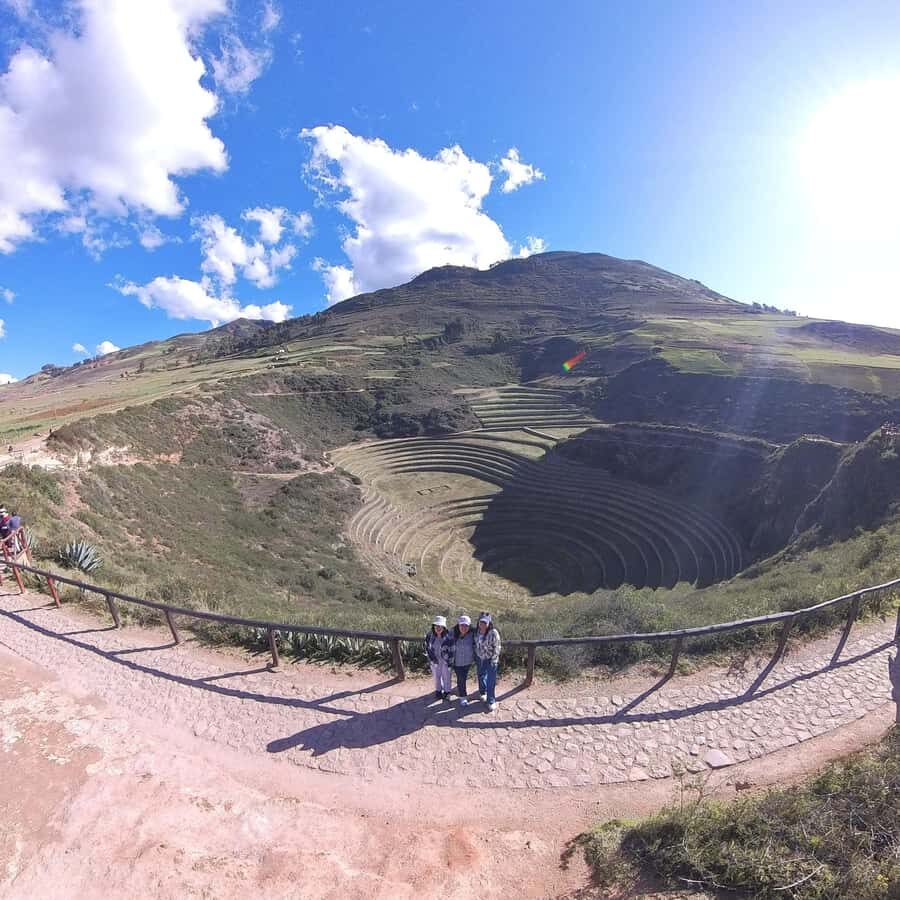
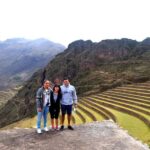
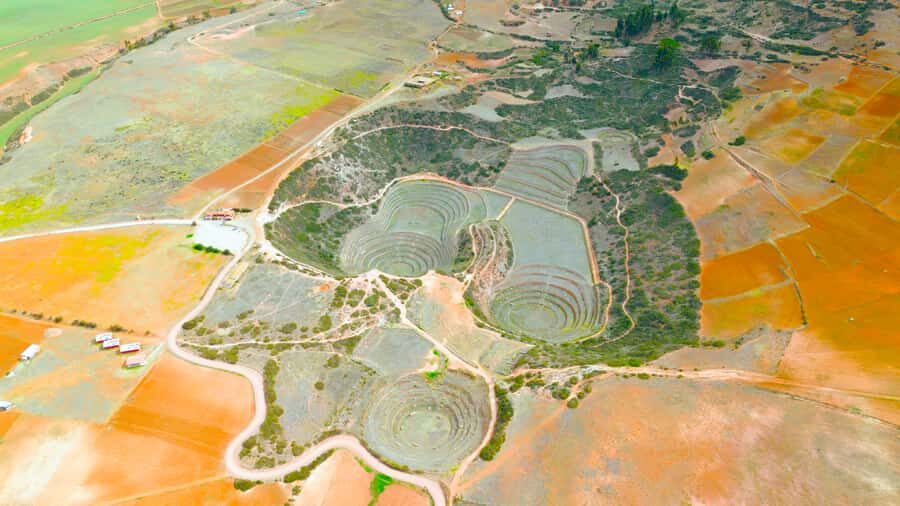
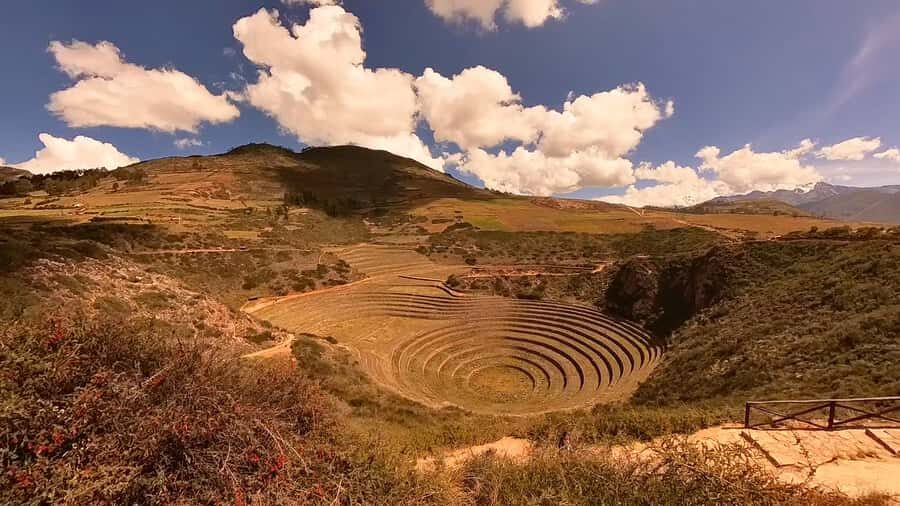
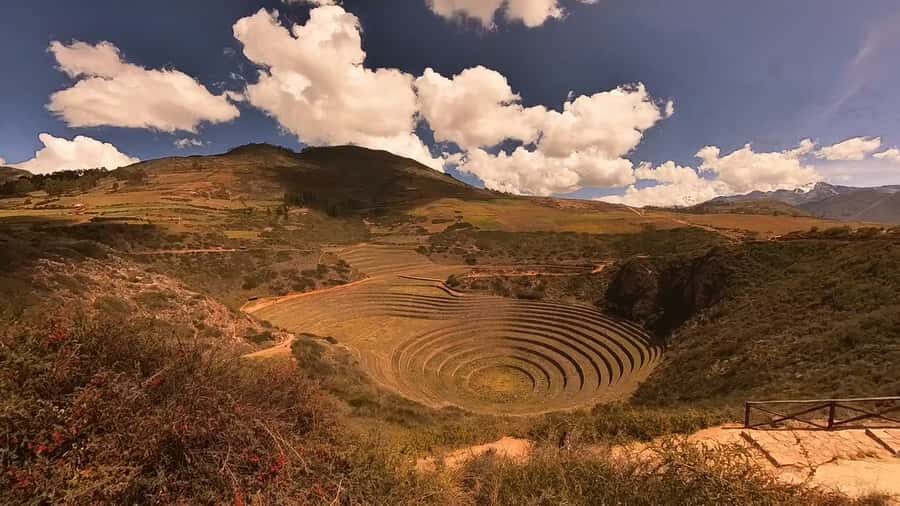
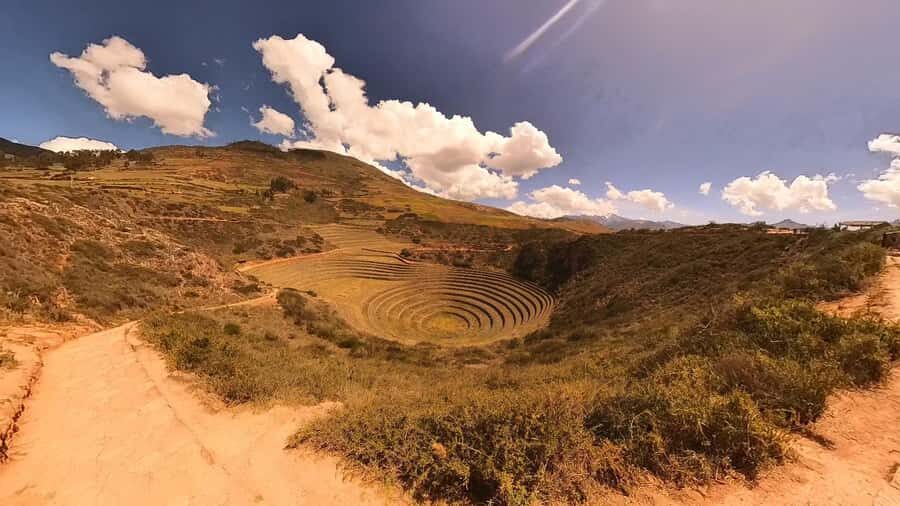
After Chinchero, you transfer to Moray. The visit time is about 40 minutes, which is short but enough to get the key idea: Moray is famous for its circular agricultural terraces.
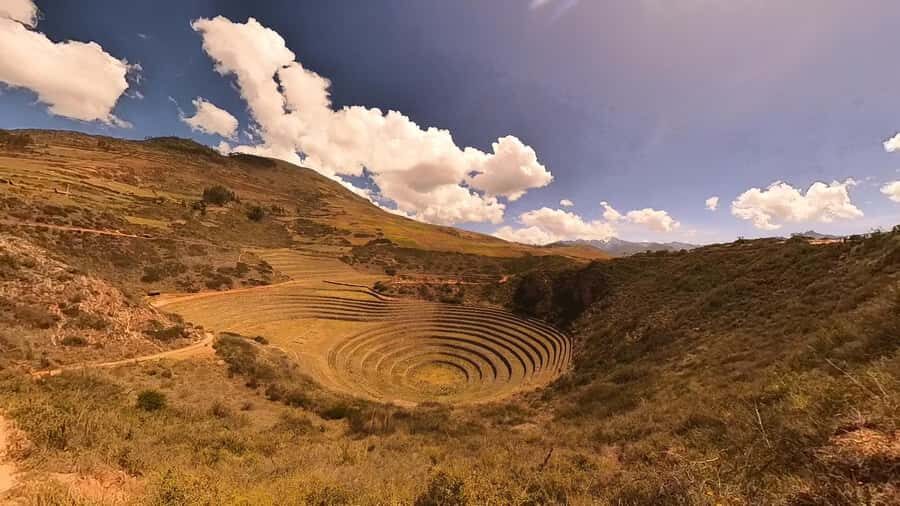
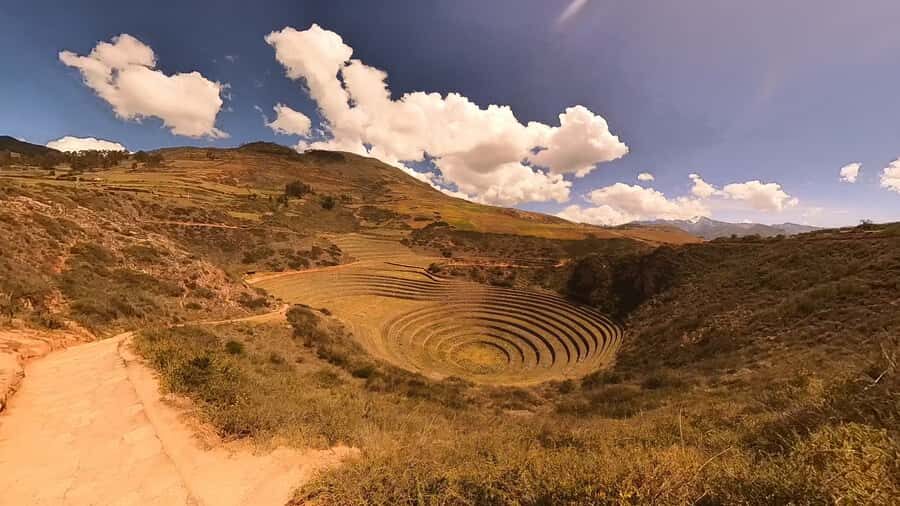
What makes Moray special is the logic behind it. These terraces weren’t built just for looks. They were used to experiment with different climatic conditions and to adapt plant varieties to different altitudes. In other words, the site works like an Inca research station, letting farmers test what grows best under varying conditions.
Even with a limited time slot, the layout helps you “see” that concept. You’re surrounded by the geometry of the terraces, and the guide can help you connect altitude and exposure to why certain crops would be tried in different sections. If you’ve ever wondered how pre-modern societies managed complex farming, Moray is one of the clearest answers you’ll get in this region.
The only drawback is also simple: 40 minutes can disappear faster than you expect, especially if you’re taking photos, reading, and listening all at once. If you tend to linger, you may want to be selective: pick the terrace areas you want to understand most, then spend the rest of your time soaking in the view.
The Maras Salt Mines drive: what that 45 minutes sets up
From Moray, the route continues to the Maras salt mines. The transfer is about 45 minutes, so you’re in “travel mode” again for a bit.
This gap matters because it signals what this half-day tour is optimizing. It’s designed to get you seeing two very different types of sites: one agricultural experiment (Moray) and one resource extraction system (Maras). You’ll go from terraces and crop logic to salt work and labor history, all in one morning.
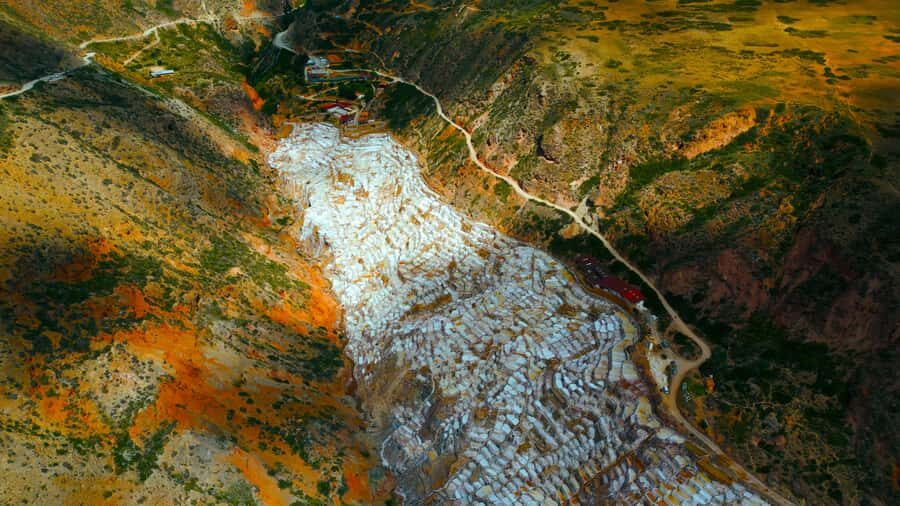
When you arrive, you’ll have enough time to do more than just look at the salt pools from a distance. The visit itself is about 40 minutes, which is long enough to understand the overall process and to see the patterned grid of the mines.
Inside Maras Salt Mines: seeing how white gold is extracted
At Maras, you’ll visit the salt mines where you can see the extraction process and how workers have exploited this natural wealth for centuries. That “centuries” detail is the anchor here. This isn’t a modern show. It’s a working system tied to a landscape that produces salt reliably.
What I like about Maras on a short tour is the clarity. The mines are visually striking, and the work is easy to grasp because the setting shows the method. Even if you only have 40 minutes, you can still understand the basic flow: the salt is harvested from many small plots, and the operation is spread across the terraced layout.
One thing to consider: Maras involves standing and looking over the mines. If you’re traveling with tight time, keep your photo strategy practical. Get your key shots early, then shift your attention to the explanation so you leave with more than just images.




Shopping stops, short site times, and how to protect your experience
This tour includes stops where you can buy things, including a textile stop in Chinchero. Some participants find these moments more pushy than they expected, and that can change the feel of the day.
If you’re the kind of traveler who hates hard selling, you have two options:
- Treat shopping stops as a quick look, then move on immediately to the guide-led parts.
- If you do want to buy, decide what you’re looking for before you arrive so you’re not negotiating in the moment.
Also, remember the schedule. With roughly 40 minutes at Moray and 40 minutes at Maras, you don’t have unlimited slack. If you spend long periods browsing at extra shops, you may feel that the main attractions get less time than you hoped.
Your best move is to mentally budget. Tell yourself: Chinchero textile stop is for watching and learning first. Moray and Maras are for your main attention. That mindset keeps the half-day tour from feeling like it got “stolen” by shopping.
Price and logistics: what you’re really paying for at $14
On paper, $14 for a half-day tour sounds like a deal, and the structure supports that. You get tourist transport and a bilingual professional guide, and you cover multiple major stops without needing to plan transport yourself.
The key catch is entrance fees. Entrance tickets to Moray and the salt mines are not included, and you need to bring 80 soles in cash. That’s the real add-on cost you should factor into your budget. Because it’s cash-only in this context, it can also affect your timing and convenience.
So is it good value? For many travelers, yes—if you want both Moray and Maras in one half day and you’re comfortable with a faster pace. The price also feels more reasonable because the guide work is what makes these sites click. Moray, especially, benefits from interpretation. Salt mines are visual, but a guide helps you connect what you’re seeing to how extraction works and why it matters.
If you prefer slow travel or you want long, quiet time inside each site, you might feel shorted here. For that style, a longer tour format could fit better.
What to bring and how to avoid a cash-day headache
The most specific thing you need is cash. Entrance tickets for Moray and Maras require 80 soles in cash.
Plan this before you leave Cusco. If you show up without cash, the tour can stall or become awkward at the entrance, and you’ll feel the time pressure immediately. Also, keep enough smaller bills if you can, since you’ll be dealing with local payment for two sites.
Beyond that, the day is designed to move. You’ll be on and off vehicles between stops and standing for site visits. Wear shoes that work for uneven ground and quick changes in terrain. You’re not going on a long trek, but the sites still involve real walking.
Who this half-day tour suits best
This tour is a strong match if you want:
- Two major Cusco-region sights without committing to a full day
- A guide who can explain the “why” behind Moray’s terrace design
- A practical schedule that gets you back around 2:20 pm
You might also like it if you’re traveling with limited time in Cusco and you don’t want to juggle tickets, transit, and route planning yourself.
On the other hand, if you dislike shopping moments or you need long stops to enjoy ruins and views, you may find the pacing and extra shop pressure frustrating. In that case, go in with a plan to stick to the main sights first.
The provider detail you should know
The experience is run by tour machupicchu best E.i.r.l. The tour includes a bilingual guide and transport, but the entrance tickets are separate. That setup is typical for Peru day tours, so the best preparation is straightforward: bring the cash and be ready for a quick, guided sprint through the highlights.
Should you book Moray and Maras? My practical take
Book it if you want a well-structured half day that hits Moray and Maras with a bilingual guide and includes transport. You’ll get a clear understanding of Inca agricultural experimentation at Moray and you’ll see salt extraction as an active human activity at Maras.
Skip it or consider a different format if shopping stops could ruin your day, or if you hate time limits. This tour is efficient, but efficiency comes from shortening visits and moving quickly between points.
FAQ
How long is the Moray and Maras half day tour?
The duration is about 5 hours, with the tour ending around 2:20 pm near Plaza Kusipata.
What is the price for this tour?
The price is listed as $14 per person.
What’s included in the price?
It includes tourist transport and a professional bilingual guide (Spanish and English).
Are entrance tickets included for Moray and the salt mines?
No. Entrance tickets for Moray and the salt mines are not included, and you should bring 80 soles in cash.
Where are pickups and where does the tour end?
Pickups are in the historic city center (from the main square area is stated for the 8:20 am schedule). The tour ends about one block from the main square, near Plaza Kusipata.
What stops are included besides Moray and Maras?
You also visit Chinchero for an arts and crafts market stop, including a textile store where you can see how wool is colored with natural products and learn about fabric production.
What languages does the guide speak?
The guide is bilingual, speaking Spanish and English.