REVIEW · CUSCO
Cusco Half Day City Tour: Four Ruins
Book on Viator →Operated by Heidi Travel EIRL · Bookable on Viator
Four ruins, one clean half-day plan. This Cusco tour strings together small-group Inca sites near town, with a guide who explains what you’re seeing in plain language across English and Spanish. I especially like how the stops are arranged so you get real context fast, even when time is tight, since some days run a bit shorter or feel rushed.
You’ll also be on your feet. There’s walking and stairs, and the altitude can make a “short” climb feel like more—especially if you’re still getting used to Cusco. And while transport is included, plan for extra entrance fees at the sites.
In This Review
- Key highlights worth your attention
- How this half-day “Four Ruins” tour actually pays off
- Price and logistics: what $45 covers, and what to budget
- Your ride in Cusco: comfortable transport, short transfers, real walking
- Stop 1: Sacsayhuaman fortress walls and the best Cusco views
- Stop 2: Q’enqo’s carved monolith temple and the mysterious canal
- Stop 3: Puka Pucara, the Red Fort, and Inca road ideas
- Stop 4: Tambomachay’s stepped terraces and El Baño del Inca water
- What you’ll learn from the guide (and why it matters)
- Who should book this tour (and who might want a different one)
- My take: should you book the Cusco Half Day Four Ruins tour?
- FAQ
- How long is the Cusco Four Ruins tour?
- What time does the tour start?
- How many people are in the group?
- What’s included in the price?
- Are entrance tickets included?
- Is free cancellation available?
Key highlights worth your attention
- Max 15 travelers means you’re not wrestling for photos or listening space
- Bilingual guidance (English and Spanish) helps you connect the dots at every stop
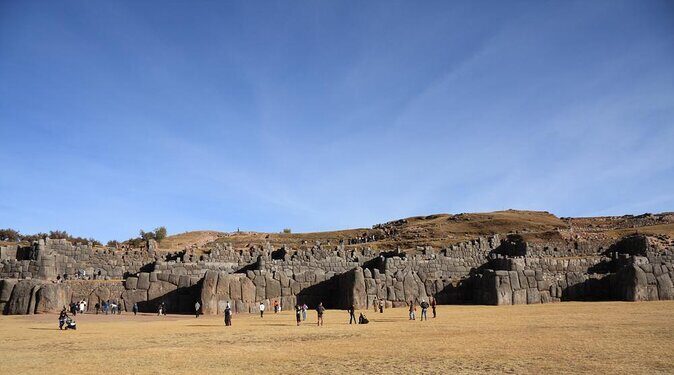
- Sacsayhuaman’s zigzag megaliths and sweeping Cusco views are the big wow moment
- Q’enqo’s carved monolith temple includes a mysterious canal with several theories
- Tambomachay’s terrace waterworks keep things calmer, with flowing water over stepped stone
How this half-day “Four Ruins” tour actually pays off
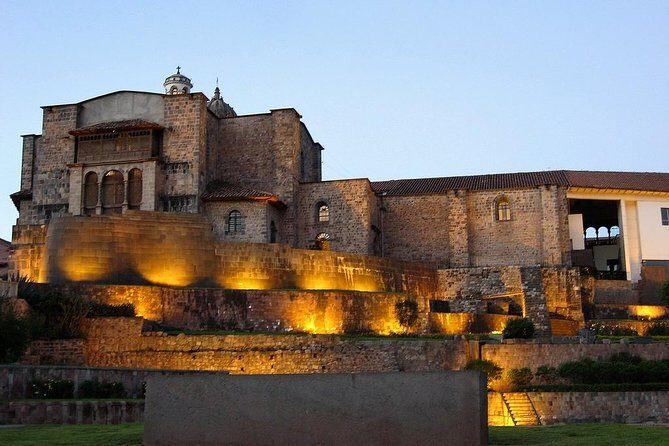
This is a smart way to see the Inca world around Cusco without turning your day into a logistics project. You’re not trying to hit everything; you’re focusing on four archaeological complexes that show different sides of Inca design—fortress-like walls, ritual space, utilitarian compounds, and a hillside water system.
The pacing works best if you treat each stop like a quick museum visit plus outdoor scenery. Your guide points out details you’d likely miss on your own, like why certain buildings are positioned where they are, or what the Incas may have intended when they cut channels into stone. That matters because many of these places have lost their original use story over time, so interpretation from someone who can explain the leading ideas is a huge part of the value.
One more practical reason I like this format: you’re using Cusco as your base. Sacsayhuaman, Q’enqo, and Puka Pucara are close enough that the rides feel short. Then Tambomachay adds a breath of air on a higher hillside, where the terraces and constant water give the group a calmer final stop.
You can also read our reviews of more city tours in Cusco
Price and logistics: what $45 covers, and what to budget
The tour price is $45 per person, and the deal includes transport plus a bilingual guide. For a half-day, that’s usually the sweet spot: you pay for someone to handle routes and interpretation while you enjoy the sites.
What’s not included are site entrance charges. The listed amounts are:
- Qorikancha entrance: PEN 20 per person
- Site entrances: PEN 70 per person
Even if Qorikancha isn’t part of your main four-ruins route, those fees show the operator is clear about separating transport/guide from entry costs. My practical advice: bring some cash for entrances so you’re not hunting around at the counter while your group waits.
Timing is another logistics point. The tour is listed at about 6 hours, but real-world timing can vary. I’d plan your day with a little buffer afterward, and expect some waiting or reshuffling if pickup runs late.
Your ride in Cusco: comfortable transport, short transfers, real walking
You start at 10:00 am from Heidi Travel EIRL (Plateros 324, Cusco 08000). Transport is included, and the group size cap of 15 helps a lot with comfort—fewer people means easier movement at stops and less scrambling when you need to line up.
Still, don’t treat this as a sit-everywhere tour. You’ll be walking on uneven ground and climbing stairs at multiple sites. One thing I’m glad your guide can control is pace. If you’re slower because of altitude, you want someone who won’t pressure you into a sprint. The best versions of this tour keep the group moving but stay respectful of breathing, especially for first-time visitors to Cusco.
If you arrive feeling winded, it’s not a failure. It’s altitude math. Go slower, take shorter steps, and let the guide know early that you might need a moment before moving to the next platform.
Stop 1: Sacsayhuaman fortress walls and the best Cusco views
Sacsayhuaman is often the moment when Cusco starts to feel big. The site carries that mix of power and ritual that’s common across Inca complexes. Even the name is Quechua: the idea is a “place where the hawk is satiated.”
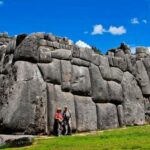
You’ll walk around the remains of what the Spanish later called a fortress, though modern interpretations also point to ceremonial use. Either way, the structure is unmistakably military in scale: massive blocks, steep angles, and that signature zigzag wall. The main wall is built with giant stones—up to about 5 meters high and 2.5 meters wide, with weights estimated around 90 to 125 tons each. That’s the kind of engineering that makes you stop and look twice, even if you’re not usually into ruins.
The other reason Sacsayhuaman earns top billing is the views. From here you can see major mountain summits that were sacred to the Incas: Ausangate, Pachatusán, and Cinca. The stones are impressive, but the reason they chose this position matters, too. It’s a reminder that Inca architecture wasn’t just for function—it was for communicating with place.
Practical note: expect some uneven walking on site. It’s worth taking your time at the viewpoints, because the best photo angles usually require a pause.
Stop 2: Q’enqo’s carved monolith temple and the mysterious canal
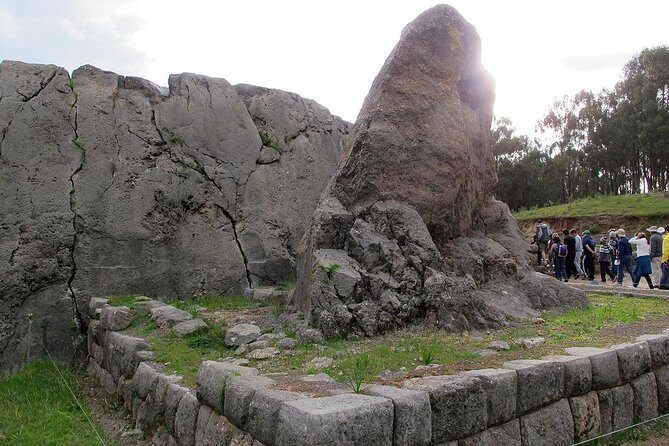
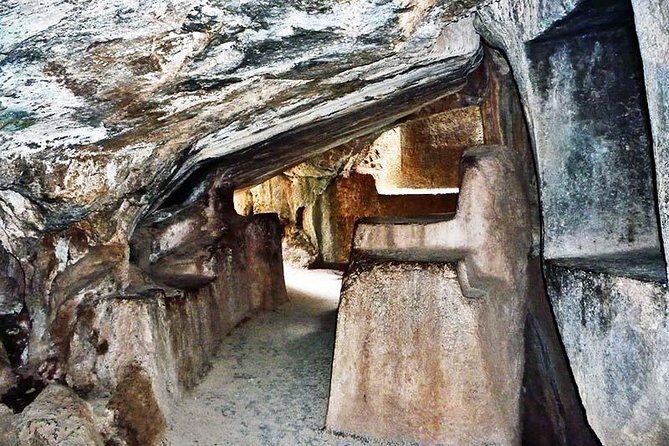
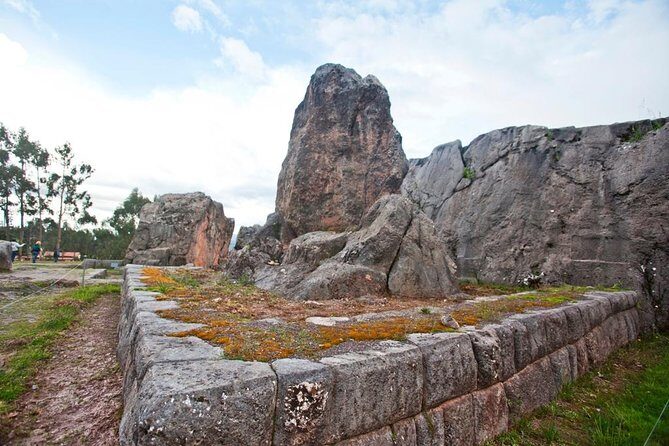
Q’enqo is the “mystery box” stop. The name is tied to the Quechua idea of labyrinth or zigzag, and the focus is a crooked canal cut into rock. Researchers don’t have a definitive answer for what the canal carried. Hypotheses range from water used in ritual settings to fermented corn beer or even blood—each leading to theories about death rituals, healing rites, or symbolic testing.
Even if you never get one final answer, you’ll still feel how carefully the space was designed. Q’enqo is carved from a gigantic monolith, blending natural rock with man-made tunnels and chambers. One chamber has 19 small niches and is set up like an amphitheater. The purpose of the “theater” is also unclear now, but it’s easy to imagine why someone would gather here for sun, moon, and star worship—or for ceremonies tied to sacrifice.
What I like most is how your guide connects the physical details to the uncertainty. Instead of pretending every ruin has a clear script, you get the best explanations and the ranges of interpretation. That’s more honest than guesswork—and it’s usually more interesting, too.
Practical note: since it’s carved into stone, it can feel a bit darker or tighter than you expect. Wear shoes with solid grip.

Stop 3: Puka Pucara, the Red Fort, and Inca road ideas
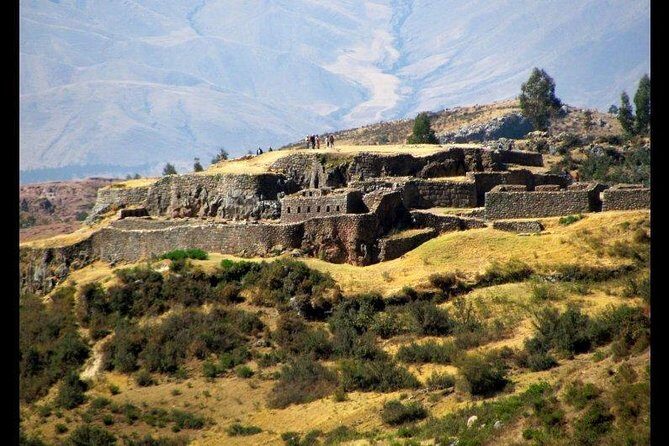
Puka Pucara (meaning red fort) is a very different vibe from Sacsayhuaman. The name comes from its setting and earth tones, plus the semi-circular enclosure style. This one also has enclosures and architectural elements like canals, aqueduct-like features, baths, and what may connect to the larger Inca road system called Qhapaq Ñan.
The rocks here are notably uneven compared to some other sites, and the layout feels functional rather than purely ceremonial. You’ll see inner squares, multiple levels, and paths that seem designed to avoid cutting through protruding stones. That kind of planning suggests the builders worked with the site’s natural geometry instead of bulldozing it flat.
Another detail that’s easy to appreciate on a walk through Puka Pucara is the layered wall design that creates different levels. You’ll also see references to rooms and platforms, with some areas trapezoidal and not strictly rectangular—another sign that Inca builders were adapting to terrain and purpose.
There are also stories and rumors associated with this place, including a suspected underground passage connecting it to Tambomachay. Since it’s described as a rumor, treat it as a piece of local lore rather than a confirmed fact. Still, it adds a human thread to what you’re seeing.
If you’re sensitive to walking time, Puka Pucara can be the “good pace” stop: enough to explore, but not usually as overwhelming as the biggest wall-and-view site.
Stop 4: Tambomachay’s stepped terraces and El Baño del Inca water
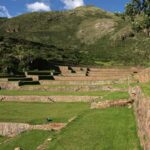
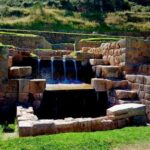
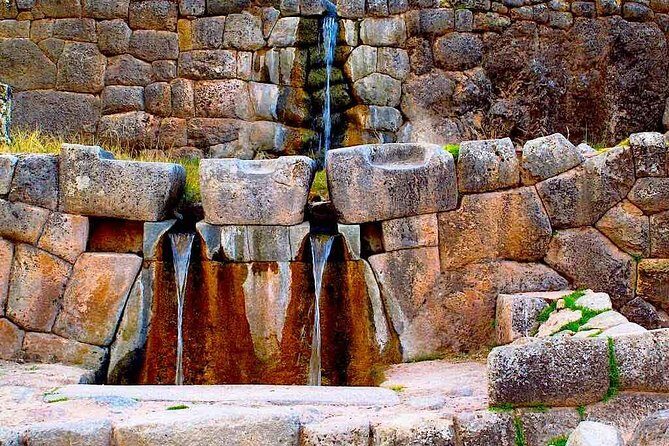
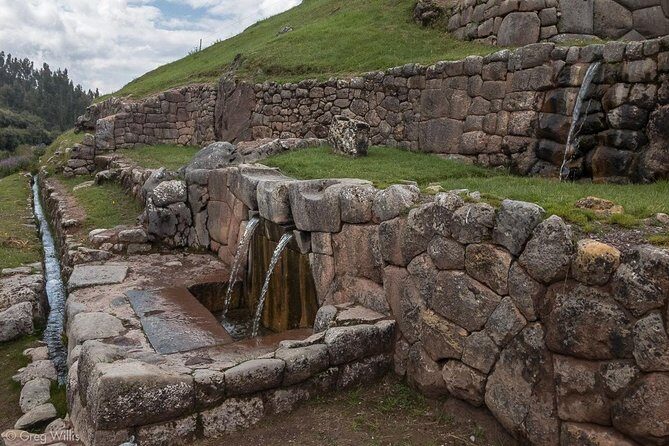
Tambomachay is the calm closer. It sits just outside Cusco and is built around a natural spring that keeps water flowing through channels, aqueducts, and small waterfalls. That constant water sound is part of why the stop feels more relaxed than the earlier stone-heavy sites.
This is the site also known as El Baño del Inca, linked to the long-held theory that it was a spa-like place for the Inca ruler and possibly the nobility. The layout supports the idea: three stepped terraces of precise stonework, with trapezoidal niches in some retaining walls.
But it’s also described as possibly serving multiple roles: ceremonial space, spa/outpost, and even military function. In practice, that means your guide will likely point out how the structure could work in different ways—how access, water control, and terraces could all support events or day-to-day visits.
Altitude is part of the Tambomachay story too. It sits at about 12,150 feet (3,700 meters). So while it’s tranquil, it can still feel like work if you’re breathless from earlier climbs. Take a slow look at the terraces, listen for water, and don’t force speed.
What you’ll learn from the guide (and why it matters)
The best part of this tour isn’t just the sites—it’s the explanations that connect them. You’ll get a bilingual guide who can explain key ideas clearly in English and Spanish, which is a huge help in Peru when you don’t know Quechua or the local historical context.
In the experiences I’ve heard of from guides tied to this operator—names like Edith and Freddy come up—what stands out is how the commentary stays practical. Guides point out things like:
- why Spanish chroniclers called some areas fortress-like
- what it means that Q’enqo’s canal purpose is debated
- how the terraces and water channels at Tambomachay could support different uses
Even when you can’t confirm one theory, you get a sense of how Incas thought: site choice mattered, water mattered, and building details were never random.
Who should book this tour (and who might want a different one)
This tour is a strong match if you want:
- a first Cusco ruin circuit with the most commonly seen nearby sites
- small-group access (max 15) without a chaotic crowd
- a guided overview that helps you understand what you’re looking at
It’s also good for families and couples who want a structured day without planning buses, entry lines, or routes.
It may not be the best choice if:
- you’re avoiding walking and stair climbing
- you need a very slow pace with lots of resting
- you want long free time at each site (this is a half-day style visit)
If you’re arriving in Cusco right away and altitude hits hard, consider going easy with your walking pace and hydration. If you’re unsure, ask your guide for a slower rhythm early.
My take: should you book the Cusco Half Day Four Ruins tour?
Yes, I’d book it if you want a tight, efficient way to see four major Inca sites around Cusco with transport included and bilingual guidance. The value comes from the combination: you get the big visual wow of Sacsayhuaman, the stone-carved oddness of Q’enqo, the red-fort layout of Puka Pucara, and the soothing water terraces of Tambomachay—without spending your day on planning.
Just go in with realistic expectations. There’s walking at altitude, and the day can feel a bit compressed depending on timing. Budget for entrance fees (site charges add up), wear grippy shoes, and keep some buffer time after pickup and drop-off.
If that sounds like your pace, this tour is an easy win.
FAQ
How long is the Cusco Four Ruins tour?
It’s listed at about 6 hours.
What time does the tour start?
The start time is 10:00 am.
How many people are in the group?
The tour has a maximum of 15 travelers.
What’s included in the price?
Transport is included, along with a bilingual guide (English and Spanish).
Are entrance tickets included?
No. Entrance to Qorikancha is listed as PEN 20 per person, and entrance to the sites is listed as PEN 70 per person.
Is free cancellation available?
Yes. You can cancel up to 24 hours in advance for a full refund.