REVIEW · CUSCO
Horseback Riding Plus Tour to Sacsayhuaman, Quenqo, Puka Pucara and Tambomachay
Book on Viator →Operated by Horseback Riding Cusco · Bookable on Viator
Riding near Cusco beats another van tour. This half-day mixes horseback riding with guided time at major nearby Inca sites, so you get movement, views, and explanations in the same outing. I especially like that your guide ties what you’re seeing to Inca religious customs, not just stone names.
I also love the practical side: you ride from Vieja Estancia Ranch with saddle setup, safety helmets, and a muleteer who looks after the horses while you’re focused on staying balanced. Even if you’re new to riding, they match horses to your comfort level, and the pace feels designed for real people, not just confident riders.
One key consideration: the ruins access fees and the Cusco Touristic Ticket are not included, and the horseback portion is only about an hour (give or take) rather than the whole tour. Plan for that so you don’t feel shorted on either the ride time or the extras.
In This Review
- Key things to know before you go
- A ride-and-ruins day that actually feels like a day
- What you’re really buying with $95
- Stop 1: Sacsayhuaman and the big-stone atmosphere
- Stop 2: Puka Pucara for a different kind of ruin stop
- Stop 3: Tambomachay and the calm before the ride
- The Vieja Estancia Ranch horseback ride: safety, horse matching, and real scenery
- How they keep it safe and beginner-friendly
- How long is the ride, really?
- What the ride feels like
- Stop 4: Q’enqo and ending on a spiritual note
- Transport, timing, and group size: why it matters at altitude
- Tickets, entrance fees, and the Cusco Touristic Ticket reality
- What to wear (and what to skip) so the ride is smooth
- Who this tour suits best (and who should look elsewhere)
- Value check: what you get for $95
- Guides and the human factor
- Should you book this horseback ride to Sacsayhuaman, Q’enqo, Puka Pucara, and Tambomachay?
- FAQ
- How long is the Horseback Riding Plus tour in Cusco?
- Is hotel pickup and drop-off included?
- What horseback riding gear is provided?
- Do I need to have riding experience?
- What is the minimum age?
- Is there a weight limit?
- Is the Cusco Touristic Ticket included?
- Are the archaeological entrance fees included?
- What should I wear for the ride?
- What if the weather is poor?
- Can I cancel for a full refund?
Key things to know before you go
- Hotel pickup and private car transport keep your day simple and organized
- Helmets + saddle + muleteer support mean you’re not riding “on your own”
- Four Inca sites plus a ranch ride gives you a full change of scenery in one morning/afternoon
- A guide who explains religious customs makes the ruins feel connected, not random
- Horseback isn’t allowed inside the archaeological areas to protect the grounds
- Max 15 travelers keeps the group feeling manageable
A ride-and-ruins day that actually feels like a day
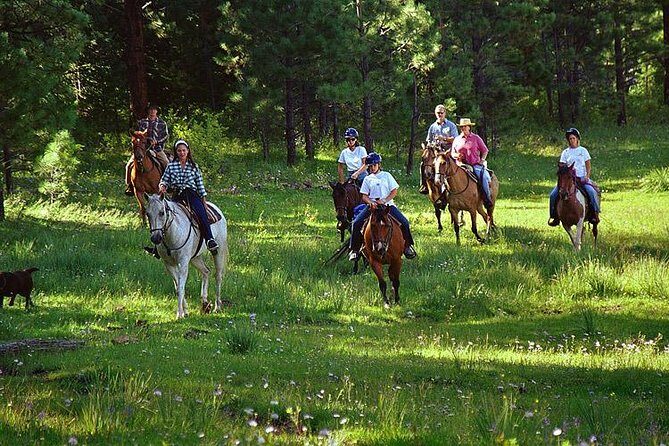
Cusco can be busy. This tour breaks the pattern. You’re not stuck in a single car window for hours. Instead, you do short drives between sites, then you switch to a ranch ride with mountain views.
The tour is built for comfort and clarity. You get a professional guide, saddle and safety helmets, mineral or natural water, and round-trip transport from your hotel area to the ranch and back. The pacing also matters at altitude. Short visits, then a change of mode—walk, drive, ride—helps your body adjust.
Group size caps at 15, which tends to make questions easier and logistics smoother. And if you’ve never ridden before, the tour is specifically set up so little-or-no experience riders can join.
A few more Cusco tours and experiences worth a look
What you’re really buying with $95
At $95 per person for about four hours, the value is in the bundle: guide + transport + safety gear + horses and staff support. What’s not bundled is part of the infrastructure: entrance fees for the archaeological sites and the Cusco Touristic Ticket. If you budget for those up front, the price starts to make sense fast—especially compared with paying for separate transport and separate activities.
Stop 1: Sacsayhuaman and the big-stone atmosphere
You start with Sacsayhuaman, one of the major nearby Inca ruins. What I like about beginning here is how it sets the tone: you’re already in Inca territory before you’re anywhere near the horses, so the day doesn’t feel scattered.
Expect a guided walk and explanations of Inca history and religious custom tied to the site. The tour is designed to give you context as you move through the area, so you’re not just collecting photos.
A practical note: you won’t ride horses directly into the archaeological area. Horses are kept out of these protected ruins to reduce damage to the ground. That means you’ll view the stones as a pedestrian, then transition later into the ranch ride.
Stop 2: Puka Pucara for a different kind of ruin stop
Next up is Puka Pucara. This is one of those stops where the payoff is the guide’s framing. The site experience isn’t presented as a quick photo stop. You get time to understand why the Incas connected specific places with religious and social meaning.
From a traveler’s point of view, this is good design. You’re not repeating the same visual pattern. You’re switching between different Inca locations in a single outing, which makes the day feel more complete than doing only one major landmark.
The drawback is simple: like most half-day tours, your time at each site is limited. If you’re the type who loves long walks and slow reading of every panel, you’ll probably want extra time in Cusco on your own later.
Stop 3: Tambomachay and the calm before the ride
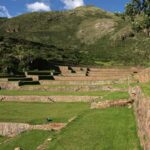
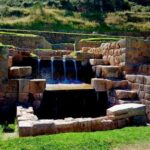
Tambomachay is where the tour begins to feel like it’s balancing culture and breath. You’ll visit another Inca site with the same guided approach—history and religious customs explained while you’re standing in front of the ruins.
What makes this stop work is the timing. After a couple of site visits, you’ve had enough walking to understand you’re doing more than just “tour bus stops.” Then you’re close to the transition point: the horseback riding session at the ranch.
And yes, the views around Cusco can do their own work. Even if the ruins are the main reason you came, the mountain scenery adds a lot to the emotional feel of the day.

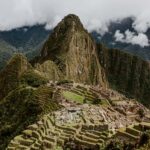

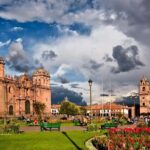
The Vieja Estancia Ranch horseback ride: safety, horse matching, and real scenery
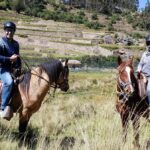
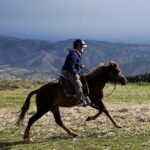
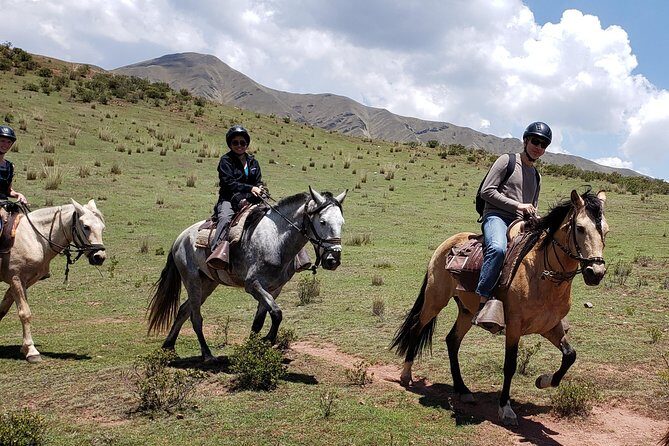
This is the signature part. You ride from Vieja Estancia Ranch, and the day’s rhythm changes from walking and driving to motion on Peruvian horses.
How they keep it safe and beginner-friendly
The tour includes saddle setup and safety helmets. You’ll also have a muleteer (an on-the-ground horse handler) whose job is to care for the horses while you ride. That matters. It means you’re not trying to multitask—just hold the reins and enjoy the route.
From what guests consistently mention, staff also match horses to the rider’s experience and confidence. If you’re a first-timer, that’s a huge deal. You want a steady horse, not a thrill-seeker.
How long is the ride, really?
Plan on about an hour of riding, sometimes closer to 1.5 hours depending on how the day flows. The rest of the time is split between transportation and the site visits.
That’s not a problem if you go in with the right expectations. It’s actually a smart approach. You get enough riding time to feel the escape from the city, without turning the day into a full-day endurance event at altitude.
What the ride feels like
The riding routes are scenic and varied. You might ride through open pasture areas and pass through landscapes that feel uniquely rural around Cusco, with staff guiding the experience at a pace that keeps beginners comfortable.
Also, you may notice that the horses can move with a smoother, comfortable gait—so even if you’re not used to riding, you’re not stuck in an uncomfortable bounce the whole time.
One more practical reminder: don’t wear jewelry or valuables during the ride. Put on what you need, keep it simple, and let the scenery be the souvenir.
Stop 4: Q’enqo and ending on a spiritual note
The final ruins stop is Q’enqo. By the time you reach this one, you’ve already seen multiple Inca sites and you’ve had the contrast of the ranch ride. That combo changes how you experience the ruins. They start to feel like part of a system rather than separate landmarks.
Your guide should explain the site in terms of Inca history and religious custom, so you’re not just looking at structures. You’re understanding the why behind where the Incas built and dedicated these places.
As with earlier stops, horse access inside the archaeological areas isn’t part of the plan. So your connection to Q’enqo is pedestrian and interpretive, not horseback.
Transport, timing, and group size: why it matters at altitude
The tour runs about 4 hours. That’s the sweet spot for a half-day in Cusco when your energy is still recalibrating to altitude.
You’ll be in a private car for transfers. Pickup and drop-off from your hotel area to the ranch and back is included, so you don’t need to arrange taxis or guess routes.
With a maximum of 15 travelers, you also avoid that “big tour” feeling where the guide can’t answer individual questions. It’s small enough that you can ask follow-ups, especially since the guides in this operation tend to be able to explain things clearly even if your questions come out messy.
If you’re sensitive to long days, this format helps you avoid stacking too many walking-heavy activities in a single itinerary.
Tickets, entrance fees, and the Cusco Touristic Ticket reality
Here’s the part you should plan for early: the Cusco Touristic Ticket is not included.
Also, archaeological site entrances are managed by the Peruvian government, and they’re paid directly by tourists. One of the explanations provided by the operator notes these fees are around 20 USD, paid on your side.
So when you compare prices online, don’t compare “$95 all-in” to other tours unless you know what’s included on the ticket side. This tour is strong on the ride + guide + transport bundle, while the site entrance and ticket costs are treated separately.
What to wear (and what to skip) so the ride is smooth
You’ll be much happier if you show up prepared for both walking and riding.
Do wear:
- Long pants (jeans are ideal)
- Closed shoes with rubber soles or walking shoes
- A rain jacket if rain is in the forecast
Skip:
- Jewelry or valuables during the ride
This isn’t fussiness. It’s the difference between “I enjoyed the experience” and “I’m thinking about how my feet feel the whole time.”
Also bring basic sun protection. Even when clouds look friendly, Cusco altitude can still surprise you.
Who this tour suits best (and who should look elsewhere)
This is a great fit if you:
- Want horseback plus ruins in one compact day
- Are a beginner or only moderately confident rider
- Prefer small groups and a guided explanation style
- Like the idea of seeing multiple nearby Inca sites without planning your own transport
It’s less ideal if you:
- Want to spend most of the day on horseback (this is roughly an hour of riding)
- Need fully “all-in” pricing with no extra tickets or fees
- Are looking for a long, slow archaeology trip with lots of downtime at each ruin
Value check: what you get for $95
Here’s the value math that tends to help people decide.
Included:
- Professional guide
- Saddle + safety helmets
- Muleteer support
- Water (mineral or natural)
- Private car transport
- Hotel pickup and drop-off
- Visits to major nearby Inca sites
- A ranch horseback ride in the Cusco area
Not included:
- Cusco Touristic Ticket
- Archaeological site entrance fees (paid directly)
- Any personal costs like extra snacks, souvenirs, or additional drinks
If you already plan to pay entry fees anyway, $95 can be a fair price for the ride + guide + transport package. If you’re trying to keep every single cost inside one number, you’ll want to add the missing ticket pieces to your budget before booking.
Guides and the human factor
One reason people rate this tour so high is the guide’s communication style. Names you may run into include Benni/Benny and Hogler, with others like Jenny mentioned as well. The common thread: clear explanations of Inca history, quick answers to questions, and a pace that works for both beginner and more confident riders.
If you like learning as you walk, this is the right structure. If you prefer silent sightseeing, you might find yourself talking more than planned.
Should you book this horseback ride to Sacsayhuaman, Q’enqo, Puka Pucara, and Tambomachay?
I’d book it if you want a half-day that mixes action and context, without turning into a logistics headache. The horseback ride is the escape moment, and the guided stops are the “why this matters” portion that makes the ruins feel connected.
I’d pause and re-check the plan if you’re trying to avoid extra ticket costs or if you expected the horseback time to be much longer than an hour. Once you’re clear on that, it’s a strong Cusco choice: safe gear, a small group, hotel transport, and four Inca sites in one practical outing.
FAQ
How long is the Horseback Riding Plus tour in Cusco?
The tour is approximately 4 hours.
Is hotel pickup and drop-off included?
Yes. Round-trip transport from your hotel is included via private car.
What horseback riding gear is provided?
Saddles and safety helmets are included.
Do I need to have riding experience?
No. The tour is suitable for participants with little or no experience.
What is the minimum age?
The minimum age is 6 years.
Is there a weight limit?
Yes. The maximum weight is 200 pounds or 90 kilos.
Is the Cusco Touristic Ticket included?
No. The Cusco Touristic Ticket is not included.
Are the archaeological entrance fees included?
No. Archaeological sites are managed by the Peruvian government, and entrance fees are paid directly by tourists.
What should I wear for the ride?
Wear long pants (preferably jeans), closed shoes with rubber soles or walking shoes, and bring a rain jacket if rain is likely.
What if the weather is poor?
This activity requires good weather. If it’s canceled due to poor weather, you’ll be offered a different date or a full refund.
Can I cancel for a full refund?
Yes. You can cancel up to 24 hours in advance for a full refund. If you cancel less than 24 hours before the start time, the amount paid is not refunded.