REVIEW · CUSCO
From Cusco: Q’eswachaka Bridge & 4 Lagoons Full-Day Tour
Book on GetYourGuide →Operated by MPTC GETS · Bookable on GetYourGuide
That rope bridge swings. And you walk across it. This full-day tour from Cusco takes you to Q’eswachaka Bridge, the last Inca bridge, then continues to four lagoon viewpoints for up-close nature time and big Andean scenery.
I love the timing here: an early start means you’re not arriving when the day is already crowded. I also like that the plan includes both the adrenaline part (crossing the bridge) and the calmer part (lagoons like Pampamarca, Asnacqoccha, Acopia, and Pomacanchi with native birds). One consideration: it’s a long day with a steep descent to the bridge walkway, so it’s not a fit if you have mobility limits or you’re expecting an easy stroll.
In This Review
- Key points at a glance
- Early Pickup From Cusco: When Your Day Really Starts
- Breakfast, Combapata Stops, and the Drive With Real Meaning
- Entering Q’eswachaka: The Last Inca Rope Bridge Over the Apurímac
- The walk itself: adrenaline, carefully managed
- Safety and how it changes your mindset
- After the Bridge: Combapata Lunch and a Reset
- The Four Lagoons: Pampamarca, Asnacqoccha, Acopia, and Pomacanchi
- Birdlife you can actually see
- Timing matters: warm afternoon light
- Getting Back to Cusco: When the Day Ends Around 4:30–5:00 PM
- Guide + Transport: Why This Tour Feels Smooth
- Price and Value: Why $49 Can Make Sense
- What to Pack for the Bridge Day (And What to Skip)
- Who Should Book This Tour—and Who Should Skip It
- Should You Book the Q’eswachaka Bridge & 4 Lagoons Full-Day Tour?
- FAQ
- What time is pickup from my hotel in Cusco?
- How long is the full-day tour?
- Is the Q’eswachaka Bridge entrance fee included?
- What languages does the guide speak?
- What should I bring?
- Is the tour suitable for everyone?
Key points at a glance
- The last Inca rope bridge: a grass-rope suspension bridge over the Apurímac River canyon
- Early timing from Cusco: pickup starts around 4:30–5:00 AM for better light and calmer access
- Four named lagoons: Pampamarca, Asnacqoccha, Acopia, Pomacanchi, set among golden hills
- Birdlife along the water: flamingos and other native birds often move through the lagoon edges
- Safety basics included: a first aid kit and oxygen balloon are on hand
Early Pickup From Cusco: When Your Day Really Starts
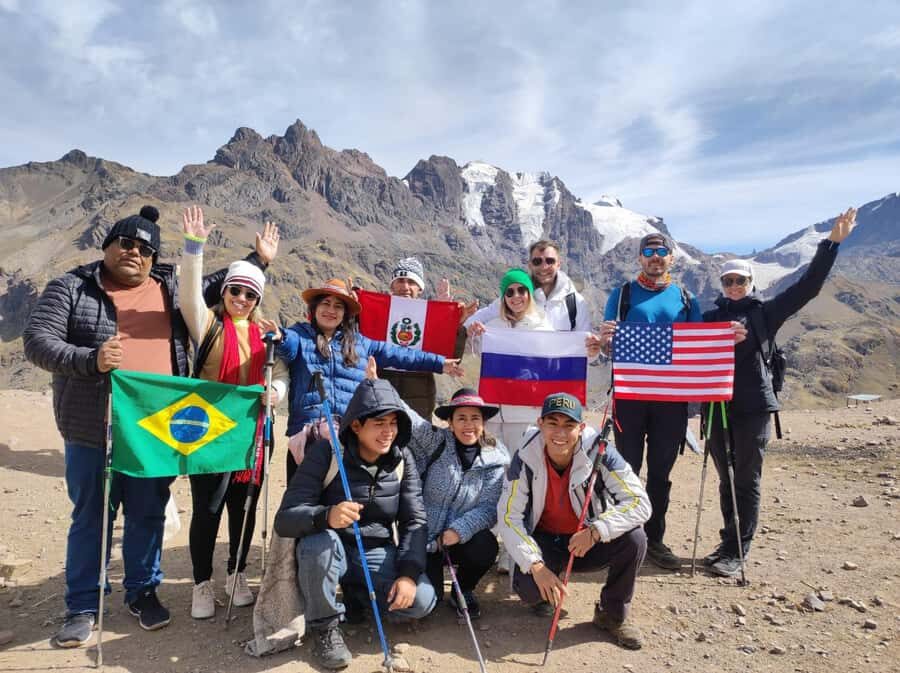
This tour runs about 13 hours, and it begins before sunrise. Pickup from your Cusco hotel is usually scheduled between 4:30 AM and 5:00 AM, and you head out in a private van. It’s early, yes. But the upside is practical: you get more comfortable driving conditions, better light for photos, and a better chance to experience Q’eswachaka without feeling like you’re in the middle of a late-morning rush.
Also, an early start matters because the bridge walk is only part of the day. The timing you get helps you fit in the drive, the breakfast stop, the bridge crossing, lunch, and the lagoon viewpoints without feeling like the day is constantly slipping forward.
If you’re sensitive to long travel days, plan ahead: bring water, wear layers, and treat breakfast and snacks like part of the tour, not something to squeeze in later.
A few more Cusco tours and experiences worth a look

Breakfast, Combapata Stops, and the Drive With Real Meaning
After pickup, you drive roughly two hours toward Combapata, with a break there for a continental breakfast. You’ll have a quick chance to fuel up before the day turns into a mix of walking, photo stops, and another stretch of road.
Then the van continues for about one more hour toward the Yanaoca area (one of the eight districts in the Canas de Cusco province). Along the route, you’ll get views of the sacred Salcca River, which is tied to Inca spiritual geography. It’s one of those details that makes the drive feel less like transport and more like context—you’re not just moving between stops; you’re traveling through places the Incas marked for meaning.
You’ll also want to keep your camera handy. This isn’t a “look once from the window” kind of route. The views along the river and through the valley are part of why the day feels like more than a single attraction.
Entering Q’eswachaka: The Last Inca Rope Bridge Over the Apurímac
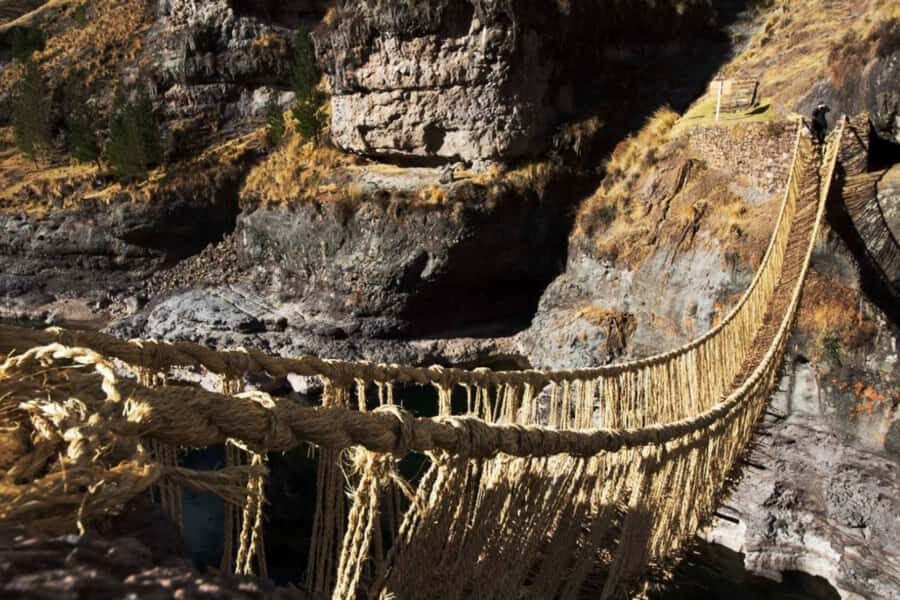
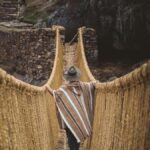
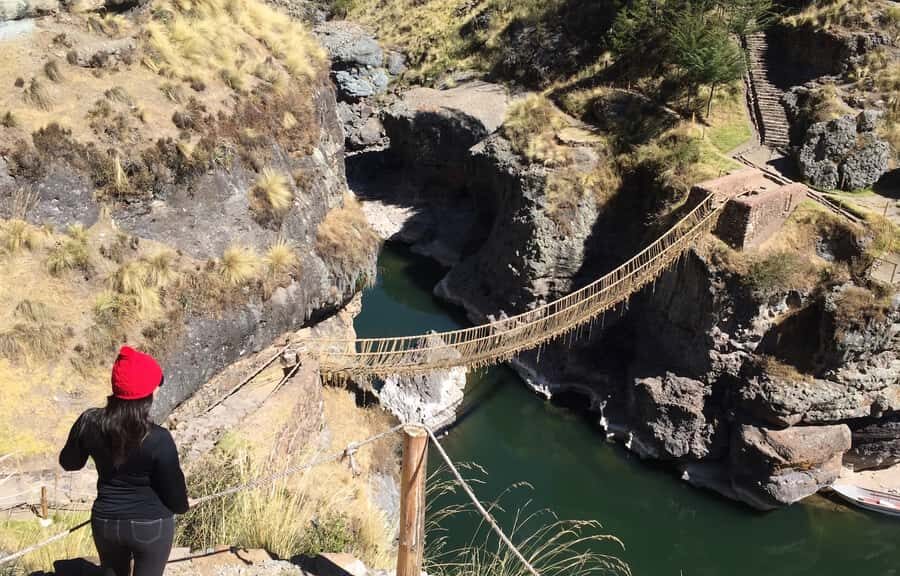
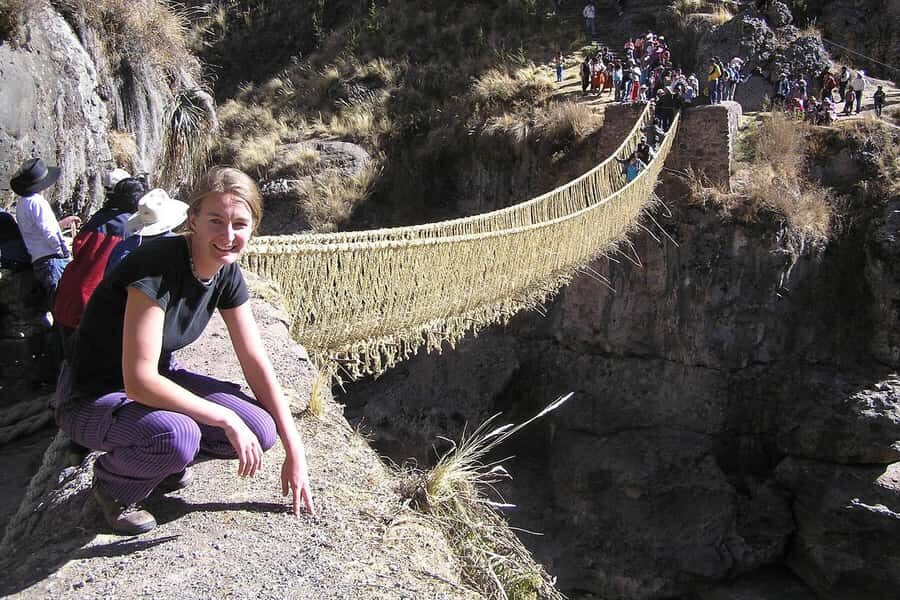
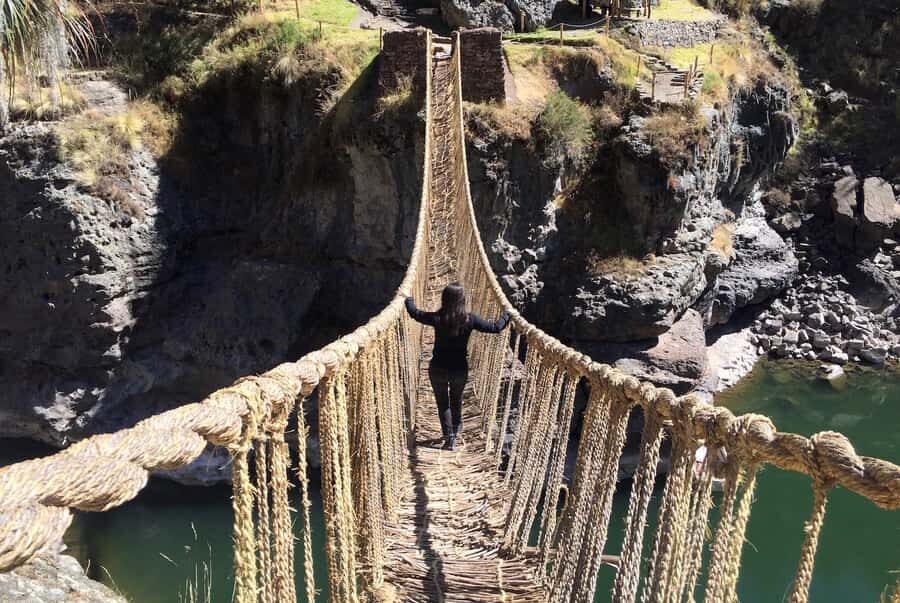
Now for the headline: Q’eswachaka Bridge. It crosses between steep rocky cliffs and spans the Apurímac River. This is an old suspension bridge built in a traditional way—one of the last remaining Inca rope bridges—constructed from ropes made of grass.
When you arrive, you don’t just walk straight onto it. You’ll descend a steep path to a viewpoint first, which gives you a chance to take photos and get your bearings before crossing. That viewpoint time is useful because the canyon is huge and deep. You’ll cross a swinging bridge while looking out over open air, and it helps to know what you’re facing before you step in.
The walk itself: adrenaline, carefully managed
Crossing Q’eswachaka is where the tour earns its reputation. The bridge has a noticeable swing, and you’re walking over a canyon that stretches many meters below. You’ll feel it in your legs and your balance. Try not to focus on the drop; focus on the rhythm of the planks, your footing, and what your guide is telling you.
If you’re the type who likes to watch how things work, there’s another layer here: this bridge isn’t modern steel. It’s traditional rope engineering in a place where the canyon does not forgive sloppy steps. It’s old-world construction you can feel under your feet.
Safety and how it changes your mindset
This tour includes a first aid kit and oxygen balloon, which tells you the operator is thinking about safety for altitude and physical exertion. No, it won’t make the bridge feel less intimidating. But it can make you feel more comfortable that you’re not on your own out there.
And if you want to level up your experience, there may also be an optional boat ride under the bridge through the canyon, described as informative and beautiful. That’s a separate choice—worth asking about when you’re on site.


After the Bridge: Combapata Lunch and a Reset
Once the bridge crossing is done, you drive to Combapata for a quick lunch break. This is your reset window: take a moment to cool down, refill water, and get something solid in your stomach before the lagoon portion of the day.
One practical note: food quality can vary. In particular, one past review mentioned that meals were cold and the restaurant didn’t keep the buffet refreshed well. You can’t control that, but you can control your expectations. If you’re picky about hot food, consider bringing a small snack you like so you’re not stuck waiting for the meal to match your standards.
Still, lunch here makes sense. It’s not a rushed snack between attractions; it’s a real break before the next long scenic stretch and lookout time.
The Four Lagoons: Pampamarca, Asnacqoccha, Acopia, and Pomacanchi
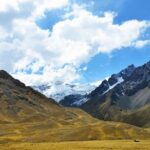
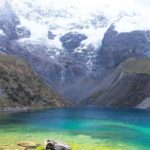
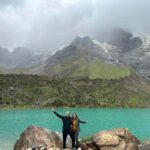
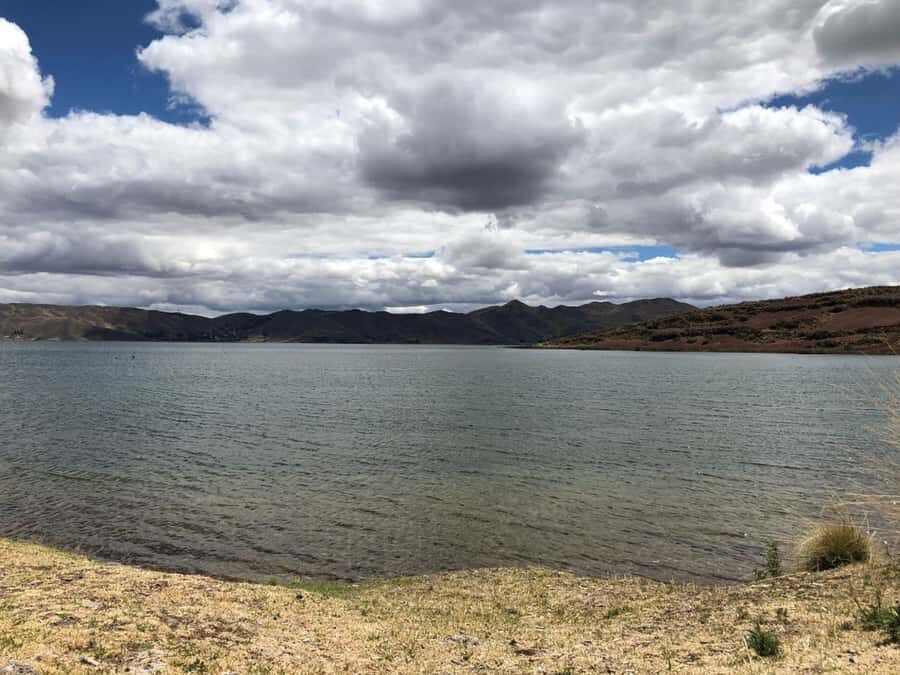
After lunch, you head into the lagoon area—often the most peaceful part of the tour. The four lagoons are known as Pampamarca, Asnacqoccha, Acopia, and Pomacanchi, and the key thing is how they sit in the valley: stretches of water tucked among hills that can look gold-green in the afternoon light.
You’ll stop at lagoon viewpoints and have time to admire the water and take photos. The atmosphere tends to shift here. The bridge was movement and fear-management. The lagoons are slower, more observational: birds, reflections, and open air.
Birdlife you can actually see
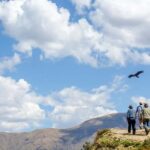
You’re not just looking at scenery from far away. One of the highlights is native birdlife around the lagoons, especially flamingos, along with other birds that feed and fly around the edges. If you like wildlife watching, pack patience. Birds don’t follow schedules, but lagoons are where you’ll actually notice them.
Timing matters: warm afternoon light
The tour finishes the lagoon portion in the afternoon, when the lagoons can look especially dramatic. That late light is why the whole day starts early. If you arrive after the best viewing time, the lagoons can still be pretty—but the glow isn’t the same.
Getting Back to Cusco: When the Day Ends Around 4:30–5:00 PM
You return to Cusco between about 4:30 PM and 5:00 PM and get dropped at your hotel. That end time is long enough that you’ll feel the day, but short enough that you’ll still have some energy left to eat dinner or do something simple around town.
Because the day is so full, I recommend you schedule nothing else major for the evening. Think of this as your big outing, not your side quest.
Guide + Transport: Why This Tour Feels Smooth
The tour includes a bilingual guide (English and Spanish) and hotel pickup and drop-off. That matters more than you’d think on a day like this. The bridge requires clear instructions, and the lagoon stops benefit from context about what you’re seeing.
One thing that stands out from good experiences here is guide help with photos and timing. In at least one case, the guide Christian was noted for being a great photographer while you’re on the bridge, plus for starting the tour early so guests get to see the bridge first after breakfast. Even if you’re not working with him, the pattern is clear: the best version of this tour is the one where your guide manages pacing and gives you photo-friendly stops.
Transport is also part of the value. You’re not self-navigating or doing multiple transfers on your own. The van takes you from Cusco to the Canas area and back with a breakfast and lunch break built in, plus the tour includes transport for the stops.
One small comfort detail: you’ll still feel the day’s duration, but you won’t be stuck figuring out routes at altitude.
Price and Value: Why $49 Can Make Sense
At $49 per person, this tour is priced like a budget-friendly day trip, and it can be a solid deal if you care about two things at once: the bridge crossing and the lagoon circuit.
You’re getting:
- Hotel pickup and drop-off
- A bilingual guide
- Continental breakfast and lunch
- Transport for the drive and viewpoints
- A first aid kit and oxygen balloon
- The chance to walk the last Inca rope bridge plus lagoon viewing
The one cost that can surprise you is the Q’eswachaka Bridge entrance fee, listed as 20 soles, which isn’t included. If you add that, your all-in cost is higher than the sticker price—but still reasonable considering the guided bridge crossing and the full-day transport.
For the value calculation, consider this: you’re not paying for just a photo stop. You’re paying for a guided itinerary that includes multiple locations and the physical experience of the bridge.
What to Pack for the Bridge Day (And What to Skip)
You’ll have a better time if you pack like the day is physical. Bring:
- Comfortable shoes (traction matters on a swinging bridge)
- Sunglasses and a sun hat
- Sunscreen
- Water
- Rain gear (weather in the Andes can change fast)
- A small daypack
- Cash (useful for the bridge entrance fee)
You’ll also want passport or an ID card on hand.
Two more practical notes:
- Don’t bring large luggage. The tour says luggage/large bags aren’t allowed.
- Keep your essentials easy to access. You’ll move from van to walking path to viewpoint to bridge, so don’t make yourself dig for items.
Who Should Book This Tour—and Who Should Skip It
This is best for you if:
- You want a signature Andean experience: walking the last Inca rope bridge
- You like a mix of adrenaline and nature watching
- You’re comfortable with a long day and early pickup
- You want guide support for crossing instructions and photo timing
It’s not the right fit if:
- You’re pregnant
- You have mobility impairments
- You know you’re not comfortable with a steep descent and a swinging bridge walkway
- You’re looking for something gentle and stroller-friendly
If you fall somewhere in the middle—like you’re nervous but determined—go in with eyes open. The bridge is the main event. The lagoons are great, but the walk is where your real memory will live.
Should You Book the Q’eswachaka Bridge & 4 Lagoons Full-Day Tour?
If you want one full-day trip that combines a rare historic walk with real Andean wildlife time, this is worth booking. The early start is a big part of the appeal, and the included breakfast, lunch, and bilingual guide make it easier to focus on the experience instead of logistics.
I’d only hesitate if your priority is comfort over effort. The bridge approach involves steep walking and the crossing is genuinely intimidating for some people. If that’s you, you might prefer a different style of tour with more time at viewpoints and less on-foot risk.
If you’re game for the bridge—and you want the lagoons afterward—this is the kind of day that turns into a story you’ll keep telling.
FAQ
What time is pickup from my hotel in Cusco?
Pickup is scheduled between 4:30 AM and 5:00 AM.
How long is the full-day tour?
The tour runs for about 750 minutes (around 13 hours).
Is the Q’eswachaka Bridge entrance fee included?
No. Entrance to the bridge costs 20 soles and isn’t included.
What languages does the guide speak?
The guide is bilingual in English and Spanish.
What should I bring?
Bring a passport or ID, comfortable shoes, sunglasses, sun hat, sunscreen, water, rain gear, cash, and a small daypack.
Is the tour suitable for everyone?
It’s not suitable for pregnant women or people with mobility impairments.