REVIEW · CUSCO
Cusco: Alpaca and Llama Farm Tour w/ Transfer & Weaving Demo
Book on GetYourGuide →Operated by Andina Expeditions · Bookable on GetYourGuide
Alpacas beat Cusco altitude every time. In about 150 minutes, this Cusco-region farm tour puts you close to alpacas, llamas, and their wild cousins, then ties it to Inca-era camelid history through a real weaving demo.
I like that it is easy logistics: a hotel pickup and a short ride (about 20 minutes from the historic center) means you’re not burning a half day just to see animals. I also love meeting vicuñas, often called the gold of the Andes, and watching traditional weaving skills put to work. One possible drawback: the end shop is big, and a couple of reviews flagged that prices can feel high, with some visitors feeling a bit followed while browsing.
In This Review
- Key points before you go
- From Cusco bustle to a farm visit that actually feels close to town
- Hotel pickup and the Manos de la Comunidad guided tour
- The camelid lineup: alpacas, llamas, vicuñas, and huanacos
- Feeding, photos, and why conservation context matters
- Weaving demo: turning fiber into culture, one step at a time
- The bonus animal museum moment (and why it’s worth staying for)
- Price and value: why $34 can feel fair (or not)
- Guides, group energy, and accessibility (what you should plan around)
- Who should book this alpaca and llama farm tour
- Should you book it? My decision rule
- FAQ
- How long is the Cusco alpaca and llama farm tour?
- Where does the tour start?
- What’s included in the tour price?
- Is the weaving demo part of the tour?
- What animals will I see?
- What languages are available for the guide?
- Is the tour wheelchair accessible?
- Does it include a separate entrance to avoid lines?
- Can I cancel for free, and can I pay later?
Key points before you go
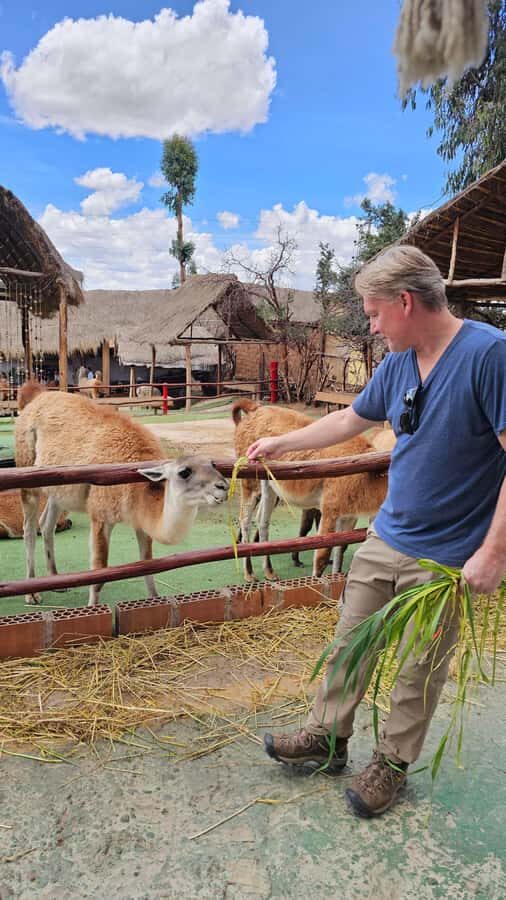
- Up-close camelid encounters: see alpacas and llamas, plus vicuñas and huanacos in the same outing
- Traditional weaving demo: watch how local people turn fiber into textiles, with real-world skills and context
- Short and practical timing: the tour is built around a 150-minute block with hotel pickup and return
- Photo help from your guide: multiple guides are praised for answering questions and assisting with photos
- Extra animal stop: a bonus small museum section has shown up in feedback, with rescued animals like condors
- Shop reality check: you may feel pressure to buy, and some prices can be noticeably higher than local market comparisons
From Cusco bustle to a farm visit that actually feels close to town
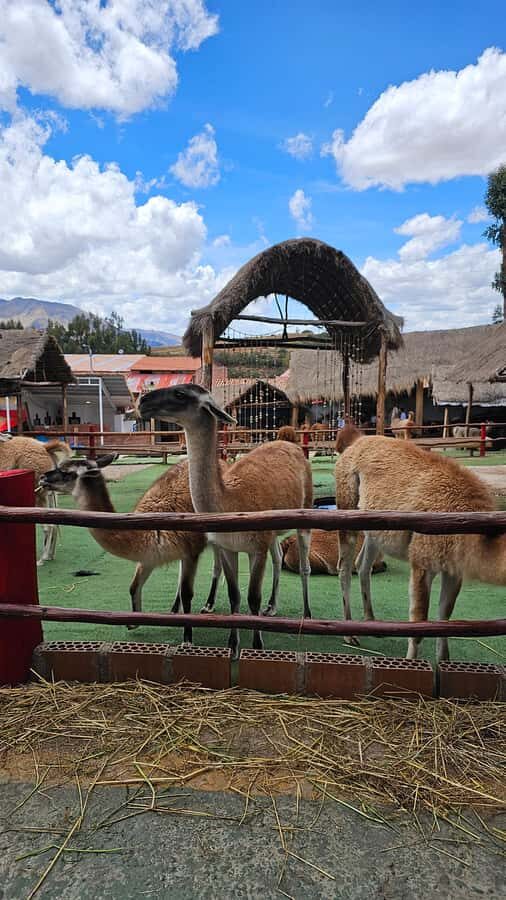
Cusco is loud, busy, and full of history you can’t stop looking at. This is the rare day trip that gives you a different rhythm without sending you far away: you’re picked up from your hotel and driven to the farm, which is only about 20 minutes from the historic center. That matters if you want a meaningful outing but also want to protect your energy for acclimation and city time.
I also like the way the experience is designed to explain the “why,” not just the “what.” You start with camelids and domestication, then move into the animals themselves, and finally connect the fiber to traditional weaving. Even if you’re not a hardcore textile person, the flow makes it easier to understand why alpaca wool and llama fiber have been important in the Andes for centuries.
A few more Cusco tours and experiences worth a look

Hotel pickup and the Manos de la Comunidad guided tour
The itinerary is built around a single guided block, with the farm visit itself anchored by an 80-minute tour at Manos de la Comunidad. In practical terms, that gives you a structured way to see a lot in a short window, instead of wandering through a farm museum on your own.
The “skip the line” detail is more than a gimmick. With a separate entrance, you typically lose less time when you arrive, which helps if your schedule is tight. Your guide also handles the “translation layer,” running the tour in English or Spanish, so you’re not stuck guessing what you’re looking at.
One thing to keep in mind: a few people felt the pace could be a little rushed and that the on-site time didn’t always match the listed duration. That doesn’t ruin the experience, but if you’re hoping to spend long, slow minutes with each animal, you’ll want to keep your expectations aligned with a compact tour format.
The camelid lineup: alpacas, llamas, vicuñas, and huanacos
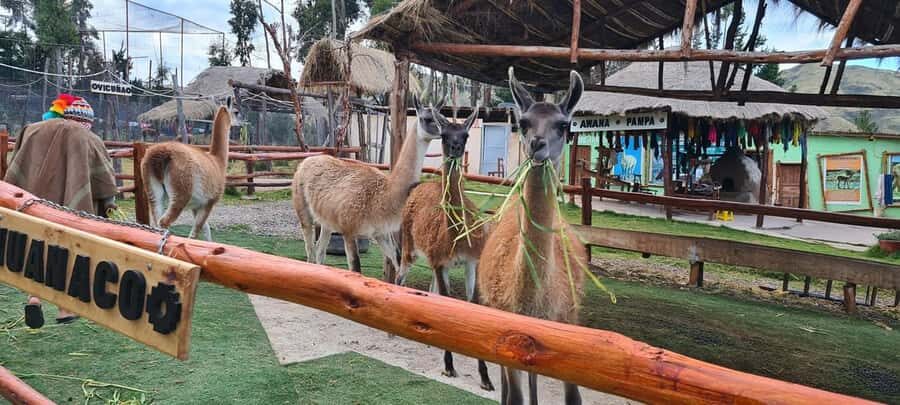
This is the core reason to book. You get a guided look at different camelid species that are deeply tied to Andean life. The tour focuses on the domestication story—how South American camelids were developed into the animals people raise today—and then zooms in on what’s different about each group.
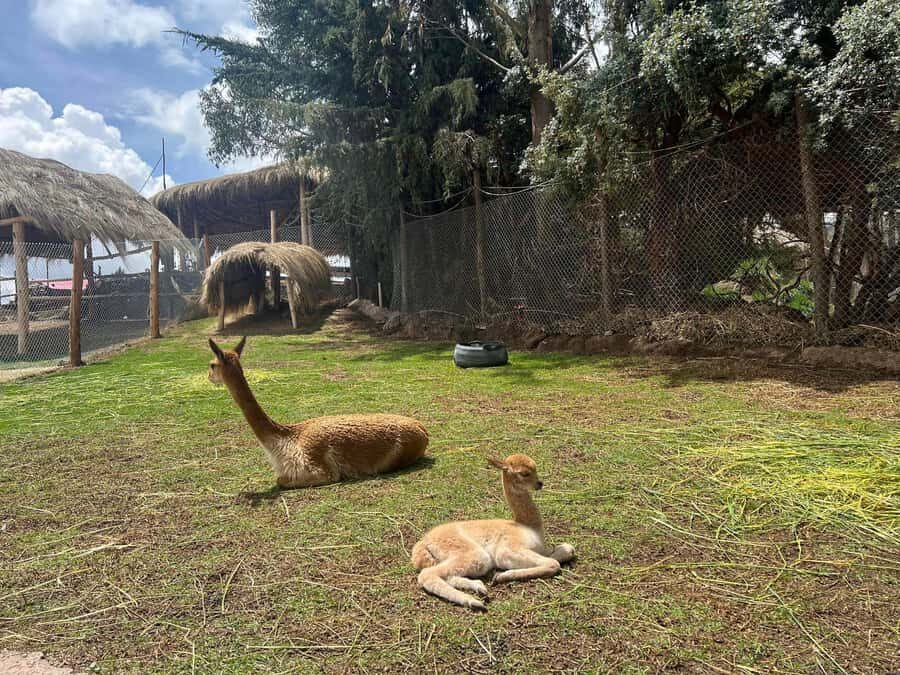
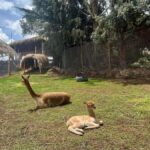
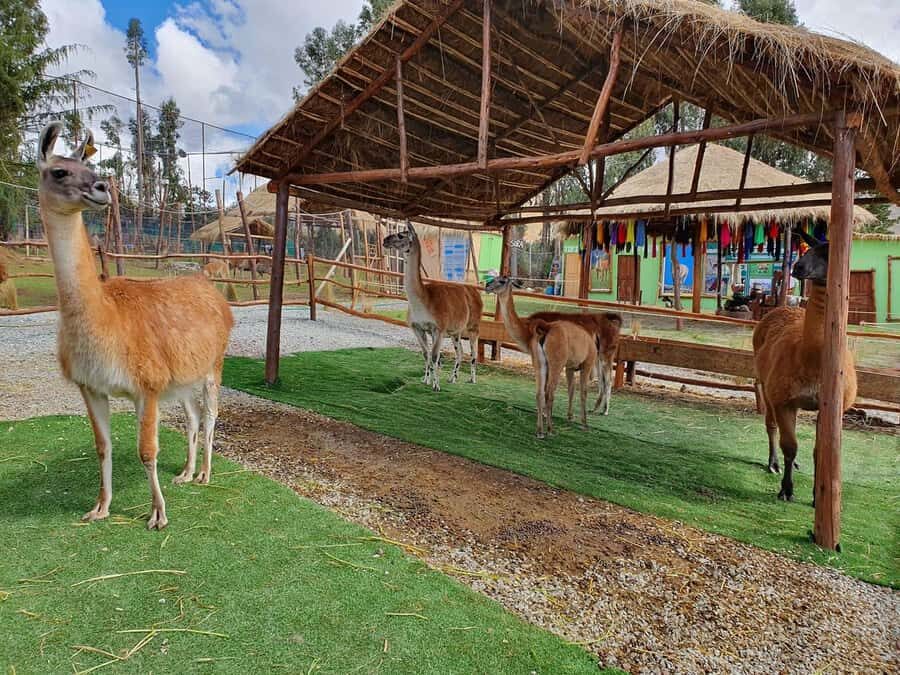
You’ll see two varieties of alpacas and llamas and learn how they relate to ancestors found in the Andes. The animal lineup doesn’t stop at the common farm stars. You can also meet vicuñas, often described as the gold of the Andes, and huanacos, another wild relative. That combination is useful because it gives you a fuller picture of the animal family, not just a single “alpaca farm” moment.
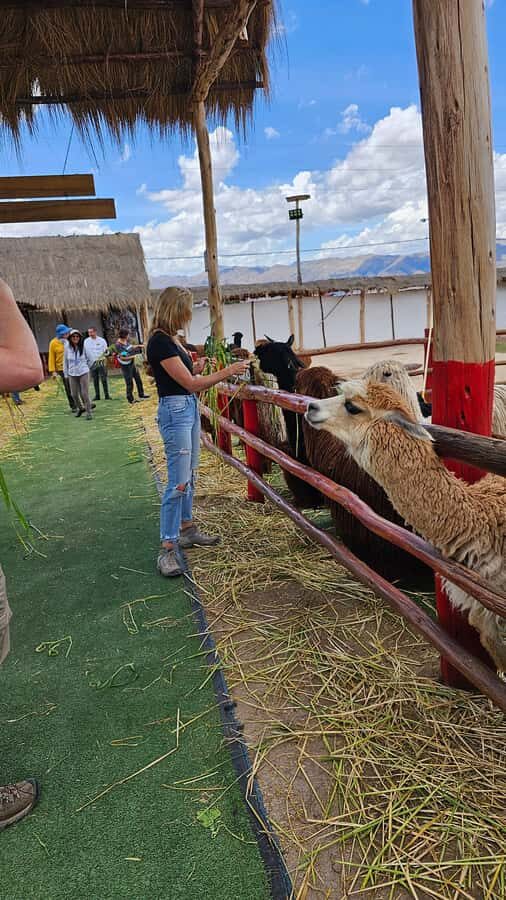
From the feedback I’ve seen, the guides do more than point and name. People praised guides for explaining animal behavior and for helping with photos, which is big when you’re standing in close quarters. Some reviews also mention that feeding and petting were part of the interaction. If that’s a priority for you, arrive ready to follow your guide’s cues, stay patient, and keep your hands gentle.
Feeding, photos, and why conservation context matters
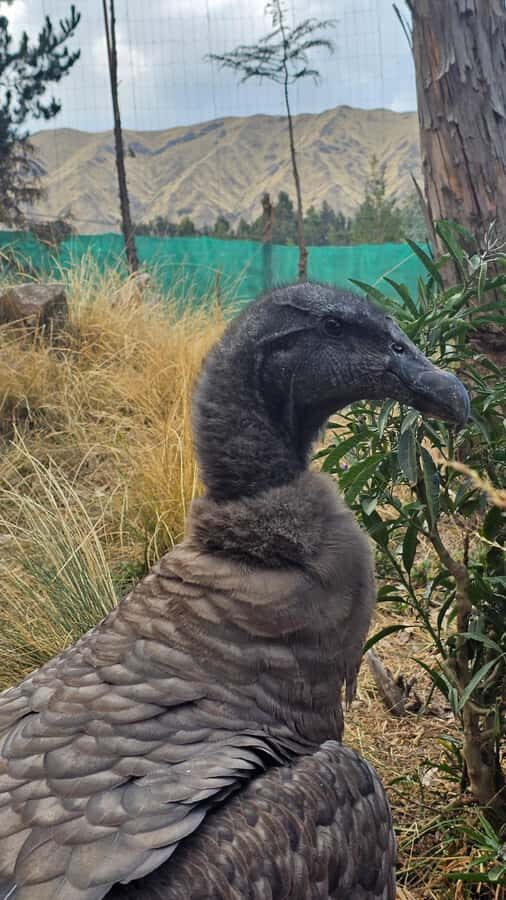
A farm tour can be fun and fluffy, or it can feel like a staged photo stop. The conservation angle shows up clearly in the feedback here. Several reviews mention that the animals look healthy and that there’s a rescue/conservation side to the story. That connection helps you look past cuteness and understand that these animals are part of a living system, not just props for pictures.
Guides are repeatedly singled out for how they handle the experience. Names that come up include Marileth, Marlith, Holger, Olga, Marley, and Olger. The common thread: they answer questions, manage photo moments, and guide you through what you’re seeing at a pace that doesn’t feel like you’re being hurried out the door.
You’ll likely notice a mix of “faces” in the barn area—calm ones, curious ones, and a few who act like they’re investigating you. If you’re planning your photos, I’d keep your camera ready early. The most interesting behavior tends to happen when you first arrive and the animals are fresh and not yet distracted.
Weaving demo: turning fiber into culture, one step at a time
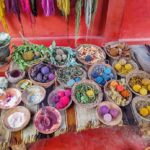
After the animal time, the tour shifts to textiles. This is where the experience becomes more than a meet-and-greet with woolly animals. You watch a weaving demonstration and learn about the skills involved in producing textiles—exactly the kind of craft that connects modern Peru to the Andes’ long history of using camelid fiber.
What I like about including weaving is that it gives you a reason to pay attention to details like fiber quality and processing. Alpaca and llama wool aren’t just “soft.” They’re resources, and the Andes developed practical know-how for turning those fibers into clothing and trade goods.
Some reviews specifically mention dyeing as part of the demo. Even if dye work isn’t emphasized in your particular session, weaving itself is a hands-on, step-by-step craft. Your guide should connect what you’re seeing to the larger story: camelids provide the fiber; weaving turns it into usable textiles; and the craft becomes a cultural marker.
If you’re shopping later, this section helps you spot what you’re buying. You may even get tips on recognizing authentic alpaca-based fabrics versus cheaper mixes, which is a big deal in tourist zones.
A few more Cusco tours and experiences worth a look
The bonus animal museum moment (and why it’s worth staying for)
A few reviews mention an extra stop: a small museum-style area with additional animals, including rescued condors, plus other animals like deer and guinea pigs. That’s not something I’d bet on as a guarantee for every single tour run, but when it appears, it adds an extra layer to the conservation theme and makes the farm feel like more than a single barn visit.
If you’re the type who enjoys learning patterns—how different species live in human-managed care—this bonus can feel like a satisfying wrap-up before the drive back to Cusco.
Also, keep your expectations realistic about pacing. If you get pulled toward the shop immediately, you may lose the chance to slow down in the animal areas. Build a buffer into your head: this is a “short-but-full” tour.
Price and value: why $34 can feel fair (or not)
At $34 per person, this tour lands in the budget-friendly range for a Cusco experience that includes hotel pickup and drop-off, a guided farm visit, a weaving demo, and bottled water. You’re also getting an English/Spanish live guide and an operation that’s close enough to avoid eating your day in transit.
Where the value gets real is the combination: animals plus craft plus explanation. Many low-cost activities in Cusco are either a quick photo stop or a single museum hour. Here, you get multiple learning moments in roughly the same time block.
That said, the price conversation doesn’t end at the ticket. The end shop can change your total spend. Some reviews describe the gift shop as overpriced and note you may feel watched while deciding whether to buy. I can’t tell you what’s fair without seeing receipts, but I can tell you this: if textiles are your goal, go in with a plan.
A good approach:
- Think of the shop as optional, not automatic
- If you want a specific item, compare prices quickly with what you see in Cusco later
- Don’t let emotions decide for you—buy only if the quality matches what you learned in the weaving demo
Guides, group energy, and accessibility (what you should plan around)
This tour is operated by Andina Expeditions, and it runs in English and Spanish with a live guide. Multiple reviews praise guide support like helping take photos and answering questions. In a short tour window, that kind of attention matters more than you’d expect.
Accessibility is also addressed: it’s described as wheelchair accessible. That’s useful to know upfront if you need step-free movement or extra space while touring the farm.
Group dynamics aren’t specified, so I’ll keep it general. If you prefer calm, slower animal time, aim for the earliest start if you have a choice. If you’re okay with a structured schedule, this should feel like a pleasant break from Cusco’s constant movement.
Who should book this alpaca and llama farm tour
Book it if you want:
- A short, practical outing with hotel pickup and return
- Real animal encounters that include more than just one species
- A weaving demo that connects fiber to culture instead of just selling souvenirs
- A good “first-day or acclimation-friendly” style activity (it’s gentle, paced, and not a long hike)
You might skip it if:
- You need lots of unstructured time to roam at your own pace
- You hate shop stops or any sales-pressure feeling at the end
- You’re mainly interested in big Inca sites, not animal-and-craft learning
Should you book it? My decision rule
If you’re in Cusco and you want one affordable activity that teaches you something real while still feeling fun, this is a strong pick. The best part is the pairing: camelid education plus weaving gives you context for why alpaca and llama fiber matters.
I’d book if you’re excited to see vicuñas and huanacos, watch fiber craft in action, and you’re okay keeping your time tight. I’d reconsider if you’re sensitive to retail browsing pressure or you dislike tours that run on a schedule. Either way, go in knowing the day is compact, and you’ll leave with the right expectations.
FAQ
How long is the Cusco alpaca and llama farm tour?
The tour duration is listed as 150 minutes.
Where does the tour start?
You’re picked up from your hotel in Cusco.
What’s included in the tour price?
Included are hotel pickup and drop-off, a guide, the farm visit, a weaving demonstration, and water.
Is the weaving demo part of the tour?
Yes, a weaving demonstration is included.
What animals will I see?
You’ll see alpacas and llamas, and the experience also mentions vicuñas (gold of the Andes) and huanacos.
What languages are available for the guide?
The tour is offered in English and Spanish.
Is the tour wheelchair accessible?
Yes, it is described as wheelchair accessible.
Does it include a separate entrance to avoid lines?
It mentions skip-the-line access through a separate entrance.
Can I cancel for free, and can I pay later?
The activity offers free cancellation up to 24 hours in advance for a full refund, and it also offers a reserve now & pay later option.