REVIEW · URUBAMBA
Guided tour of Cusco and its 4 ruins
Book on GetYourGuide →Operated by Exploor Trip E.R.L · Bookable on GetYourGuide
Cusco can feel like a giant open-air classroom. This guided loop keeps you moving through the city’s most important Inca-era sites, from the Temple of the Sun at Qoricancha to the major fortress walls of Sacsayhuamán. You also get a structured look at how Inca and Spanish worlds overlap, starting right in the historic center.
What I like most is how the tour connects meaning to stone. You get guided context for Qoricancha, which is famous for the Inca-Spanish fusion you can actually see in the architecture and decoration, including Inca gold elements. I also love the pacing shift from the city to the ruins by minibus—once you’re outside Cusco, the landscapes of ritual and defense make more sense fast.
One drawback to keep in mind: timing can be tight, and on at least one day (Sundays) the visit order may change. That can matter if you have a short window or you care most about visiting the Cathedral of Cusco and Plaza de Armas in a particular order.
In This Review
- Key things to know before you go
- How the Cusco loop really plays out in 6 hours
- Cusco Cathedral at Plaza de Armas: architecture plus the Inca gold story
- Qoricancha, Temple of the Sun: where Inca religion meets Spanish walls
- The minibus shift: a useful reset before the ruins
- Sacsayhuamán fortress: why these walls impress
- Qenqo shrine: a sanctuary with a purpose you can follow
- Puca Pucara (Red Fortress): the defense layer
- Tambomachay, the Inca Bath: why water mattered
- Price and value: $20 covers the guide and transport, not the key entrances
- Timing, visit order, and the one thing you should double-check
- Who should book this tour, and who should skip it
- Should you book this Cusco guided tour?
- FAQ
- How long is the tour?
- What places are included in the visit?
- Does the price include entrance tickets?
- How much are the entrance fees?
- Is transportation included?
- Do I get a live guide?
- What languages are the guide available in?
- Where do they pick you up and drop you off?
- Is there free cancellation?
- Can I reserve without paying right away?
Key things to know before you go
- Qoricancha first: You start with the Temple of the Sun, tied to major Inca religious life.
- Sacsayhuamán with a guide: Expect explanations of why this fortress is seen as the Incas’ greatest architectural work.
- Four ruins in one run: Sacsayhuamán, Qenqo, Puca Pucara, and Tambomachay are grouped efficiently.
- Water worship at Tambomachay: The site is tied directly to how the Incas worshiped water.
- Entrances cost extra: The $20 price covers guide and transport, while several key entrances are separate.
How the Cusco loop really plays out in 6 hours
This is set up as a half-day-style outing with a city start, then a minibus ride out to the ruins. You’ll be picked up at the meeting point and brought into Cusco, with return transfer back near the center at the end. The published duration is 6 hours, but the schedule is also described as a four and a half hour tour once you’re in the core area—so treat the full day length as a best-case window that can flex with timing and site flow.
The route is logically built. First, you get your bearings in the historic center around Plaza de Armas and the Cusco Cathedral. Then you walk to Qoricancha, where Inca religious power gets paired with Spanish-era additions. After that, you switch into minibus mode and tackle the “four ruins” cluster beyond the city.
If you like guided explanation more than just photo stops, you’ll get more out of this format. If you’re the type who wants to linger for long stretches on your own, you may feel the time squeeze—especially because some of the most important moments, like Cathedral and Qoricancha entries, require separate entrance fees and are time-dependent.
You can also read our reviews of more guided tours in Urubamba
Cusco Cathedral at Plaza de Armas: architecture plus the Inca gold story
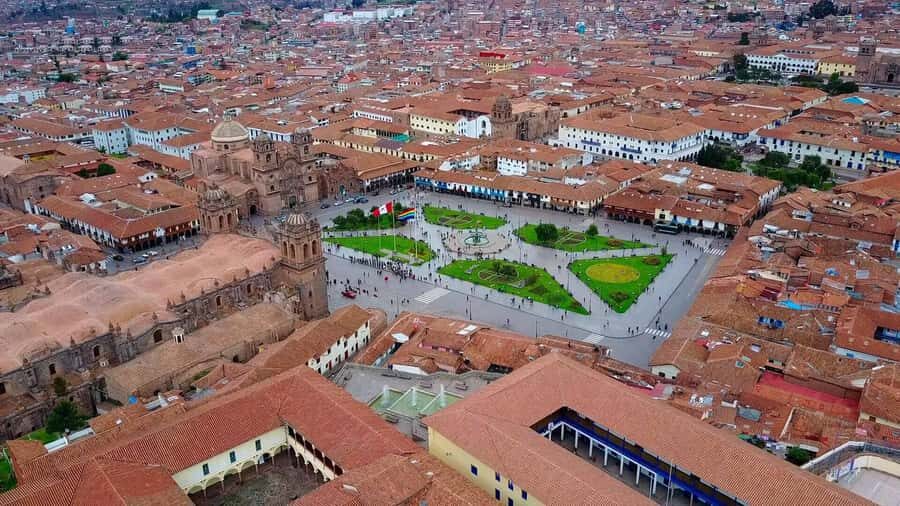
You begin at Plaza de Armas, where the Cusco Cathedral is located. The tour has you enter the Cathedral so you can look past the facade and focus on the architecture and artistic wealth inside.
Here’s the key detail that makes this stop more than a quick landmark: many decorative elements are said to be made with Inca gold. Even if you’ve seen other cathedrals in Peru, this is the part that helps you understand how Spanish rule didn’t erase Inca craft overnight—it layered new religion over older power and materials.
Practical takeaway: treat this as your “anchor stop.” It sets context for the rest of the tour, especially once you reach Qoricancha, where you’ll see the Inca-Spanish fusion again—this time in a temple setting rather than a church.
Qoricancha, Temple of the Sun: where Inca religion meets Spanish walls
Next you walk from the Cathedral area to Qoricancha, also called the Temple of the Sun. The exact date of construction is described as still a mystery, which helps set the mood: this isn’t just an old ruin, it’s a living puzzle of time.
The big payoff here is what you’re told to look for. The tour frames Qoricancha as one of the most important religious centers of the Inca Empire. Then it pushes you to notice the fusion between Inca and Spanish culture. As soon as you enter, the guide’s job is to point out what makes that fusion tangible—how the structure reads differently depending on whether you’re imagining Inca-era worship or Spanish-era changes.
Inca temples in Peru can feel similar at first glance—stone + symbolism—but Qoricancha is special because it’s right in the city fabric and linked to the Sun cult that the Inca treated as central. If you’re curious about how the Incas organized religion through space, Qoricancha is your strongest intro.
Budget note: Qoricancha has an entrance fee separate from the tour price, so plan for that upfront (more on costs below).
The minibus shift: a useful reset before the ruins
After Qoricancha, you head back onto the minibus. There’s about half an hour of travel before you reach Sacsayhuamán.
This matters more than it sounds. Cusco’s center can blur together—streets, churches, viewpoints, souvenir blocks. The vehicle ride creates a clean break between the “city story” and the “ruins story,” so when you stop at Sacsayhuamán, your brain is ready for different architecture, different purpose, and different scale.
If you’re prone to getting bored on group tours, this section is the one you’ll usually tolerate best. You’re not trapped in a long transfer with no payoff; you’re heading toward a fortress that the guide will frame as a major architectural achievement.
Sacsayhuamán fortress: why these walls impress
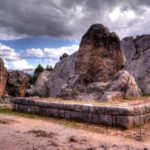
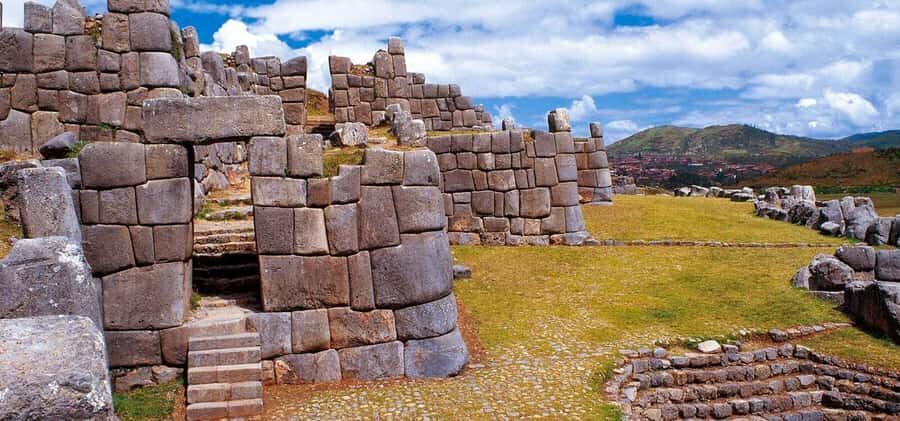
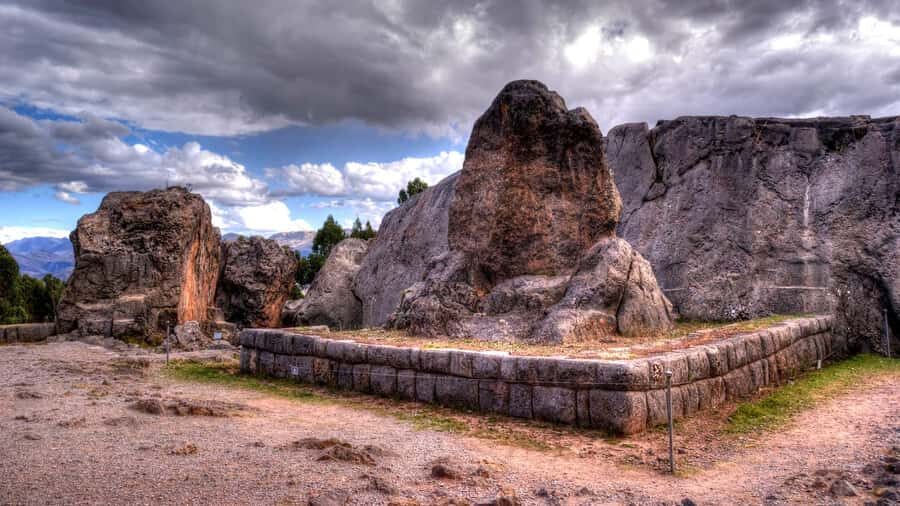
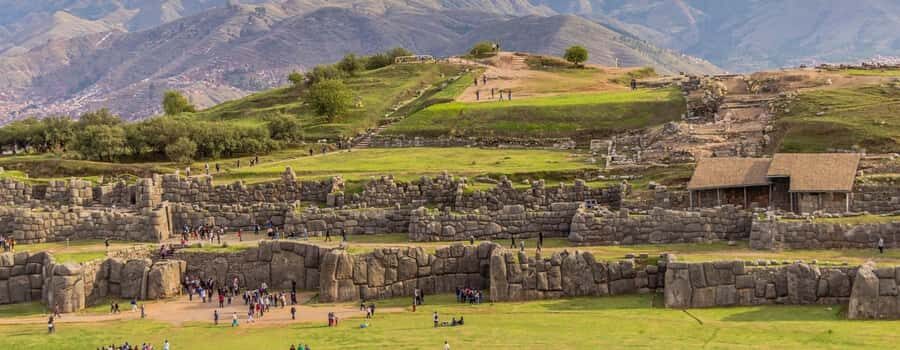
Sacsayhuamán is the first of the major ruins stops, and it comes with a guided tour. The description makes a strong claim: it’s considered the greatest architectural work of the Incas.
Even without getting lost in technical details, I think that label makes sense here because this fortress reads as a system. It’s not a random scatter of stones—it’s defensive, planned, and meant to dominate the area. A guide helps you see that, rather than just walking the perimeter and taking photos.
One thing to watch: because the tour is time-managed, Sacsayhuamán won’t be a slow museum visit. If you want to linger, you’ll need to keep an eye on the group tempo and the guide’s check-in points. The payoff is that you’ll likely leave with a stronger sense of function and design than you’d get by reading a sign.
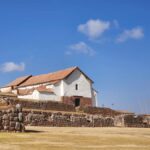


Qenqo shrine: a sanctuary with a purpose you can follow
After Sacsayhuamán, the minibus takes you to Qenqo, described as one of the most important sanctuaries of its time.
Inca shrines can be tricky because they look like stone structures until you know what they’re for. That’s where the guided component matters. Qenqo isn’t presented as an “extra stop,” it’s framed as key to understanding religious life—so the guide should help you interpret the layout and symbolism rather than treating it as a quick sightseeing checkbox.
If your favorite part of history trips is connecting place to ritual, Qenqo is likely to land well. If you mostly want views, this may feel more subtle than a fortress—but it has a clear identity as a sanctuary.
Puca Pucara (Red Fortress): the defense layer
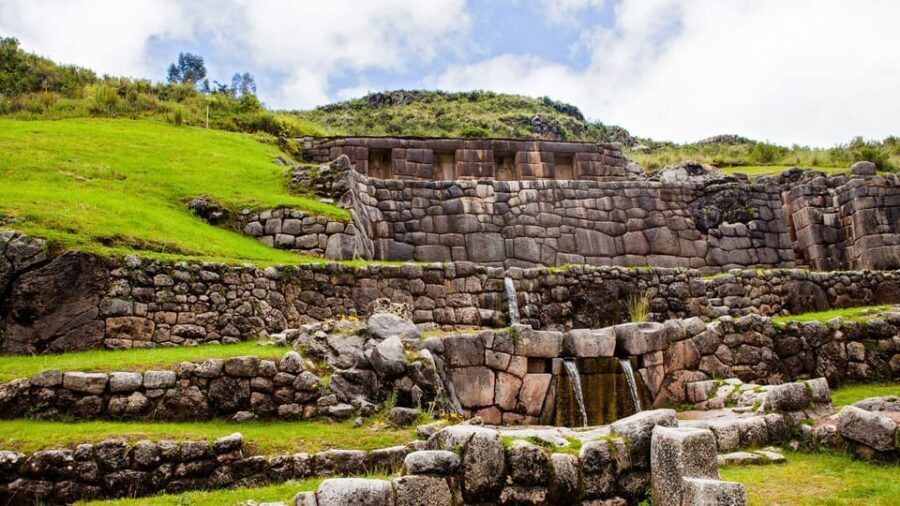
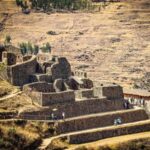
Next is Puca Pucara, known as the Red Fortress. The name alone hints at what you’re meant to notice: this isn’t about worship first—it’s about the defensive and watchful side of Inca space.
You’re still on the same ruins day, so the group will be moving through multiple sites. That means your best strategy is to keep your attention on the contrast: Qenqo is about religious function; Puca Pucara is about surveillance and strength. When you can feel that shift, the whole day starts to click.
Tambomachay, the Inca Bath: why water mattered
The final ruins stop is Tambomachay, also called the Inca Bath. The tour explanation ties it directly to worship: it was precisely here where the Incas worshiped water.
This stop is a good reminder that Incas weren’t only building for conquest or ceremonies in the abstract. They were building for the resources they depended on, and they turned water into something sacred through practice.
Tambomachay can be a calmer end to the circuit. By the time you get here, you’ve seen fortress walls and shrine spaces; now you’re asked to focus on a different kind of relationship with the environment: water as devotion.
Price and value: $20 covers the guide and transport, not the key entrances
The tour price is listed at $20 per person for a guided program lasting around half a day’s worth of sightseeing. What’s included is the big practical stuff: pick-up and return transfer to the center of Cusco, minibus transportation, and a live guide.
What’s not included are the entrance fees that you’ll pay separately:
- Cusco Cathedral: 40 S/ for foreign persons (10.70 US$)
- Qoricancha: 15 S/ (4 US$) per person
- Four ruins total entry: 70 S/ (18.80 US$) for foreign persons (with a local rate also listed)
If you add up the foreign-person entrances shown, you’re looking at about 33.50 US$ in entry fees on top of the $20 tour price. That puts your likely total in the neighborhood of $53.50, assuming you use the included guided access at each required site.
Is it good value? For me, yes—if you’ll actually use the guide at each stop. You’re not just buying entry tickets. You’re buying a guided story that connects the city (Cathedral and Qoricancha) to the out-of-town ritual and fortress sites (Sacsayhuamán, Qenqo, Puca Pucara, Tambomachay). That’s especially valuable if you want context fast and you don’t want to assemble your own route.
If you’d rather wander on your own and skip guidance, then the entrance fees may make the tour feel pricier than you expected.
Timing, visit order, and the one thing you should double-check
Here’s the practical reality: the schedule can be sensitive to day-of-week flow. There’s at least one documented case where the planned order didn’t match what passengers expected, and the group ended up not reaching the Cathedral and Plaza de Armas area before the planned time window ran out.
So do yourself a favor: before you start, ask what the exact order will be for that day and confirm you’ll have time at the Cathedral and Plaza de Armas. The tour is structured to include those stops, but timing is what can break expectations.
Also, note the inconsistency in descriptions about total duration versus the 4.5-hour tour window. That’s normal in practice—pickup time, site crowding, and group pace can all shift—but it’s worth planning your day with buffer.
Who should book this tour, and who should skip it
This tour fits best if:
- You like a guided route that links Inca and Spanish-era layers without you doing planning math.
- You want to see multiple major Cusco sites in a single half-day run: Qoricancha, Sacsayhuamán, Qenqo, Puca Pucara, and Tambomachay.
- You enjoy history explanations that connect architecture to purpose, especially at Qoricancha and Sacsayhuamán.
You might want a different option if:
- You’re extremely tight on time and can’t tolerate any schedule changes.
- You care most about just one stop and want long unhurried time there.
- You dislike the idea of multiple paid entrances piling on top of the base price.
A note on guides: one positive experience highlighted a guide who sounded like a true teacher—an academic-style passion for history and profession. That’s exactly what makes a short guided tour work: the guide translates stone into meaning quickly.
Should you book this Cusco guided tour?
I’d book it if you want a fast, well-structured way to understand Cusco’s most important Inca-era sites, plus the Inca-to-Spanish overlap starting in the Cathedral area. The route is efficient, and the combination of Qoricancha + Sacsayhuamán + the surrounding sanctuaries gives you a complete picture of religion and power, not just one kind of ruin.
If you do book, protect yourself with two simple steps: confirm the day’s visit order, and budget for entrances in soles so you’re not scrambling at the gate. Do that, and you’ll have a strong half-day that actually explains what you’re seeing—not just moves you from one stop to the next.
FAQ
How long is the tour?
The tour duration is listed as 6 hours. You’re also described as being left near Plaza de Armas after a four and a half hour tour.
What places are included in the visit?
You’ll visit Cusco Cathedral at Plaza de Armas, Qoricancha (Temple of the Sun), and the four ruins of Cusco: Sacsayhuamán, Qenqo, Puca Pucara (Red Fortress), and Tambomachay.
Does the price include entrance tickets?
No. Entrance to Cusco Cathedral, Qoricancha, and the four ruins are not included.
How much are the entrance fees?
For foreign persons: Cusco Cathedral is 40 S/ (10.70 US$), Qoricancha is 15 S/ (4 US$), and the four ruins are 70 S/ (18.80 US$). Local rates are also listed but are lower.
Is transportation included?
Yes. The tour includes pick up at the meeting point, minibus transportation between stops, and return transfer to the center of Cusco.
Do I get a live guide?
Yes. A live tour guide is included.
What languages are the guide available in?
The guide is available in Spanish and English.
Where do they pick you up and drop you off?
You’ll be picked up at the meeting point and returned to the center of Cusco. The end point is described as near Plaza de Armas.
Is there free cancellation?
Free cancellation is available up to 24 hours in advance for a full refund.
Can I reserve without paying right away?
Yes. The option is listed as Reserve now & pay later, so you can book your spot and pay nothing today.