REVIEW · CUSCO
Salkantay Trek 4 Days to Machu Picchu by Glamping Sky Lodge Dome
Book on Viator →Operated by Quechuas Expeditions · Bookable on Viator
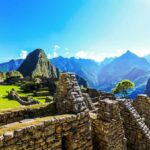
Salkantay tests you, then spoils you a little. This 4-day trek out of Cusco blends early-morning muscle with glamping sky lodge domes and a smooth, guided finish at Machu Picchu. You’ll hike high passes, slip down through cloud forest, then work your way into the upper jungle before sunrise helps Machu Picchu feel brand-new.
Two things I really like about this route are the way it’s organized around your comfort, and the energy it gives you each day. Meals are handled for you (with vegetarian options at no extra cost), and the days are paired with hot teas to keep you moving when it’s cold. The guide team is also a big deal on this trek; names like Fernando and Nildo come up again and again, and the emphasis is on altitude support, plus clear explanations along the way. (That includes practical touches like coca leaf support in some groups.)
One drawback to plan for: the schedule is early and the altitude is serious. Day 2 is the longest climb and the highest point hits about 4,650 m, and snow is possible. Nights get cold too, even in the domes—so if you hate cold starts or you’re not used to thin air, this can feel like a lot.
In This Review
- Key Highlights to Know Before You Go
- Salkantay to Machu Picchu in 4 Days: What You’re Signing Up For
- The Pre-Dawn Pickup and Day 1: From Cusco to Mollepata to Cruzpata
- Day 2’s 4,650 m Pass: The Long Climb and the Cloud Forest Descent
- Day 3 in the Upper Jungle: Rivers, Waterfalls, and 6 Hours of Walking
- Sky Lodge Domes and the Aguas Calientes Night Before Machu Picchu
- Machu Picchu Sunrise Option and Your Guided Walking Tour
- Who Runs This Trek: Guide, Chef, Horsemen, and the Altitude Safety Net
- Price and Value: What $761.91 Includes and What Costs Extra
- What to Pack: Cold Nights, Rain, and Altitude-Ready Boots
- Who This Trek Fits Best (and Who Should Think Twice)
- Should You Book This Salkantay 4-Day Dome Trek?
- FAQ
- What time does the trek start from Cusco?
- How long is the trek?
- Where does the trek begin?
- What kind of accommodation is included on the trek?
- Are meals included?
- What Machu Picchu costs are included?
- Are there any extra entrance fees you should budget for?
- How do you return to Cusco after Machu Picchu?
- Do you need special trekking equipment?
- What if my plans change after booking?
Key Highlights to Know Before You Go
- Sky lodge domes instead of ground tent camping for a more comfortable night routine
- Long day 2 with a highest pass near 4,650 m and possible snow
- Guided Machu Picchu time plus time to explore on your own after a walking tour
- Hearty meal plan (3 breakfasts, 3 lunches, 3 dinners) plus 3 afternoon hot teas
- Group size capped at 19 with an assistant guide added for larger groups
- Safety net included: first-aid kit plus an emergency oxygen bottle
Salkantay to Machu Picchu in 4 Days: What You’re Signing Up For
This is not a “walk in the park” version of Machu Picchu. You’re hiking through big altitude swings, from high Andean terrain to cooler cloud forest, then into the jungle side where conditions feel wetter and greener. The pacing is built around that change, with hiking days that get longer and harder as the trip moves toward the summit day for Machu Picchu.
The big advantage here is that the program removes a lot of the annoying logistics. You’re picked up from your hotel, transported to the trailhead, and then everything from camping gear to cooking setup is handled on the mountain side by the cook and horsemen/porters. You carry a limited load—about 7 kg—so you can focus on your own breathing and footwork.
You still need real stamina. The itinerary includes an early start most days, a longest hiking day on Day 2, and a Day 4 wake-up around 4:00 a.m. for Machu Picchu. If you treat this like training for your future self, you’ll be fine.
You can also read our reviews of more hiking tours in Cusco
The Pre-Dawn Pickup and Day 1: From Cusco to Mollepata to Cruzpata
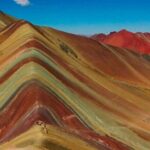
Day 1 starts brutally early: you’re picked up from your hotel around 4:30 a.m. and driven about three hours to Mollepata, where breakfast happens before the trek begins. You’ll likely see the team get organized fast—cook and horseman packing camping and cooking gear while you’re eating, so the start feels like you’re jumping straight into the adventure.
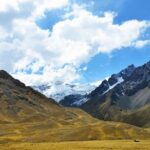
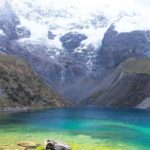
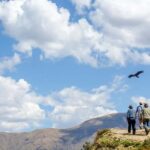
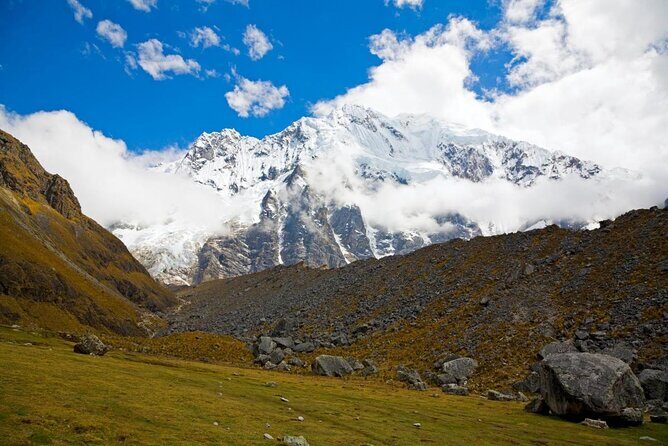
Then you hike uphill for about the first three hours to reach Cruzpata for lunch. This stop matters because it gives you instant payoff: panoramic views of major peaks. You’re looking at Humantay (4,120 m / 13,500 ft) and Salkantay (6,271 m / 20,575 ft). Even if you don’t know every ridge line, you’ll understand the altitude reality right away—this trek is about being close to the mountains, not just walking between viewpoints.
After lunch, the hike continues toward Soraypampa, your first camping spot at about 3,800 m. That’s a notable detail: Soraypampa is described as the highest and coldest campsite on the trip. In practice, it means Day 1 isn’t just “warm up.” It’s where you learn what cold feels like at altitude, even when you’re inside a dome.
One practical tip: start your day with a solid breakfast and slow breathing early. Uphill at altitude hits hard even when you think you’re pacing well.
Day 2’s 4,650 m Pass: The Long Climb and the Cloud Forest Descent
Day 2 is the heart of the trek. You start around 5:30 a.m., after breakfast, and the morning begins with a climb that lasts about four hours. The goal is the trek’s highest point at roughly 4,650 m, located halfway between Salkantay and Tucarhuay. The itinerary notes there’s a possibility of snow here, which tells you the weather can flip quickly even when skies look fine earlier.
What you’ll remember from this section is the contrast: you’re grinding uphill, then the views open in a big way once you reach the pass. From there, the descent shifts into dramatic cloud forest. That change matters because it’s not just nicer scenery—it’s a physical relief too. Cloud forest conditions often mean the ground feels different and the air can feel a bit less punishing than peak altitude.
After reaching Huayracpunku for lunch, you hike again toward the start of the jungle. Eventually you reach Chaullay, where you take local transportation for about one hour to reach Loreta La Playa Coffee Campsite. This transport piece is a smart design choice. It keeps the end of Day 2 from turning into an endless wall of walking, and it helps you arrive at camp with enough energy for dinner and sleep.
In terms of what this day demands: plan for cold, plan for effort, and plan to move slowly. If you’re hoping to “power through” like you do at home, this is the day that will teach you humility.
Day 3 in the Upper Jungle: Rivers, Waterfalls, and 6 Hours of Walking
Day 3 begins around 6:30 a.m. and shifts from mountain-to-jungle vibe. You’ll walk through the upper jungle, cross the Lluskamayo River, and pass multiple small brooks. That means you’ll likely get a different mix of footing and sound underfoot than the rocky high sections.
The hike is about six hours and is described as a route through valleys with waterfall views, plus tropical fruit and plants. Even when you’re tired, this part has a way of pulling you out of pure “step counting.” The jungle side tends to feel more alive, and you’ll get frequent natural breaks just from stopping to look.
By the end of the day you reach La Playa, where your trek continues into the final Machu Picchu morning. This makes Day 3 an important bridge day. You’re not arriving at the finish line yet, but you’re building the stamina you need for the last pre-dawn push.
Sky Lodge Domes and the Aguas Calientes Night Before Machu Picchu
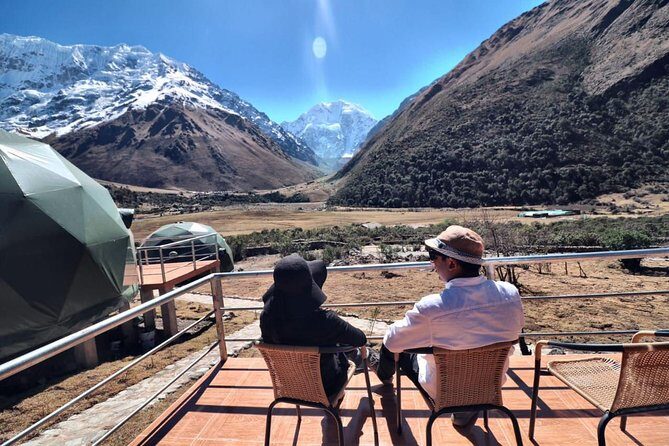
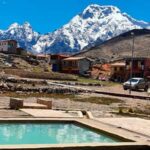
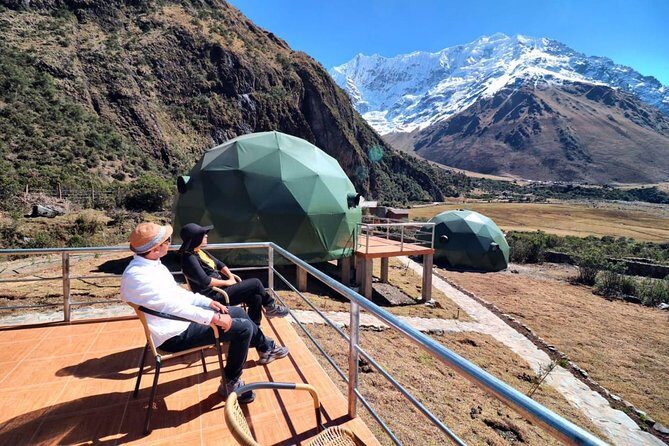
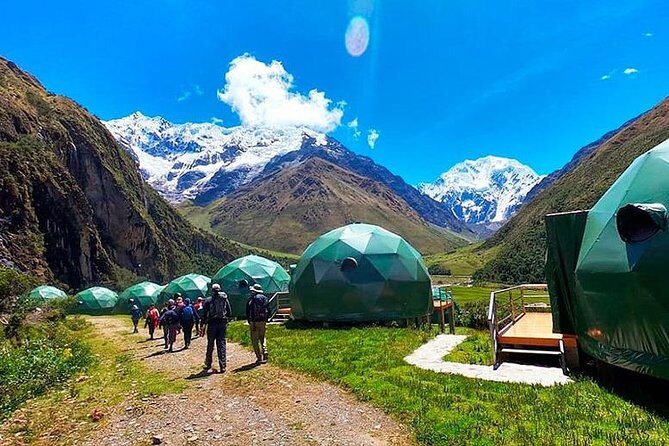
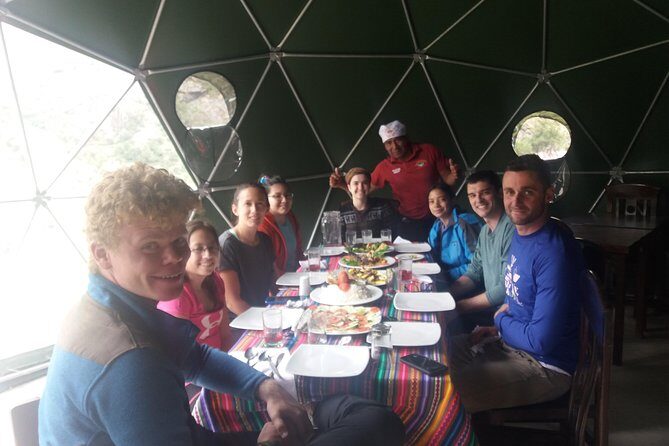
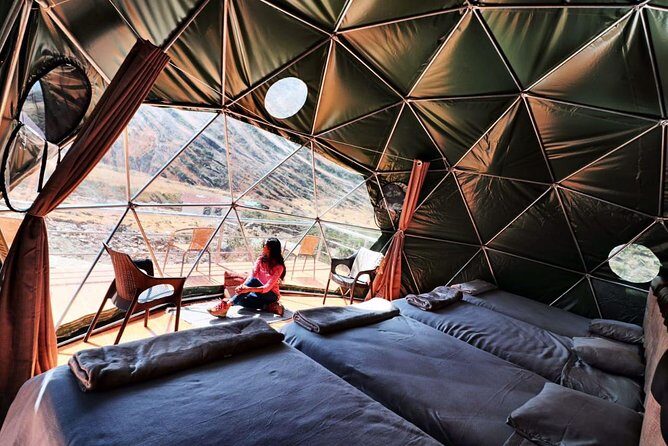
This trek’s camping setup is a key reason people enjoy it. Instead of sleeping on the ground in a standard tent situation, you stay in Sky Lodge Dome accommodation. In the real world, domes can mean less fuss with condensation, and a warmer-feeling space than open tent fabric. A dome also helps you reset faster after dinner, which matters because you’re up early again soon.
Then you get a hotel night in Aguas Calientes, and that’s a comfort upgrade you’ll feel. You’re included for one night with a private shower and private bathroom. After days of outdoor living, that private bathroom alone is worth its weight in morale.
The itinerary also keeps small comfort pieces in play: you get afternoon hot teas during the trek, and your day includes structured meal stops (plus dinners). In cold high-altitude trekking, food and warmth aren’t extras. They’re the difference between finishing strong and feeling wrecked.
A few more Cusco tours and experiences worth a look
Machu Picchu Sunrise Option and Your Guided Walking Tour
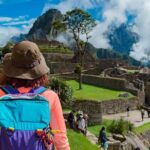
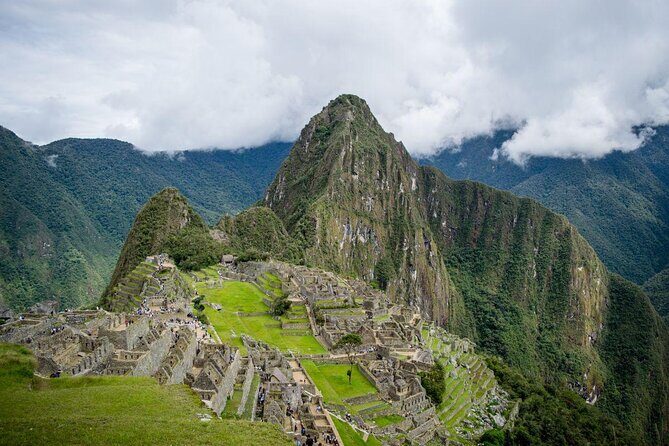
Day 4 is about Machu Picchu, and it starts early again: wake up around 4:00 a.m., breakfast around 4:30, then you walk toward Machu Picchu in about one and a half hours. The itinerary also offers a faster sunrise method: you can catch the first bus at 5:30, a trip of about 25 minutes, to watch Machu Picchu as the sun rises.
Either way, the payoff is the same: a guided experience once you’re inside. You get a walking tour of approximately 2 hours led by your guide, then you can explore on your own. That structure works well. The guide time helps you understand what you’re seeing, then your free time lets you revisit the spots that hit you personally—views, terraces, and quiet corners where you can absorb it without a schedule shouting in your ear.
One important detail: the Machu Picchu entrance fee is included, which you’ll appreciate since entrances can turn into surprise add-ons on other trips.
Who Runs This Trek: Guide, Chef, Horsemen, and the Altitude Safety Net
The team is where this tour often feels different. The guide isn’t just there to herd you from point to point. In groups led by Fernando, for example, there’s emphasis on altitude check-ins and practical support, plus clear explanations about the mountains and Inca context. Another lead name that comes up is Nildo, with support that’s described as careful with details and very encouraging when you’re tired.
You also get multiple layers of staffing: a professional guide plus an assistant guide when the group is larger than 8 people. That staffing matters on a hard route because it improves pacing flexibility. Some people need slower breaks. Others want extra context. A larger team makes both possible without slowing the entire group.
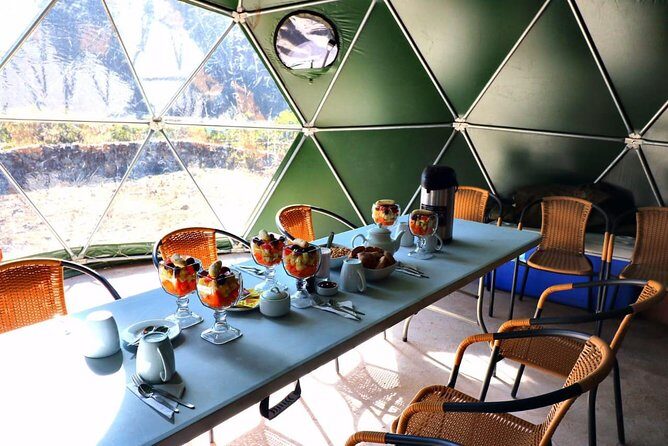
Food deserves its own spotlight. Your trek includes 3 breakfasts, 3 lunches, 3 dinners, plus 3 afternoon hot teas. Vegetarian options are included with no extra cost. And the cooking team is specifically praised for producing meals that taste good enough to feel like a reward, not just fuel.
Finally, the logistics people deserve credit too. The horseman/porters handle food, camping gear, cooking equipment, and personal items up to about 7 kg. Watching that system in action helps you understand why your hands stay free for trekking poles and good posture.
Safety-wise, you get a first-aid kit and an emergency oxygen bottle. It doesn’t replace good judgment, but it signals you’re not on your own if something goes wrong.
Price and Value: What $761.91 Includes and What Costs Extra
At $761.91 per person, the value is easiest to judge by what’s bundled. You’re paying for the full supported trek experience: hotel pickup, trailhead transportation via bus to Challacancha (the trailhead), sky lodge dome accommodation for the trek portion, and one hotel night in Aguas Calientes with private facilities.
You also get the full meal plan (except a couple items noted below), plus Machu Picchu entry, plus the return ride. The return matters: you get the expedition train from Aguas Calientes to Ollantaytambo, then a bus back to Cusco. That reduces the chance of your last day turning into a transportation scavenger hunt.
What’s not included:
- Breakfast day 1 and lunch day 4
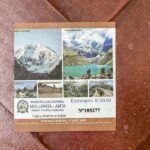
- Entrance fees to Salkantay and Humantay: 20 soles per person (noted as the trek and Humantay fee)
- Any extra personal costs like drinks or snacks you buy along the route
How this affects your budget:
If you’re comparing to trekking options that look cheaper but require you to source transport, manage your own food, or handle separate Machu Picchu logistics, the included package makes sense. The domes and the private Aguas Calientes hotel night also reduce the “sleep quality gamble,” which is a big deal after cold mountain days.
One more reality check: this trip is non-refundable and can’t be changed for any reason. If your schedule is fragile, think carefully before booking.
What to Pack: Cold Nights, Rain, and Altitude-Ready Boots
The packing list is straightforward, and it’s built for real conditions. The big items to take seriously are sleeping warmth, rain protection, and foot comfort.
Key gear items from the kit list:
- A sleeping bag rated to -11 C / 12 F
- A rain poncho (or rain jacket) since you want to stay dry without losing mobility
- A wind-stopper layer (poly/fleece) plus a light sweater
- Wind/rain pants (Gore-tex or similar)
- A good pair of trekking boots (and use them before the trek)
- Wool or synthetic socks (4 pairs)
- Walking poles (2 pairs are recommended)
- Headlamp for early starts
- Water sterilizing tablets (Micropur), plus a water bottle
- Sunscreen and UV-protecting sunglasses, plus lip balm SPF
Also bring a day backpack and keep personal items organized. Your main pack setup matters less than your ability to access what you need during short breaks.
For altitude comfort, follow the guide’s lead. In some groups, guides like Fernando have shared coca leaves for help with elevation comfort. Even if you don’t use that, you’ll want to stay hydrated and move at a pace you can sustain.
Who This Trek Fits Best (and Who Should Think Twice)
This is a great fit if you want:
- A supported trek where meals, camping setup, and key logistics are handled for you
- Dome-style glamping rather than ground tent living
- A guided Machu Picchu visit with time to explore afterward
- A smaller-group feel (max 19 travelers) and staffing that adapts as the group grows
It’s worth thinking twice if:
- You’re sensitive to cold and don’t handle early mornings well
- You’re not ready for the highest point near 4,650 m and the chance of snow
- You want a relaxed pace with minimal physical strain
If you do have strong fitness and you’re okay trading comfort-for-a-few-days for views and a real sense of accomplishment, this is one of the more comfortable ways to do the classic Salkantay-to-Machu Picchu route.
Should You Book This Salkantay 4-Day Dome Trek?
If your priority is a trek that feels adventurous but still supported, I’d book this. The mix of sky lodge domes, full meals, and a real hotel night in Aguas Calientes removes a lot of the friction that can turn a hard itinerary into misery. Add the guide team support and the early Machu Picchu options, and you get a route that’s both intense and efficient.
Before you commit, double-check two things: your altitude readiness and your packing discipline. If you’re going to show up with the right cold-weather gear, steady walking pace, and patience on Day 2’s pass, you’ll get rewarded with the kind of mountain-to-jungle-to-Machu Picchu arc that actually sticks with you.
FAQ
What time does the trek start from Cusco?
You’re picked up from your hotel at about 4:30 a.m.. The meeting point information lists a 5:00 a.m. start time.
How long is the trek?
The trip is 4 days (approx.).
Where does the trek begin?
After pickup and driving, the trek starts at Mollepata, and the included bus gets you to the trailhead at Challacancha.
What kind of accommodation is included on the trek?
You get Sky Lodge Dome accommodation during the trek portion, plus one night in a hotel in Aguas Calientes with a private shower and private bathroom.
Are meals included?
Yes. You get 3 breakfasts, 3 lunches, 3 dinners, and 3 afternoon hot teas. Vegetarian options are available with no extra cost.
What Machu Picchu costs are included?
The Machu Picchu entrance fee is included.
Are there any extra entrance fees you should budget for?
Yes. Entrance fees for Salkantay and Humantay are listed as 20 soles per person.
How do you return to Cusco after Machu Picchu?
You’re included with the expedition train from Aguas Calientes to Ollantaytambo, then a bus back to Cusco.
Do you need special trekking equipment?
No special equipment is required beyond regular good-quality trekking gear. The packing list includes a sleeping bag rated to -11 C / 12 F, rain protection, boots, and trekking poles.
What if my plans change after booking?
This experience is non-refundable and cannot be changed for any reason.