REVIEW · URUBAMBA
Super Sacred Valley
Book on GetYourGuide →Operated by Exploor Trip E.R.L · Bookable on GetYourGuide
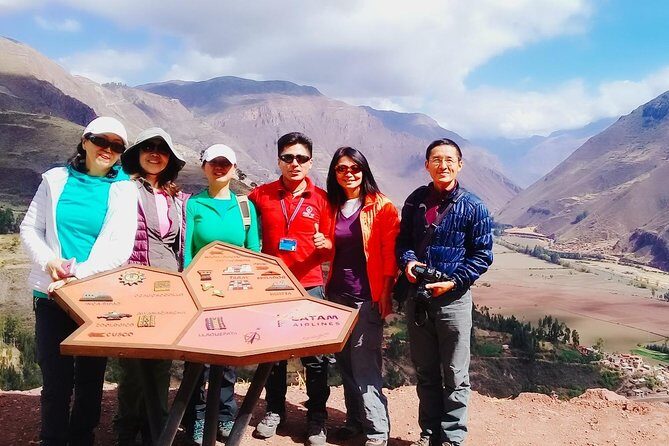
One day, four big Inca stops. This full-day route makes the Sacred Valley feel connected, moving from Inca agriculture at Moray to the Maras Salt Mines and then into the still-livable Inca city of Ollantaytambo. I like the way the day isn’t only ruins on a map; it also brings in real village life at Chinchero and hands-on craft shopping at Pisac. I also like that the guide support is strong, with examples of bilingual explanation (Emil, in one case) and key ideas repeated in both English and Spanish so nothing important gets lost.
The main drawback is that the schedule is packed, and that can mean short stops at textile or craft places that feel more like quick sales than deep learning. One traveler also flagged a small 17-seat bus with limited legroom, so comfort can depend on where you sit.
In This Review
- Key things to know before you go
- The day’s route: how you’ll actually experience the Sacred Valley
- Chinchero: Inca walls, a colonial church, and textiles up close
- Moray: circular terraces and the Inca’s agriculture experiments
- Maras Salt Mines: the 3,000+ wells where salt still matters
- Urubamba buffet lunch: where the day slows just enough
- Ollantaytambo: the last living Inca city in real life
- Pisac: hillside market crafts plus the archaeological park
- Price and logistics: where the $50 feels fair, and where extra costs show up
- Group comfort and shop-time reality checks
- Who should book Super Sacred Valley, and who should think twice
- Should you book this one-day Sacred Valley tour?
- FAQ
- What time does the tour start and when do we return?
- How long is the experience?
- Which places are included in the itinerary?
- Is lunch included?
- What entrance tickets are not included?
- Does the tour include transportation?
- What languages does the guide use?
- Are emergency supplies included?
- Is there free cancellation?
- Is there an option to pay later?
Key things to know before you go
- A full Sacred Valley sweep in one day: Chinchero, Moray, Maras, Urubamba lunch, Ollantaytambo, and Pisac.
- Moray is about farming: circular terraces tied to Inca agricultural experimentation.
- Maras is about real production: more than 3,000 salt wells, historically tied to Inca consumption.
- Ollantaytambo is still a living Inca city: not just a pile of stones.
- Pisac mixes market time with archaeology: good odds to buy crafts and still see the park.
- Tickets are extra: plan for entrance fees beyond the tour price.
The day’s route: how you’ll actually experience the Sacred Valley
This is a long, classic one-day circuit. You’ll be picked up around 7:00 am, then you’ll work your way from highland towns and Inca farming sites down toward Urubamba for lunch, and back up to more Inca-era highlights before returning to Cusco around 7:00 pm.
What makes this itinerary smart is the logic: it starts with cultural roots (Chinchero), moves to how the Incas controlled food and resources (Moray and Maras), and then finishes with the places that show power, community, and craft (Ollantaytambo and Pisac). If your time in the region is tight, it’s a practical way to see the headline sites without booking a multi-day plan.
That said, the day moves fast, and “fast” is where shopping stops can creep in. If you’re the type who wants maximum time at ruins and minimum time at demonstrations, go in with a clear idea of what you’ll prioritize.
You can also read our reviews of more tours and experiences in Urubamba.
Chinchero: Inca walls, a colonial church, and textiles up close
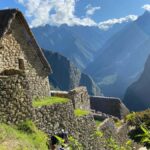
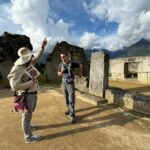
Chinchero is where the tour begins to mix eras. You’ll visit Inca wall constructions and a colonial church, a combo that helps you understand how Spanish-era architecture was layered onto existing power centers.
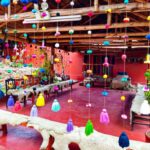
There’s also a textile center moment, including a small participation element. This part can be worthwhile if you enjoy craft culture and want to see how people present traditional weaving. It can also feel short if what you really want is uninterrupted archaeological time.
Practical tip: if textiles aren’t your focus, treat this as a quick cultural pause, not the main event. Put your energy into Moray, Maras, and Ollantaytambo where the stops are more tightly centered on Inca engineering and daily resource use.
Moray: circular terraces and the Inca’s agriculture experiments
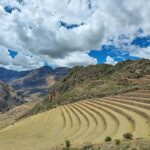
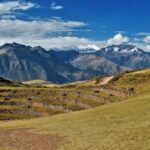
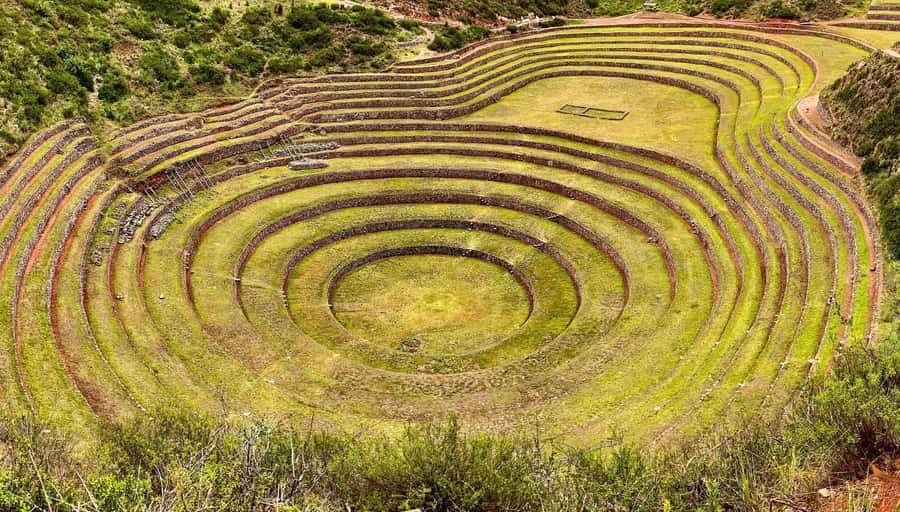
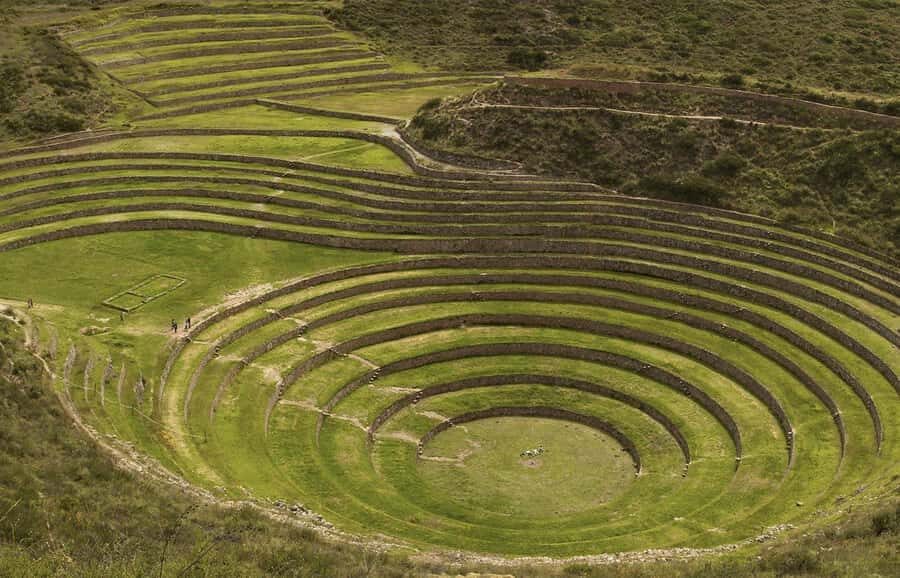
Moray is one of those places that surprises you because it looks almost playful from a distance: circular terraces stacked on a slope. Up close, it’s clear this wasn’t random building. It was important in the Inca era, especially for agriculture, and the shape hints at how the Incas could test growing conditions.
The tour frames Moray as a key site because it connects architecture with food science. Even if you’ve read generic facts about Inca farming, Moray gives the idea a physical form—terraces turned into experiments.
Time at Moray is usually limited on one-day tours, so go with a “look for patterns” mindset. Notice the circles, the way levels step across the hillside, and how the design supports different micro-conditions.
Maras Salt Mines: the 3,000+ wells where salt still matters
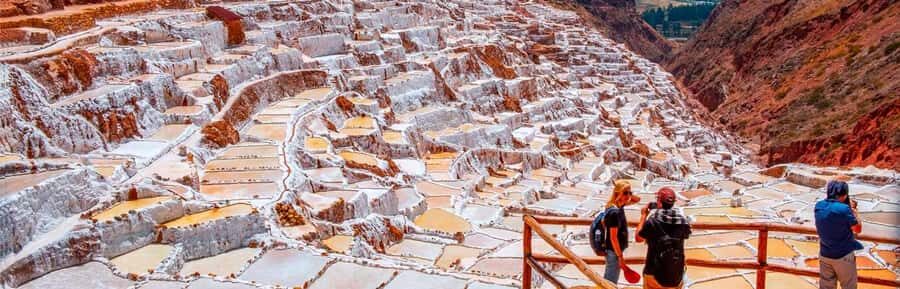
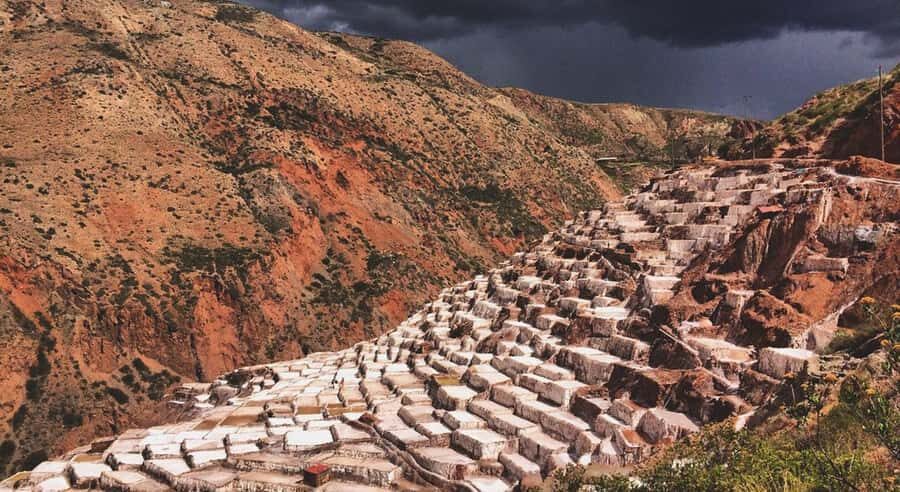
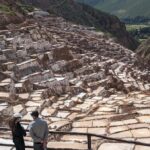
From Moray you’ll descend to the Maras Salt Mines. Here, the headline detail is simple and striking: you’ll visit more than 3,000 salt wells. Historically, this salt was used by the Incas for consumption, which is why the mines aren’t just scenic—they’re tied to how people survived and ate.
The visual impact is part of the appeal. The mines cover a large area, so you get that “how did anyone organize this?” feeling. It also helps explain why the Incas cared about logistics and resources, not only temples and palaces.
One more practical note: Maras has its own entrance fee, and it’s listed separately (PEN 10). If you’re doing the math ahead of time, it’s easier to feel good about the value instead of surprised later.
Urubamba buffet lunch: where the day slows just enough
After Maras you’ll reach Urubamba, where you’ll enjoy a buffet lunch before continuing to the next ruins. This is a big deal on a one-day route because it gives you a real break between high-focus sites.
In one case, the lunch spot was praised as excellent. That matches the logic of a well-run Sacred Valley circuit: if the food is good, the rest of the day feels more comfortable and less rushed.
Still, don’t expect a long lingering meal. You’re on a tight schedule, so treat lunch as a reset button: fill up, take a breather, then get ready for Ollantaytambo and Pisac.


Ollantaytambo: the last living Inca city in real life
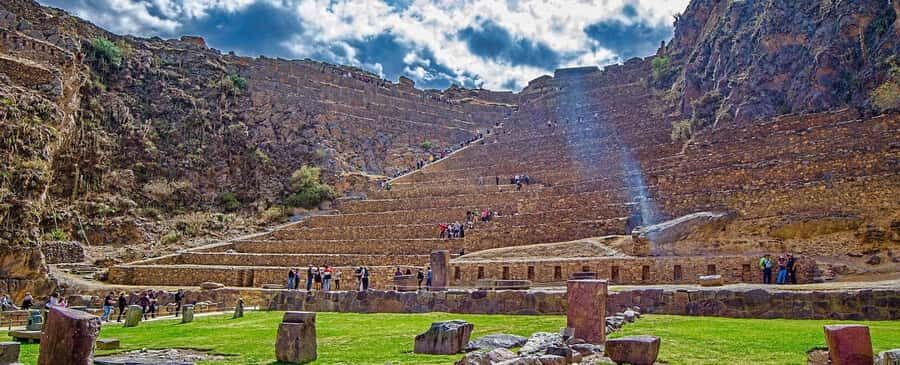
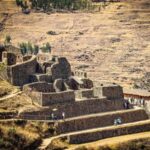
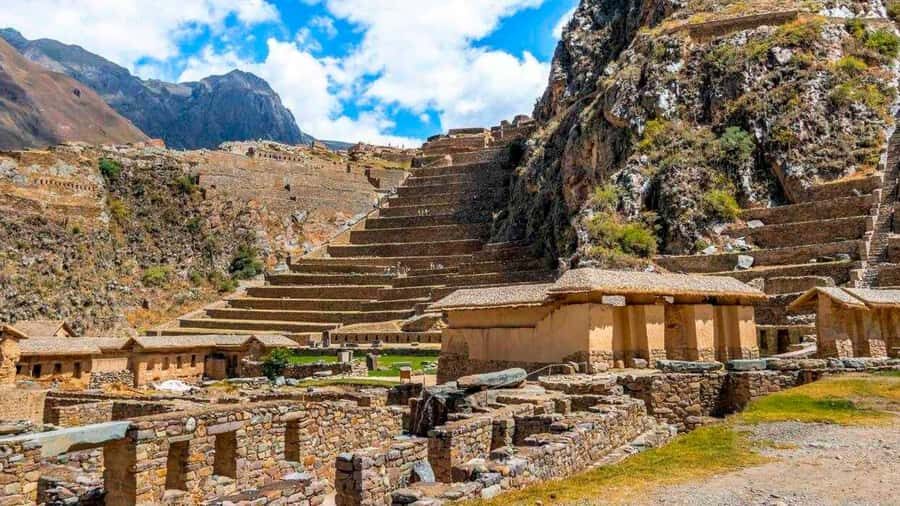
Ollantaytambo is often described as the Last Living Inca City, and the name matters. When a place is still lived in, you don’t just see stones—you see a living connection to the settlement.
You’ll visit the archaeological area after lunch. As with Moray, don’t expect this to be only “background facts.” The point is to see how Inca builders shaped movement, defense, and community space—then recognize it’s not cut off from ordinary life.
If you only have one day and you want your best odds of feeling the scale of the Inca presence, make sure you give Ollantaytambo your full attention. This is one of the stops that people remember after the bus leaves.
Also plan for the entrance fee here (listed under the main PEN 70 ticket group).
Pisac: hillside market crafts plus the archaeological park
Pisac comes after Ollantaytambo and is tied to the Intihuatana hill, described as the place where the sun is moored. That symbolism gives the visit a sense of place beyond a simple stop on a route.
You’ll first enter the indigenous market of Pisac, widely regarded as a strong spot for buying crafts. If you’re looking for textiles, small handmade items, or souvenirs that feel tied to local production, this is the part of the day where you’ll have the easiest chance to shop.
Then you’ll move to the Archaeological Park of Pisac, which includes Inca stonework and finely assembled polished stone buildings. This is where Pisac shifts from market energy to stone-and-structure focus.
The balance here is good: you get both the cultural economy (market) and the architectural story (archaeology). The only caution is time. If you want shopping and detailed ruin exploring, keep your priorities in order before you arrive.
Price and logistics: where the $50 feels fair, and where extra costs show up
The tour price is $50 per person, and several big pieces are included: round-trip transportation, a professional English/Spanish speaking guide, pickup at your hotel, and a buffet lunch. There’s also emergency coverage with a first aid kit and an oxygen bottle for emergencies.
The entrance fees are not included. The tourist ticket for Chinchero, Moray, Ollantaytambo, and Pisac is listed as PEN 70, and the Maras Salt Mines ticket is PEN 10. That means the real total cost is the tour price plus about PEN 80 in site fees, paid separately on the day.
So is it good value? Often, yes—because you’re paying for transportation and a guide to connect multiple major sites in one schedule. Where value can wobble is if you dislike shopping stops or if bus comfort becomes a real issue for you. If you’re sensitive to cramped seating, that’s worth considering before you book.
Group comfort and shop-time reality checks
One traveler flagged that the bus was small, a 17-place setup, with limited legroom compared to other tours. That matters because a long day on a compact bus can drain energy right when you want your legs to feel fresh for walking at the sites.
There’s also a pattern to watch: craft demonstrations or textile-center moments can cut into site time. One review specifically complained about short, not-very-valuable craft stops that felt like tourist retail. That doesn’t mean every day is like that, but it’s a real risk on one-day circuits where everything is scheduled tightly.
If you want the best outcome, use the guide’s structure to your advantage. Ask where the “must-see” points are in each stop. Then focus your attention there. You’ll still get the full itinerary, but you’ll feel in control of your time.
Who should book Super Sacred Valley, and who should think twice
This tour suits you if:
- You want one-day access to the key Sacred Valley sites without spending extra time in transit over multiple days.
- You prefer a guided explanation and bilingual support, with examples of guides repeating key ideas in both English and Spanish.
- You like mixing archaeology with cultural stops like Chinchero and the Pisac market.
You might think twice if:
- You’re very sensitive to bus comfort and legroom, especially if you end up near the back.
- You want minimal shopping and maximum ruin time. This itinerary includes textile participation and a market stop, and those moments may feel rushed.
If you’re aiming to spend hours at only one or two sites, a longer, slower plan might fit better. But if your schedule only allows a single day, this route is built for exactly that.
Should you book this one-day Sacred Valley tour?
I’d book it if you want a smart, efficient sampler of the Sacred Valley’s big names—Moray, Maras, Ollantaytambo, and Pisac—with transportation and lunch handled. The added value is the guide support and the fact that the day connects farming, resources, community, and crafts instead of treating each stop as a random photo stop.
I’d hesitate if you’re booking mainly to avoid any “extra” retail moments or if cramped seating would genuinely annoy you. In that case, you’ll need to be okay with the reality of a packed schedule.
If you do book, go in with a simple game plan: prioritize Moray and Maras for the engineering story, Ollantaytambo for the living city feel, and Pisac for crafts only during the market window. With that mindset, the day can feel satisfying instead of rushed.
FAQ
What time does the tour start and when do we return?
Pickup is at your hotel meeting point at approximately 7:00 am, and you return to Cusco at about 7:00 pm.
How long is the experience?
It lasts 1 day.
Which places are included in the itinerary?
You’ll visit Chinchero, Moray, the Maras Salt Mines, Urubamba for lunch, Ollantaytambo, and the Pisac market plus the Pisac Archaeological Park.
Is lunch included?
Yes. You’ll have a buffet lunch in Urubamba.
What entrance tickets are not included?
Tourist tickets are not included for Chinchero, Moray, Ollantaytambo, and Pisac (PEN 70.00 total), and the Maras Salt Mines ticket is PEN 10.00.
Does the tour include transportation?
Yes. You get round-trip transportation plus pickup at your hotel.
What languages does the guide use?
The guide provides professional interpretation in English and Spanish.
Are emergency supplies included?
Yes. The tour includes a first aid kit and an oxygen bottle for emergencies.
Is there free cancellation?
Yes. You can cancel up to 24 hours in advance for a full refund.
Is there an option to pay later?
Yes. You can reserve now and pay later.