REVIEW · CHIVAY
From Puno: 2-Day Tour to Colca Canyon ending in Arequipa
Book on GetYourGuide →Operated by PERÚ Signature · Bookable on GetYourGuide
Condors and hot springs in two days. This is a high-altitude, sight-packed route that starts in Puno at 6:00 a.m. and ends in Arequipa about 5:00 p.m. the second day, with big views, real Andean wildlife, and a classic Colca Canyon showstopper. I especially liked the way the day is paced so you get multiple photo stops without feeling like you’re rushing nonstop, and you’re guided in both English and Spanish along the way.
The main consideration is the altitude and the cold. You’ll hit high points like Patapampa at 4,900 meters, and it can feel bracing even if the sun is out—so warm layers and good walking shoes matter.
The other thing I liked a lot: the animal reserve time. At Salinas and Aguada Blanca National Reserve, you’re not just passing a viewpoint—you’re in an area where vicuñas, llamas, and alpacas are part of the scene, not a gimmick. And then you cap the first day with the La Calera hot springs to give your body a break after all that walking and thin-air breathing.
Key highlights worth your attention
- Cruz del Cóndor condor watching with the best chance to see soaring Andean condors
- Salinas y Aguada Blanca Reserve for vicuñas, llamas, and alpacas in their natural range
- Patapampa viewpoint at 4,900 m for volcanic-range panoramas and a real sense of elevation
- La Calera hot springs to loosen up after a long first day
- Maca church and Antahuilque terraces for a mix of colonial and pre-Inca viewpoints
- Smooth start/end with hotel pickup in Puno and drop-off in Arequipa downtown
In This Review
- How the Puno to Arequipa route really plays out in 2 days
- Day 1 at 6:00 a.m.: from Puno toward Chivay with key scenic stops
- Lagunillas viewpoint: highland views that set the mood
- Salinas and Aguada Blanca Reserve: where the animals feel real
- Patapampa at 4,900 m: the stop that makes the whole trip feel real
- Chivay base: lunch optional, then hot springs to reset your body
- La Calera hot springs: the best kind of payoff
- Evening with culture
- Day 2 into Colca Canyon: Maca’s church and Antahuilque terraces
- Maca: colonial church stop with a local feel
- Antahuilque viewpoint: pre-Inca terraces in a dramatic setting
- Cruz del Cóndor: timing your condor moment in the open air
- After Cruz del Cóndor: heading back and then to Arequipa
- Price and value: why $99 can make sense here
- Who this tour fits best (and who should adjust expectations)
- Practical tips so you enjoy the high altitude part
- Should you book the Puno to Colca Canyon 2-day tour ending in Arequipa?
- FAQ
- Where does the tour start and where does it end?
- What time does the tour leave Puno?
- What are the main stops on the first day?
- What will I see on the second day in Colca Canyon?
- Is lodging in Chivay included?
- Are meals included?
- Are entrance fees included?
- What should I bring and wear?
How the Puno to Arequipa route really plays out in 2 days
This tour is basically a bridge between worlds: Titicaca-area high plains in the morning, then down into Colca Canyon country, and out to Arequipa at the end. You’ll start with hotel pickup in Puno city, and you’ll finish with drop-off in Arequipa downtown. That’s a practical setup if you don’t want to fight logistics for connecting buses between regions.
Day 1 is about altitude, wide views, and wildlife. Day 2 is about Colca Canyon’s iconic look and the condor moment. The timing is straightforward: start early, spend meaningful time at viewpoints, and end each day where you can rest—first in Chivay (your hotel is your responsibility), and then in Arequipa.
One smart detail: it’s built around a sequence of stops rather than a single long day. That’s important here because travel time at altitude can wear you down, and short breaks at the right places help you actually enjoy the scenery.
Day 1 at 6:00 a.m.: from Puno toward Chivay with key scenic stops
You’ll depart Puno at 6:00 a.m., heading toward Chivay with a series of viewpoint and wildlife stops along the way. Starting early is not just tradition—it gives you calmer conditions for stopping and a better shot at clear views.
A few more Chivay tours and experiences worth a look
Lagunillas viewpoint: highland views that set the mood
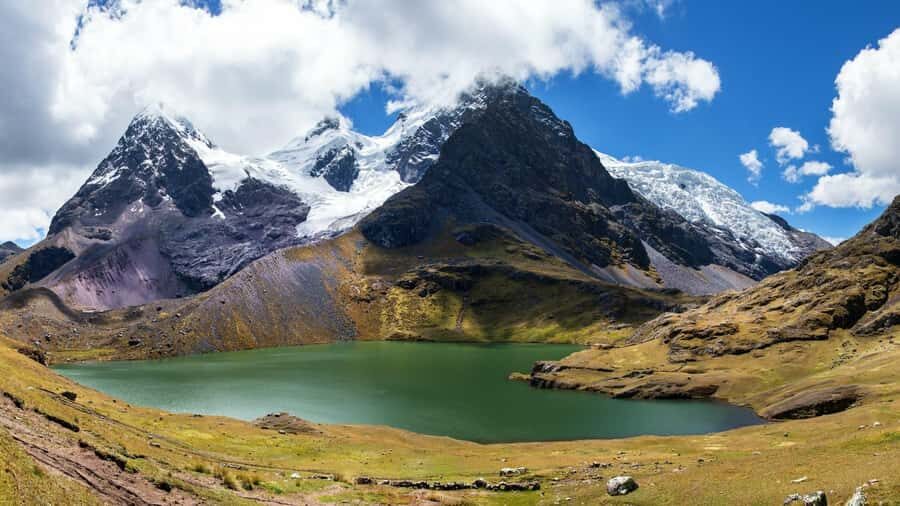
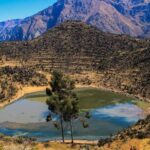
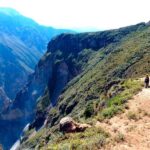
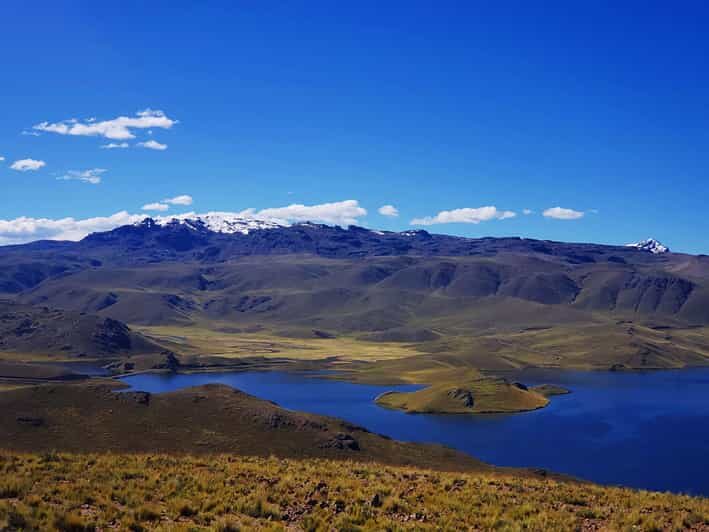
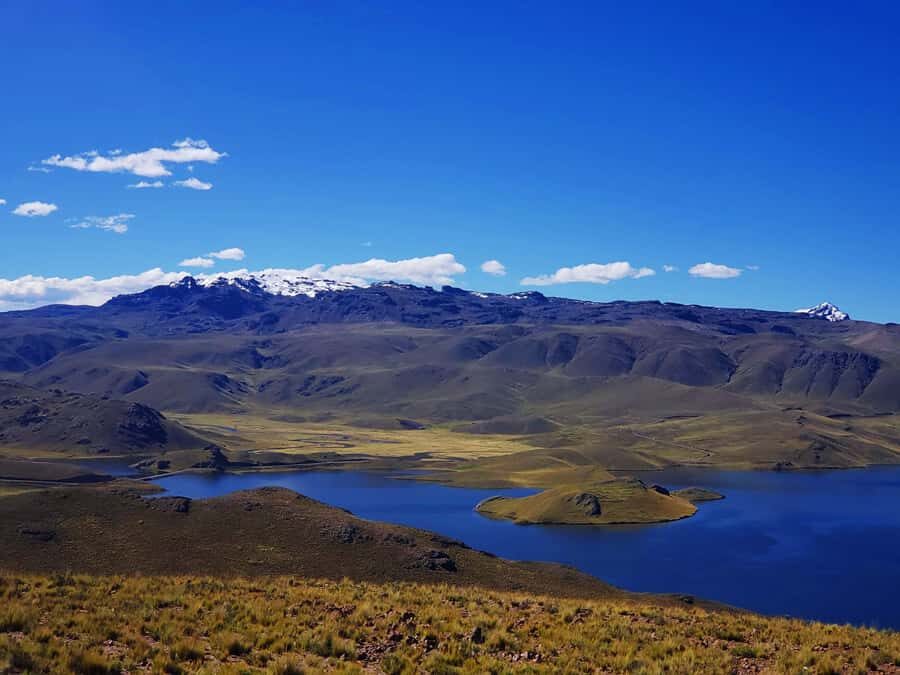
The first notable stop is Lagunillas viewpoint, where you’ll look out over the South American highlands and a quiet lagoon. This is a classic “get your bearings fast” moment. Even if you’ve seen photos of the Altiplano, being there in person makes the scale click: open sky, sharp light, and that thin-air crispness.
Practical tip: keep your camera ready but don’t freeze in one spot. Move around a bit and take breaks so your body stays comfortable in the cold.
Salinas and Aguada Blanca Reserve: where the animals feel real
After Lagunillas, you visit Salinas and Aguada Blanca National Reserve. This is the part you’ll remember later because you’re looking at Andean camelids in a landscape that looks like it belongs to them.
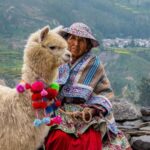
You may spot vicuñas, llamas, and alpacas roaming freely. That matters because it changes the experience from “look at animals” to “observe a habitat.” You’ll get the best results when you stay patient and let the animals come to your view, rather than sprinting around for the closest shot.
If you’re traveling with kids or just want something less intense than canyon terrain, this reserve portion is a nice change of pace. You’ll still be in a high, dramatic setting, but you’re not constantly looking down into a gorge.
Patapampa at 4,900 m: the stop that makes the whole trip feel real
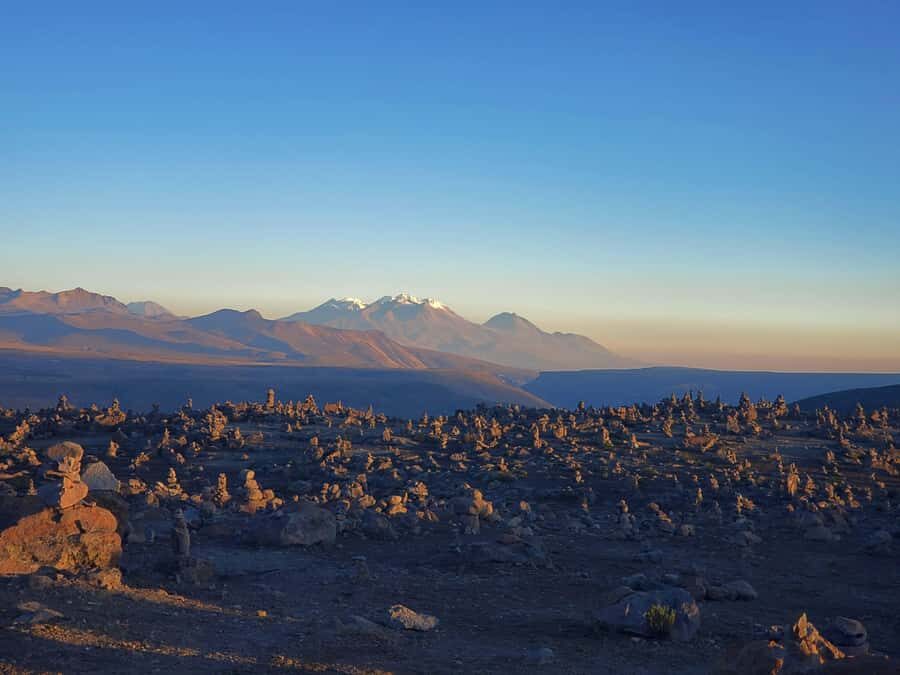
Next is Patapampa, the highest point on the route at 4,900 meters. This is a big deal in a way that you can’t fully capture in a single photo. At altitude, views feel louder. The mountains and volcanic range become more defined, and the whole world seems sharper and more distant.
Consideration: this is where people start to feel the thin air. You don’t need to “push through” anything. If you feel short of breath, slow down, breathe through it, and focus on enjoying the view in small bursts.
Chivay base: lunch optional, then hot springs to reset your body
When you arrive in Chivay, you have an optional lunch (not included), and then you’re transferred to your hotel for the night. Accommodation in Chivay is not included, so you’ll want to line that up ahead of time if you already know which area you prefer.
What’s nice is that you’re not stuck with an inflexible schedule. Dinner is also optional in the evening, and there’s a traditional dance show available as part of the experience.
La Calera hot springs: the best kind of payoff
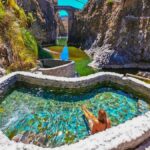
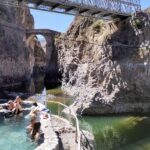
In the afternoon, you relax at La Calera hot springs. After high-altitude viewpoints and walking on uneven ground, hot springs are not just a nice extra—they help you recover. Your muscles feel less tight, and your head clears. It’s one of the few ways to counter the day’s cold and elevation stress without adding more sightseeing.
Important note: the entrance fee for La Calera hot springs is an add-on during booking, so check whether it’s included in your chosen package. Even if you do pay on arrival or as an add-on, plan extra time for getting ready and drying off.
Evening with culture
There’s an optional dinner accompanied by traditional dances. This is a simple cultural add-on that rounds out the day nicely, especially if you want something warm and lively after being outdoors all afternoon.
Day 2 into Colca Canyon: Maca’s church and Antahuilque terraces
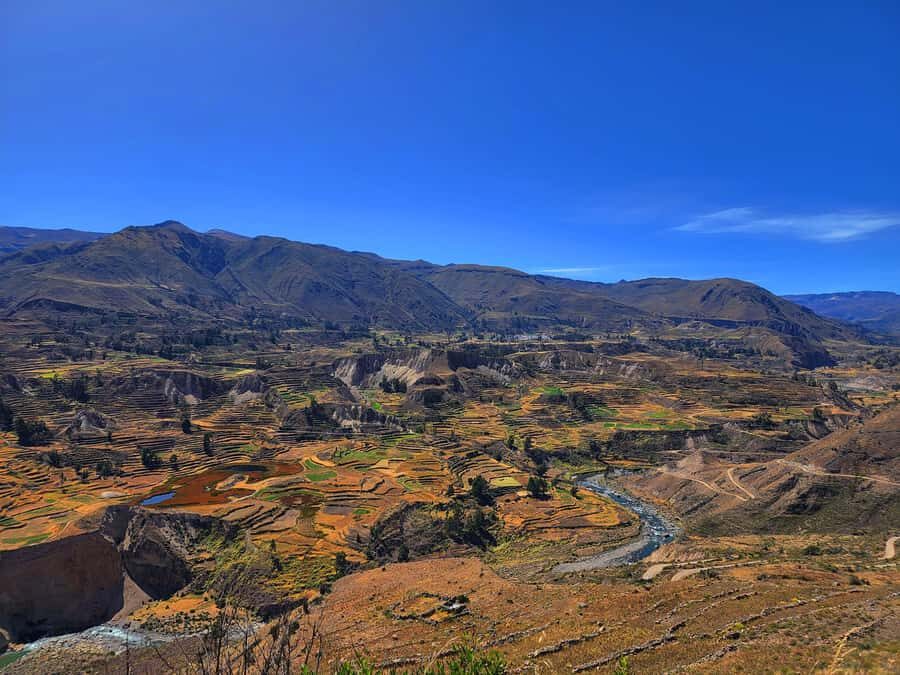
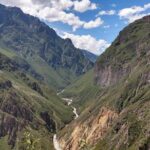
You’ll start early on the second day heading toward Colca Canyon. The route includes a couple of stops that help you understand what Colca is about beyond the canyon itself.
Maca: colonial church stop with a local feel
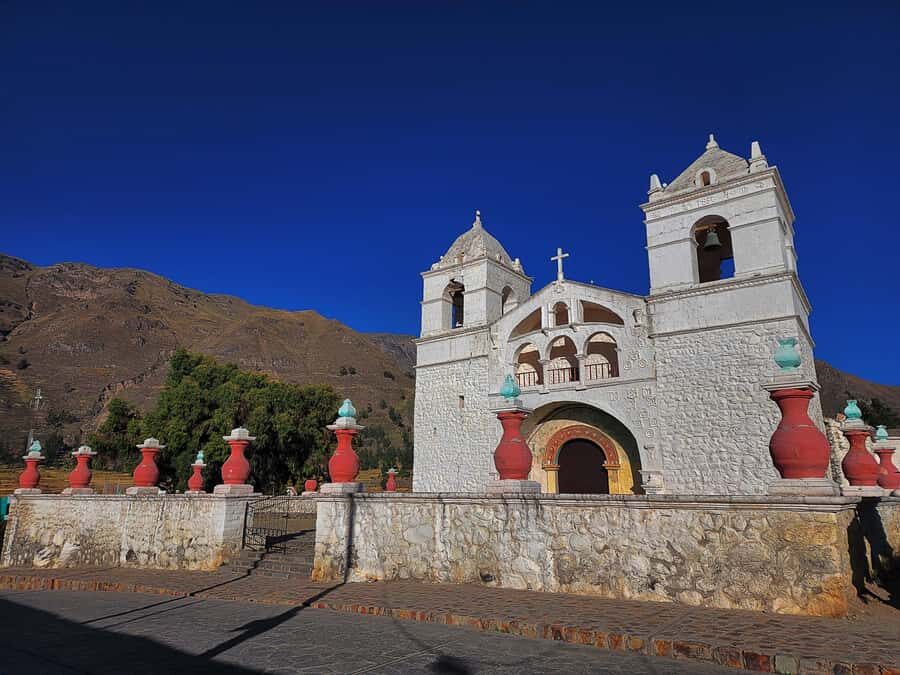
On the way, you visit the charming town of Maca and its colonial church. This is a good contrast to the wide open Andean spaces. Churches like this often feel like “anchors” for the region—places where community life and history show up in one location.
What to expect: this is typically a short stop, more about viewpoint and cultural context than a long stay. Wear shoes you’re comfortable in, since you may be walking on uneven surfaces.
Antahuilque viewpoint: pre-Inca terraces in a dramatic setting
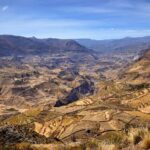
Next, you head to Antahuilque viewpoint to admire pre-Inca terraces. Seeing terraces in person is different than seeing them in a book. You can understand the engineering and the stubborn effort it took to cultivate land on steep slopes.
Why it’s worth the stop: terraces remind you that Colca wasn’t just a place to survive—it became a system that people refined over time. If you like “how did they do this?” moments, this is the stop.
Cruz del Cóndor: timing your condor moment in the open air
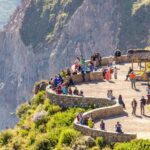
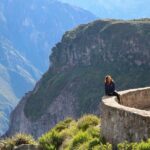
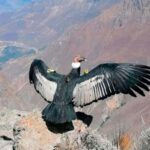
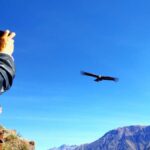
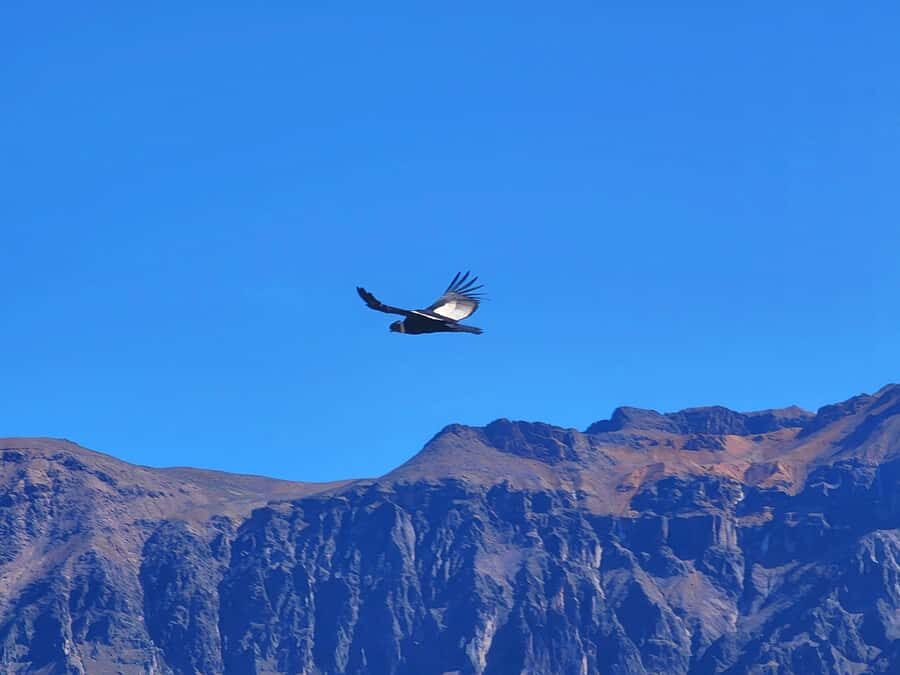
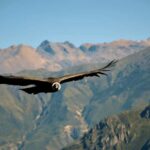
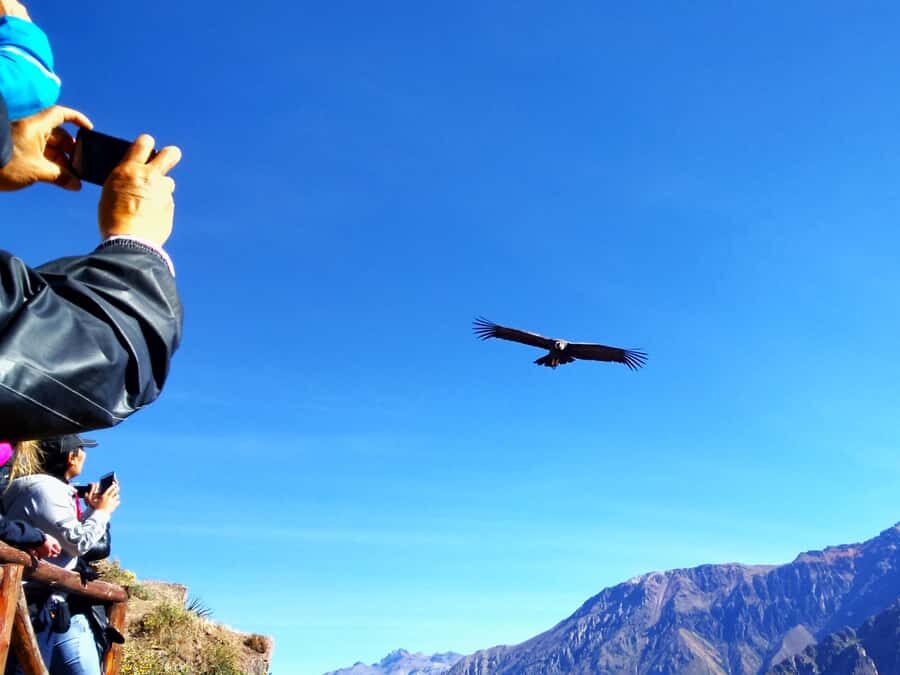
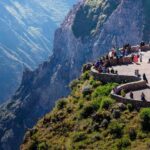
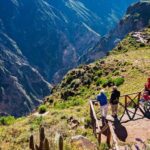
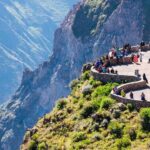
Finally, you arrive at Cruz del Cóndor, the famous spot where you can watch the flight of the Andean condor, the largest flying bird in the world. This is the headline activity for most people on the tour, and for good reason: the scale of the canyon turns a bird sighting into a full scene.
Here’s how to think about it practically: condors depend on weather and wind. You’re not controlling that. Your job is to be ready—bring your warm layers, stand where you can see the air currents, and give it time.
This is also where the tour design helps you. You’re not trying to see everything at once. The day builds toward this moment so it feels like a proper finale rather than just another stop.
After Cruz del Cóndor: heading back and then to Arequipa
On the return journey, there’s an optional lunch in Chivay, and then you continue toward Arequipa, arriving around 5:00 p.m.
That arrival time is helpful: you’ll likely have enough energy to shower, eat, and take it easy without feeling like the day swallowed you whole.
Price and value: why $99 can make sense here
At $99 per person for a 2-day route, this is one of those prices that works when the alternative is messy. You’re not just buying “a couple of stops.” You’re buying:
- pickup and drop-off (Puno pickup, Arequipa downtown drop-off)
- a bilingual professional guide (English and Spanish)
- coordinated timing across multiple viewpoints and the canyon area
- the vehicle transport between regions and stops
Your biggest extra costs are predictable: Chivay lodging is not included, and entrance fees for Colca Canyon and La Calera are add-ons, along with optional lunches and optional dinner.
So the value hinges on you planning smart around what’s optional. If you already know where you’ll stay in Chivay, and you’re comfortable paying entrance fees and meals on your terms, this price can be very fair for the amount of ground covered.
Who this tour fits best (and who should adjust expectations)
This tour is a great fit if you want a structured route with a guide, you’re excited about condors, and you don’t want to wrestle with day-to-day transport between Puno, Chivay, and Arequipa.
You’ll probably love it most if:
- you enjoy viewpoint hopping with short walking segments
- you care about wildlife time at the reserve
- you want Colca Canyon without planning every connection yourself
You might want a different plan if:
- you dislike early mornings (the 6:00 a.m. start is real)
- you’re very sensitive to altitude and want more time to acclimate
- you prefer full flexibility with no set stops (this is structured)
Also, if you get a guide named Rahul, you’re likely to get clear, high-energy guiding. One departing group called his guidance top class—exactly what you want when the schedule is tight.
Practical tips so you enjoy the high altitude part
A few things will make your experience smoother:
- Bring comfortable shoes. Ground can be uneven around viewpoints.
- Pack warm clothing. Expect cold moments even if it’s sunny.
- Plan for altitude. Slow down at Patapampa (4,900 m), sip water, and don’t sprint between stops.
- If you’re traveling with luggage, the transport can carry large suitcases, so you don’t need to travel like you’re packing only a day bag.
- If you need wheelchair access, the tour is listed as wheelchair accessible.
If your hotel in the canyon area isn’t among the standard drop-off options, the tour notes that drop-off service may not cover places like Colca Lodge, Casitas del Colca, El Refugio, and similar. In those cases, staff can help arrange a reliable taxi to your accommodation. That matters most if you’re staying outside the included drop-off footprint.
Should you book the Puno to Colca Canyon 2-day tour ending in Arequipa?
Yes, if your goal is a classic Colca experience with strong organization and you want it packaged from Puno to Arequipa. This is the kind of trip where the condor moment at Cruz del Cóndor plus the wildlife time at Salinas y Aguada Blanca gives you a well-rounded two days.
Book it if:
- you want the convenience of pickup in Puno and drop-off in Arequipa downtown
- you’re okay paying entrance fees and choosing optional meals yourself
- you can handle early starts and cold weather at high elevations
Skip it or consider an alternate plan if:
- you’re trying to avoid altitude stress
- you want a slower pace with more nights in the canyon area
If you’re ready for a busy-but-manageable route, this tour is a solid value way to connect Titicaca highlands, Andean reserve wildlife, and the Colca condor spectacle into one trip.
FAQ
Where does the tour start and where does it end?
It starts with hotel pickup in Puno city and ends with drop-off in Arequipa downtown on the second day.
What time does the tour leave Puno?
Day 1 departs Puno at 6:00 a.m.
What are the main stops on the first day?
You’ll head toward Chivay with stops at the Lagunillas viewpoint, Salinas and Aguada Blanca National Reserve, Patapampa (4,900 meters), then continue to Chivay for hotel time and La Calera hot springs in the afternoon.
What will I see on the second day in Colca Canyon?
You’ll visit viewpoints including the Antahuilque viewpoint with pre-Inca terraces and then Cruz del Cóndor, where you can watch the flight of the Andean condor.
Is lodging in Chivay included?
No. Accommodation in Chivay is not included, so you’ll need to book your hotel there.
Are meals included?
Lunch on both days and dinner on day 1 are optional and not included. The tour does offer optional lunch in Chivay and an optional dinner with a traditional dance show.
Are entrance fees included?
No. The Colca Canyon entrance fee and the La Calera hot spring entrance fee are available as add-ons during booking.
What should I bring and wear?
Bring comfortable shoes and warm clothing, since you’ll be at high elevation and the weather can feel cold.