REVIEW · CHIVAY
Turist Bus Colca Canyon (Chivay) To Puno
Book on Viator →Operated by Nativa Express · Bookable on Viator
Andes views in one long bus ride. This Chivay to Puno transfer turns a straight shot into a guided route with four stops across high Andean viewpoints, led by a licensed Spanish-English guide. I love the mix of practical transport and built-in sightseeing, so you’re not stuck guessing where to look for the big views or the iconic animals.
I also like the comfort details: an air-conditioned bus with Wi-Fi, onboard toilet (depending on unit), and device charging so the long day feels less painful. One drawback to keep in mind: the plan can run long, and while snacks, water, and Wi-Fi are described as included, I’d come prepared with a backup snack and a little cash just in case your bus experience doesn’t match the promise.
In This Review
- Key highlights at a glance
- How the Chivay-to-Puno transfer really works
- Abra Patapampa: the high view and the apacheta story
- Tocrapampa: animal spotting with a technical stop
- Patahuasi (Pampa Cañahuas): Aguada Blanca’s wildlife and warm herbs
- Laguna Lagunillas: mirror views and flamingos (seasonally)
- Onboard comfort, Wi-Fi, and the food-and-water reality
- Price and value: why ~$41 can be a fair deal
- The guide and the transfer help you’ll be grateful for
- Who this tour fits best (and who might want another option)
- Should you book this Chivay to Puno tour?
- FAQ
- Where do I meet the tour in Chivay?
- What time does the tour depart from Chivay?
- About how long is the trip from Chivay to Puno?
- How many sightseeing stops are included?
- Which places are visited on the way to Puno?
- Is Wi-Fi included on the bus?
- Is there a toilet on the bus?
- What is included in the tour besides the bus ride?
- What happens at the end of the tour in Puno?
Key highlights at a glance
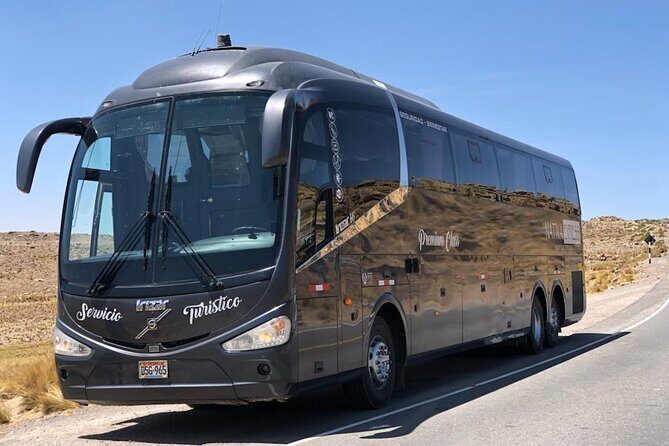
- Four guided sightseeing stops from Chivay toward Puno, with photo time at each viewpoint
- Abra Patapampa for big Andean peaks and the old-school idea of stone offerings called apachetas
- Patahuasi (Pampa Cañahuas) inside Reserva Nacional de Aguada Blanca, with vicuñas/llamas/alpacas and warm herbal drinks
- Laguna Lagunillas for reflective lake views and high-Andes bird spotting (like flamingos, seasonally)
- Onboard comfort kit: air-conditioning/heating, Wi-Fi, chargers, reading light, and a toilet if your unit has one
How the Chivay-to-Puno transfer really works
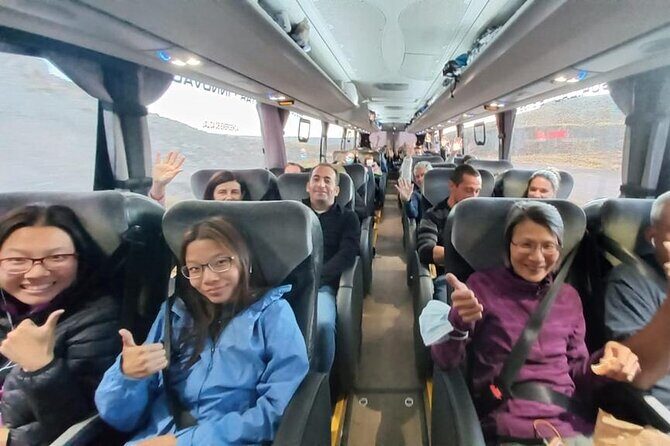
This is a guided transport day that leaves Chivay after a meet-up at the main plaza area. You’re expected at the operator’s office in Chivay, next to the church at the Plaza principal, between 12:30 and 1:10 pm, then departure is around 1:15 pm. The whole trip is about 6.5 hours, but plan for the real world—construction or traffic can stretch it, making it a long late-afternoon arrival.
The route matters because it’s not just driving. You’ll stop for sightseeing with a licensed bilingual guide, and each halt is timed so you can see more than what you’d get if you simply hired a taxi or took public transport. The group size is capped at 40, which usually keeps things organized without feeling like a cattle car.
The end point is in Puno (different location than the start), and if your hotel sits in the Centro Histórico, you can likely be directed to it. That last bit is worth something when you’re tired—Puno can feel confusing late in the day, and a handoff beats figuring out streets on foot.
You can also read our reviews of more tours and experiences in Chivay.

Abra Patapampa: the high view and the apacheta story
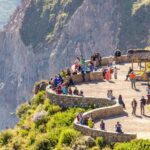
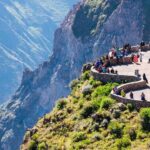
Abra Patapampa is the first real taste of why this route is popular: the viewpoints are high enough that the Andes feel close. You’ll stop briefly—about 8 minutes—at the Mirador de los Andes, where the guide points out major volcanic peaks: Ampato, Sabancaya, Hualca Hualca, Mismi, and the Chila range.
What I like here is that the guide doesn’t just name mountains. You’ll also learn about apachetas, those small piles or towers of stones that travelers once left as offerings to the gods. It’s a simple idea, but it adds context fast—suddenly the rocks aren’t random. They’re part of how people historically treated this landscape with respect, especially on long journeys.
The short stop is the trade-off. You’ll get a look and some photos, but if you want long, unhurried wandering, this isn’t that kind of tour. Bring your eyes ready and your camera set before the doors open.
Practical tip: this is at altitude. Dress like it’s cooler than you think, and keep moving once you’re out so you don’t turn into an ice sculpture.
Tocrapampa: animal spotting with a technical stop
Between the big viewpoint and the main reserve stop, you’ll have a technical pause at Tocrapampa. It’s not a long “attraction” stop. Think of it as a chance to step out, look around, and scan for Andean wildlife—especially llamas and alpacas grazing in their natural habitat.
With luck, you might spot vicuñas, which are prized for the very fine, expensive fiber used in high-end textiles. That detail matters because it gives the spotting a reason beyond cuteness. You’re not just hoping for a photo; you’re watching how an ecosystem works and why certain animals are protected and valued.
The limited time is again part of the deal. You’ll want to stay alert during the brief window. If you’re traveling with kids, this stop can still work well—animals are easier to spot than distant birds, and the guide can help point them out quickly.
One more thing: even when the stop is “technical,” it’s still a chance to breathe fresh air away from the bus. If your body feels stiff from the drive, this is the moment to stretch without turning it into a long break.
Patahuasi (Pampa Cañahuas): Aguada Blanca’s wildlife and warm herbs
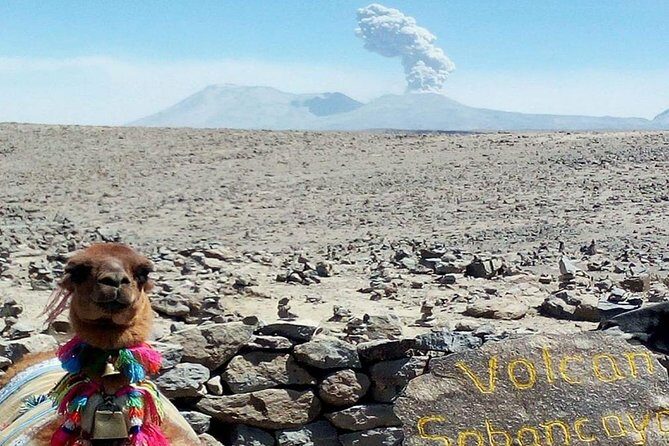
The biggest nature-oriented stop is Patahuasi, also described as Pampa Cañahuas. You’ll be in/near Reserva Nacional de Aguada Blanca, with the Chachani volcano behind the view. Your time here is about 15 minutes, which is short, but it’s long enough for the guide to do a quick orientation and help you scan the ground and mid-distance.
This is where the animal odds often feel best on this route. You may see vicuñas, llamas, and alpacas, and if conditions align, you could also spot animals like foxes or guanacos far away. The “far away” part matters—don’t expect guaranteed close-up wildlife, especially in a short stop.
Another smart part: the stop includes hot herbal drinks. The description lists herbs like chachacoma and muña, which makes this feel more like a roadside experience with meaning rather than a rushed photo pull-over. You can also use the restrooms here, and you can browse artisanal crafts and souvenirs.
Possible downside: because you only have around 15 minutes, you’ll need to choose your priorities—photos, animals, or browsing. If your goal is souvenirs, move fast. If your goal is animal spotting, keep your eyes low and use the guide’s directions to avoid time-wasting detours.
Laguna Lagunillas: mirror views and flamingos (seasonally)
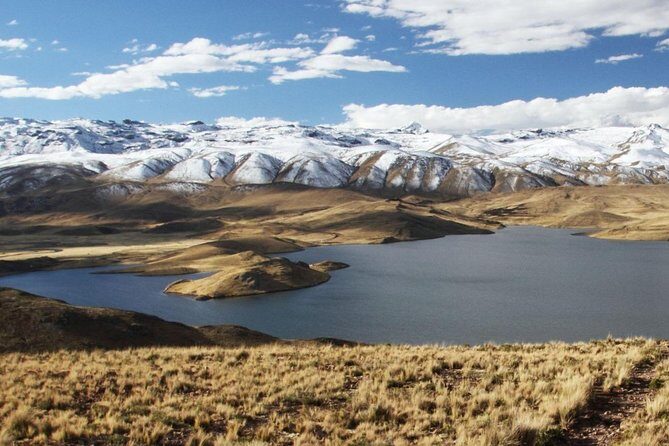
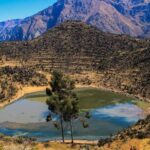
The last sightseeing stop is Laguna Lagunillas, where you get a panoramic view of small lakes that can look like mirrors reflecting the sky. You’ll have about 15 minutes, which is usually enough to get the main photo angles without feeling trapped.
This is also one of the best bird-spotting mentions on the itinerary. The route notes that andean flamingos may be present depending on the season, along with other birds. Even if the flamingos aren’t there, the water-and-sky effect is still the whole point. You’re here for the way the light sits on the surface.
What I appreciate is that the tour doesn’t oversell it as a guaranteed wildlife show. The guide points you toward the lookout, and you get a fair chance to see the birds if the season is right.
Photo tip: turn off your “auto” settings if you know how. If not, just focus on steady shots and try a couple angles—reflections can shift fast with clouds and wind.
Onboard comfort, Wi-Fi, and the food-and-water reality
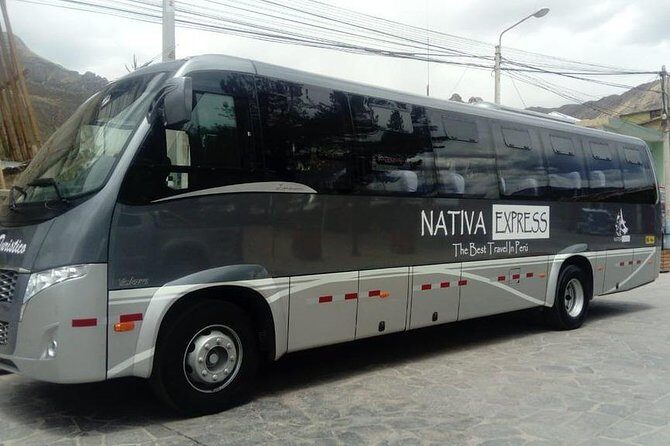
The bus setup is one of the strongest parts of the value proposition. You get an air-conditioned bus with heating/AC options, plus Wi-Fi, onboard toilet (depending on the unit), and chargers for phones and devices. There’s also a reading light and a general expectation that the trip is comfortable enough to survive without constant arm-wrestling for space.
So what’s the practical concern? The tour description highlights complimentary snacks, water, and coffee, and it also promises free Wi-Fi. But I’d treat Wi-Fi as a bonus, not a productivity guarantee. One real-world mismatch can happen: sometimes the “included” items don’t show up the way you expect, and then you’re stuck making decisions under pressure at altitude.
My advice is simple:
- Bring a backup snack and a small amount of cash in case you need to buy water or food.
- If you’re planning to work, prepare offline options. Even when Wi-Fi is listed, connectivity can be uneven.
- Use the onboard toilet if you need it before you get out for stops. Long waits after can be annoying.
The good news: even with a hiccup, the overall experience is still built for comfort, and the guide role can make the difference between a frustrating transfer and a smooth one.
Price and value: why ~$41 can be a fair deal
At around $41.03 per person, this isn’t an expensive private transfer—it’s a guided route that packs in multiple stops. For that price, you’re paying for more than seats on wheels. You’re paying for:
- A licensed bilingual guide doing interpretation and pointing things out
- Four sightseeing stops, including reserve-area viewpoints
- Bus comfort items like AC/heating, charging, and an onboard toilet (on many units)
- A schedule that gets you from Chivay to Puno by late evening without you having to plan each leg
If you were to arrange this yourself, you’d likely spend time coordinating drivers, timing, and entry stops. Here, those headaches are reduced, and the guide helps you get value out of each stop fast.
That said, the “best value” only holds if the inclusions match the expectation. If snacks and water matter a lot to you, don’t rely on everything arriving on cue. Bring your own essentials so the price stays a bargain instead of a frustration.
The guide and the transfer help you’ll be grateful for
The guide can be the difference maker on a day like this, and the experience described here clearly leans that way. The tone is professional and helpful, with a focus on keeping people oriented and solving small problems during the travel day.
One practical benefit you can look for: help with connections or onward plans, plus hands-on support during the late-arrival phase. Some guests also note that the end-of-trip handoff for hotel access can be useful, especially if you’re staying in the Centro Histórico and the operator helps you get pointed in the right direction.
This tour’s big strength is how it turns a long day into something structured. You’re not just sitting on a bus hoping someone will explain the rocks. You get quick context, animal spotting guidance, and viewpoint timing.
Who this tour fits best (and who might want another option)
This is a strong fit if you want:
- A guided Andes transfer rather than DIY transport
- Built-in stops for mountain views, vicuñas, and lake photos
- Comfort upgrades like AC/heating and charging
- A schedule that gets you into Puno in time for evening plans
It may not be ideal if you:
- Need a lot of quiet time or long walking breaks at each stop
- Expect Wi-Fi to reliably support work tasks
- Are very dependent on the bus providing snacks and water exactly as listed
If you’re the kind of traveler who likes control, you might prefer private transport. If you’re the kind of traveler who likes checklists and clear timing with a guide, this one is made for you.
Should you book this Chivay to Puno tour?
Book it if you want a smart, structured day that trades a bit of flexibility for great built-in viewpoints and a competent guide. The four stops give you more than just “getting there,” and the bus comfort helps a lot when the day runs long.
Skip or supplement it if you’re sensitive to the possibility of missing onboard snacks or if you’ll truly need Wi-Fi for work. In that case, treat the included items as a bonus and pack your own essentials. Also, dress for cool Andean temperatures even if the sun looks strong.
Overall, for the price, the mix of comfort + guided stops + a late-day arrival in Puno makes this a practical way to move between regions without sacrificing the best sights along the way.
FAQ
Where do I meet the tour in Chivay?
You meet at the operator’s office in Chivay, next to the church at the Plaza principal.
What time does the tour depart from Chivay?
Check-in is from 12:30 to 1:10 pm, and the bus leaves around 1:15 pm.
About how long is the trip from Chivay to Puno?
The duration is approximately 6 hours 30 minutes, though it can run longer due to road conditions.
How many sightseeing stops are included?
There are four stops during the trip for sightseeing with a licensed guide.
Which places are visited on the way to Puno?
You stop at Abra Patapampa, Tocrapampa, Patahuasi (Pampa Cañahuas), and Laguna Lagunillas, then you arrive in Puno.
Is Wi-Fi included on the bus?
Yes. Free Wi-Fi is included as part of the onboard amenities.
Is there a toilet on the bus?
An onboard chemical toilet is included depending on the type of unit.
What is included in the tour besides the bus ride?
The included items listed are bottled water, free Wi-Fi, attention from an onboard professional bilingual guide (Spanish-English), an individual reading light, air-conditioning (or heating), and chargers for cell phones/tablets/laptops.
What happens at the end of the tour in Puno?
The tour ends in a different location in Puno. If your hotel is located in the Centro Histórico, they may help direct you to your hotel.