REVIEW · CHIVAY
From Arequipa: 1 Day Tour to the Colca Canyon + Buffet lunch
Book on GetYourGuide →Operated by Todo Turismo · Bookable on GetYourGuide
That 3am start is your ticket to the Andes. I love how this 17-person group keeps the day feeling unrushed, and I also like the chance to walk along the canyon edge near Cruz del Cóndor. It’s a full day of big altitude views, quiet side stops, and then a soak at the end—one package that saves you from planning transport and timing yourself.
The bilingual guide experience stands out, and on my read of the guides, David is the kind of person who talks with energy and makes the Colca Valley feel real. The vehicles also carry an oxygen cylinder, which is a comforting safety touch when you’re heading toward high points. One possible drawback: the continental breakfast may not win any awards, so I’d treat it as fuel—not a highlight.
In This Review
- Key points to know before you go
- The 3:00–3:30am Arequipa pickup: why you’re up before sunrise
- Mirador de los Volcanes (4,910 m): the big-altitude checkpoint with oxygen
- Maca’s Santa Ana Church: a cultural break that doesn’t feel rushed
- Wayra Punku, Antahuilque, and Huayrapunku: viewpoint hopping done the civilized way
- Cruz del Cóndor: your one-hour condor window at the canyon’s edge
- Artisans and the Sancayo Pisco Sour stop: a taste break, not a shopping trap
- Natural viewpoints like Patapampa and Tocrapampa Wetlands
- Chacapi Hot Springs in Yanque: the 38°C reward you’ll feel
- Buffet lunch in Chivay: fuel for the final push back to Arequipa
- Price and value: what you pay for, what you’ll add on
- Who should book this Colca Canyon day trip
- Should you book this Colca Canyon tour?
- FAQ
- FAQ
- What time does the tour pick me up in Arequipa?
- How long is the tour?
- How many people are in the group?
- What language is the guide?
- Is breakfast and lunch included?
- Do I need to pay entrance fees for the Colca Valley?
- Is the hot springs entrance included?
- Will we have time to watch for condors?
Key points to know before you go
- Small group size (17 max) means less waiting and more time at the viewpoints that matter.
- Cruz del Cóndor gives you a full hour for photos and condor spotting when conditions cooperate.
- Mirador de los Volcanes hits 4,910 m, with classic volcano views (Ampato, Sabancaya, Hualca Hualca).
- A walk along the canyon edge is part of the experience, not just standing still with a camera.
- Chacapi Hot Springs in Yanque uses medicinal waters at 38°C, and you can buy entry separately if you want.
- Breakfast plus buffet lunch are included, but the breakfast is the part that needs the most patience.
The 3:00–3:30am Arequipa pickup: why you’re up before sunrise
This tour starts early—hotel pickup is typically between 3:00 and 3:30 am. That’s not for drama. It’s for timing: you want to reach the high viewpoints with daylight and a workable schedule, and you want enough time to do the canyon stops without rushing.
The ride out of Arequipa takes about three hours before your first major viewing stop. If you’re sensitive to altitude or motion sickness, start hydrating the night before and keep your breakfast light in the morning. Also, dress for real cold. Early starts in the Andes often feel sharper than you expect, even when the midday sun later warms things up.
One smart move: plan your day like a marathon. I’d treat the early departure as part of the bargain for better light, calmer conditions, and a day that ends with warm water in Yanque instead of fatigue.
A few more Chivay tours and experiences worth a look
Mirador de los Volcanes (4,910 m): the big-altitude checkpoint with oxygen
After the drive, you stop at Mirador de los Volcanes, which is the highest point of the route at about 4,910 meters above sea level. This is where you can appreciate volcanoes like Ampato, Sabancaya, and Hualca Hualca—views that make it obvious you’re in a living volcanic zone, not a postcard.
Here’s the practical part: altitude can hit you even if you’re fit. The tour units come equipped with an oxygen cylinder, and that matters because it gives you peace of mind while you adjust. It doesn’t remove the need to take it slow. Stand up slowly, breathe steadily, and don’t try to “power walk” the moment you get out.
Then you hop back into the van and continue toward breakfast. In other words, this isn’t a long hike at the highest altitude—it’s a viewpoint stop. For many people, that’s the right balance: see the big elevation moment without turning the day into one nonstop trail slog.
Maca’s Santa Ana Church: a cultural break that doesn’t feel rushed
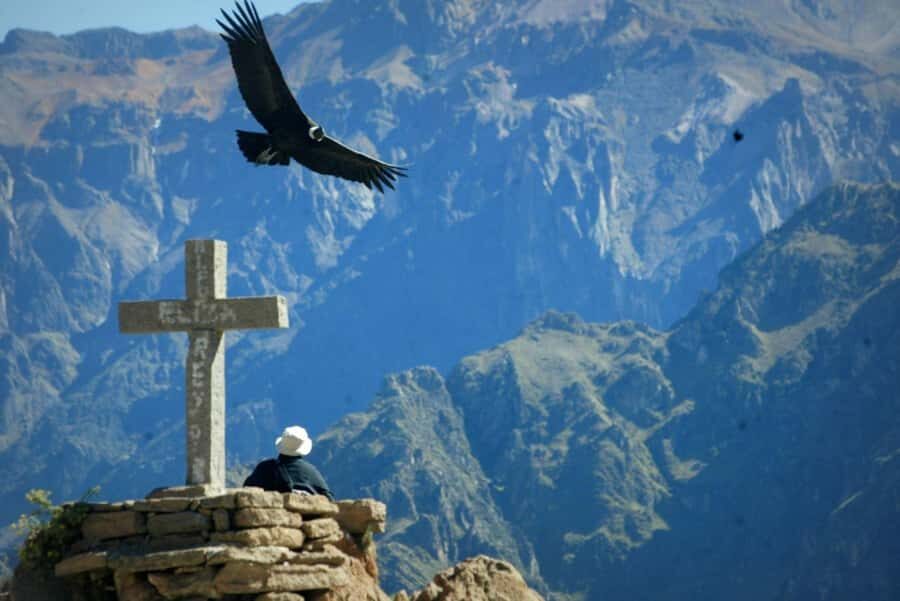
Next you’ll head to Maca, and the standout stop here is the Colonial Church of Santa Ana. What’s special is the craft work: it’s recognized for sculptures carved in ashlar stone. This is the kind of stop that adds depth to the day without turning it into a history lecture.
You’re not stuck staring at one wall for ages. It’s a real pause between viewpoints—a chance to stretch, look closely at stonework, and regain your bearings before the canyon area starts swallowing your attention.
If you like travel days that combine scenery with a little culture (and you don’t want museum time), this is a good mid-route rhythm. It also helps break up the long morning drive.
Wayra Punku, Antahuilque, and Huayrapunku: viewpoint hopping done the civilized way
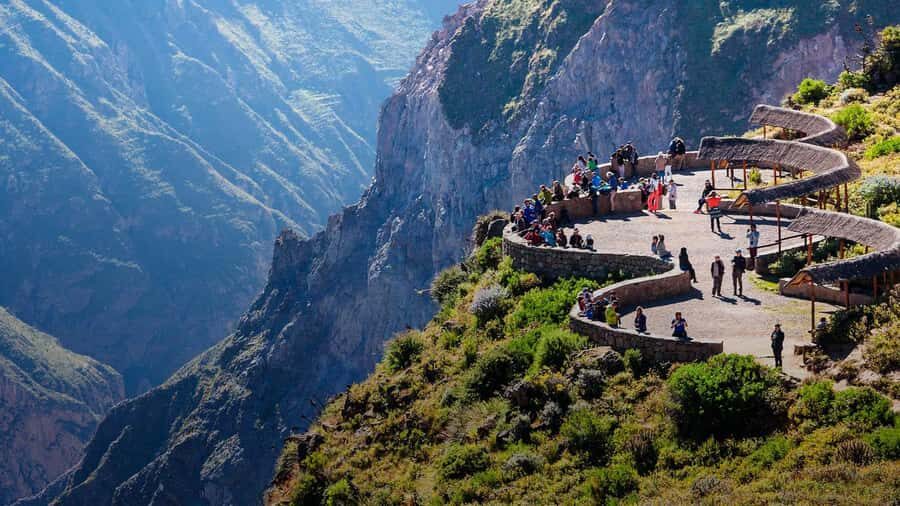
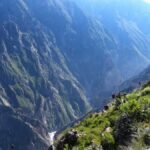
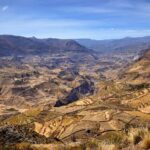
Once you reach the inter-Andean Colca Valley, the schedule shifts into “see-more-than-one-angle” mode. You’ll stop at viewpoints including Wayra Punku, Antahuilque, and Huayrapunku.
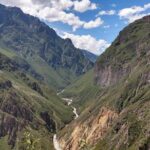
These stops matter because Colca isn’t one view—it’s layers. You’ll often notice the canyon walls, the settlement patterns, and the way light changes how the rock shows texture. Short viewpoint stops are also useful for altitude management: you see what you came for and then you get back into the vehicle rather than marching for miles.
Small-group format helps here. With 17 passengers max, you’re less likely to lose time to crowds at the miradors. You still get plenty of time to look around, but you aren’t stuck waiting while the whole group tries to take the same photo from the same spot.
Cruz del Cóndor: your one-hour condor window at the canyon’s edge
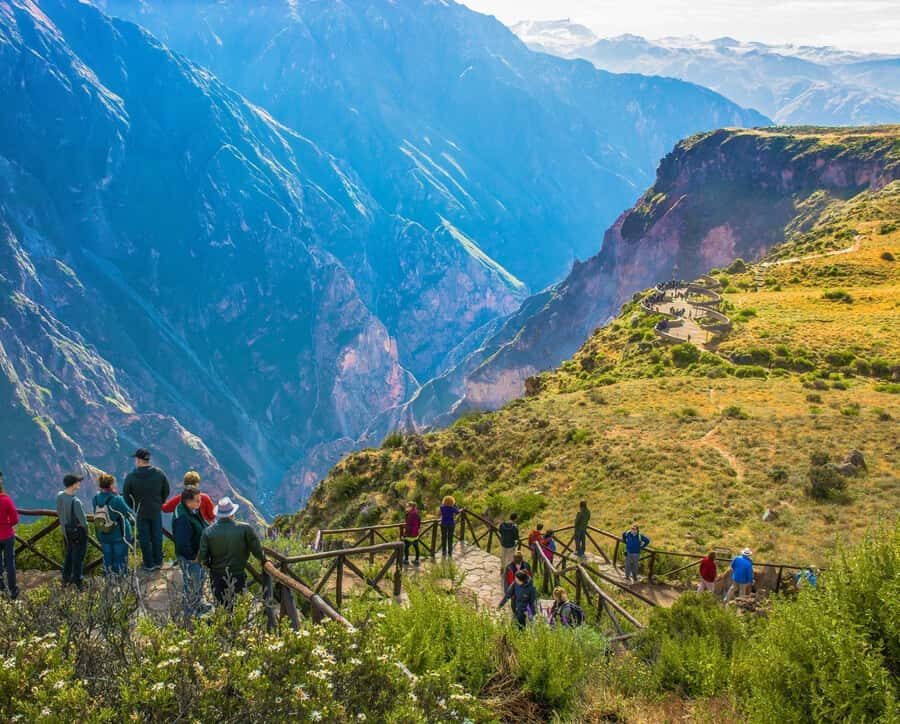
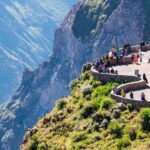
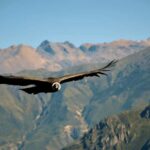
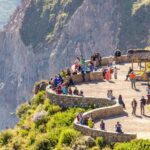
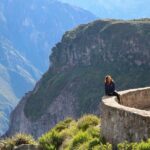
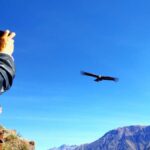
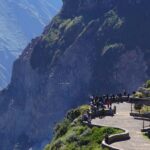
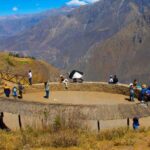
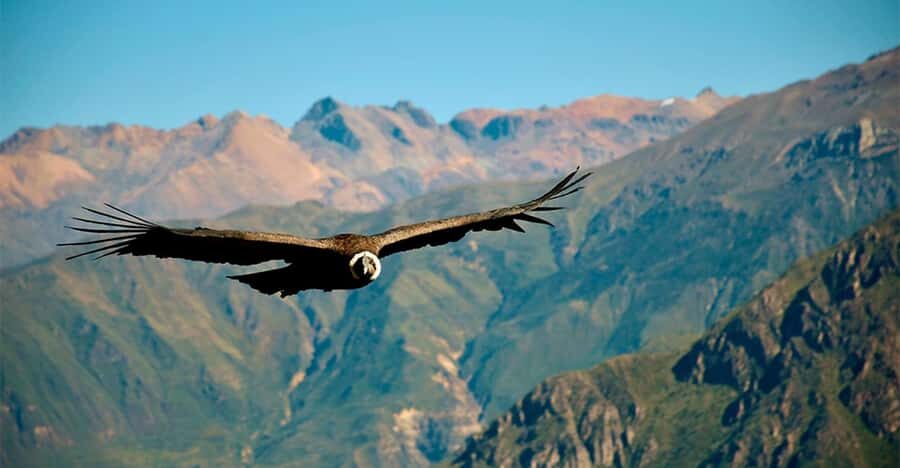
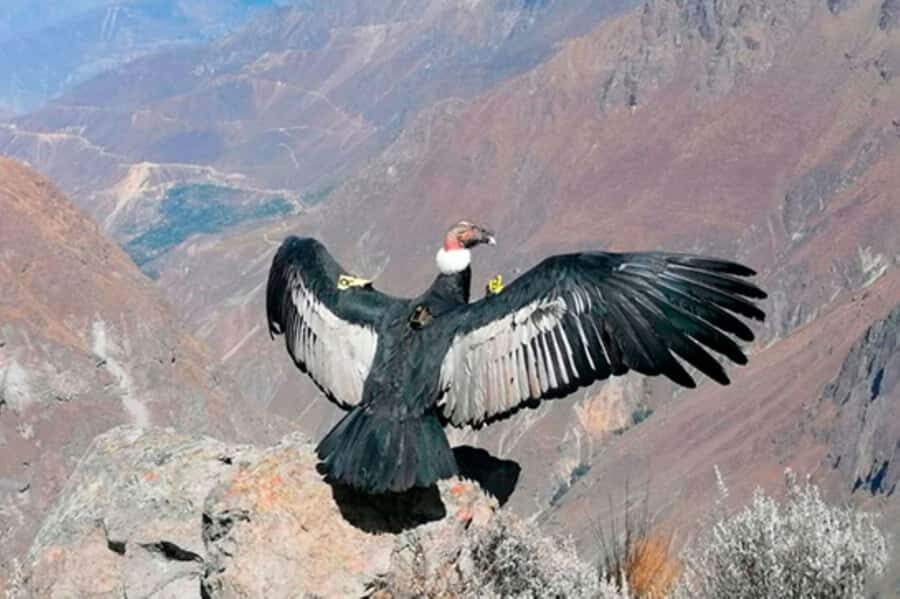
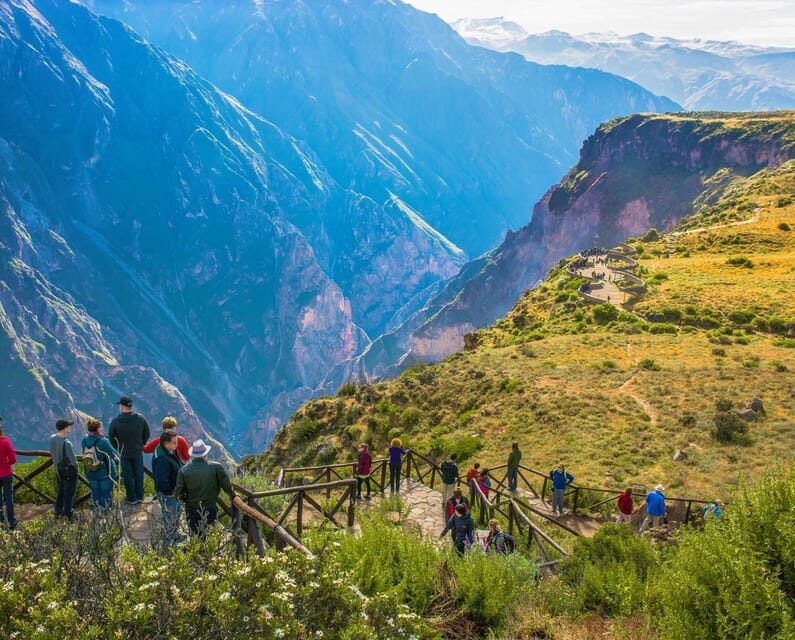
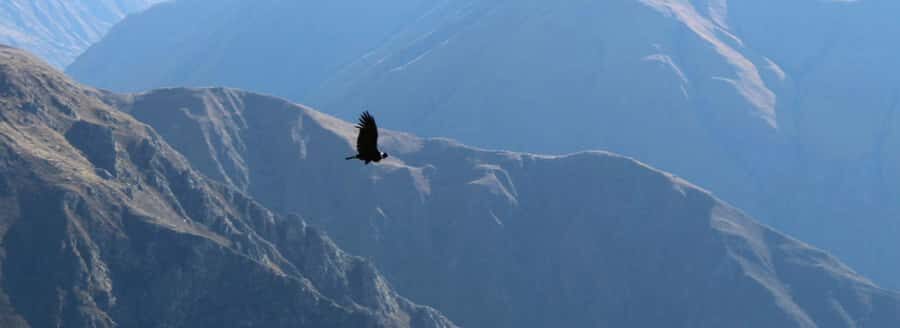
The tour’s signature moment is the Cruz del Cóndor viewpoint, located at the foot of the canyon. You get about one hour of free time here. This is where the best condor odds often land, though you need luck and timing.
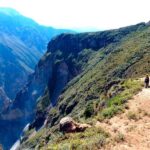
The experience also includes walking along the edge of the canyon. That’s the part I’d highlight for value: it turns the viewpoint from a simple stop into an “I’m really here” moment. Just be careful. Edges at altitude can feel exposed and windy.
When you arrive, give yourself a minute to adjust to the cold and wind. Then scan upward, not just toward the canyon bottom. Condors usually show up when you’re ready—so if you’re always looking at your camera settings, you’ll miss the first pass.
This is also your photo and video window. If you like filming wildlife, bring your patience and plan to shoot more than one angle. The canyon pulls focus in every direction.

Artisans and the Sancayo Pisco Sour stop: a taste break, not a shopping trap
Between viewpoint moments, you’ll pass by areas where artisans offer handmade souvenirs. This is one of those segments where it’s easy to move too fast. In a small group, you actually get the chance to slow down and look at what people are making—especially if you enjoy small-scale craft work.
The day also includes an additional stop where you can try the famous Pisco Sour of Sancayo. The tour doesn’t spell out that it’s included, so think of it as an optional tasting stop. If you do buy one, it can be a fun midday reward—just remember you’re still in a long day with hot springs later.
I like this part of the schedule because it breaks the “only viewpoints” monotony. You get a human-scale moment, and you can decide on the spot how much you want to engage.
Natural viewpoints like Patapampa and Tocrapampa Wetlands
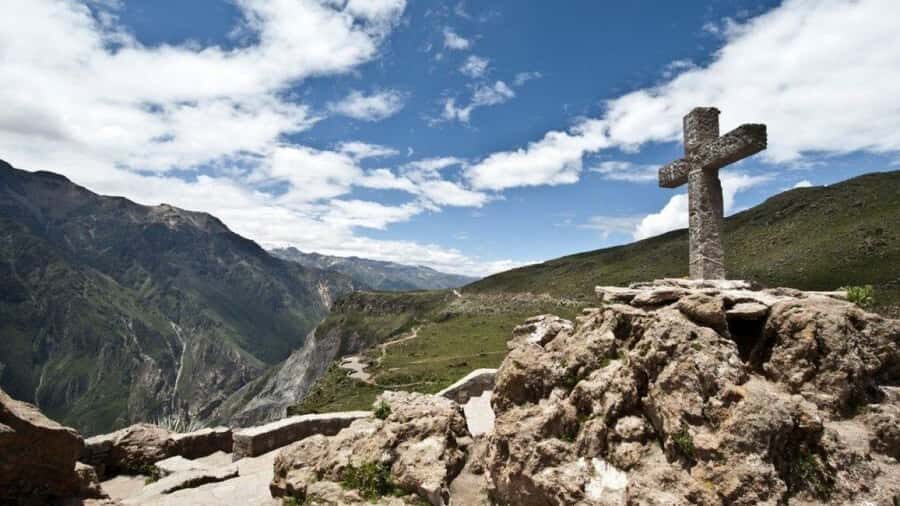
In the route options, you’ll also see stops associated with Patapampa and Tocrapampa Wetlands. Even without turning these into long walks, these are meaningful because they expand your view beyond the canyon rim.
Wetland areas can show you how water supports life at altitude. And Patapampa-type viewpoint stops usually give you a broad sense of where the canyon sits in the wider valley system. Together, they make the day feel more complete than just “one canyon stop and done.”
If you’re the kind of traveler who likes learning from each stop—what the place looks like, how it’s used, and why it’s here—these secondary viewpoints are worth paying attention to. They help you understand Colca as an ecosystem, not only a photo location.
Chacapi Hot Springs in Yanque: the 38°C reward you’ll feel
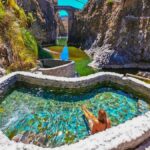
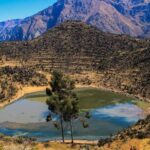
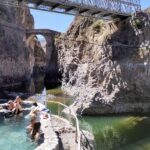
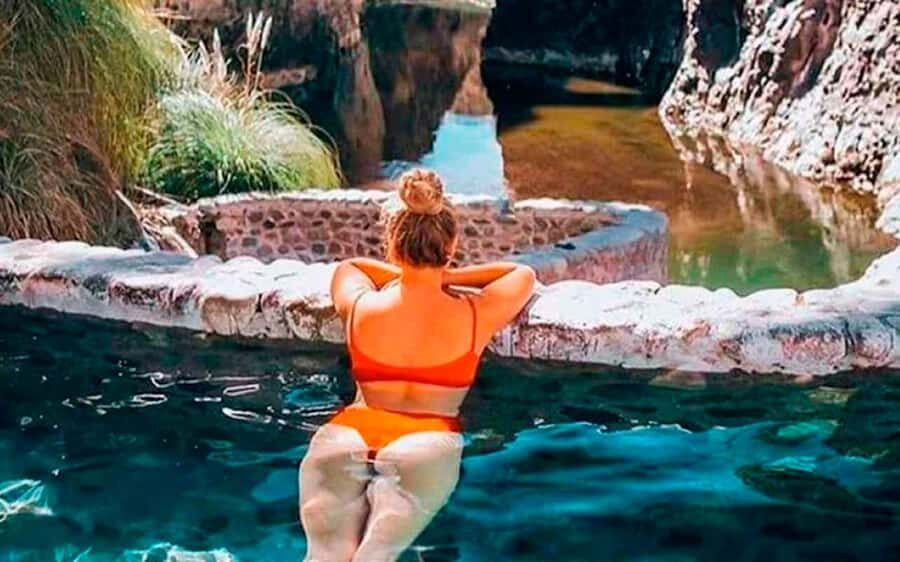
Near the end of the day, you visit Chacapi Hot Springs in the town of Yanque. The waters are at 38°C, and they’re described as medicinal. That means after hours of cold air and long views, your body has a clear reason to relax.
This is the moment I’d plan for with care: bring your swimsuit and a towel. The tour is very explicit about that, and good advice is good advice. If you forget, you’ll still enjoy the trip—but you’ll miss the main payoff.
Also note the thermal baths entrance is not included in the base price. The ticket is listed as S/15.00 optional, so you decide on the spot based on your energy and how cold you still feel.
Buffet lunch in Chivay: fuel for the final push back to Arequipa
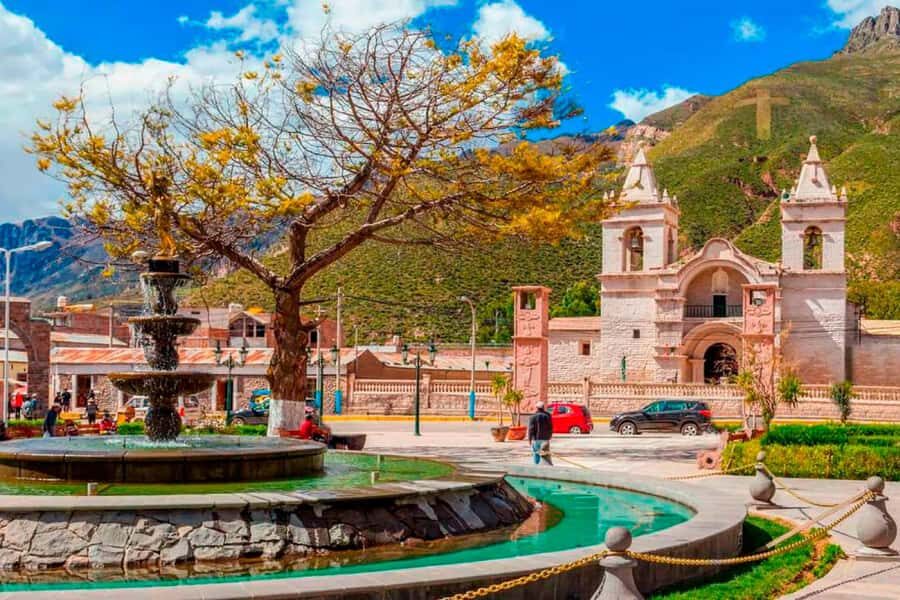
Lunch happens in Chivay. You’ll enjoy a buffet lunch focused on Arequipa cuisine. After the cold morning and the altitude drive, a proper meal matters, not just for taste but for stamina.
Still, I’d take the breakfast expectation down a notch. One verified booking comment points out that the breakfast can be weak. So I treat the continental breakfast as a starter, then let the lunch be the real nourishment.
Timing helps too. You’ll generally start the return journey at 1:30 pm, and you arrive back in Arequipa around 5:00–5:30 pm. That means you should have enough time to shower, eat, and actually enjoy your evening instead of feeling destroyed.
Price and value: what you pay for, what you’ll add on
The tour price is $50 per person for a 1-day small-group Colca Canyon experience. Included in that price are tour transport, a bilingual guide (English/Spanish), 1 continental breakfast, buffet lunch, and small group logistics.
What’s not included can change your total:
- Colca Valley entrance ticket: National S/20, Latinos S/40, Foreigners S/70
- Thermal baths entrance: S/15 optional
So the real value question is this: you’re paying for a planned route with transport, guide interpretation, and meals, while you handle entrance fees yourself. Given that you also get the oxygen cylinder safety touch and a small-group format, $50 can feel reasonable if you’re trying to see the canyon efficiently in one day.
If you’re cost-sensitive, build the entrance fee into your budget before you book. If you’re the type who hates figuring out buses and timelines at altitude, the guided day trip price is often cheaper than the stress you avoid.
Who should book this Colca Canyon day trip
I’d point you here if you want:
- A first-time Colca plan that covers the major viewpoints without complicated logistics
- A small group experience where you’re not stuck waiting all day
- A mix of scenery, canyon edge time, and a real food stop
- The option to add Chacapi Hot Springs later in the day
This is also a good fit for people who don’t want to hike for hours. The big altitude moment is mostly a viewpoint stop, and the walking is focused on the canyon edge experience rather than long trekking.
If you dislike early mornings, you’ll feel it. If you’re very altitude-sensitive, you should still consider medical guidance before going—but the oxygen cylinder and guided structure are supportive.
Should you book this Colca Canyon tour?
Yes, if you want an efficient, guided day that actually prioritizes the best moments: the high-altitude mirador, the canyon rim walking, and that one-hour Cruz del Cóndor window. I also like that the operation is set up as a direct provider (Todo Turismo) and that the group size is capped around 17, because that directly affects how enjoyable each stop feels.
I’d book with eyes open if you’re picky about breakfast quality, since that’s the part that seems most likely to disappoint. Also, plan your budget for the Colca Valley entrance ticket and decide separately on the Chacapi Hot Springs fee.
FAQ
FAQ
What time does the tour pick me up in Arequipa?
Hotel pickup is typically between 3:00 and 3:30 am.
How long is the tour?
The duration is 1 day.
How many people are in the group?
It’s a small group with up to 17 passengers.
What language is the guide?
The guide provides live commentary in English and Spanish.
Is breakfast and lunch included?
Yes. You get 1 continental breakfast and a buffet lunch.
Do I need to pay entrance fees for the Colca Valley?
Yes. The entrance ticket to the Colca Valley is not included (prices are listed by category).
Is the hot springs entrance included?
No. Entrance to the thermal baths at Chacapi is optional, with a listed price.
Will we have time to watch for condors?
Yes. At Cruz del Cóndor viewpoint you have about 1 hour of free time, which is when condor spotting is part of the experience.